Books & Arts

Books and Arts

The importance of going to the movies

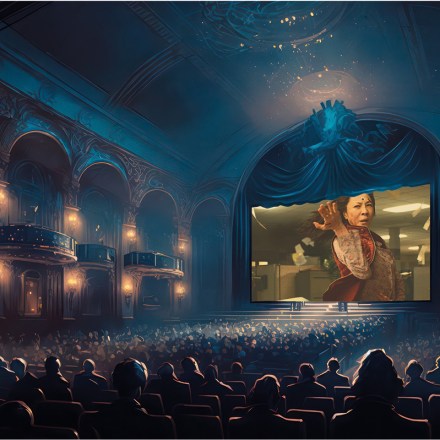
By the beginning of this decade, popular American cinema was once again in peril — just as it was in the 1950s and the Eighties. Then the threat was television and home video, respectively. Now it is streaming. There have been peaks and valleys in between, but before the pandemic, these were the major existential challenges to Hollywood and American movie theaters. The survival of theatrical exhibition after an unprecedented sixteen-month absence speaks to the power of the medium and the ineffable itch that going the movies scratches. Even Steven Spielberg looked desperate, if relieved, when he told Tom Cruise earlier this year, “You saved Hollywood’s ass and you might have saved theatrical distribution” with Top Gun: Maverick.
movies theaters
del rey

Lana Del Rey’s new record: samey, stale, sterile

The title song of Lana Del Rey’s ninth studio album, Did You Know That There’s a Tunnel Under Ocean Blvd, opens in a style now typical of the thirty-seven-year-old singer-songwriter. Amid the swelling string accompaniment and slow beat, the artist sings “fuck me to death, love me until I love myself.” So far, so in keeping with the musician who made her name with the dark, sensuous songs of 2012’s Born to Die (“my old man is a bad man, but I can’t deny the way he holds my hand”) and 2019’s Norman Fucking Rockwell! (“Goddamn man-child, you fucked me so good I almost said ‘I love you’”).

Why are there no paintings in Star Wars?

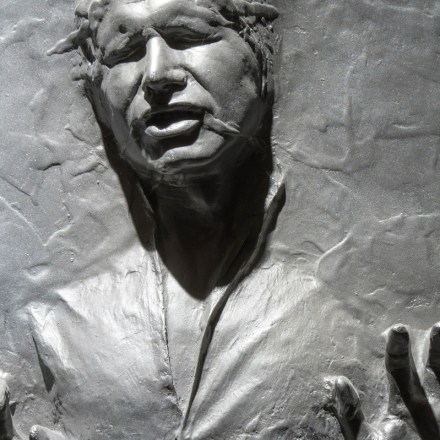
Why are there no paintings in Star Wars movies? The question occurred to me recently, rewatching The Rise of Skywalker. I’m old enough to recall seeing A New Hope in a drive-in in summer 1977, as well as the infamous Star Wars Holiday Special on television in 1978. Over time, my interest in Star Wars has shifted into something akin to nostalgia, so it may not be surprising that this question never struck me before. What is surprising, however, given their glaring omission from the films, is that the man who created the Star Wars universe happens to be a major collector of art — including paintings — and is due to open the Lucas Museum of Narrative Art in Los Angeles by 2025.

Star Wars
subway

Is the New York subway the city’s best gallery?

Milton Glaser was among the most celebrated graphic designers in the world, honored with one-man shows at such glittering institutions as the Museum of Modern Art and the Cooper Hewitt National Design Museum. Glaser was the first graphic designer to receive the National Medal of the Arts award. His “I ♥ New York” logo has been emulated everywhere, and his Push Pin Studios set the standard for graphic design outfits around the world, likely creating more theater posters and magazine covers than any other in New York. But when Glaser pitched one of his “dotty landscape paintings” to the 2017 Metropolitan Transit Authority’s (MTA) call for artists, its Art & Design judges turned him down. Glaser took the rejection in his stride.

Forbidden love in the Great War

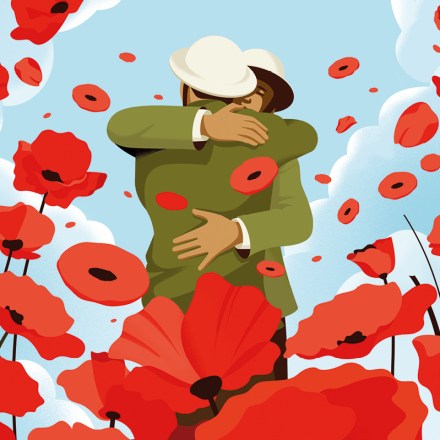
Alice Winn’s beautifully written and engrossing debut, In Memoriam, comes hot on the heels of Tom Crewe’s debut The New Life, which followed the tortured relationship between two men at the turn of the century, and was loosely based on the life of the scholar John Addington Symonds. Winn has turned her impressively attuned eye to World War One, and two young men who fall in love at their public school (old money, military and aristocratic connections, tailcoats and buggery), before heading off to the front; the flower of their generation, doomed to die as the mechanistic future tears apart chivalric ideals, and society starts to question its very nature.

Winn memoriam
coward

Noël Coward, the English playwright who loved all things American

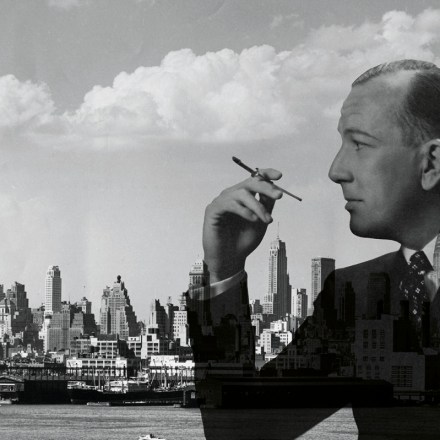
Half a century after his death, the playwright, songwriter, actor, director and general Renaissance man Noël Coward is regarded, with some justification, as the quintessential English polymath. His best-known plays and songs, from Private Lives and Present Laughter to “Mad Dogs and Englishmen” and “London Pride,” seem so steeped in their Britishness — even if Coward was catering to a country that loved seeing a distorted, exaggerated version of itself — they could be placed in a time capsule as perfectly executed microcosms of the national identity. Any man who could write “Wouldn’t it be dreadful to live in a country where they didn’t have tea?

Ernest Hilbert weathers the storms of life and fatherhood

Storm Swimmer, Ernest Hilbert’s fifth collection of poems and winner of the 2022 Vassar Miller Prize in Poetry, is obsessed with bodies of water, especially the ocean. Even before the book begins, Hilbert declares this preoccupation through three sea-based epigraphs, running a wide gamut from Apollonius of Rhodes to Rachel Carson and Iris Murdoch. Over the forty-four formally various and adept poems that comprise this ninety-page, seven-section text, Hilbert engages repeatedly with different aspects of the oceanic to dazzling effect. Often he effects our encounter with the sea through the experiences of the swimmer, who almost always is a struggling figure. Sometimes — as in the case of the title poem — he must contend with the weather: “Without the sun the sea is tangled steel.

Hilbert
bob fosse

Broadway brings back Bob Fosse’s Dancin’

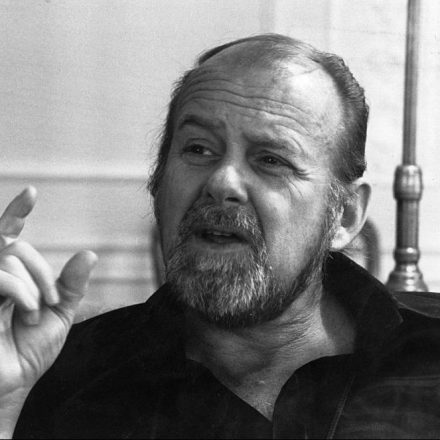
To kick off the new revival of Bob Fosse’s Dancin’, a lone performer comes onstage to inform us that, per the recommendation of the WHO, the CDC, the US Surgeon General and sundry others, the evening’s proceedings will not include any plot, message, or moral. I pinched myself. Wearing Fosse’s signature bowler hat, the speaker, played by Manuel Herrera, promises nothing but “dancing, some singing... and more dancing” — and for the most part, this dazzling two-and-a-half-hour musical revue lives up to that promise. Directed and staged by Wayne Cilento, who danced in the original production, the first revival of Dancin’ on Broadway is a treasure trove for Fosse fanatics, a smart introduction for the unfamiliar and a delight for everyone between.

Madness and cannibalism with David Grann

David Grann is one of a very select club of writers: those whose books of history are so diverting that they almost seem implausible. Their narrative constructions are so effective, the dialogue so apposite, that jaded readers might think everything has been made up or twisted to give the books life, in novelistic fashion. And yet — as with the books of Erik Larson — that’s not true at all. It’s all there in the notes: everything between quotation marks was actually said or written. It’s a remarkable skill. This is a hell of a story, and I use that word appropriately. Those who shipped out from Portsmouth on HMS Wager in 1740 — part of George Anson’s circumnavigation of the globe — struggled through hell.

grann
sittenfeld

Curtis Sittenfeld is the great American observer

If a Martian landed on Earth and wanted a quick summary of the state of modern American life, I would point him toward the works of Curtis Sittenfeld. Sittenfeld (born 1975 in Ohio) is a novelist. Like all the great ones, her perceptions are more accurate about real life than most nonfiction writers’ could claim. In Prep (2005), she skewered American class in the story of a Massachusetts boarding school; Sittenfeld herself went to private school at Groton. In Rodham (2020), a novel about Hillary Clinton, she nailed today’s politics. And, in her best book to date, American Wife (2008), a thinly disguised novel about George and Laura Bush, she filleted the American approach to inherited money, and the swaggering confidence it produces.

What makes a novel funny?

What makes a novel funny? As well as being too enormous a question to tackle properly here, such an enterprise would, I suspect, require so clinical an approach to reading comic fiction as to remove entirely any possible joy or amusement. As the old saying goes, deconstructing a joke is like dissecting a frog: nobody laughs, and the frog dies. However, the question came to me again recently, as I reread John Kennedy Toole’s A Confederacy of Dunces. I howled with laughter from the initial farcical scene outside a department store, through Ignatius J.

funny novel
king

Who was the real Martin Luther King, Jr.?

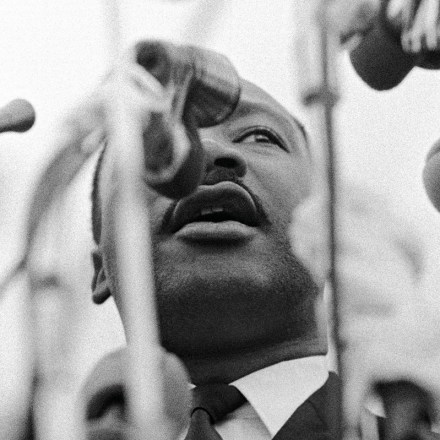
Jonathan Eig’s new King: A Life (KAL) is the first comprehensive biography of the black civil rights hero to appear in more than thirty years, and it will succeed my own Bearing the Cross (BTC), published in 1986, as the standard account. One normally does not review a book one’s blurbed — I’ve called it “a great leap forward in our biographical understanding” — nor where one’s actively aided the author’s research and read his manuscript multiple times. But comparisons between KAL and BTC will be legion, so highlighting the three most significant ways in which the two biographies differ will be a service both to the thousands of readers whom Eig’s volume should attract and to students of King’s life more generally.