Spectator Life

Spectator Life

An intelligent mix of culture, style, travel, food and property, as well as where to go and what to see.

A royal guide to festive dressing

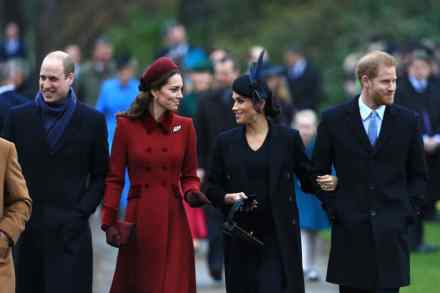
The royals, like most families, had a very different Christmas last year due to Covid restrictions. Traditionally, multiple generations of the family gather at Sandringham House for the festivities. This year the Queen is expected to return to her Norfolk residence once again, to host her extended family for what will be a poignant Christmas – the first one without her husband in over 70 years. We have HM’s great-great grandmother’s generation to thank for many of the traditions of Christmas time. Queen Victoria’s husband, Prince Albert, inspired by his German heritage, popularised the idea of decorating a tree in the home.
Offices are back – but not as you know them

Like a lot of things it began with the cleaners. You may be old enough to remember when there were actual cleaners in offices before they all vanished about 20 years ago. In fact they didn’t disappear, they just got outsourced. That usually meant that nothing much got cleaned especially anymore, but bins were changed at night by unseen hands – the invisible Morlocks in fluorescent bibs, wearing the last person’s name-badge. Now there are plans for us to outsource our offices altogether. In this case it might make sense: after all, if it’s not your core business, why bother? You’re better off leaving it to the experts.

The Toyota Land Cruiser Invincible: a formidable rival to Land Rover

In the latest James Bond movie, which passes for the National soul – though I think Roald Dahl was closer to nailing it – a Toyota Land Cruiser Prado wins a fight with a Land Rover Defender in Norway. Or rather two Land Rover Defenders. Out they bounce from forest to stream and back to forest. Kiss-kiss, bang-bang, snort, rattle. I long to know what conversations marketing executives have with the Bond franchise. Do you pay to have your car win a fight with a commercial rival? And, if your car doesn’t win, can at least it be beaten by a minimum of two cars, and one of them not a Kia? And, do they get it in writing?  At the end of the car fight, the minor villain ends up crushed by his own Land Rover Defender. From COP with love, you might say.

The problem with Peloton bikes

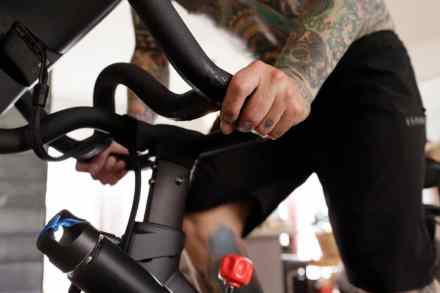
It feels good to say that you own a Peloton bike. After months of peering into those enigmatic Apple-style Peloton stores which came into being unsurprisingly in the more affluent areas of London (Knightsbridge, Marylebone and Oxford Street), my wife and I decided to bite the bullet and buy into the Peloton dream. Like many lockdown fitness devotees, a cancellation of our Central London gym memberships unlocked some disposable income which meant we could afford it. Only just though. When delivery day finally came, I realised just how heavy the bloody thing is. Peloton had sent what looked like its two oldest employees to haul it up the stairs and into our second bedroom. One looked 70 and the other about 90.

The marvellous reinvention of phone boxes

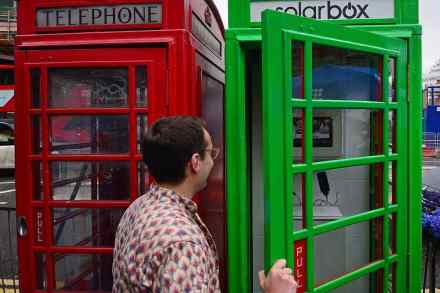
Britain’s legendary red phone boxes are in the news again. Of course they’re a symbol of the country’s past (about 2000 of them are officially listed buildings) – but what makes them really great is their capacity for reinvention. The story this week was about Ofcom preventing BT from closing down many of the nation’s 21,000 phone boxes. A box will now be saved if it meets one of several criteria, such as being located at an accident or suicide hotspot, or if more than 52 calls have been made from it over the past 12 months. But everyone knows what the long-term trend will be in a country where virtually everyone owns a mobile phone.

The Mazda MX–5: proof that sports cars can be affordable

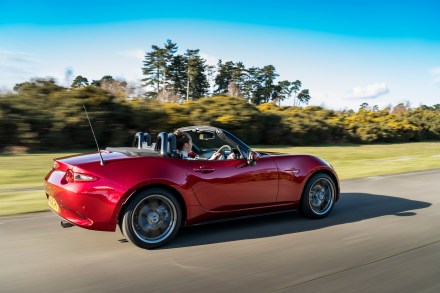
The British have a long-standing reputation for coming up with great ideas, executing them quite well – and then leaving others to really run with them. Such is the history behind what is officially the best-selling two-seat convertible sports car of all time, the evergreen MX-5 made by Japanese marque Mazda. The story goes that the MX-5 was born out of a conversation held 45 years ago between Mazda's former head of research and development Gai Arai and US automotive journalist Bob Hall. The latter had been bemoaning the impending demise of the simple, open-top sports car after it had been threatened with extinction during the late '60s due to US safety legislation on sales of conventional convertibles.

In praise of members’ clubs

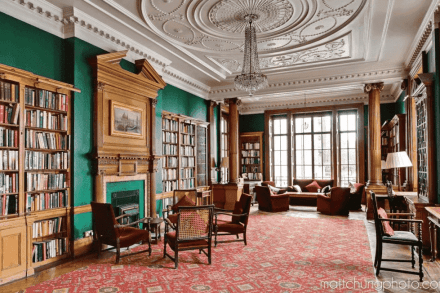
I live in Mayfair these days. I wander through expensive streets, past costly boutiques, exclusive restaurants, and grand houses where chandeliers glitter behind the windows. I walk past private members’ clubs, through elegant squares and along hidden mews. There are embassies, temples, schools and churches; casinos, cinemas, bookshops, tiny cafes and pubs thronging with white-collar workers. It’s elegantly Georgian here, but there’s also plenty of that red-brick ebullient Dutch – and French – inspired architecture of the monied Edwardians. That’s what my house is like – flamboyant, with curlicues on the crimson brick, ornate windows and original Regency railings.

Should you electrify your classic car?

Inspiration comes in unusual forms. David Lorenz’s lightbulb moment arrived when his classic Mercedes broke down. His small daughter was in the car, and Lorenz began thinking about ways to make it cleaner, more reliable and give it a long term usable future in a world that is turning its back on the internal combustion engine. This led him to set up Lunaz Design, close to the Silverstone racing circuit in Northamptonshire. It’s high end old car restoration business that fits electric drive systems to sometimes exotic period Jaguars, Rolls-Royces and Aston Martins amongst others.

The moustache is back

It is a grand British tradition, that when trying to raise money for charity, we make ourselves look silly. Nowhere was this more true than with Movember. When Movember first came along, you’d see someone on the streets wearing a moustache and the gut reaction was very much along the lines of, 'Poor lad, he’s doing Movember, good for him for sticking it out.' The alternative is doing something strenuous, and most of us would rather not. In fact the graver the cause and the more insidious the disease, the more irreverence we lather onto it. This year however, I saw the ads on the side of buses, appealing for support, and it occurred to me that I needed to read the poster before figuring out what it was for. Why?

The return of the cape coat

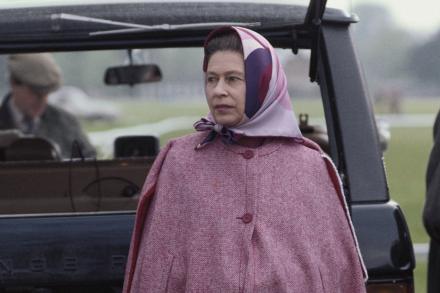
One of my favourite off-duty pictures of HM the Queen is this photo taken at the Royal Windsor Horse Show in 1979. I love the look of HM’s long pink tweed cape worn with a matching silk headscarf and leather boots. A simple, understated country casual outfit but she still has an air of superwoman about her from her choice of cover up – the cape.  Queen Elizabeth II at the Royal Windsor Horse Show, May 1979 (Getty Images) It is a popular outer garment with the Royal ladies of all generations, demonstrating its timeless and classic appeal. There is something undoubtedly regal about this style of outerwear, reminiscent of the coronation robes.

The hidden fortune in old watches

It's not so long ago that old watches used to turn-up at car boot fairs, charity shops and jumble sales (remember those?), usually in the form of unremarkable models set aside to be 'got rid of' after the grim reaper had called time on their original owners. Back then 'watch collecting' had yet to benefit from the turbo-boost of the internet and remained an esoteric hobby enjoyed by scholarly types who had put the work in to discover the varied histories of all the best brands in the old-fashioned way: by reading books. To everyone else, one second-hand watch was very much like another, regardless of the signature on the dial –unless, of course, it was a Rolex.

Implausibly fast: inside the Bentley GT Speed

When the famously gloomy British winter starts to tighten its icy grip and spirits begin to wane, a tangible reminder that the sun will shine again always provides a fillip. And I find watching David Niven in the 1958 film Bonjour Tristesse usually does the trick. The movie version of Francoise Sagan's famous novel about a young girl called Cecile who lives with her rakish father, Raymond – effortlessly played by Niven – is based around the family villa on the Côte d'Azur, from where Raymond cruises the corniche in a silver Bentley S1 Continental drophead while looking tanned, relaxed and unspeakably sophisticated.

The secret to wearing pink

It would be interesting to see what people would have turned up in had the Bond premiere not been of the Royal variety with a black-tie dress code. Perhaps Daniel Craig in Yeezys or Lea Seydoux all Parisian chic in a pair of jeans and sweatshirt, we can but wonder. It is a relief that people didn’t treat it like the Met Gala and turn up in anything but the dress code. The turnout was extremely good for the sartorially minded, including from the guests. Jason Momoa showing up in a Henry Poole tuxedo juxtaposed his hobo-rambler-surfer vibe. This came as less of a surprise to me as he is often posting about deliveries of rings and accessories from artisans and I know he has a few bespoke shoes from Gaziano & Girling.

The perils of an autumn Chelsea Flower Show

Once upon a time, the Royal Horticultural Society staged a Great Autumn Show every September in their two Horticultural Halls off Vincent Square in London. It was a fine mixture of colourful nursery trade exhibitions and fiercely-fought amateur competitions, involving fruits, flowers and glowing foliage (Who could forget the amusing annual battle between the Dukes of Marlborough and Devonshire - or rather their head gardeners - over the prize for the best bunch of glasshouse grapes?).

Sing for your supper: London’s best Karaoke booths

After Cabinet members recently took to the microphone for a karaoke evening, is Westminster's new favourite hobby on course for a winter comeback? With summer days of al fresco cocktails and late-night picnics in the park almost behind us, a let-your-hair-down evening belting out karaoke could be just the answer. Here’s our guide to London’s best booths. Bloomsbury Bowling Lanes Bloomsbury bowling lanes Cosy rooms with vinyl records covering every inch of wall, studded leather sofas and low-lit kitschy lamps create a perfectly funky vibe for an evening of crooning along to Otis Reading and Stevie Wonder.

The secret to restoring old records

It’s a kind of alchemy, transforming worthless clutter into pleasing and valuable collectors’ items, a slow but gratifying process all but forgotten in the modern age. I first learned it from the woman who ran a second-hand record store in my hometown, Tunbridge Wells, from the late seventies to the early nineties, where I misspent much of my youth and most of my pocket money. Fiona, a hangover from the hippie era, with her whispered husky voice and the endless extraordinarily-thin hand-rolled cigarettes that perhaps explained it, first imparted this lesson in around 1982. I speak of the lost art of fixing warped records.

The rebellion of wearing a suit

During my first job at an advertising firm, there was a palpable disdain for suits amongst my colleagues. For a newly appointed copywriter, fresh out of university and hooked on Mad Men, wearing a suit seemed like the sensible thing to do in the office. But to the Generation-X creative director I was now working for – perhaps having been forced to wear a suit for most of his earlier career – it was an unwelcome relic of the past. He set me straight in my first client meeting. I bought a cheap two-piece from the high street, hoping to make a good impression. Ten minutes before we sat down, he pulled me to the side, wanting to know if I could find anything more ‘relaxed’ for next time: 'the suit is a bit… pompous,' he added.

Why the camper van craze is here to stay

Britain’s staycation charge has seen thousands of people buying campervans for the first time, not least the classic VWs beloved of hippies, surfers and generations of families whose definition of a good day out is a Thermos flask of tea. These clattery, engine-in-the-back vehicles already had cult status, but it seems the pandemic has supercharged their appeal, with demand for VW campers soaring both before and after lockdown. But what’s it like living with a box on wheels originally conceived seventy plus years ago? Fun, according Midlands-based Graham ‘Dougie’ Douglas, who owns two 1966 and ’67 vans, the latter, a retired Austrian police minibus, bought on a whim in 2006 when his wife and family were out and he had nothing but eBay for company.

When will James Bond drive an SUV?

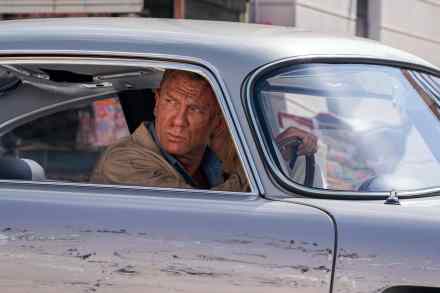
I once read that after watching a James Bond film men speed in their Honda Civics: they might do 35 mph in a built-up area. If this is so, it is due to the Aston Martin Bond has driven since 1964 (the DB5 in Goldfinger, a man with 'a cold finger'). The DB5 has appeared in six Bond films so far; and some kind of Aston Martin has appeared in twelve Bond films. Is it, I wonder, contemplating Bond’s internal wasteland of sex addiction, murder and laundry, the only real home he ever had? Is it his wife? When the DB5 was revealed in Skyfall, waiting calmly in a garage, it seemed it was. The face of Bond – he is named after an ornithologist - may change.

The dos and don’ts of paddleboarding

Searches for paddleboarding locations across the country have risen hugely over the last 18 months, with the global market for paddle boards now estimated to be worth around £7 billion. Stand Up Paddleboarding, also known as SUP, is a popular way to easily and cheaply get out on to the water, without having to purchase a huge amount of equipment or carry racks, as you would for kayaking, for example. Paddleboarding is suitable for both exploring the coastline or paddling around the lochs and lakes of the UK, making it an extremely versatile way of providing you with freedom and ability to gain your sea legs on a small budget. What type of paddleboard do I need?

Is there a car more quintessentially English than the Morgan?

There are few sports cars as quintessentially English as Morgans. They speak of World War Two and flat-capped Spitfire pilots driving home to their sweethearts through leafy country lanes, taking the bends at maximum speed but courteously slowing down for horses and to wave at the vicar. But now the 113-year-old firm, which has operated from Malvern Link in Worcestershire since day one, has produced a model designed to be as capable of taking-on a crossing of the Gobi desert as it is of negotiating the parish hall car park after a particularly nasty fall of autumn leaves.

A piece of Hollywood history: inside Tom Hanks’ film trailer

'I got it in the days when movies moved slower,' says Hollywood A-lister Tom Hanks of the Airstream caravan that served as a home-from-home while shooting some of his biggest hits of the past 30 years, including Forrest Gump, Apollo 13 and Sleepless in Seattle. But now Hanks is offering the polished aluminium 33-footer at a Bonhams classic car auction in Carmel, California, on August 13 - where it's tipped to realise up to $250,000. He's also selling the vast Ford F450 Super Duty pick-up truck ($70,000 - 100,000) that he bought to give the Airstream 'a kinder, gentler tow' than usual movie crew vehicles, as well as his customised Toyota FJ Land Cruiser ($75,000 -125,000) and a Tesla Model S P85D ($70,000 - 100,000) - all of which are up for grabs 'without reserve'.

Why the British love charity shops

In Mary McCarthy’s 1954 novel The Group, Mr Andrews describes the contents of a charity shop (or thrift store if you hail from the States) as an 'instructive inventory of the passé'. And indeed, all charity shops are repositories of the recent past - a perfect distillation of expended trends and fashions. Worthy of an anthropologist’s eye, charity shops are living museums; rail after rail of cultural history infused with the faint smell of other people’s washing detergent and mothballs. But Mr Andrews missed one vital point: charity shops are not simply about the past. They are also caverns of possibility, where formerly prized objects become affordable, and where the taste of the customer reins supreme. There is no type of shop quite like it.

In praise of pastel suits

There have been various style know-it-alls who have been ruminating over the possible, perhaps inevitable, return of suits which have Miami Vice proportions. The Eighties cop show was bold in its broad silhouette, generous pleats, puffy shoulders and unstructured loucheness that undid 100 years of tailoring’s mission to flatter and ennoble. In 2021 it feels like the logical next step for people all too used to not having to dress up at all - an exercise in sartorial fence sitting. What people didn’t predict was that people would also feel inspired by the show’s colour palette too. Pastels are everyone’s favourite tone to mock, but opting for brightness, is the smart move. I’d like to claim credit for the uprising, having written in 2019 about J.P.

What does it feel like to fly?

Have you ever wanted to fly? For me the urge comes whenever I see a bird hovering directly over a hedge, flying into the wind so it can maintain a position and spot prey. It’s not the prey I’m interested in, just the sensation. Wouldn’t it be fantastic to defeat gravity? Like many of us, Richard Browning had that same urge. Unlike the rest of us, he did something about it. Starting in 2016, he experimented with small jet turbines strapped to his arms and legs, pointing downwards so their thrust would lift him off the ground. His ‘flying suit’ took a long time (and a lot of money) to refine.

The joy of Britain’s country shows

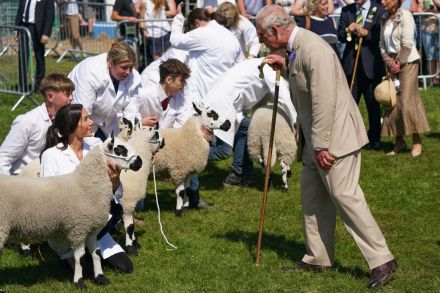
Wandering through the sheep pens at the Great Yorkshire Show, it’s clear that a sheep is not ‘just’ a sheep. The sheer array of livestock on display is a lesson in itself. Sheep with fluffy legs; sheep with four enormous horns. Pink sheep, white sheep, brown, black and piebald sheep. Dreadlocked sheep; sheep with huge donkey ears, and rams with huge, curled horns. Above their pens they proudly display their prizes: Breed Champion; Winning Lamb; Best Swaledale; Best Homebred. It’s remarkable calm in here; the odd bleat here and there, or a scuffle as someone objects to being puffed and preened before their next class. But for the most part the sheep are content to loll around, munching on their hay.

‘Gumtree for the posh’: why Sloanes have embraced Radio H-P

In 1983 Cambridge academic W.G. Runciman, reviewing Peter York and Ann Barr’s The Official Sloane Ranger Handbook, described the work as an 'anthropological survey' in the mould of such distinguished scholars as Malinowski and Veblen. Veblen’s late-nineteenth century The Theory of the Leisure Class was, Runciman explains, an 'earnest social-Darwinian exercise in the analysis and survival of certain archaic behavioural traits'. By attempting to define the Sloane ranger, York and Barr were Veblen’s disciples he concluded, albeit unintentional ones.  Nearly forty years later, eons from the Harpers & Queen heyday of the Sloanie, driven by Princess Diana and Fergie, we must ask ourselves this: where have they all gone?

The death of lawn mowing

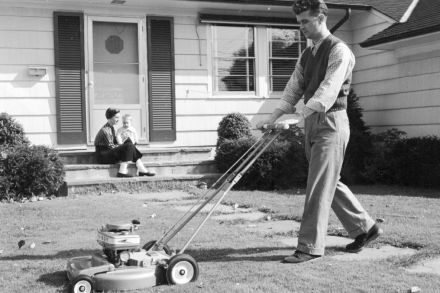
Are we witnessing the slow death of manly gardening? A new government initiative urges us that for the sake of bees and pollinators we should leave the mower in the shed and let our lawns turn into savannahs. Some thirty councils are signed up. King’s College Cambridge has turned its lawn into a wild flower meadow. Monty Don approves. He has piously decreed that mowing is 'about the most injurious thing you can do to wildlife' and a 'male' obsession. Get this, Monty. Mowing in my garden is only a male activity because my wife won’t do it. So I have to, while she watches your bloody programmes! I can't really complain, mind you. I have a lawn tractor, a pleasure to ride, and generally speaking tasks in our garden are equally divided.

Why Britain is best explored by motorcycle

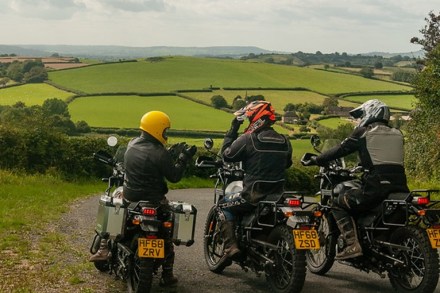
With the emphasis on staying on home turf this summer rather than enduring the risks and administrative tribulations of holidaying 'overseas', many of us are heading out in search of parts of the country that we previously never bothered trying to discover. And what better way to find pastures new than by motorcycle? That's the thinking behind a fledgling business called Superior Motorcycle Adventures that aims to give riders, be they experienced or relative novices, the chance to explore rural Dorset on roads that are distinctly less travelled - in other words, the tracks and byways that were once plied by cattle drovers and journeymen but which, in a surprising number of cases, remain legally open to vehicular traffic.