Spectator Life

Spectator Life

An intelligent mix of culture, style, travel, food and property, as well as where to go and what to see.

What has Amy Lamé actually done for London?

It’s no surprise that Britain’s night economy is in dire straight given a quarter of people told pollsters they would like to see nightclubs permanently closed even after the pandemic. Yet nobody embodies modern society’s contempt for club culture quite like Amy Lamé, Sadiq Khan’s embattled ‘Night Czar’. Places that ought to be the capital’s dedicated nightlife districts, such as Soho, are being squeezed to death Yes, as she stressed in a recent op-ed defending her record, she did her stint on the scene herself. But as any investor will tell you, past performance is no guarantee of future returns – and Lamé’s record speaks for itself.

How to carry out a citizen’s arrest

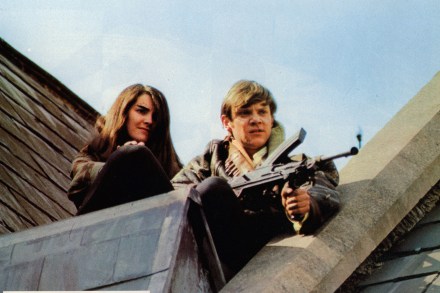
One Monday morning about 30 years ago, I drove to work, parked my car in the village car park, and started hauling my bags of files out of the boot. In my new role with a firm of solicitors, the weekend had been a chance to familiarise myself with my pressing caseload. I initially paid little attention to a small group of people in heated animation nearby as I unloaded the car. Then I realised what was in fact going on was an attack; someone was pinned against a van. Seconds later, I heard weak squeals for help. I dropped by bags and bellowed, ‘Stop! Stop that now! I am a solicitor and I’m telling you to stop now!’ I strode to the huddle and continued yelling at them to stop.

The genius of Flanders and Swann

War has had its apologians ever since history began,From the times of the Greeks and Trojans when they sang of Arms and the Man,(But if you ask me to name the best, sir, I’ll tell you the one I mean,Head and shoulders above the rest, sir, was the War of 14-18) If you’ve never heard Michael Flanders’s rollickingly good version of Georges Brassens ‘La Guerre de 14-18’ – an ironic take-down of the industrial-scale slaughter of the first world war, then you’re missing a treat. I first heard Flanders and Swann in my schooldays: I loved ‘The Gnu’, ‘The Hippopotamus Song (Mud, mud glorious mud)’ and ‘Misalliance (The Honeysuckle and the Bindweed)’.

Where is the Princess of Wales?

Tuesday’s statement about Prince William was terse to the point of being unhelpful. ‘The Prince of Wales has pulled out of attending the memorial service for the late King Constantine of Greece at Windsor Castle due to a personal matter.’ Granted, William has been unusually active during the past few weeks. One minute he has been photographed hobnobbing with the stars at the Baftas, the next has been diving into controversy by calling for a humanitarian ceasefire in the Middle East. Therefore, his absence from the memorial service could be down to anything from exhaustion to some minor but unpleasant personal complaint.

Frank Skinner: twilight of an insurgent comic

Watching Frank Skinner perform his latest one man show at the Gielgud Theatre reminded me of what it must have been like back in the dying days of variety. By the late 1970s and early 1980s cheeky jokesters and all-round entertainers such as Tarby, Brucie, Doddy and Manning were feeling the heat from a new breed of alternative comedian vehemently opposed to the old guard’s reliance on tedious stereotyping and shallow observation. Now in their mid-fifties (considered ancient back then) many took the hint, hung up their dickey-bows and retired to Bexhill; others struggled on in tatty end-of-the-pier shows in front of dwindling geriatric audiences. Mystifyingly, Sir Bruce Joseph Forsyth-Johnson CBE continued his wearisome nice-to-see-you shtick right up until his death in 2017 aged 89.

Dinosaurs and culture wars

Last week marked the 200th anniversary of the most significant evening in the history of palaeontology. On 20 February 1824, the learned gentlemen of the Geological Society gathered at their rooms on Bedford Street in Covent Garden for a meeting that would transform human understanding of prehistoric life. To begin, the clergyman William Conybeare announced and described the Plesiosaurus. A vast marine lizard that Mary Anning had discovered in Dorset, the Plesiosaurus was memorably described as ‘a serpent threaded through the shell of a turtle’; it would later leap from the rocks of Lyme Regis into the fiction of Jules Verne and Arthur Conan Doyle, and into the popular imagination as the Loch Ness monster.

The enduring ghastliness of Alastair Campbell

As someone who was fond of Derek Draper (a feeling that probably wasn’t mutual, as I nicked his bird) it was strange to see photographs of his funeral. It seemed like a state occasion for some legendary leader who had died in battle defending his country, rather than for the husband of a likeable TV presenter who had been unlucky enough to catch a virulent version of a sickness which so many shook off. Sir Elton John sang; Sir Tony Blair speechified. Gordon Brown, Peter Mandelson, Ed Balls and Alastair Campbell showed up; the Blair Bunch reunited. The dignity of Draper’s widow and children sat oddly next to this ghastly bunch of carpetbaggers, reminding us that before he found redemption, Derek became famous – notorious – for revealing the hollowness at the heart of New Labour.

AI just exploded. Again

When they come to write the history of the AI revolution, there’s a good chance that the writers will devote many chapters to the early 2020s. Indeed, such is the pace, scale and wildness of the development, it is possible entire books will be devoted to, say, what happened in the last week or so. This is happening now, not in some dystopian future If you’ve not been paying attention, let me talk you through it. On 15 February Sundar Pichai, CEO of Google, and Demis Hassabis, the head tech bro at DeepMind (the London-based AI company bought by Google in 2014) announced the launch of Gemini Ultra 1.5 Pro. It may sound like a slightly superior razor-blade, in truth it is a very serious machine. To demo Gemini 1.

Think drug legalisation is a good idea? Visit Fentanyl Land

In 1988, I lived on the backpackery Khaosan Road, Bangkok, in a hotel which offered heroin on room service. It went like this: in the morning, you padded down the teakwood stairs to the little kitchen and you asked the pretty Thai girl for breakfast – scrambled eggs, bacon, ‘extras’. Ten minutes later the same sweet girl would arrive in your room and graciously set down your tray, with scrambled eggs, orange juice – plus two straws of China White heroin, neatly paired on a saucer.

Welcome to the age of uncancelling

In September 2019 my fear was that comedian Shane Gillis might throw himself off a bridge. Just hours after being hired by Saturday Night Live, one of the world’s biggest TV shows, he was fired. The reason: journalist Seth Simons had posted clips of Gillis disparaging Chinese people. The clips, from 2018, showed Gillis on his podcast mimicking the accent of an old-fashioned racist as he said, ‘Let the fucking Chinks live there.’ Then he used his natural voice to have an ugly conversation about Chinatown. Another clip showed Gillis saying ‘faggot’ and using ‘gay’ as an insult. Gillis being fired from Saturday Night Live isn’t a free speech issue His Saturday Night Live dream was over.

Rewild the churchyards

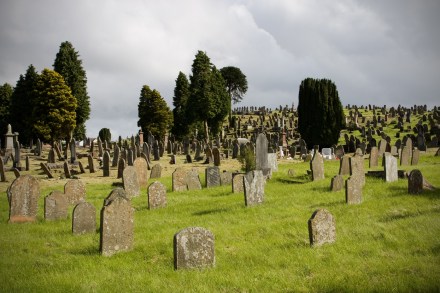
In the village where we used to live, the churchyard was just over the road from our cul-de-sac. I often used to potter around on my lunchbreaks, or pass through on walks. The oldest gravestone I managed to find, if I remember correctly, was for a local chap who had died in his seventies around the year 1750, which meant that he had been born towards the end of the reign of Charles II, some three hundred years before my own birth. There is a quiet consolation in the long continuity of communities There was a strange comfort in thinking that the man whose mortal remains lay – or had once lain – beneath my feet had walked the same hills and fields as me, had known the same church and the same valley.

An optimist’s guide to dying

My favourite bit of understatement ever comes not from a Brit or a Spartan but from the Japanese Emperor Hirohito. In August 1945, following Japan’s defeats in every recent battle and the obliteration of two cities with nuclear bombs, he broadcast that ‘the war situation has developed not necessarily to Japan's advantage’. At 46, I have lived far longer than most of the humans in the 300,000-year history of our species Well, I’m sorry to have to announce that my cancer situation has also developed not necessarily to my advantage. Last August I was diagnosed with advanced throat cancer, and was started on a fairly aggressive regime of treatment to try to cure it.

The BBC’s betrayal of Steve Wright

Radio is my favourite medium. Always has been. It doesn’t shout ‘Look at me! Look at me!’ in the way newspapers and screens do. Radio informs and entertains as you drive a car, paint a ceiling or perform open-heart surgery. And there was no finer, more creative and more enduring radio entertainer than Steve Wright, who died on Monday. His afternoon show made Radio 1 in the 1980s. When Wright moved to Radio 2 in the late 1990s, it was a stroke of genius by the station’s then controller Jim Moir, reviving Steve’s – and Radio 2’s – anarchic glory. There, The Big Show remained a hugely popular and always evolving stalwart of the schedule.

Historian’s notebook: What the Dean of Westminster would save from a burning Abbey

Last Wednesday morning, the Cellarium Café of Westminster Abbey was filled with excitable French visitors. It was the press preview of Notre-Dame de Paris, The Augmented Exhibition. ‘What do you make of our croissants?’ I ask the sharp suited French curator. ‘Comme ci, comme ça’ he chuckles, taking another bite. While Notre Dame undergoes restoration following the 2019 fire, its stewards have toured the world via an immersive digital exhibition, now doing a stint in the Chapter House of Westminster Abbey. With an iPad-like device in hand, visitors become une mouche sur le mur of major events in the cathedral’s story: the 12th century building site, Napoleon’s coronation, Viollet-le-Duc’s creation of the iconic 19th century spire.

The fetishisation of failure

Awhile back, I followed the career of the writer Elizabeth Day, but not in a good way; rather, I followed it much as a fly must have followed a muck-cart in the olden days. Her column for the Mail on Sunday, from 2018 to 2021, was quite probably the worst column ever to appear in a newspaper up to that point. I dubbed her The World’s Worst Columnist (and it wasn’t envy, as I had a cushy billet at the Sunday Telegraph at the time) and took great delight in sharing the choice cherries of triteness atop her weekly Sunday sundae of banality with my mates on social media.

The tyranny of the 20mph limit

I was still thinking about the film when I came out of the cinema and got into my car. I can’t have exceeded 28mph. On this wide, well-lit, almost empty London road at midnight, it was hardly reckless. Nevertheless, this stretch of road is one of hundreds to have had their speed limits reduced from 30mph to 20mph. Had I driven past a camera while reflecting on the ambiguous ending of All Of Us Strangers? I now face an anxious few weeks waiting to find out. When I mentioned this to friends I discovered this anxiety is now a common experience. The last time I got the dreaded speed camera letter in the post was for going at a breakneck 22mph Take my friend David. Last year he moved to east Sussex.

It’s official: modern music is bad

It’s one of the hoariest cliches in popular culture: that every fading generation must, in flailing anger at its own imminent irrelevance, turn on the next generation and say, ‘your music is dire’. From the crusty judge contemptuously asking ‘who are these Beatles’, to the middle-aged outrage surrounding the spitting and pogoing Sex Pistols, to the Tory MP who expressed his horror at the Beastie Boys and Run DMC for ‘mocking disabled children in Montreux’, it is an established human tradition. And of course, it is always nonsense. It turns out the next generation has music of equal brilliance, passion, vivacity, excitement. Pop music once commonly expressed joy, love, energy, freedom, and happy sexuality Except, perhaps, this time.

Why we’ve come to love Camilla

Could it be that Queen Camilla has quietly, after all these years, been accepted by the British people? We’ve watched her navigate the past turbulent days with dignity and grit, just ploughing on with her public duties and keeping the drama low. I suspect that her steady-Eddy style is going down well, particularly since it’s now clear that the woman is a grafter, and we like a grafter. How admirable her low-key style seems when compared to the antics of the Sussexes Looking back, we could see that she was a first-class trooper at the end of January when she opened a new Maggie Centre at the Royal Free Hospital in London; elegant in turquoise and smiling her broad toothy smile. The public didn’t yet know about Charles’s cancer diagnosis, but surely Camilla did.

Why Trump loves The Smiths

Donald Trump and The Smiths make, you would think, very unlikely bedfellows. Recently a mini-kerfuffle broke out over a Smiths song – ‘Please Please Please Let Me Get What I Want’ – playing over the tannoy at a Trump rally as part of the warm-up. Saying the unsayable, saying what we wish we could say, is a very attractive quality Smiths guitarist Johnny Marr was certainly taken aback. ‘I never in a million years would’ve thought this could come to pass,’ he tweeted after seeing video footage of the song being piped from a South Dakota MAGA stage. ‘Consider this shit shut right down right now.’ (It’s unclear what he’s done to shut it down, or what power an artist has to stop this kind of use of their music.

The rise of the Thomas Hardy guy

If I had to pick a king of women I’d call a draw between Vermeer, the 17th century painter, and Thomas Hardy, novelist and poet. Both had an outstanding capacity to take women’s interior lives seriously, to see individual women as distinct, intense and complex, and far from corresponding to any feminine stereotype. Whether it’s Vermeer’s young woman with a pearl necklace, Eustacia Venn in Hardy’s The Woodlanders or his mournful poems about his wife Emma’s death, these are moving, emotionally astute portraits. The pick-up artist movement, which began in the early 2000s, created its own breed of Hardys But while Vermeer seems to have been a decent husband, Hardy was not.

Is Marvel finished?

Martin Scorsese thinks Marvel films aren’t cinema. ‘The pictures are made to satisfy a specific set of demands, and they are designed as variations on a finite number of themes,’ he wrote in a New York Times article in 2019, written after a wave of backlash from superhero fans and directors alike. Earlier that year, Marvel’s three-hour blockbuster The Avengers: Endgame had garnered over $2.7 billion. For a while it was the highest-grossing film ever made. People turned up to see it in spandex catsuits. You couldn’t move for replica infinity stones. Some cinemas in America, eager to fill the demand, screened the film over and over for 72 straight hours.

Have I been cursed by a white deer?

It was standing completely still, about 40 yards away, partially obscured by a clump of hazel: a pure white deer. It looked almost iridescent in the gloom of an overcast winter day. My dogs were straining at the lead but otherwise all sense of movement ceased for half a minute, maybe longer. I managed to decapitate it with a twist and fastened the head and horns to my car roof with bungee cords Then something broke. The white deer twitched. It was only when it began to run that we realised it had been accompanied by half a dozen other, darker-skinned herdmates. In just a few seconds we were alone again. The straining dogs were the only sign that anything had happened at all.

Who doesn’t love a good catfight?

Was I the only person who felt a flash of disappointment when a source said of the imminent Girls Aloud re-union that ‘No one wants it to be a catfight’? Obvs I don’t just want a catfight – they’re the best girl group ever, so they are artists and women of substance. But just a bit of a catfight, maybe? I’ve had a soft spot for catfights since I was a child; I saw loads at the rough comprehensive school I attended between the older girls - they’d always take their earrings out first and hand them to their best friend to hold, which I found unspeakably glamorous. One of the few disappointments of having been so upwardly mobile during one’s long and lush life is that one never got to see such scraps at one’s watering holes of choice.

America has warped our minds

Churchill immortalised the phrase the ‘special relationship’ in his 1946 ‘Sinews of Peace’ address. He was talking about the UK and the US. And when we think of America and Britain’s relationship, we think of the wars we’ve fought together and the diplomatic camaraderie we’ve shared over the past hundred years. We think of Iraq and Afghanistan. We think of Reagan and Thatcher waxing lyrical over the phone. But there’s something else that’s special about our relationship, and that’s Britain’s fascination with American culture. I was indoctrinated into American culture from an early age in the form of television I’ve spent my whole life watching America. We all have.

The best place to see art? Twitter of course

We hear a lot these days about how social media causes many of our ills. You may have heard some of that from me. And I was right. But I’ve recently realised that there’s one thing where the socials – in particular, Facebook and X (formerly Twitter) – score a positive triumph. They are the best medium for the appreciation of paintings. Like most of us, I was corralled around museums and galleries as a child I know, I know, that sounds loopy. I can hardly believe I’m saying it myself. But hear me out. The purely visual arts have always been a bit of a problem area for me. Until my revelation, I’d never been quite sure how to react to paintings. I thought that my own lack of artistic skill meant that I just couldn’t, at a very deep level, get a handle on art.

Is this the worst pop song ever recorded?

On a cold January night 39 years ago in Los Angeles, 46 of the world’s biggest egos gathered together to record a song that was, according to Netflix ‘The Greatest Night In Pop.’ The song was the grandly titled ‘We Are The World’, a hastily composed follow up to the monumentally successful British charity single ‘Do They Know It’s Christmas’? Just seven weeks earlier. At least those appearing in the British version came across as less wholesome and more honest Band Aid’s effort was hardly a great song but the occasion captured the UK’s imagination and wallets so soon after pictures of starving Ethiopians had sent shockwaves across the nation. But ‘USA For Africa’, as the American supergroup called themselves, was seen as a poor follow-up.

Historian’s notebook: Chaucer’s questionable fashion sense

I am chatting to Jon, an ex-tree surgeon from Derby, in one of the galleries of the British Museum. He became an amateur metal detectorist when his wife, Julie, gave him the kit on Valentine’s Day a few years ago. ‘Our honeymoon to Barbados was cancelled because of Covid’, he explains, ‘so this present was the trade-off’. It has proved a source of marital bliss: Jon adores his new hobby, and Julie enjoys ‘weekends of peace’.  How remarkable that these objects have spent centuries lying forgotten underground until – Beep! Beep! A few months ago, Jon pulled a strange, curved object from the sandy Staffordshire soil, which at first he thought was an aluminium drawer handle.

The rise of the sham actors

We’re all wise to those phoney rotters who hold ‘luxury beliefs’ – the excellent phrase coined by the social commentator Rob Henderson in 2019 to describe ‘the modern trend among affluent Americans to use their beliefs as a way to display their social status… a belief held or espoused in order to signal that a person belongs to an elite class’. I’ve recently noticed a new side-effect of extreme privilege; luxury self-deprecation, as seen principally in actors who diss their own vehicles (if old) or express dismay at becoming famous (if young). I call them the Slamming Hams – Shams for short.

Why do so many writers become dictators?

The list of writer-politicians goes back as far as Julius Caesar, who wrote a robust account of his campaigns. More recently, Boris Johnson has published fiction, as has former culture secretary Nadine Dorries, although neither to much acclaim. Inevitably, the names on this list tend to be either minor politicians or minor writers. Often both.  In fact, if you’re in search of a major literary figure, who also made a significant contribution to the politics of their country, and even rose to be a ruler in their own right, there’s only one answer. That is the Italian author, soldier, womaniser, coke-addict and career egomaniac, Gabriele d’Annunzio, who briefly became dictator of his own tinpot state on the Adriatic coast.