Economy

  • AAPL

    213.43 (+0.29%)

  • BARC-LN

    1205.7 (-1.46%)

  • NKE

    94.05 (+0.39%)

  • CVX

    152.67 (-1.00%)

  • CRM

    230.27 (-2.34%)

  • INTC

    30.5 (-0.87%)

  • DIS

    100.16 (-0.67%)

  • DOW

    55.79 (-0.82%)

Trump Accounts are good economics

The most interesting piece of economic policy from the Trump White House is not a tariff, nor is it an AI export restriction. It’s a brokerage account for babies. Under the new Trump Accounts program, eligible American children born between 2025 and 2028 will receive $1,000 from the Treasury, to be invested in a broad index of American companies. Parents, employers, and other benefactors can contribute up to $5,000 more annually. Before these children can walk or speak, they will own their slice of corporate America.  At first glance, this seems uncharacteristically left wing – as if a fever dream from Andrew Yang’s presidential platform had escaped and somehow convinced the Trump administration of its merits.

Spotlight

Featured economics news and data.

Cutting Britain’s giant welfare bill would be an act of kindness

Does having money really matter that much? There are those, usually with quite a bit of it, who want us to care less about materialism. But, unequivocally, money really does matter – not because of any status it supposedly brings, but for the freedom it buys: freedom to choose how we live and how we look after others. Considering this, it seems that the deep disillusionment with mainstream politicians in recent years stems from a protracted and ongoing period of stagnant living standards over which they have presided. But the truth is that the average person has not got poorer since the global financial crisis. They have got a little bit richer. Employment levels are still exceptionally high. And, both historically and internationally, we are a very rich country.

Russia is running out of workers

Vladimir Putin likes good statistics. At a government meeting on April 15, even as he acknowledged that growth was slowing, he pointed proudly to Russia's unemployment rate: 2.1 percent, a record low. Proof, he suggested, that the economy remains fundamentally sound despite everything the West has thrown at it. The Russian President would do better to worry. A record low unemployment rate is not, in normal circumstances, cause for alarm. In Russia's case it signals something closer to a slow-motion emergency. For the first time in its post-Soviet history, Russia has run out of workers.

workers

Is Russia’s economy really on its last legs?

The head of Swedish military intelligence has dropped what he clearly regards as a bombshell. Thomas Nilsson told the Financial Times this week that Russia's economy is far weaker than it appears, that the Kremlin systematically manipulates its statistics to fool Ukraine's Western allies, and that the central bank is understating inflation, which he believes is closer to 15 percent than the official 5.86 percent. For good measure, he endorsed the German intelligence service BND's earlier estimate that Russia's budget deficit is understated by $30 billion. One need not be a Kremlin agent to find this less than convincing. That Russia's economy is struggling is not in dispute.

Tariff refunds are a nightmare for Trump’s economy

Donald Trump's second presidency began with a blaze of executive orders which horrified and impressed in equal measure. It also begged the question: if it really were so easy for a president to circumvent the legal obstacles and assert his will, how come none had behaved in this way before? A year on, we are learning the truth: no, a president can't just do what he likes, and there is a horrible price to pay if he tries. In the case of Trump's "Liberation Day" tariffs the notional bill is $166 billion. That is the sum that US Customs believes it will have to refund to importers who paid tariffs which were ruled unlawful by the Supreme Court in February. A computer portal to handle the refunds was set up this week, the administration of which adds more cost.

trump tariffs

We’re stuck at the worst possible oil price

A ceasefire has been agreed with Iran. The Straits of Hormuz will reopen. And the oil market will get back to normal very quickly. By Wednesday morning, it looked as if the energy crisis was over. Finance ministers will be breathing a sigh of relief as the crisis abates. But hold on. In reality, the truce is fragile, and huge amounts of supply have been taken out of the market. So long as that remains true, the price of oil, and with it the global economy, will remain stuck. The average price of $90 to $100 a barrel is not what anyone really thinks a barrel of oil is worth The price of oil has been on a wild ride ever since the United States and Israel started the attack on Iran a month ago.

oil

The US currency is under attack like never before

It was, on the surface, a fairly routine proposal. Officials from the BRICS nations, made up of Brazil, Russia, India, China and South Africa, have decided to discuss, at a summit in New Delhi later this year, how to deepen trade and collaboration. No one was paying very much attention when the decision was made. And yet, according to a report in the well-informed newspaper Berliner Zeitung, a resolution was quietly suggested that might turn the global monetary system upside down. It was the start of what might be termed the “plot against the dollar.” America’s currency is likely to face its most serious challenge of the post-World War Two era. BRICS Pay may not sound very exciting.

The markets have stopped listening to Donald Trump

Over the last 24 hours, President Trump has come up with a bewildering series of "solutions" to the global oil crisis triggered by his war with Iran. He might seize all of the country's oil wells. He may send the marines in to capture its main exporting hub, Kharg Island. He has threatened to bomb the country back to the Stone Age if it doesn’t re-open the Straits of Hormuz, while at the same time – apparently – he is very close to a "fantastic deal" that will settle the entire conflict. But will these threats work? Can Trump keep a lid on the unfolding crisis? Crucially, the markets are not listening to him anymore – and the price of oil keeps rising.

Donald Trump can’t simply talk down the price of oil

When the war against Iran started, President Trump could have justifiably felt confident that the price of oil could be controlled from the White House. America, after all, is the biggest oil producer in the world. It has the most refining capacity, and, separately, it has by far the world’s strongest military. And yet, over the last two days it has become alarmingly clear that America has lost its ability to cap the price of an oil barrel. Does big trouble lie ahead for both the President and the global economy? With a single Truth Social post Monday, President Trump managed to send the prices of both WTI crude oil, the main American benchmark, and Brent crude, the main European one, plunging.

trump

Has Trump averted an energy crisis?

Have markets and governments horribly underestimated the fallout from the Iran war, or is it the doomsters who have got it horribly wrong? President Trump’s announcement has rather caught the world off guard. This morning, he posted on Truth social saying that he is seeking a negotiated settlement with Iran and has postponed his planned attacks on energy infrastructure. Many expected a huge escalation in hostilities this week. Could this be yet another example of TACO (Trump Always Chickens Out), or was his threat to bomb energy infrastructure another crafted bluff – and that order to the global economy will be swiftly restored?

The Iran war has exposed the world’s maritime chokepoint

The war with Iran is exposing a vulnerability at the heart of the global gas market: the extraordinary concentration of liquefied natural gas supply in the Persian Gulf. Qatar alone accounts for roughly a fifth of global LNG exports, almost all of it passing through the narrow Strait of Hormuz. The conflict has illustrated how easily a single maritime chokepoint could interrupt a significant share of the world’s gas trade. Even if the war ends soon, the vulnerability it has exposed will not disappear President Donald Trump has suggested the conflict may soon end, describing the campaign as largely achieved and possibly over "very soon." The Gulf monarchies also appear eager for a quick resolution, even as they continue to face missile and drone attacks.

The Iran war is just what Putin’s depleted coffers need

Of all the parties watching the chaos in the Middle East unfold, one should be rubbing its hands together with particular satisfaction. Russia has not fired a shot in this conflict, lost no allies it cannot afford to lose and has so far gained rather a lot, with more to come. A cynic might call it the perfect war for Vladimir Putin. Moscow's public reaction has been characteristically theatrical. The Foreign Ministry denounced American and Israeli actions as a "reckless step" and a "dangerous adventure." Things have gone no further. There has been no announcement of political or military support for Iran from the Kremlin – nor is there likely to be: Russia needs its drones and missiles for Ukraine.

putin

What would Adam Smith make of the AI revolution?

Today marks the 250th anniversary of the publication of The Wealth of Nations: Adam Smith's seminal text in the history of economics. Smith gave his name to the institute that I co-founded, so you might expect me to advocate for reading his most famous text. But you shouldn’t. It’s very long, written in elegant but spacious prose and full to exasperation of examples, observations and terminologies that puzzle a modern reader. Read my Condensed Wealth of Nations instead or wait for my cartoon graphic novel to come out later in the year. Smith would see the scale of government today as the greatest tyranny Nonetheless, modern unreadability doesn’t mean that The Wealth of Nations is unimportant.

adam smith

MAGA-nomics is working

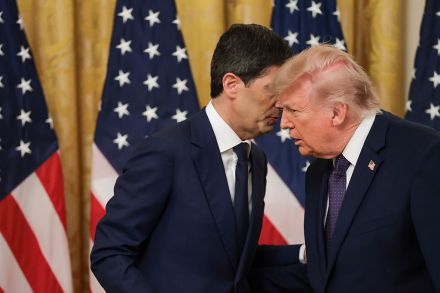
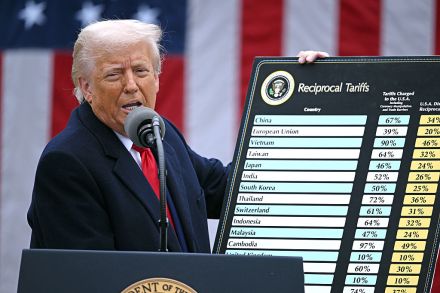
Donald Trump’s State of the Union address, the longest in history, served as a reminder of the relentless will and unstoppable energy he brings to the office of the presidency. In a coup de grâce he humiliated congressional Democrats, securing footage of them remaining seated en masse as they refused to accept that the role of the government is to prioritize American citizens. He gently chastised the Supreme Court judges, assembled in the front row, for declaring his tariff program unlawful last Friday.

MAGAnomics

The Supreme Court is right to reject Trump’s tariffs

At a rally in Georgia on Thursday night, President Trump declared that he couldn’t wait “forever” for the Supreme Court to rule on the legitimacy of his sweeping tariff policy. Whether or not the court was listening to his complaint, forever arrived today as it handed Trump a thumping defeat. It struck a blow not only for fiscal but also political sanity. Government intrusion upon the free enterprise system is bound to prove inimical to prosperity and liberty The language of the ruling was as lapidary as it was persuasive. “President asserts the extraordinary power to unilaterally impose tariffs of unlimited amount, duration and scope,” Chief Justice John Roberts wrote in the 6-3 opinion.

The unfathomable depths of blue-state fraud

“The Somali pirates who ransacked Minnesota remind us that there are large parts of the world where bribery, corruption and lawlessness are the norm, not the exception,” said Donald Trump in his State of the Union address last night, as the Democrats booed and heckled him. Media commentators scoffed at Trump’s inflammatory rhetoric. But the President, who estimated that $19 billion had been lost to fraud in Minnesota alone, is if anything underplaying the scale of the problem. The extent of fraud across blue state (that is, Democrat-led) America is truly monstrous, and each week brings fresh revelations of swindling on a truly epic scale.

fraud

Trump is right about greenhouse gases

Irresponsible Trump, responsible China: that is the message the BBC's climate editor seemed to be sending us by juxtaposing the news that the President had repealed Barack Obama’s "endangerment finding" and that China’s carbon emissions fell slightly last year. Trump’s critics like to portray him as a rogue figure in a world which is otherwise committed to reaching net-zero greenhouse gas emissions. But is there any truth in that? The endangerment finding does not appear to have had any obvious impact on US emissions The endangerment finding was a piece of legalese issued in a 2009 ruling by the Environmental Protection Agency (EPA).

Musk’s SpaceX is worth every penny

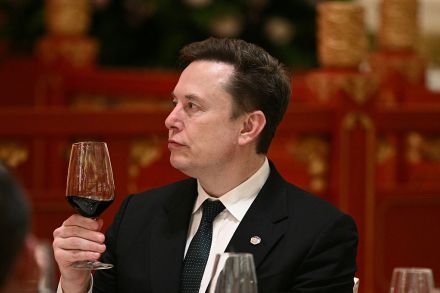
As the hype builds for the reported $1.5 trillion IPO of Elon Musk’s SpaceX later this year, there will be plenty of critics who argue the company’s marketing has more hot air than one of its rockets. It has been claimed by some that the IPO will be worth more than the top seven companies currently listed on the London Stock Exchange – including century-old giants such as Shell, HSBC and AstraZeneca – combined. And yes, sure, there is probably an element of wishful thinking in these reports, as there often is with Musk. But SpaceX also has the potential to become one of the giants of the 21st-century economy and is very likely to prove its worth. SpaceX's will be the biggest IPO of the year.

elon musk spaceX