Economy

  • AAPL

    213.43 (+0.29%)

  • BARC-LN

    1205.7 (-1.46%)

  • NKE

    94.05 (+0.39%)

  • CVX

    152.67 (-1.00%)

  • CRM

    230.27 (-2.34%)

  • INTC

    30.5 (-0.87%)

  • DIS

    100.16 (-0.67%)

  • DOW

    55.79 (-0.82%)

Why Xi thinks he has the upper hand

Taiwan is “the most important issue,” Xi Jinping warned Donald Trump. “If mishandled, the two nations could collide or even come into conflict, pushing the entire China-US relationship into a highly perilous situation,” according to Chinese state media. The contrast with Trump’s comments was striking. Trump had earlier named trade as the most important issue. In opening remarks, the American President stuck to bland flattery, saying he and Xi had a “fantastic relationship,” that Xi was a “great leader” and that “it is an honor to be your friend.” “The relationship between China and the USA is going to be better than ever before,” he insisted.

Spotlight

Featured economics news and data.

Cutting Britain’s giant welfare bill would be an act of kindness

Does having money really matter that much? There are those, usually with quite a bit of it, who want us to care less about materialism. But, unequivocally, money really does matter – not because of any status it supposedly brings, but for the freedom it buys: freedom to choose how we live and how we look after others. Considering this, it seems that the deep disillusionment with mainstream politicians in recent years stems from a protracted and ongoing period of stagnant living standards over which they have presided. But the truth is that the average person has not got poorer since the global financial crisis. They have got a little bit richer. Employment levels are still exceptionally high. And, both historically and internationally, we are a very rich country.

The West can’t afford to shun Russian oil

Donald Trump is a radical foreign-policy innovator. Over the past few decades, the US has tried a range of non-military means to nudge, squeeze and occasionally strangle its adversaries. These range from travel bans and banking restrictions, to export controls and trade limitations. But never has the US – or indeed anyone – tried to use import tariffs as a species of economic sanction. Trump has threatened Vladimir Putin with introducing “secondary sanctions” against countries that import Russian oil – a threat intended to strike at the heart of Russia’s war economy. And on August 4, Trump appeared, for the first time, to make good on that threat.

oil
nationalization

Nationalizing America will cost us dearly

“I have the right to do anything I want to do,” Donald Trump told reporters in the White House cabinet room last month. “I’m the President of the United States.” Other branches of the federal government might disagree, but their representatives are strangely mute. “What Trump wants, Trump gets” is the motto that has defined the first eight months of the President’s second term. The overhaul of global trade? Sorted with an executive order and a pen. Poor job numbers? Fire the messenger, hire your own. Feeling the acute absence of a ballroom? Take “a little walk” on top of your White House, look out at your vast kingdom, and decide where the marble floor and golden beams will go. But domination of the federal government is simply not enough.

Will Trump’s stake sink Intel?

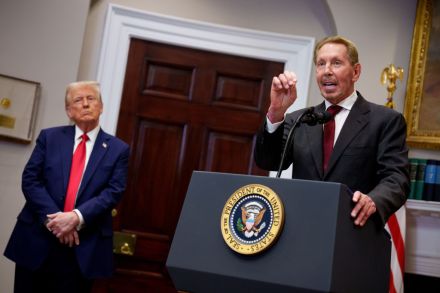
In a move supported by Vermont’s socialist champion, Senator Bernie Sanders, President Donald Trump has arranged for the federal government to become the single largest shareholder of Intel Corporation. All for national interest, according to the White House.Secretary of Commerce Howard Lutnick announced that the deal gives the government “a piece of the action.” Is it in fact a piece of the action, or a disaster to come for the American business community? Created in 1968, Intel is an American multinational technology company that designs, manufactures and sells semiconductor chips and related products. Following its early successes, it has been in decline as a result of bad management decisions for the last 20 years or so.

Donald Trump intel
Lisa Cook

Can Trump fire Lisa Cook for cooking the books?

President’s Trump’s efforts to reign in the administrative state and prod the Federal Reserve to adopt more Trumpian policies took a dramatic turn when he ousted Dr. Lisa D. Cook, an alleged miscreant, from the Federal Reserve’s Board of Governors last week. The drama, and there’s always high drama in Trump World, unfolded after Federal Housing Finance Agency Director Bill Pulte made a criminal referral to the U.S. Department of Justice based on Cook’s apparently falsified mortgage documents for homes in both Ann Arbor, Michigan as well as Atlanta, Georgia. Cook claimed the Ann Arbor house as her primary residence, which would allow her to obtain more favorable financing terms. Just two weeks later, Cook claimed her Atlanta condominium as her primary residence as well.

Trump brothers go mining

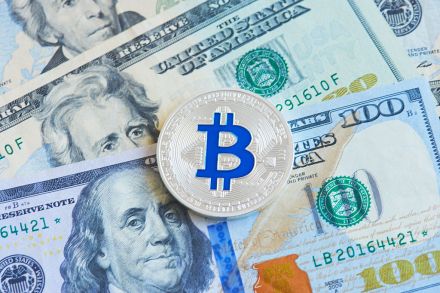
After a day where the very alive President Trump bombed a Venezuelan drugs boat, moved Space Force headquarters out of Colorado because that state has mail-in voting, declared he was sending federal troops into Chicago and claimed that AI generated a video of someone throwing a plastic bag of construction debris out of the window of the White House, it became clear that the real action was going on outside the White House walls, with Trump’s very rich sons. As Cockburn reported yesterday in The Spectator, the Trump Brothers, Don Jr, Eric, and the true genius behind the operations, Barron, had somehow amassed $5 billion in paper wealth thanks to savvy investments, based in no way on shady insider information, in WLFI, the family’s nascent cryptocurrency venture.

Bitcoin

Has college football sold its soul?

While you are typing away and grinding at your 9-5, a 23-year-old college athlete you may have never heard of has pocketed multiple seven figures to play a sport he loves. Oh, and this is just the salary, it doesn’t take into account the outside endorsements that these supposedly amateur athletes of various sports and both genders lock down. Quarterback Carson Beck, 23, for example, is thought to have snagged a cool $3-4 million to move from Georgia to the University of Miami – snubbing the NFL in the process. While Duke’s quarterback Darian Mensah, who is just 20-years-old, reportedly makes $4 million.Don't even ask what Arch Manning, 21, Texas starting quarterback and nephew to Super Bowl winning brothers, Peyton and Eli Manning makes.

Arch Manning

Trump should buy Hooters

In the wake of the US government taking on a 10 percent equity stake in Intel, Commerce Secretary Howard Lutnick is floating the idea of the government investing in defense companies like McDonnell Douglas. “If we are adding fundamental value to your business, I think it’s fair for Donald Trump to think about the American people,” he said. When this news broke last week, Kentucky Senator Rand Paul, the last true living conservative, told Politico, “If conservatives endorse this now, they hand Democrats a blueprint to expand government ownership over the private sector later. Socialism is literally government control of the means of production.” Sure Rand.

Hooters

Vegas’s seedy soul will save Sin City

I vividly remember the first time I saw Las Vegas. It was decades ago, and a friend and I did the classic LA-Vegas mini-road-trip, across the burning desert, arriving in Nevada around dusk. As we crested the final sandy hill, I saw this thing. This glittering neon jewel-box of a city, glowing in the twilight. I fell in love at once, a love that was only confirmed when we actually entered Vegas, and I realized I was motoring down Hugh Hefner Way.That love didn’t quite last, however. Not long ago I returned, and something felt very different. Sadder, somehow. Yes, I was shown a Damien Hirst-designed bedroom with a fridge full of diamonds, but I also saw too much druggy homelessness, and too many stickers that gave me a shock.

Vegas

Young people should drink more, no great story starts with salad

According to a recent Gallup poll, young Americans are drinking less than ever before. Two-thirds of adults aged 18 to 34 now believe even moderate drinking harms their health, up from 30 percent in 2001. Only half say they drink at all, down from 59 percent in 2023, the lowest figure since Gallup began tracking alcohol consumption in 1939. What is happening to young people in America?Possible explanations pile up: a new obsession with health, better information about alcohol’s effects, swapping gin and tonics for weed or vaping, the cruel economics of $18 cocktails, or the quiet lure of staying home, where TikTok and Netflix bring the world to your couch instead of you having to find it in a crowded bar.

Drinking

Trump’s command economy

Donald Trump never made a secret of the fact that he wanted to be a commanding president but it wasn’t clear that it included a command economy. In the past few months, though, Trump has been steadily meddling with it, ranging from his insistence on a 15 percent cut of the profits from his threats against computer chip manufacturers Nvidia and AMD to his threats against the independence of the Federal Reserve – including his peremptory demand that Fed Governor Lisa Cook resign, which she has vowed to resist. Others are not as resistant. It appears that Trump has successfully extorted a cool $10 billion from Intel CEO Lip-Bu Tan whom he has previously derided as in cahoots with China. Trump is depicting his move as a grand bargain that will benefit both sides.

Donald Trump
Cracker Barrel

Will one rotten rebrand spoil Cracker Barrel?

No one thinks the Cracker Barrel rebrand is a particularly good idea. The entire charm of Cracker Barrel lay in the farmhouse attic vibe, the nana’s candy dish assortment in the gift shop and the menu, which served up the best chicken and dumplings or biscuits and gravy and sweet tea possible from a fast-casual chain with horrible wooden chairs. Still, the melodrama surrounding this story, the rising and falling stock prices, the online mocking and gloating, seems a little overblown. Not everything has to be political. Cracker Barrel certainly doesn’t. For those of you who’ve been wandering around the fields with a bucket on your head this week, Cracker Barrel has streamlined.

Sachia Vickery

The US Open OnlyFans star

Sachia Vickery, a 559th-ranked player, lost her qualifying match yesterday, but likely gained new followers from her activity off the court: OnlyFans. That’s right, Vickery charges $12.99 a month for any fan or sexually-charged viewer to subscribe to exclusive content. During an Instagram Q&A this week, she said, “I’m very open-minded and I don’t care what people think of me. It’s also the easiest money I’ve ever made and enjoy doing it.”Clutch your pearls and breathe. Your first thought might be: Does she need money? Why else would an athlete of her stature resort to OnlyFans. Vickery is hardly broke. She made a reported $2 million in 14 years of professional tennis and even cracked the top 100 in 2018.

Can tariffs replace income taxes?

Can tariffs replace income taxes paid by Americans earning an income under $200,000 annually, as President Trump has suggested? We seem to have entered a new world in 2025, or rather, reincarnated an older America whose tax receipts were heavily built on tariff payments. U.S. Secretary of Commerce Howard Lutnick recently stated that tariffs could replace income taxes paid by Americans making up to $150,000 per year. And certain economic nationalists have urged that there is a vital causal connection here worth recalling in an “American system” of tariffs and protectionism, and the growth of American industry. They argue that America’s Gilded Age wasn’t regressive economically; in fact, the country exploded in growth, commerce and inventions.

Tariffs

The Art of the Dealmaker-in-Chief

Who really thought Donald Trump’s America was about to join the stampede of first-world powers promising to recognize Palestine at the United Nations?  "Wow!" He exclaimed this morning on Truth Social. "Canada has just announced that it is backing statehood for Palestine. That will make it very hard for us to make a Trade Deal with them."  All over the world, commentators convinced themselves that Trump’s expression of concern on Monday about "real starvation" in Gaza meant he was pivoting with global opinion and against Israel.  It turns out, however, that Team Trump is not for turning when it comes to the Middle East. Marco Rubio, the US Secretary of State, has accused the countries now embracing Palestinian statehood of falling for "Hamas propaganda".

Trump deals

Did Trump win the US-EU trade negotiations?

Trump has got almost everything he wanted in the trade deal between the United States and the European Union. Goods imported into the US from the EU will now be subject to tariffs of 15 percent - half the rate that Trump had threatened but far higher than existed prior to "Liberation Day" on April 2.  What has Ursula von der Leyen got in return? Nothing at all, other than the punitive tariffs being dropped. She has agreed to lowering tariffs on imports from the EU, in some cases to zero. She has also agreed to the EU buying more products from the US, including liquefied natural gas (LNG), making a mockery of the EU's net zero policy.

The truth about the Trump ‘trade deals’

They say three times makes a pattern. So what should we make of the President’s trade agreements, three of which he confirmed this week, as the August 1 deadline for "reciprocal tariffs” looms?  If there remained any confusion about his agenda, he helpfully laid it out in all caps. “I WILL ONLY LOWER TARIFFS IF A COUNTRY AGREES TO OPEN ITS MARKET. IF NOT, MUCH HIGHER TARIFFS!” he wrote on Truth Social. “USA BUSINESSES WILL BOOM!” Given the size of the lettering, and the similarities to the deals secured with Indonesia, the Philippines and Japan this week, we should take Donald Trump at his word on this one. Put simply: so long as other countries cut taxes for their businesses, he will hike taxes on American businesses ever so slightly less.

trump trade

Trump’s Japan deal is a hollow victory

The reaction of markets to the US trade deal with Japan shows yet again that if you presage bad news with even worse news you can make people pathetically grateful at the outcome. Shares in Toyota surged by 14 percent at the news. Yet why, when the deal will see imports of Japanese cars to the US slapped with tariffs of 15 percent? Because back on "Liberation Day" in April,  Donald Trump announced that Japanese imports would be subject to 24 percent tariffs. Reactions to Trump’s reset in trade relations with the rest of the world have undergone wild swings in recent months. First, markets plunged.

Tariffs

LinkedIn is one big re-education camp

You just graduated college – time to find a job, buck-o. Print out those resumes, and hit the streets hungry. Pass them out to everyone and anyone. Be willing to do what others won’t. Landed your first gig? Show up each morning bright eyed and bushy tailed, no matter how humiliating, and consistently go above and beyond. But most importantly, stay true to yourself. This is the bumper sticker “job advice” boomers have been giving to successive generations for the last 50 years. It’s arguable how useful it ever was, even in their own time. But it’s not until LinkedIn that this contrived work ethic became formalized and permanentized in the digital square – so much so that we’re forced to ask, will we ever have a normal job culture again?

LinkedIn

The Trump administration is practicing Carmen Sandiego economic theory

President Trump sent out another round of passive-aggressive tariff letters to foreign leaders Wednesay, which he posted to Truth Social so the world could marvel at his negotiating prowess. He worded each letter exactly the same, using Find and Replace to change country names, so Cockburn will just quote the Libya letter here: “It is a Great Honor for me to send you this letter in that it demonstrates the strength and commitment of our Trading Relationship, and the fact that the United States of America has agreed to continue working with Libya, despite having a significant Trade Deficit with your great Country. Nevertheless, we have decided to move forward with you, but only with more balanced, and fair, TRADE.

tariffs

Has Trump given up on tariff deadlines?

“TARIFFS WILL START BEING PAID ON AUGUST 1, 2025,” Donald Trump shared on Truth Social this morning. “There will be no change... No extensions will be granted. Thank you for your attention to this matter!” It’s a rather definitive statement from the President. But we’ve been here before. The original 90-day extension of “reciprocal tariffs” (better described as trade deficit figures with a percentage symbol attached) was also supposed to be a hard deadline. The President suggested only last week that there were no plans to push implementation back again. But here we are: a new date, a new deadline and a mixed market reaction.

tariff