Uncategorized

How to end the chaos in college football

For millions of Americans, September not only marks the beginning of fall, it marks the beginning of college football season. The fans pack enormous stadiums, watch on TV by the tens of millions, cheer for their favorite teams and boo their traditional rivals. There are very few fans supporting both Ohio State and Michigan, and neither is supporting Notre Dame. It’s the great American sport.  And it is in deep trouble.  The problem stems from the usual suspects: a few far-reaching court decisions affecting the players, the comatose response of the sport’s ruling body, the NCAA, and the looming threat of government action if private actors can’t solve the problem themselves. So far, those private actors have failed.

college football NIL

The Renoir heist was entirely predictable

Things are tough for French museums right now. A dawn raid on Tuesday at the Musée Renoir in Cagnes-sur-Mer resulted in the theft of two paintings by Renoir worth $10.5 million (another two were stolen but swiftly abandoned). On long term loan from the Musée d’Orsay, the paintings were seized when thieves sliced through the museum's garden fence with an electric saw. Following a spate of thefts from French museums in July, France’s patrimoine is undeniably under threat. The Louvre heist was inspirational While British museums (The Horniman, Pitt Rivers, Ashmolean, Fitzwilliam and occasionally British Museum) busy themselves with the return of their artifacts, the French, it would seem, struggle to keep hold of theirs.

coffee

Coffee-drinking is a cult

Ten years ago, I started getting migraines. They were so bad that when one struck, I babbled nonsense, couldn’t speak, type or write. The swelling in my head, which caused the migraine, was pressing on the language department of my brain. Once recovered, I was confused for days, repeating words three or four times in a row and not quite understanding what was being said to me. This all had to stop immediately, as communication is key to the smooth operation of my life. It was suggested to me that coffee is a common migraine trigger and if I was looking for a culprit I ought to start right there. I immediately cut out the black stuff and the migraines stopped.

We don’t swear like we used to

In the halcyon, innocent year of our lord 2004, there was a minor political scandal, if you can imagine such a thing. Then-Vice President Dick Cheney was questioned by a Democratic senator about his financial ties to a government contractor during a photo op. Cheney’s response was short but far from sweet: the inquisitive senator was told to go “fuck yourself.” A few years later, reminiscing happily about the moment during a radio interview, Cheney doubled down on his mot juste, saying “You’d be surprised by how many people liked that. That’s sort of the best thing I ever did.”  A sad state of affairs indeed, and I’m not talking about the long decline of inter-party discourse. I mean the decline of swearing, in its quality, if not quantity.

How Charles de Gaulle won over Gen Z

It turns out that this summer’s cinematic hero is not Spiderman or even Odysseus, but the French wartime leader Charles de Gaulle who has knocked both Marvel and Homer into a kepi (the French military hat he favored).   De Gaulle, a two-part, six-hour epic directed by Antonin Baudry has been a surprising hit in France and is in demand from all the major international markets, including those of Latin America, India and China. The buzz is remarkable for a foreign-language film starring a person who, although a national hero in his homeland, is not a global household name.

Why the Japanese don’t need fat jabs

“You can never be too rich or too thin”: so said Wallis Simpson, would-be consort to Edward VIII. Or perhaps Dorothy Parker. Or perhaps Joan Rivers. No one really knows. But whoever said it, Japan appears to have had it engraved on its national escutcheon. Japan is officially the world’s thinnest rich country, with an obesity rate of just 4.3 percent of the population. By comparison, it’s 40 percent in the US. A close comparison to Japan is Bangladesh, where the rate is 4.5 percent – but where one in ten people is dangerously undernourished. These are extraordinary statistics. What on earth is going on?  The most reached-for reason is diet. Japanese food, so it is thought, is healthy and lean.

How corporate twaddle makes us less productive

Bandwidth is troubling, because it’s just one of many phrases that assume we are mere cogs in the machine Allow me to totter onto my rickety soapbox for a second, and say: business jargon has gone too far. Buzzwords have become so entrenched into working life that they have, in effect, become a second language. One that, like a much-needed laxative, we are forced to digest to keep daily operations running smoothly. If you don’t use (or at least nod energetically along with) phrases like “low-hanging fruit” or suggest that someone “circle back” so that you can “create synergy,” and instead choose to communicate like an unlobotomized person, you’ll find yourself a virtual pariah.

corporate

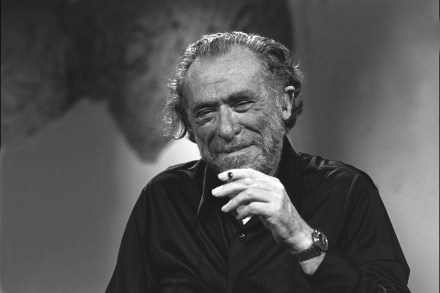
The car crash appeal of Charles Bukowski

My reading experiences with the poet and novelist Charles Bukowski (1920-94), once described by Time magazine as the “laureate of American lowlife,” have taught me an important truth about literature: that characters you hate can be at least as compelling as those you admire.    Take Henry Chinaski, the depressive, alcoholic protagonist of Bukowski’s five semi-autobiographical novels (he wrote six in total, as well as hundreds of poems and short stories). One of these in particular I have read so many times that the jacket is falling off: Women (1978), in which Bukowski’s alter-ego Chinaski enjoys – if that’s the right word – the rewards of literary fame after decades of obscurity.

What do changing emoji trends tell us about society?  

When did you, Spectator readers, last send an emoji in a text, DM or, gasp, email? I’ve just looked through the last messages I’ve sent and I sent a weeping smiley face to my wife last night while we were discussing Colin Firth’s singing in the film of Mamma Mia! (To be honest, anyone who has suffered through Firth murdering “My Last Summer” might use considerably stronger emojis than that.) Yet as a 44-year-old man, I can also concede that my own usage of emojis in my written communications is not as prevalent as that as my 10-year-old daughter Rose, who is an ardent user of them whenever she gets hold of my or her mother’s telephone.

emoji emojis

Why I need literary Viagra

“No man is a success to himself” wrote Graham Greene. I am feeling this acutely, as I turn 60 on September 1st and enter the Decade of Reckoning for uncomfortable life truths. As somebody whose literary ambition was only wanting to be a bestselling English social novelist, it’s been creeping up on me that if one hasn't written that Big Novel by one's sixth decade, then perhaps throwing in the quill is the only dignified thing to do.   In a desk drawer in my study, there is a cream envelope, postmarked September 1987. That August, I found myself sitting two tables from the Graham Greene in Chez Feliz, a fish restaurant just inside the walls of the old Antibes port.  He was 82, and lunching with his mistress Yvonne Cloetta.

AI has taken my job

This week I was replaced by AI. I saw it coming, but it didn’t make the news any easier to deal with. To be honest, it terrifies me for the future of our species. If that sounds a bit over the top, hear me out. I am a writer. Not only that, I am a commercially successful one. Although you probably haven’t heard of me, I’ve published more than 300 short stories in women’s magazines over the past 15 years. From ghost stories in Woman’s Weekly to tales of romance in Take a Break Fiction Feast, I write them all. Sorry – wrote.  “Dear Geoff,” the email said. “Going forward, our in-house team will be using AI tools to compile future editions, but we thank you for your many contributions to the magazine over the years. Kind regards, Rebecca.

Sorry, I won’t try to remember your name

As if there wasn’t enough apocalyptic news to keep abreast of, studies show that forgetfulness is on the rise. A cocktail of causes is to blame: microplastics clogging the brain, post-Covid symptoms, Dickensian air quality... whatever the culprit, our memories are taking a pummeling. Call me an inveterate optimist, but I’m glad to have the company. I had name amnesia before it was cool, as the kids say. Place me in front of a new neighbor or colleague, and I can glad-hand, smile and make friends with the best of them. What I can’t for the life of me do is recall that person’s name. (Too busy being paranoid about leaving specks of spit on their tie, or hiding the Mark Rothko installations of my armpit stains.

Drop the wacky wedding stunts

Picture the scene: it’s midsummer, a bucolic wedding is mid-flow, the bride is radiant, the groom pristine. They stand above their guests in a doorway while caterers ascend the stone staircase carrying the ceremonial wedding cake. But wait! One of the caterers is wobbling! The cake is slipping! The caterer reaches for it but it falls from his hands and tumbles to the ground: splat. A dog appears from nowhere and begins to eat the crumbs. And all of it, every excruciating moment, is captured on camera. Is this one of my night terrors? Well, yes, but it was also the wedding of Anna Boden – the eldest daughter of Boden clothing founder Johnnie – to her now husband Oliver last week.

Dostoevsky is a dreadful writer

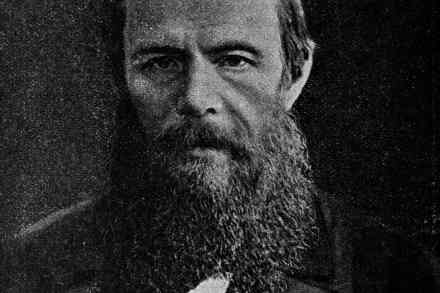
On the back of my copy of Fyodor Dostoevsky's 1869 novel The Idiot, there’s a quote from the English philosopher A.C. Grayling that tells you what to think of it. "One of the most excoriating, compelling and remarkable books ever written," it reads, "and without question one of the greatest." That "without question" bothered me. Why assume that every classic deserves its reputation? We should make up our own minds after having read one, as we do with any other book.   That wasn’t the only reason why I treated Grayling’s claims with skepticism as I edged my way into this gargantuan novel (I can’t remember exactly when that was, but I know I was a much younger man at the time).

The perfect sycophancy of an AI running coach

If there’s one thing more boring than people telling you about their dreams, it’s people telling you about their exercise. And if there’s one thing more boring than people telling you about their exercise, it’s people telling you about how they use AI. With that in mind, here’s how I’ve been using ChatGPT as my running coach. Stick with me.  Most runners now use an app called Runna, which creates personalized runs for you, according to your target race date, time you have to train, and what not. One friend who has recently started running – "I could barely drag my lardy arse around 5k (3 miles) at 6:00/km" – managed to run a 55-minute 10K after just two months using it.

Longevity is not the meaning of life

So you want to live forever? Excellent. You’ve come to the right place. Here at Gilgamesh-Makropulos Limited, we know a thing or two about immortality. First, we need to track your metrics: biological age versus chronological age, average number of erections per night, metabolic health, maximal oxygen consumption, heart rate variability, stool volume and color and salivary flow rate. Sound good? My assistant will fetch the paperwork.  This might seem like the beginning of a potboiler sci-fi rip-off. But it’s actually closer to our reality than Bernard Williams would have liked. While we still haven’t achieved immortality, the cult of "longevity" has become something of a gold rush in recent years.

The French love affair with Scotland

France’s summer smash at the cinema is set to be a comedy called The Perfects. It opens next week with an all-star cast that includes Scottish actor Alan Cumming. The Perfects are a family of con-artists who flee France to escape the police and they end up in Scotland where madcap adventures in tartan ensue. It’s further proof that France can’t get enough of Bonnie Scotland. Films, television documentaries, newspaper features and even a puff piece earlier this month on the primetime lunchtime news about a visit to the most isolated pub in Scotland.  Billy Connolly once famously likened Scottish folk singers to ‘singing shortbread tins," churning out clichéd lyrics about mountains, heather and a Roamin' in the Gloamin.’ "Garbage!

scotland

Meet my snooty AI sommelier

My grandparents’ home was a proper house, on the cusp of Hampstead Heath in North London, with roses and flagstones at the front. It was the sort that looked like it housed a robust wine collection – solid on account of good, aged European bottles, bought at a time when standards were, one assumes, higher.  There was one bottle in my grandfather’s possession that came with particular fanfare: a 1974 Bordeaux whose label was so far gone you couldn’t see exactly what it was. As a treat, I arranged to have the sommelier of the Connaught Hotel examine and open it. Once the cork gave way, a thud of brown sediment rocked the bottle. It was decanted and it breathed – inasmuch as a long-dead thing can breathe. Still hopeful, we tried the sherry-looking stuff – and it was nasty.

Why are we still seduced by wealth?

Show me the money. Show it to me in the dedicated pages of national newspapers, in documentaries and TV series and on social media, where influencers make their money by showing me the money. Let me revel in all the clichés we’re offered – the poorer man’s idea of wealth, defined by supercars and mega-yachts, houses pent and country, dinky handbags and preposterous watches, fat cigars, deep tans, Tic Tac teeth and honed abs, for even the body is performative of money these days. Tom Wolfe would be slack-jawed.  Forty years ago he coined the sadly forgotten term "plutography," to capture the then prevailing trend for the publishing business to offer readers a monthly dose of full-color insight into how the other half lived.

The politically incorrect heyday of 2000s gaming

Some years ago, a childhood friend of mine was playing the racing game TOCA on the Xbox. It had, for its time, a decent line in realistic car collisions, allowing an inept driver to ruin the race of a competitor. Such was my friend’s dexterity, an irate Australian man said he hoped my friend would get "nonced."  Character building, as my mom would say, though I doubt she’d be entirely approving of the rambunctious culture of online gaming during my teenage years. Playing online in those days meant exposing yourself to commentary that could at best be called "robust." And luckily for worried mothers, the government is here to help.