Uncategorized

The dangerous fantasy of GTA VI

Back in 2001, Grand Theft Auto III let players do something that shocked parents and thrilled teenage boys. You could pick up a prostitute in a stolen car, kill her and take your money back. Critics were outraged. Predictably, sales soared. The newly released Grand Theft Auto VI, out today, has done away with prostitutes. That is a marked departure from previous editions. This latest iteration of the game has two playable main characters, Jason and Lucia. Intimacy in the game is limited only to them. Players can shape their relationship through activities like going on dates, robbing banks together and, presumably, sex. The genius of GTA is that it supplies the unavailable.


Long live honeytraps!

By now you’ve surely seen the photographs. In one, a silver-haired man in a black leather jacket sits beside a slim, attractive woman in a long white coat. In another the same pair are raising their glasses in a toast. The images could not be more anodyne, the story behind them could scarcely be more explosive.  The man is Jensen Huang, 63, the boss of Nvidia, whose chips power the AI revolution – and have made him worth more than $150 billion. The woman is Alice Huang (no relation), a Chinese businesswoman who looks to be in her forties. Jensen has now admitted being unfaithful to his wife of more than four decades, the third person is presumably Alice.

The Democrats’ Texas blowout was inevitable

No one who paid even five minutes of attention to Texas politics this fall should be surprised by tonight’s results. James Talarico conducted a normal, respectable campaign with good voter outreach, and focused heavily on affordability issues. He ran it slickly, but it was nothing special. More than anything, he was fortunate in his choice of opponents.  Ken Paxton, in addition to being personally unappealing, was the most overtly self-dealing political candidate for major national office in a generation, and couldn't hide his paper trail. He also ran the most incompetent campaign imaginable, attempting to paint Talarico as a weirdo sex-freak pervert, when Talarico is actually just a mildly woke run-of-the-mill liberal.

texas talarico

Event: Socialism in the City

We’re sorry to announce that we have had to postpone this event. It will no longer take place on Thursday November 12 in Manhattan. If you are interested in attending the event, please fill out the form below and you will be notified when a new date is announced.

What explains Haley Stevens’s ‘despicable betrayal’ of Abdul El-Sayed?

That was fast. One moment Representative Haley Stevens, who was defeated by Abdul El-Sayed in the primary for US Senate in Michigan, was supposed to mend fences with the Democratic candidate at a party unity event in Detroit. The next she’s endorsing Mike Rogers, his Republican opponent. A chaotic press conference on Sunday ended with Stevens declaring that no candidate is “perfect” and being heckled as a “traitor” before she was hustled away by the Rogers camp.   Why did she do it? One answer is the virago theory. Angered by her loss, she’s having a public meltdown. Another is that El-Sayed treated her poorly. He’s hardly short on arrogance and Stevens had her fill of it.

haley stevens

The town where Europe committed suicide

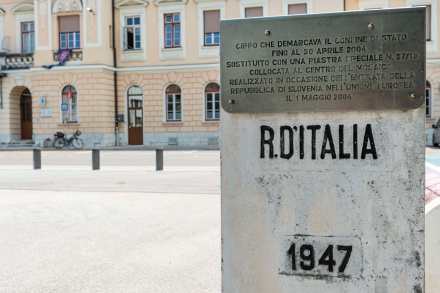
Have you ever heard of Gorizia? Probably not, and yet it is decidedly pretty. It sits in the far northeastern corner of Italy, where the Latin map frays into the Slavic. The center is all pink arcades, pistachio green shutters, and palazzi painted in faded yellow. Beyond everything is the great pale wall of the Julian Alps.  The town has had at least three names – Gorizia, Görz, Gorica – because for centuries it was Habsburg, then Austro-Hungarian. That is to say: it was a quintessentially multilingual city, full of Italians, Slovenes, Friulians, Germans and Jews, halfway between Trieste and Vienna. Some called it the “Austrian Nice.” Imperial officials came here to die of tranquil old age.

gorizia

Watch: Murdoch’s World

On Wednesday, October 28 in Manhattan, we hosted Murdoch’s World: The empire that changed news, and you can watch the live recording here. Rupert Murdoch is one of the most influential media magnates in modern history. Through his distinctive character and unparalleled command of conservative media, he has shaped the political narratives through which millions understand the world. But how did he reach a position of such unprecedented influence? What did Murdoch see that others didn’t? And has he changed journalism in ways that will endure?

Omar family values

Penny for the thoughts of Ilhan Omar, the “Squad” member and Democratic Congresswoman for Minnesota’s 5th district, who finds herself the object of affection for at least two of Donald Trump’s government departments. Omar said Wednesday that she plans to move out of her DC home, which was searched by around two dozen Department of Homeland Security agents in the early hours of October 12. Cockburn could retread the well-worn path about how Trump 2.0 was supposed to augur the end of “lawfare” and the weaponization of government, but he’ll spare you. The probe into Omar, according to the Washington Post, is believed to center on investigating whether she or her father falsified her date of birth in order to secure US citizenship.

omar

Lola-Fleur and the long tradition of radical babes

On Monday night, with the glass still being swept up from the latest événements, French viewers were offered a spectacle almost as compelling as the riots. A young, blonde, radical left-wing woman appeared on France's La Grande Confrontation TV show and gave a performance mixing, in equal parts, conviction, narcissism, privilege, contempt and, at best, a highly selective grasp of history. And all delivered from a face of transfixing beauty. The privileged young blonde white woman was defending the poor brown boys Her name is Lola-Fleur Whittaker. She is 23, and a Sciences Po student who stood for Mélenchon's La France Insoumise in the Paris municipals this spring.

How bare knuckle fighting took over boxing

Anyone who watches the former IBF featherweight and Commonwealth boxing champion Lee Selby enter the ring for his next big fight, in London in November, may be forgiven for thinking all that being bashed around the head has left him with a touch of amnesia. It will seem as though he’s forgotten his gloves.  In fact Selby – who remains as sharp as his jab – is simply partaking in his second career, as a bare knuckle boxer. For those not up with the increasingly esoteric world of sport, the sweet science of bruising, as traditional boxing was once called, is fast being over-shadowed by the sweet science of blood-letting.

Kimberly Guilfoyle and the MAGA swamp

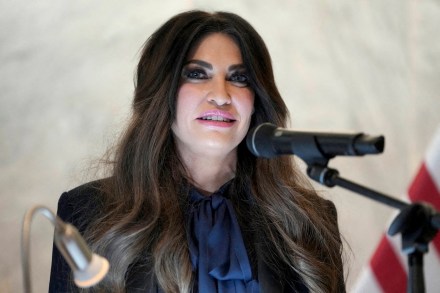
After the midterm elections, a resurgent Democratic party is likely to use its new oversight powers to peel back the Trump administration’s layers of self-dealing. “Winter is coming,” a prominent Washington corporate lobbyist told me this week.  The lobbyist thinks the firing of Kimberly Guilfoyle as ambassador to Greece represents one of the rare times the administration’s corruption problems have broken through to average Americans. Guilfoyle had texted a donor asking him to pay off her $100,000 Amex bill, according to the Wall Street Journal. “Honey please,” was the rather pathetic plea that accompanied the request.

Email signatures are performative slop

Your last impression, as the sages tell us, is your lasting impression. Nowhere is this truer than the digital world, where email signatures – the little phrases or miscellanea that sit under each message proper – leave a particular taste in the mouth. You can file these flavors under the good, the bad and the baffling. (And the deadly; but we’ll get to that.) Let’s start with the good. One of my semi-regular contacts ends their missives by highlighting the book they’re currently reading. That’s a touch a rampant bibliophile can get behind. It allows me to coo “Aha, that looks like something I should add to the to-be-read pile,” or sneer at their taste as midwit piffle.

Keep American football in America

The United Kingdom is no longer a safe place for US Air Force bombers, it seems. But American football is another matter. Today, at the Tottenham Hotspur Stadium in one of London’s most ethnically diverse neighborhoods, the Jacksonville Jaguars will play the Philadelphia Eagles. It is almost certain to be a large scale bore-athon and another disappointment. Take it from a Londoner who has been to several NFL fixtures in my home city: it don’t work The game is one of nine NFL internationals this season – three in the UK, one in Australia, France, Spain, Germany, Brazil and Mexico. There’ll be all the razzmatazz: fireworks, cheerleaders, half-time shows. The TV commentators will hype up the foreign location.

Is Digger Tom Cruise’s biggest flop yet?

Tom Cruise must be the most divisive big star in Hollywood. For everyone who salutes him as the last old-school movie icon, who has brought joy to millions, even billions, worldwide over a 40-year career, there are others who sneer at his Scientology faith, his supposed weirdness and many of the pictures that he has made.   But his latest film Digger, directed by Alejandro González Iñárritu, is something else altogether, and a rare example of where a picture’s obvious flop status does not mean that it is an uninteresting piece of cinema. Quite the reverse.

Digger

Welcome to the age of centaurs

I’m watching my old friend Liam break the caramel on his crème brûlée, in a discreet restaurant in the hills above Nice. Liam is in his mid-fifties now: rugged and well-set, possessed of the affable, intellectual confidence of a man who once played chess at the very highest level. “Liam” is, of course, not his real name. He is a successful but highly private businessman, and he wants to stay that way. ‘Eventually we called it centaur chess, and nobody thought it was cheating. It was accepted’ Our surroundings are impossibly tranquil, yet the world beyond is in turmoil, not least because of AI. And my friend Liam knows all about AI, indeed he thinks his experiences with AI and chess have a lesson for the rest of us. And he has a story to illustrate his thesis.

Lithuania tells America to move in

On Monday, President Trump was asked whether the US would consider a permanent military base in Lithuania. “They are friends of mine. They are great people. So we will certainly look at it.” That was enough encouragement for Lithuanian’s Prime Minister Mindaugas Sinkevičius, who then announced Lithuania would cover its cost. “@POTUS only needs to make a political decision and Lithuania is ready to cover the associated costs. ”, he announced on X. This is not simply another smaller European country keen on more American security guarantees.

lithuania

Inside the church of pipe smoking

I am a smoker. I can never be sure of the reaction I will get to those words nowadays, though I have hope that Spectator readers are more receptive than most. Anyway, in my case it’s somewhat of an understatement: I worship the goddess Nicotiana. Or, as J. M. Barrie put it: “My Lady Nicotine.” Compton Mackenzie had it, simply, as “Sublime Tobacco.” And for any vegetarians among you, there’s always Frank Zappa’s “my favorite vegetable."  I enjoy many forms of tobacco consumption, but having recently read Thomas Sydenham’s description of a tobacco smoke enema, I am convinced that not all methods are created equal. Cigars? Enjoyable, but exorbitantly expensive. Cigarettes?

Watch: The Nixon Revival

The Spectator held its first event in Manhattan on Wednesday September 30 — and you can watch the full discussion above. Known to many as “Tricky Dick,” Richard Nixon has often had his legacy reduced to the scandal that brought his presidency crashing down: a break-in at the Democratic National Committee headquarters, a criminal cover-up, then his resignation. But what if his story is far more complicated? Why has J.D. Vance described Nixon as a “new icon” for young conservatives? And why do some Gen Zers now see him as an “America First” populist pioneer?

Meet the adult toddlers who play with toys

A colleague of mine has a sizable collection of sportscars. He has, he notes, every expression of his favorite, the Lotus Esprit. He lovingly cleans them, occasionally changes up the way they’re displayed. What he might then jokingly add is just how easy this is. The biggest of his cars is just a few inches long. They’re models, of the kind that small children might push over the carpet making “brrm, brrm” noises, once they’ve passed out of what the toymakers call the “bash and crash” phase, when motorway carnage is the name of the game.   What might appear strange to an older generation – overlooking their own love of train sets – is that this mid-life interest in toys is not unusual.

We don’t need more Austen adaptations. Or do we?

It’s a shame that Jane Austen can’t profit from selling the adaptation rights to her novels. In her own lifetime, she made but a modest living as a writer. Today, she would be fabulously wealthy.   As it is, the copyright has long expired, so it’s all fair game. In the last three decades alone, Austen’s stories have spawned over a dozen adaptations.