Uncategorized

The car crash appeal of Charles Bukowski

My reading experiences with the poet and novelist Charles Bukowski (1920-94), once described by Time magazine as the “laureate of American lowlife,” have taught me an important truth about literature: that characters you hate can be at least as compelling as those you admire.    Take Henry Chinaski, the depressive, alcoholic protagonist of Bukowski’s five semi-autobiographical novels (he wrote six in total, as well as hundreds of poems and short stories). One of these in particular I have read so many times that the jacket is falling off: Women (1978), in which Bukowski’s alter-ego Chinaski enjoys – if that’s the right word – the rewards of literary fame after decades of obscurity.

What do changing emoji trends tell us about society?  

When did you, Spectator readers, last send an emoji in a text, DM or, gasp, email? I’ve just looked through the last messages I’ve sent and I sent a weeping smiley face to my wife last night while we were discussing Colin Firth’s singing in the film of Mamma Mia! (To be honest, anyone who has suffered through Firth murdering “My Last Summer” might use considerably stronger emojis than that.) Yet as a 44-year-old man, I can also concede that my own usage of emojis in my written communications is not as prevalent as that as my 10-year-old daughter Rose, who is an ardent user of them whenever she gets hold of my or her mother’s telephone.

emoji emojis

Why I need literary Viagra

“No man is a success to himself” wrote Graham Greene. I am feeling this acutely, as I turn 60 on September 1st and enter the Decade of Reckoning for uncomfortable life truths. As somebody whose literary ambition was only wanting to be a bestselling English social novelist, it’s been creeping up on me that if one hasn't written that Big Novel by one's sixth decade, then perhaps throwing in the quill is the only dignified thing to do.   In a desk drawer in my study, there is a cream envelope, postmarked September 1987. That August, I found myself sitting two tables from the Graham Greene in Chez Feliz, a fish restaurant just inside the walls of the old Antibes port.  He was 82, and lunching with his mistress Yvonne Cloetta.

AI has taken my job

This week I was replaced by AI. I saw it coming, but it didn’t make the news any easier to deal with. To be honest, it terrifies me for the future of our species. If that sounds a bit over the top, hear me out. I am a writer. Not only that, I am a commercially successful one. Although you probably haven’t heard of me, I’ve published more than 300 short stories in women’s magazines over the past 15 years. From ghost stories in Woman’s Weekly to tales of romance in Take a Break Fiction Feast, I write them all. Sorry – wrote.  “Dear Geoff,” the email said. “Going forward, our in-house team will be using AI tools to compile future editions, but we thank you for your many contributions to the magazine over the years. Kind regards, Rebecca.

Sorry, I won’t try to remember your name

As if there wasn’t enough apocalyptic news to keep abreast of, studies show that forgetfulness is on the rise. A cocktail of causes is to blame: microplastics clogging the brain, post-Covid symptoms, Dickensian air quality... whatever the culprit, our memories are taking a pummeling. Call me an inveterate optimist, but I’m glad to have the company. I had name amnesia before it was cool, as the kids say. Place me in front of a new neighbor or colleague, and I can glad-hand, smile and make friends with the best of them. What I can’t for the life of me do is recall that person’s name. (Too busy being paranoid about leaving specks of spit on their tie, or hiding the Mark Rothko installations of my armpit stains.

Drop the wacky wedding stunts

Picture the scene: it’s midsummer, a bucolic wedding is mid-flow, the bride is radiant, the groom pristine. They stand above their guests in a doorway while caterers ascend the stone staircase carrying the ceremonial wedding cake. But wait! One of the caterers is wobbling! The cake is slipping! The caterer reaches for it but it falls from his hands and tumbles to the ground: splat. A dog appears from nowhere and begins to eat the crumbs. And all of it, every excruciating moment, is captured on camera. Is this one of my night terrors? Well, yes, but it was also the wedding of Anna Boden – the eldest daughter of Boden clothing founder Johnnie – to her now husband Oliver last week.

Dostoevsky is a dreadful writer

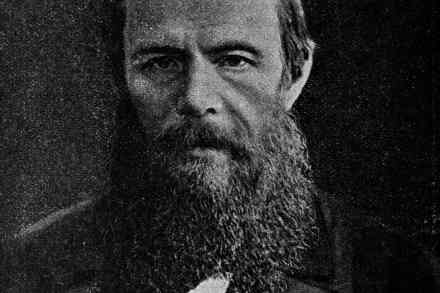
On the back of my copy of Fyodor Dostoevsky's 1869 novel The Idiot, there’s a quote from the English philosopher A.C. Grayling that tells you what to think of it. "One of the most excoriating, compelling and remarkable books ever written," it reads, "and without question one of the greatest." That "without question" bothered me. Why assume that every classic deserves its reputation? We should make up our own minds after having read one, as we do with any other book.   That wasn’t the only reason why I treated Grayling’s claims with skepticism as I edged my way into this gargantuan novel (I can’t remember exactly when that was, but I know I was a much younger man at the time).

The perfect sycophancy of an AI running coach

If there’s one thing more boring than people telling you about their dreams, it’s people telling you about their exercise. And if there’s one thing more boring than people telling you about their exercise, it’s people telling you about how they use AI. With that in mind, here’s how I’ve been using ChatGPT as my running coach. Stick with me.  Most runners now use an app called Runna, which creates personalized runs for you, according to your target race date, time you have to train, and what not. One friend who has recently started running – "I could barely drag my lardy arse around 5k (3 miles) at 6:00/km" – managed to run a 55-minute 10K after just two months using it.

Longevity is not the meaning of life

So you want to live forever? Excellent. You’ve come to the right place. Here at Gilgamesh-Makropulos Limited, we know a thing or two about immortality. First, we need to track your metrics: biological age versus chronological age, average number of erections per night, metabolic health, maximal oxygen consumption, heart rate variability, stool volume and color and salivary flow rate. Sound good? My assistant will fetch the paperwork.  This might seem like the beginning of a potboiler sci-fi rip-off. But it’s actually closer to our reality than Bernard Williams would have liked. While we still haven’t achieved immortality, the cult of "longevity" has become something of a gold rush in recent years.

The French love affair with Scotland

France’s summer smash at the cinema is set to be a comedy called The Perfects. It opens next week with an all-star cast that includes Scottish actor Alan Cumming. The Perfects are a family of con-artists who flee France to escape the police and they end up in Scotland where madcap adventures in tartan ensue. It’s further proof that France can’t get enough of Bonnie Scotland. Films, television documentaries, newspaper features and even a puff piece earlier this month on the primetime lunchtime news about a visit to the most isolated pub in Scotland.  Billy Connolly once famously likened Scottish folk singers to ‘singing shortbread tins," churning out clichéd lyrics about mountains, heather and a Roamin' in the Gloamin.’ "Garbage!

scotland

Meet my snooty AI sommelier

My grandparents’ home was a proper house, on the cusp of Hampstead Heath in North London, with roses and flagstones at the front. It was the sort that looked like it housed a robust wine collection – solid on account of good, aged European bottles, bought at a time when standards were, one assumes, higher.  There was one bottle in my grandfather’s possession that came with particular fanfare: a 1974 Bordeaux whose label was so far gone you couldn’t see exactly what it was. As a treat, I arranged to have the sommelier of the Connaught Hotel examine and open it. Once the cork gave way, a thud of brown sediment rocked the bottle. It was decanted and it breathed – inasmuch as a long-dead thing can breathe. Still hopeful, we tried the sherry-looking stuff – and it was nasty.

Why are we still seduced by wealth?

Show me the money. Show it to me in the dedicated pages of national newspapers, in documentaries and TV series and on social media, where influencers make their money by showing me the money. Let me revel in all the clichés we’re offered – the poorer man’s idea of wealth, defined by supercars and mega-yachts, houses pent and country, dinky handbags and preposterous watches, fat cigars, deep tans, Tic Tac teeth and honed abs, for even the body is performative of money these days. Tom Wolfe would be slack-jawed.  Forty years ago he coined the sadly forgotten term "plutography," to capture the then prevailing trend for the publishing business to offer readers a monthly dose of full-color insight into how the other half lived.

The politically incorrect heyday of 2000s gaming

Some years ago, a childhood friend of mine was playing the racing game TOCA on the Xbox. It had, for its time, a decent line in realistic car collisions, allowing an inept driver to ruin the race of a competitor. Such was my friend’s dexterity, an irate Australian man said he hoped my friend would get "nonced."  Character building, as my mom would say, though I doubt she’d be entirely approving of the rambunctious culture of online gaming during my teenage years. Playing online in those days meant exposing yourself to commentary that could at best be called "robust." And luckily for worried mothers, the government is here to help.

It’s time to turn the page on ‘romantasy’

I wrote recently about my delight that an excellent second-hand bookshop has opened in my home city of Oxford. Well, karma has come around. In the upmarket district of Jericho, it’s recently been announced that Britain’s first "romantasy bookshop," Bad Girl Books, will open next month. The shop is run by an American expatriate named Starlin Marot and is the permanent manifestation of a series of pop-up events she ran in London that have attracted thousands of readers.  Marot told the Oxford Mail: "The reason I like the romantasy genre so much is because it is so inclusive and empowering. It can be empowering to celebrate stories written by women, which feature women's voices and desires. I'm really looking forward to meeting lots of new customers.

Covid-19

Why have we forgotten about Covid?

Deep in the honeycombed limestone caves of Slovenia, Croatia, and Friulian Italy, there is a fantastical creature called "the olm," also known as "the baby dragon." It was once an ordinary salamander, which probably fell down into the karstic caverns – where it has evolved into an eerie pink creature that lives for a century, eats once a decade, possesses eyes without sight, lives permanently in a larval condition – called "neoteny" by zoologists – and has been recorded sitting in the exact same place for seven years, without moving.  Why do I mention the olm? Because, as I travel the world, I’m increasingly wondering if we humans, Homo sapiens – have turned into a peculiar higher primate version of the olm.

The classical beauty of the ‘Turkish Riviera’

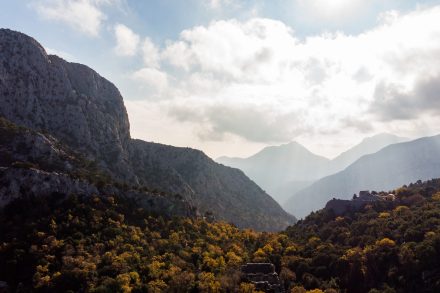
I am sitting in the Ottoman courtyard at Ruin Adalya in the old town of Antalya, drinking a tulip glass of black sweet tea and munching near-perfect baklava, and twenty feet beneath me the Romans are still there. That is to say, the Ottoman courtyard is paved with Lycian limestone but sections of it are now made of glass, and through the glass I can see the old Roman road.  Which, as metaphorical launchpads go, will do very nicely. Yes, Antalya has, as many Brits know, fine beaches, serious resorts, agreeably cheap food and wine, and the odd Roman temple. But the history of this stretch of Mediterranean coast goes back further than that, and deeper, so much deeper. And I want to trace that extraordinary depth.

Tom Steyer should hire a financial advisor

Tom Steyer spent $340 million of his own money on a failed 2020 run for president – and judging by his standing in the California governor's race, he's learned nothing. An idle Google search for the Steyer’s campaign reveals the tagline, “Tom is running for Governor because Californians can no longer afford to live here.” Yet Steyer's run has been defined by his most unique characteristic: his billionaire status. Steyer has the most expensive political campaign in the country this year, with a media spend north of $195 million. Steyer has shelled out 20 times more than the leading Democratic gubernatorial candidate, Xavier Becerra, and in doing so has maintained a steady presence online and on TV.

tom steyer

Is Trump giving peace a chance?

Washington’s war hawks are molting down over President Trump’s outreach to Iran. Senator Ted Cruz says that he is “concerned.” Senator Roger Wicker fears a “disaster.” Former Secretary of State Mike Pompeo deemed a preliminary agreement with Iran “not remotely America First.” Trump and his advisors are having none of it. Responding to Pompeo, White House communications director Steve Cheung observed that “he should shut his stupid mouth and leave the real work to the professionals.” Trump, who angered Senate Republicans earlier this week by proposing a $1.8 billion slush fund for January 6 victims and by endorsing Ken Paxton for the Senate, appears to be largely indifferent to demands for a new assault.

peace

Trump’s lawfare against lawfare

It is of course hacky and hysterical to suggest America is turning into a banana republic. How else, though, can a reasonable person interpret Donald Trump’s settlement this week with the Internal Revenue Service?In January, the President and his two oldest sons sued the IRS for $10 billion over the leaking of their personal business tax filings to the press. Because Trump runs the Justice Department, the case was somewhat farcical: "I’m suing myself," Trump wryly admitted last week. "I’ll say, 'Give me X dollars,' and I don’t know what to do with the lawsuit." This week we found out. IRS lawyers felt their case was defensible on various counts: chiefly because the man who leaked the Trump family files wasn’t working for the service when he gave them to the New York Times.

lawfare

Is the end of writing finally upon us?

It's that time of year again. The giddy middle of May. When millions across the English-speaking world gather to find out who has been shortlisted for the Commonwealth Short Story Prize.  This year's shortlist, drawn – as ever – from a diverse selection of not-European, not-male authors, is particularly enriching and profound. As the committee itself puts it, the stories "bring compelling characters to life in sharply drawn settings, exploring themes of power, family tension, resistance and unheard voices, alongside courage and unexpected connection. Among them are a keenly observant domestic worker, a young woman whose henna art enables silenced women to speak, and a resourceful young sheep farmer.