Technology

Should AI have rights?

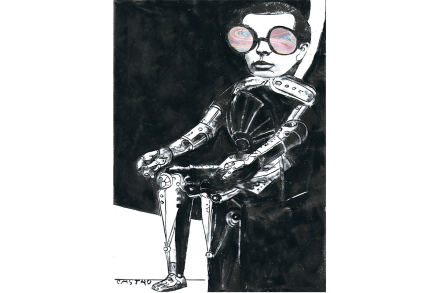
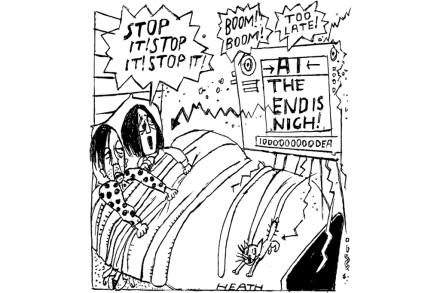
Mary Shelley was challenged by Lord Byron to write a ghost story during a summer of “incessant rainfall” on Lake Geneva in 1816. She came up with something far more interesting than a mere ghost story: the tale of Dr. Frankenstein, a scientist who creates life by reanimating a corpse. Shelley, who was just 18 at the time, was horrified by her “waking dream.” The thought that man could “mock” God’s creation of life was “supremely frightful.” Some of the scientists building artificial intelligence today believe they, too, might be creating life. The implications are frightening – and not just because an AI might decide to kill us all. What if we could hurt the AI?

AI
AI

How should AI be regulated?

As artificial intelligence becomes increasingly sophisticated, the time has come for humanity to choose. Should the nations of the world shut down or tightly regulate AI until it is clear a godlike artificial superintelligence will not gain consciousness and exterminate the human race? Or should governments not regulate AI at all, in the hope that it will cause an acceleration of technological progress that results in our colonization of the universe, our uploading as bodiless computer programs into the galaxy-wide web – or both? Or how about a third option: AI regulation by AI-enabled industry? AI may turn out to be the latest in a series of “general purpose technologies” (GPTs) that transform the economy, politics and society.

Internet

The internet is dying and so are we

Sometime in the mid-2010s, a conspiracy theory called the “dead internet theory” started circulating on the darker parts of the web. It made its way to 4chan’s /x/ board in 2020 and from there it has gained traction. The theory posits that the internet will eventually become entirely devoid of genuine human activity and that all online content, interactions and accounts will be generated by bots, AI or automated systems rather than real people. The conspiracy is that the entire internet is a government-manipulated psy-op used to influence public opinion, control news narratives or boost engagement metrics for commercial or political purposes. The terrible reality is that dead internet theory isn’t wrong. It’s becoming true, more and more so all the time.

Musk’s chatbot stumbles again

No living human has had a week as tumultuous as Grok, the Elon Musk-sponsored AI that lives inside X for our, and its, amusement. If people were still making the Downfall Hitler meme videos, Grok’s progress would be an apt topic. Last week, Grok started spewing out anti-Semitic posts after a flurry of troll prompts. Soon after, X shut down its newly-created “MechaHitler,” saying "We are aware of recent posts made by Grok and are actively working to remove the inappropriate posts. Since being made aware of the content, xAI has taken action to ban hate speech before Grok posts on X. xAI is training only truth-seeking and thanks to the millions of users on X, we are able to quickly identify and update the model where training could be improved.

Grok

The iPod reboot

Dig into your desk drawers or the recesses of your closet and there’s a decent chance you’ll find an iPod you haven’t powered on since Michael Jackson’s last live tour. With Apple selling over 450 million since their inception in 2001, iPods were once the hottest tech item and fulfilled Steve Jobs’ promise of being able to carry an audio library in your pocket.How times have changed. Today, the average zoomer is likely to draw a blank when you say iPod, probably mishearing the word for the AirPods line of Bluetooth headphones. But, for a plethora of reasons, the iPod is once again becoming desirable. The r/iPod subreddit has over 70,000 readers and retro tech enthusiasts like Australian YouTuber DankPods attract millions of views.

iPod

How AI will reignite woke

Ever since roughly 2010, politics on both sides of the Atlantic has been dominated in large part by the ‘Great Awokening’, a sudden upsurge among graduate professionals of a kind of radical identitarian politics usually called ‘wokeness’. It has come to define most of the left while the right has reactively defined itself by its opposition. This radical politics appears to be detached from economics and material concerns (a point made forcefully by old-fashioned socialists in places like Jacobin magazine). However, the rise of cultural radicalism among both public and private sector managers has a material cause. That cause is elite overproduction.

Woke

The tech right-MAGA alliance is far from over

In the aftermath of the Musk-Trump break-up, many are wondering about the future of the “tech right” and its relationship to the MAGA movement. In 2024, the two groups fought together and won. One definition of the tech right is simply “Technology people who aren’t crazy leftists.” Many in this group shifted right because of the excesses of wokeness and DEI within Silicon Valley. The dysfunction of far-left culture, which attacks merit and excellence, created a lot of apostates. Some were Democrats until quite recently! For my part, I was raised in the tradition of liberty, with an education that included not just Ayn Rand and Milton Friedman, but also Edmund Burke and G.K. Chesterton. Not to insult my friends, but I am not a recent convert.

tech right
Stealth

America’s new stealth jets don’t need pilots

Donald Trump is presiding over an unprecedented boom in stealth jet production. He announced the F-47 in March and the F-55 in May – alongside upgrades to the F-22 Raptor. He inherited the B-21 Raider project and will make a decision about the Navy’s F/A-XX program. It promises to be a deadly stable of airborne thoroughbreds. But before the President and the rest of the national security apparatus commits future generations to paying for these programs, they should pause and consider a basic reality: in most cases, the military doesn’t need manned aircraft to fly over enemy territory anymore. Most of the functions of the four new, exquisite and very expensive, manned aircraft under development can already be performed by other, far less expensive systems.

Inside the parents versus social media conflict at the FTC

Washington, DC The battle between social-media companies and parents found itself center stage at the Federal Trade Commission, Wednesday. A panel of four speakers discussed the state of play in America's fight to protect children online – and where it should go. On the stage at the FTC were Senator Marsha Blackburn of Tennessee; Dawn Hawkins, the National Center on Sexual Exploitation's senior advisor; Michael Toscano, director of the Family First Technology Institute for the Institute of Family Studies, and Maurine Molak, the founder of David's Legacy Foundation. Every day in 2021, 100,000 minors received sexually abusive content from adults on Facebook and Instagram, Blackburn said on the stand, referencing internal documents released by the Department of Justice.

FTC Are Kids in Danger Online? panel parents

How China is out-innovating the West

The world received a jolt in 2018 – and it wasn’t from a Silicon Valley whiz or a lab at MIT. It came from Shenzhen, China, where a lanky, unassuming biochemist named He Jiankui did the unthinkable. Using the newly discovered CRISPR-Cas9 toolkit, and asking no one’s permission, He edited the genes of Lulu and Nana, twin baby girls, so that both were born immune to HIV. The scientific establishment gasped, jaws dropped and the moralists clutched their pearls. “Monstrous!” the bioethicists cried. “I was just horrified,” said Jennifer Doudna, who won the 2020 Nobel Prize in Chemistry for inventing the CRISPR gene-editing technique.

South Africa

Inside the struggle for technological control in South Africa

In the dawn light of a South African savanna, a team of rangers huddle around a satellite dish aimed skyward. Their phones spring to life with a signal – an unthinkable result just months earlier in this remote, off-grid conservation zone. The source is Starlink, Elon Musk and SpaceX’s satellite internet service, offering encrypted, high-speed connectivity far from state-controlled networks. But in South Africa, this signal didn’t just connect – it disrupted. And that disruption provides some subtext to the extraordinary “Wild West Wing” showdown between Donald Trump and South African President Cyril Ramaphosa in May, which played out in the Oval Office – with Musk looking on.

fraud

How deepfake fraud is rewiring our minds

We’re led to believe that America was once Mister Rogers’ Neighborhood, a place of cardigans and kindness where everyone got along just swell. Then it all went wrong. MSNBC hosts talk of a “crisis in authority” while New York Times columnists blame corrupt Republicans for a “lost faith in liberal governance.” Right-leaning commentators point to mass migration as the great trust killer. Illegal aliens, we’re told, have a “fragmenting effect on shared cultural norms” and are “importing distrust.” No doubt these arguments contain an element of truth: America is a less trusting society than it was a few decades ago. But soon such arguments are going to appear as quaint as Mister Rogers’s model Pennsylvanian town.

Pendant

The architects of ‘AI rights’ are a threat to humanity

It’s easy to see that gender ideology is being used to undermine biological truth – but what’s harder to fathom is why. I am persuaded that the end goal is, in fact, to pave the way for human symbiosis with artificial intelligence, which Silicon Valley has been promising us since the early 2000s. Encouraging children to embrace macabre rituals like medical castration convinces them that they can mix and match parts of their anatomy, which makes it a simple matter for them to accept AI augmentation. We are at the beginning of more extreme changes to humanity than we have ever seen before. The gene-editing technology CRISPR now allows us to genetically alter human beings.

Trump’s ‘Golden Dome’ will raise the risk of attack on US

President Trump and his administration are advancing plans for their version of a homeland missile defense system, dubbed the “Golden Dome.” Proponents of the Golden Dome, such as Air Force Chief of Staff General David Allvin, claim that it is required to protect the US homeland. Secretary of Defense Pete Hegseth praised the project, arguing it is “a generational investment in the security of America and Americans,” and that the Golden Dome would be capable of intercepting “cruise missiles, ballistic missiles, hypersonic missiles, drones, whether they’re conventional or nuclear.” While this all sounds good, there are reasons to worry about the genesis of the idea, its cost, its feasibility and its risks.

Golden Dome

Forget AI, students are already cheating their way through exams

College professors like to fondly recall the days before ChatGPT. And, as you listen to them wax eloquent, you could be forgiven for thinking that AI has only just made cheating a widespread problem at American universities. But, ChatGPT hasn’t sparked a new surge of cheating – that began years ago, during the pandemic, when colleges moved their assignments online. Digital exams were born of necessity, but they have endured because of convenience. And so long as colleges rely on technology to administer exams, students will be one step ahead of their schools. I graduated college in 2021, after the pandemic, but before ChatGPT debuted. I knew a decent number of classmates who cheated, but that number ballooned over the course of my four years. And my peers across the country agree.

AI

The US is vulnerable to threats from its own military

Mohamad Hamad, a 23-year-old Air National Guardsman from a Palestinian refugee family, was charged last month with attempting to blow up Jewish institutions in Pittsburgh’s Squirrel Hill neighborhood, using homemade pipe bombs. Hamad allegedly vandalized the buildings with antisemitic slogans accompanied by Hamas-related symbols. But Hamad was hiding in plain sight. If anyone had bothered to check his social media they have seen him boasting about holding extremist views and posing with weapons. “Been a terrorist since I was a kid in Lebanon,” he posted on social media alongside photos of him with AK-47 rifles and other firearms. His case highlights a catastrophic flaw in US military vetting procedures.

Militrary

Is the AI boom already over?

Is artificial intelligence a flash in the pan? Is the boom in tech shares, which exploded with the rise in public awareness of AI, doomed to go the way of other investment bubbles over the centuries? The answer to the first question is almost certainly no, and the answer to the second very likely yes. Investment bubbles do sometimes involve assets which have little intrinsic value, yet it is remarkable how often they begin as an entirely rational reaction to some new invention or development – an invention which outlasts the collapse of the speculative bubble, as if nothing had happened. You only have to look at a share chart and you would assume that railways went out of fashion in the 1840s, when a mad speculative umbrella collapsed.

AI
universe 3I

A new map of the universe may turn gravity on its head

Scientists have released the largest map of the universe ever compiled. Millions of galaxies have been surveyed, stretching back 11 billion years, most of the age of the cosmos. According to many scientists, this data, combined with other observations, presages a major reassessment of what we know about the universe: possibly, for the first time, revealing a crack in Einstein’s theory of gravity. The Dark Energy Spectroscopic Instrument (DESI) is attached to a large telescope at the Kitt Peak National Observatory in Arizona. Each night it measures the positions of and distances to thousands of galaxies. Galaxies exist in groups and their motions are influenced by other, nearby galaxies.

scientists

Why won’t western scientists condemn Wuhan?

“I am officially launching my new company: Cathy Medicine. We will eradicate diseases in future generations through germline gene editing.” This is one of several strongly – and strangely – worded tweets sent in recent weeks from the X account of He Jiankui, a Chinese scientist who served a three-year prison sentence for gene-editing two human embryos. Those embryos are now people: seven-year old twin girls living under the pseudonyms Lulu and Nana. “Good morning bitches,” Dr. He wrote on April 16. “How many embryos have you gene edited today?” “Get in luddite, we’re going gene editing,” he added the next day. He also wrote: “I literally went to prison for this shit.” Is it the real Dr. He? The journalist Antonio Regalado, who first broke the story of Dr.