Society

From letter to worse

It is a truth generally acknowledged that any statement of civil principles will now be met with pitchforks and personal attacks, insinuations of racism, sexism, classism and white privilege, not forgetting online guerrilla action by the army of the fashionably aggrieved, led by their crack troops, the transsexuals. Take this week’s letter to Harper’s magazine, ‘A Letter on Justice and Open Debate’.

letter

Sister act: did Kerri Greenidge sign the Harper’s letter or not?

Have you met the Greenidge sisters — Kirsten, Kerri, and Kaitlyn? They are quite the trio. Kirsten, the eldest, is a playwright who teaches at Boston University; Kerri, the middle one, is a historian and the director of American Studies at Tufts University; and youngest Kaitlyn is the author of the award-winning We Love You, Charlie Freeman who also writes for the New York Times. Fancy that? Kerri has found herself in hot water this week after she signed the now notorious Harper’s letter in defense of free thought and free expression. She appears to have been stunned by the hostile reaction the letter received. Within hours of its publication she tweeted: ‘I do not endorse this @harpers letter. I am in contact with Harper’s about a retraction.

Kerri Greenidge, Photo: Twitter

The problem with the NYT’s Taylor Lorenz

‘To have a photographer come is overwhelming; a lot of kids don’t want anything to do with it, especially if their parents aren’t fully aware of what they are doing.’ No, that is not a quote from a child predator. It is from a New York Times reporter. But nowadays, there doesn’t seem to be much of a difference. Taylor Lorenz is the tech reporter bringing Tiger Beat to the Gray Lady. She seeks to validate internet culture among the media class, taking TikTok videos, YouTube feuds and Instagram trends as seriously as an economics reporter does the Dow. What this means in practice is that she is a thirty-something woman exploiting teenagers for clicks.

Taylor Lorenz attends VidCon 2019

Joe Scarborough: masks for thee, but not for me

Last night, MSNBC Morning Joe co-host Joe Scarborough implored his 2.6 million Twitter followers, 'where do critics of Florida’s governor go for their apologies, knowing in real time that he was acting reckless and dumb in the face of a raging pandemic?' The answer is Nantucket, Massachusetts.

joe scarborough

Harping on Harper’s

Earlier this week, a motley assortment of about 150 sententious bourgeois liberals, joined by a couple of Chamberlain conservatives, diminished whatever public standing they had by choosing Harper’s magazine, your grandmother’s favorite periodical, to publish an ungainly group letter that, they would like us to believe, is an impassioned defense of free speech in these parlous times. On its merits, this should not be controversial or even necessary. Until about ten years ago, free speech was a sacrosanct element of the American Republic.

speech Protesters hold a banner reading ''Fund-raising for a guillotine'

When Ann Coulter met Jeffrey Epstein…

In an interview last week with Breitbart News Tonight, Ann Coulter revealed a curious episode from her past in which she met Jeffrey Epstein. Coulter recalled Epstein picking her up in a limousine and taking her to his Manhattan townhome. She was so creeped out by the encounter that she later asked to be dropped off two blocks from her own home. Cockburn has acquired the transcript of Coulter's story. ANN COULTER: I had my own encounter with Jeffrey Epstein, and before I give you this little vignette: very important that I tell you something. All of my friends know I have absolutely no radar on freaks, on weird people. I'm a terrible judge of character.

Ann Coulter
vox

Harper’s vs Vox — and the bonfire of the liberal values

Cockburn is long enough in the tooth to recall when it was uncontroversial to defend the 'free exchange of information and ideas.’ Not so many moons ago, it seemed obvious to the point of boring to say that 'the way to defeat bad ideas is by exposure, argument, and persuasion, not by trying to silence or wish them away.’ Not anymore. In 2020, that is edgy stuff, as the group of 150 writers who just wrote a joint letter to Harper’s have proved. Their letter, a defense of free expression, makes the perfectly clear and fair point that ‘as writers, we need a culture that leaves us room for experimentation, risk taking, and even mistakes. We need to preserve the possibility of good-faith disagreement without dire professional consequences.

Tough news for Terry Crews

Actor and comedian Terry Crews is taking heat for criticizing the Black Lives Matter organization over its tendency to hone in on police brutality and ignore far larger issues in the black community. He recently tweeted that he wants to make sure 'black lives matter' doesn't turn into 'black lives matter more'. Predictably, he was met by reactionary shrieks of ‘Uncle Tom’ and ‘coon’.Crews appeared on CNN on Monday night to explain his objections to BLM, and instead received a lecture from Don Lemon about the grievous errors in his line of thinking.

Terry Crews appears on CNN's Tonight with Don Lemon
polling Times Square 2016 election

The polling revolution

It’s a difficult time to be a pollster. For roughly 40 years, phone surveys have been the go-to polling method. Now, the internet is marking its territory.Just six percent of Americans answered phone surveys in 2018, continuing a steady decline in the new millennium that experts attribute to increasing instances of spam calls. Pew Research found little correlation between polling response rates and accuracy, but there are lingering concerns over the cost of these studies.‘For phone surveys the trend line up in cost and trend line down in participation are problematic,’ Courtney Kennedy, director of survey research at Pew, told me. ‘In five to ten years, if not sooner, those trends may not be sustainable.

So, you wanted to be famous?

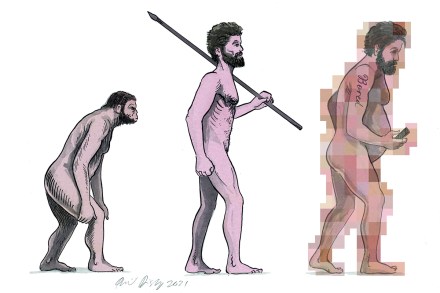
For decades, people worldwide have dreamed about being famous. What would it be like to live like a celebrity? To have even a glimpse of celebrity life? Well, as technology has been democratized, so has fame and the many trappings that come with it. People flock to Twitter, Facebook, Instagram, TikTok, Twitch, and YouTube to share their random thoughts, uninformed opinions, dance moves, animal photos, children’s names, and much more. The masses want to feel special. They want to be celebrated. They seek out an R.O.E. — return on ego — which comes with digital likes, comments and a hit of dopamine, instead of an R.O.I. —  return on investment — which allows you to pay your mortgage.

famous

Why corporations should not bow to the mob

Some of America’s biggest businesses are withholding their ad spending from social media sites, in order to pressure these platforms into restricting or fact-checking posts from conservative users — under the guise of ‘opposing hate online’. On Friday, Unilever, the company behind household brands Lipton, Dove, and Axe, announced it would stop buying ads on Facebook, Instagram, and Twitter to encourage those sites to be a ‘trusted and safe digital ecosystem’. Unilever joined several other major brands boycotting social media advertising, such as Coca Cola, Denny’s, Honda, and Starbucks. This corporate pressure campaign is an unfortunate example of businesses bowing to the online mob.

corporations

Parler is not going to replace Twitter

Parler, the right-wing conservative public Slack channel, saw a surge in users last week after Twitter banned popular meme-maker Carpe Donktum. It’s all the rage in social media world, especially among free speech enthusiasts and the political right. It’s managed to not just pick up Twitter exiles like Laura Loomer, Milo Yiannopoulos, Jacob Wohl and Twitter’s most famous Resistance Reply Guys, Ed and Brian Krassenstein, but more mainstream conservatives such as Megyn Kelly or Fox strongman Dan Bongino. It also has attracted politicians — Ted Cruz has endorsed the platform multiple times.

parler
facebook

The Facebook ad boycott is a convenient virtue-signal

When the coronavirus pandemic hit, some industry pundits predicted that the ‘techlash’ — the souring of public opinion on huge technology companies like Facebook and Google — would cool off or even disappear entirely. After all, with everyone cooped up at home, surely we’d develop a newfound appreciation for the technologies that became the only way to connect with others?That was short-lived. Following extraordinary social pressure amid this summer’s heated civil unrest, an advertiser boycott of Facebook has taken hold. Under the moniker Stop Hate For Profit and backed by the Anti-Defamation League and NAACP, brands from Starbucks to Unilever to Coca-Cola have bravely pulled ads from Facebook for the month of July.

The trouble with Brad Parscale

What Donald Trump hates more than anything is someone making money from his name without cutting him in for a share of the profits. Roger Stone told me that once and he should know, having spent decades advising Trump. With this in mind, the anti-Trump Republicans of the Lincoln Project made a video perfectly designed to needle Trump and damage his 2020 campaign manager, Brad Parscale. It shows some of the things Parscale has bought since he joined the campaign back in 2016: a ‘gorgeous’ red Ferrari, a ‘sleek’ black Range Rover, a $2.3 million home in Fort Lauderdale, two more Florida condos worth $1 million each, and a yacht, one seemingly packed with jiggling, bikini clad flesh, though that might be the Lincoln Project’s artistic license.

brad parscale

White Jesus

It’s not the best of times to be a statue — or even an icon. Last week Shaun King, a well-known campaigner on racial issues, wrote that icons and statues which depict Jesus as white should be removed. 'They should all come down,' King said. These icons are 'tools of oppression and racist propaganda...all murals and stained glass windows of white Jesus, and his European mother, and their white friends should also come down’. King received an enormous amount of abuse and even death threats — including from a group of retired police officers in Long Beach, California. Shaun King is an influential figure.

jesus

The death of the private citizen

The internet is not a private place, but news outlets have decided that it's up to them to determine when someone loses their right to anonymity. Quite often, the media gets this calculation wrong and destroys lives in the process. Scott Alexander, the pseudonymous blogger behind 'Slate Star Codex', deleted all of the content on his popular website after the New York Times revealed it was going to publish his true identity. In a long post explaining the debacle, Scott Alexander said that he was talking to a Times reporter last week who was planning on writing an article about his blog. The Times reporter apparently discovered Scott Alexander's identity in the course of reporting and cited a 'New York Times policy' requiring him to publish his full name.

The New York Times private
nikole hannah-jones

Nikole Hannah-Jones and 1619, Inc.

The New York Times’s 1619 Project is meant to be all about details that, it alleges, were ‘conveniently left out’ of America’s ‘founding mythology’. But should its Pulitzer-winning curator, Nikole Hannah-Jones, worry more about the details she’s been slipping in? And what’s the relationship between the Times’s 1619 Project and 1619 Enterprises, a company for whom Hannah-Jones’s techie partner, Faraji has supposedly worked? When she's not explaining how destroying property isn't violence on national television or circulating conspiracy theories about fireworks, Hannah-Jones is giving puff interviews, like this one to Glamour in May, in which she endorsed some of her favorite products.

Yes, it’s time to defund NPR

When the Public Broadcasting Act was signed into law in 1967, the stated goal was to provide public financial assistance to producers and broadcasters of educational programming. And so PBS and NPR came into existence. They enjoy public funding from taxpayers today. But should taxpayers continue to fund these enterprises, when they clearly focus less on educating the public, and more on pushing commentary and opinion, and now, even libel?Public media has long been defended. Frequently it’s pointed out that public funding for NPR is only about two percent of their federal operating budget, the same excuse we hear when Planned Parenthood pushes back against calls to defund it. Just as frequently, right-leaning outlets seek to point out a clear bias in publicly-funded coverage.

npr

Another fine media mess

When I spoke with NBC News earlier this week to talk about the media industry’s role in combating misinformation, I worried that the story might gain undue traction if any footage happened to get posted from my Zoom interview. In it, I was sitting in front of a bookcase full of chainsaw operation manuals and guides to dealing with invasive plant species. (Hello from COVID exile in rural Maine, where every day is Groundhog Day. Literally. A family of groundhogs has taken up residence outside the living room window.)Instead, the story turned out to be the fruits of a partnership between NBC News and a nonprofit called the Center for Countering Digital Hate.

nbc news
Google logo

Who doesn’t fund the Federalist?

One of the internet's most elusive questions — who funds the Federalist? — has finally been answered. Well, sort of. NBC announced Tuesday that Google would be banning the Federalist from its ad platform, meaning the conservative website will no longer be able to earn money from running Google ads. The Federalist was targeted alongside ZeroHedge, a right-wing financial blog. Or so NBC claimed. 'We have strict publisher policies that govern the content ads can run on and explicitly prohibit derogatory content that promotes hatred, intolerance, violence or discrimination based on race from monetizing,' a Google spokesperson said of the decision. 'When a page or site violates our policies, we take action.