Scotland

The SNP’s NHS meltdown

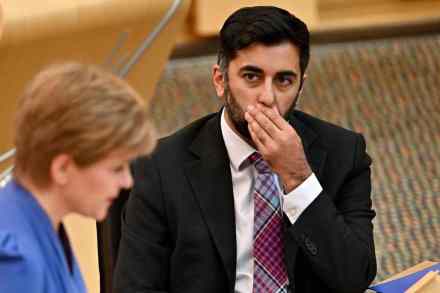
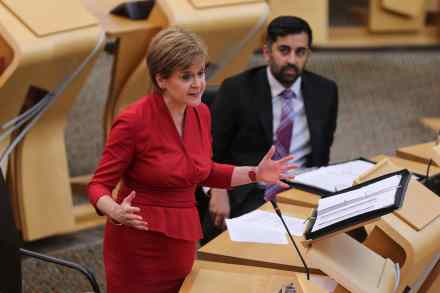
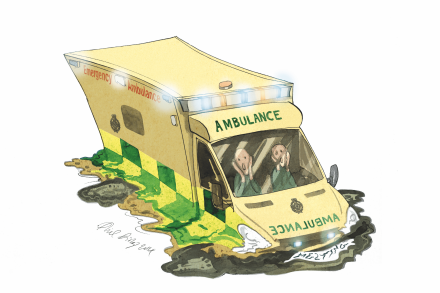
When he’s not falling off his scooter like he’s auditioning for the role of Inspector Clouseau in the Pink Panther franchise, the gaffe-prone Scottish health minister, Humza Yousaf, is mired in a multitude of Scottish NHS crises. This month saw Britain’s armed forces parachuted in to prop up the Scottish Ambulance Service. Nicola Sturgeon was forced to call on the military after distressed patients had to wait hours, and sometimes even days, for an ambulance – one of the most harrowing cases involved a frail Glasgow pensioner who died after waiting 40 hours for an ambulance to arrive. Dig into the government statistics and the scale of the crisis facing the Scottish NHS is clear.
As COP26 looms, Glasgow is facing a waste crisis

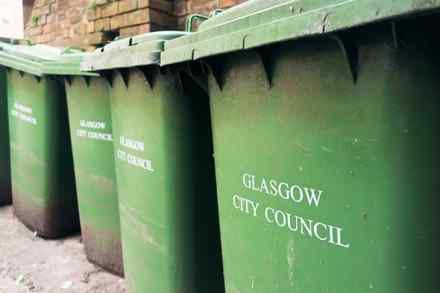
In just a few weeks, Glasgow will be the focus of the world’s attention for the COP26 summit. For the Prime Minister, however, two major embarrassments await. Firstly, an environmental conference aimed at weaning the developed world off fossil fuels looks set to take place in the middle of a British energy crisis. Secondly, Glasgow — whose council is now run by the SNP for the first time — is a city in crisis where streets are overflowing with rubbish. Pavements strewn with household waste are a common sight. Residents routinely post images on social media of the city centre and its outer-lying suburbs covered in detritus.

Labour’s Scottish problem isn’t going away

Certain questions are eternal and many of them are correspondingly dreary too. ‘How should Labour deal with the SNP?’ and ‘What can Labour offer the nationalists?’ are two of them. Since Labour requires a swing of heroic – or 1997 – proportions to win even a bare majority at the next election, you can understand why these questions will not disappear. Equally, if Labour cannot win a majority, it must dance with the parliament likely to be returned, not the parliament of its dreams. There is a problem here. What appears to make abundant sense viewed from London makes little sense viewed from Scotland. And vice versa.

Scotland’s worst council leader strikes again

Susan Aitken, the worst thing to hit Glasgow since the Luftwaffe, might well be Britain’s most hapless council leader. The SNP leader of Glasgow City Council was challenged again on the city’s cleaning crisis during a BBC interview last night. Shown footage of graffiti at the Scottish Event Campus, soon to host the COP26 conference, Aitken blamed ‘a wee ned with a spray can’. It is not Aitken’s first gaffe over a city-wide waste and dumping epidemic. In a knuckle-gnawingly awkward TV grilling earlier this month, she insisted Glasgow’s streets weren’t ‘filthy’ and just needed ‘a spruce up’.

Seven awful Indyref predictions seven years on

On Saturday it was the seventh anniversary of the Scottish vote on independence – how time flies. That contest saw a decisive ten point majority against separation; not that you'd know it from the way Nicola Sturgeon conducts her affairs. The SNP First Minister succeeded Alex Salmond in the post just weeks after the plebiscite and has spent most of her time in office talking tough and delivering little on making Scexit a reality.   In many ways it's a good thing the vote did not go the SNP's way. There's the whole 300 years of history shtick of course but as the calculations of the 2013 White Paper on independence make clear, not all of the predictions necessary for the sunlit uplands of an independent Scotland have managed to come true.

Ian Blackford reaffirms his crofting credentials

The last few months have been a period of change for SNP Westminster leader Ian Blackford. The waistcoat-wearing MP for Ross, Skye and Lochaber placed one of his two Skye homes on sales for £400,000 and quit his £39,000-a-year directorship of Golden Charter – the investment firm which gets its money from pre-paid funeral plans. The company caused Blackford a fair amount of embarrassment last year after it was revealed to have bemoaned how 'excess deaths' caused by Covid meant it had to hand over more than usual to cover the costs of customers' funerals and cremations. Classy. Now such Gordon Gekko antics are behind the former investment banker.

Coming soon: Devi Sridhar’s spring best-seller

It's been a tough pandemic for all of us here in Britain. Lockdowns, supply shortages, over-zealous policemen and Matt Hancock's gurning face – there's been a shortage of joy these past 18 months. But now Mr S is delighted to discover there is light at the end of the tunnel: a forthcoming book bonanza by Covid experts – and Devi Sridhar – who have all somehow found time to pen books on the global crisis despite being proven wrong again and again. Below is Steerpike's guide to all the titles which won't be flying off the bookshelves in the forthcoming months.... First, we have the aforementioned Sridhar, who finally has a release date in May for her book: Preventable: The politics of the pandemic and how to stop the next one.

Will Scottish independence really be ‘Brexit times ten’?

Scottish civil servants are to start work on a 'detailed prospectus' for independence so the Scottish government can hold another referendum 'when the Covid crisis has passed', Nicola Sturgeon announced earlier this month. The irony of this – coming just days before the Office for National Statistics reported that the percentage of Scots testing positive in a single week for Covid-19 equated to around one in 45 people – was lost on the First Minister. These things happen when you're busy fighting to free your people from the tyranny of liberal democracy and free society in one of the richest places on earth.

Humza Yousaf has revealed a dark truth about the SNP

American journalist Michael Kinsley once observed that in Washington DC a 'gaffe' should be understood as a moment in which a politician or public official inadvertently blurts out a truth it would have been better, and certainly wiser, to leave unsaid. By that standard Humza Yousaf, currently serving as health secretary in the Scottish government, is a mighty friend to journalists. Pondering the meaning and significance of what has become known as the Alex Salmond affair, Yousaf told the comedian Matt Forde that the conflict between Salmond and Nicola Sturgeon was 'really upsetting because it could have done our cause a hell of a lot of damage – it still might do our cause a hell of a lot of damage'. Sometimes it is better not to say the quiet bit out loud.

Sturgeon is indulging her conspiratorial supporters

Nicola Sturgeon’s speech to the SNP’s conference earlier this afternoon was mostly standard fare (Covid, climate, coalition with the Greens, Universal Credit) but towards the end, a section on Brexit and independence stood out. She told the faithful: Westminster will use all that damage that they have inflicted as an argument for yet more Westminster control.By making us poorer, they’ll say we can’t afford to be independent. By cutting our trade with the EU, they’ll say we are too dependent on the rest of the UK. By causing our working population to fall, they’ll say the country is ageing too fast.They want us to believe we are powerless in the face of the disastrous decisions they have taken for us and the damage those decisions are doing.

Does Nicola Sturgeon care more about oil revenue or climate change?

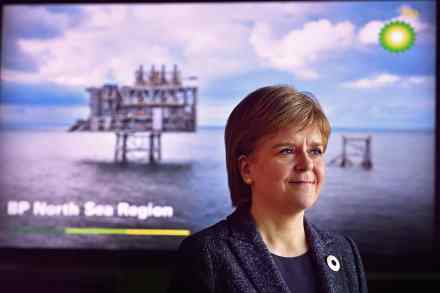
'Now, as I've hopefully made clear throughout all of my remarks, the North Sea will continue to produce oil for decades to come. It still contains up to 20 billion barrels of recoverable reserves. Our primary aim – and I want to underline and emphasis this – our primary aim is to maximise economic recovery of those reserves.' The words are from a speech made in June 2017, a few months after the Paris Agreement that aimed to limit climate change came into effect. A speech by a pro-oil Conservative, or perhaps the head of an industry group working on behalf of the oil sector? No. They are, in fact, the words of First Minister Nicola Sturgeon speaking at the Oil and Gas UK Conference that year.

Why is Sturgeon hiding behind the JCVI?

For much of its 58-year long existence, the scientists who sat on the government's Joint Committee on Vaccination and Immunisation (JCVI) lived a life of happy obscurity. But now the poor men and women who make up its membership have been thrust into the limelight amid furious Whitehall rows over whether 12 to 15 year-olds should be given the Covid vaccine.  Members of Boris Johnson's government are said to disagree with the JCVI's rulings but have had their hands tied by the committee's status as a statutory basis for giving advice in England and Wales – though intriguingly not Northern Ireland or Scotland. Judging by Nicola Sturgeon's recent comments however, you would be forgiven for not knowing this distinction.

Scotland’s four-day week policy would be a disaster

A shock poll commissioned by the IPPR Scotland thinktank has revealed this week that more than 80 per cent of Scots would like to work fewer hours for the same pay. This may well prompt further revelations about the religious leanings of the Pope, or the toilet habits of bears, but in the meantime, the IPPR has called on the Scottish government to extend its financial support for companies who want to trial a four-day working week. This is still quite a modest proposal. The SNP manifesto for the May elections promised to establish a £10 million fund for companies trialling the shorter week, with the results used to consider a more general shift ‘as and when Scotland gains full control of employment rights’.

Scotland’s census sex muddle is bad news for transgender people

What is your sex? It is a simple question and one that we can all surely answer. When it comes to filling out a census, ascertaining a person's sex is particularly important. Working out the number of men and women living in an area allows for the appropriate provision of public services. But in its approach to conducting Scotland's census next year, the Scottish government risks undermining this. Astonishingly, according to guidance published this week, the 2022 Scottish census will allow some respondents to essentially answer what they think best. It says: 'If you are transgender the answer you give can be different from what is on your birth certificate. You do not need a Gender Recognition Certificate.

The north-east’s green success puts Scotland to shame

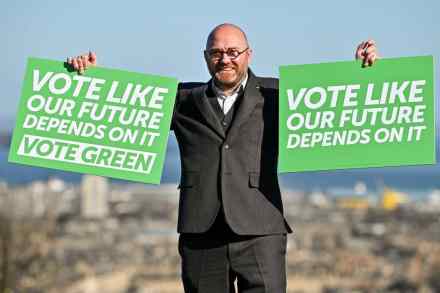
It’s confirmed. The co-leaders of the Scottish Greens, Patrick Harvie and Lorna Slater, have become junior ministers in Nicola Sturgeon’s government. Harvie is Minister for Zero Carbon Buildings, Active Travel and Tenants’ Rights, while Slater is Minister for Green skills, Circular Economy and Biodiversity. Of the two, Slater’s is the more interesting role as it includes green industrial strategy, an area where Scotland has continued to fail under the SNP. If Slater is serious about turning this around then she should make her first ministerial outing a trip to the north-east of England to see how green industrial strategy should be done.

The shame of the SNP’s grubby power-sharing deal with the Scottish Greens

This afternoon Patrick Harvie and Lorna Slater, co-leaders of the Scottish Greens, will become ministers in Nicola Sturgeon’s government. The appointments come after Green members ratified a cooperation agreement over the weekend. The unity pact is a strategic masterstroke by Sturgeon, handing her an overall majority at Holyrood, insulating her from internal SNP criticism and coopting a rival nationalist party. There is one midge in the porridge, however, and it’s this: the Scottish Greens are unhinged. Not merely eccentric or a little outside the mainstream, but full-blown, solar-powered, honest-to-Gaia cranks. For an illustration, consider a motion debated at their autumn 2015 conference in Glasgow.

Watch: Michael Gove’s bizarre dance moves

Downing Street's Union Unit has tried many ideas to keep Scotland in the UK – but even they can't have thought of this. Cabinet Office minister Michael Gove was spotted in the early hours of the morning dancing in a popular nightclub in Aberdeen, the city of his birth. Gove, a veteran of the Whitehall jungle, turned up shortly after 1 a.m. at O'Neills pub – a place 'where you can enjoy the craic' in its own words – before heading on upstairs to nightclub Bohemia. One gob-smacked punter was quoted in the Daily Record as saying:  'Michael Gove walked into O'Neills at around 1.15am, the pub was just about closing. I'm almost sure he was by himself.  I heard people saying, 'he's a Tory MP' others asked 'Who's Michael Gove?' and were Googling him.

Scottish Greens chase the green

Few groups better embody Boris Johnson's philosophy of 'cakeism' than the Scottish Greens. The party is both pro-having cake and pro-eating cake; committed to tackling 'fuel poverty' while opposing both fossil and nuclear energy, releasing adverts demanding an end to hardship and penury while disparaging economic growth. Now though the party seems determined to take the biscuit. Having struck a power-sharing agreement with the SNP, the Greens face the luxury of being in both government and opposition at the same time. As former Green MSP Andy Wightman has pointed out, the deal is functionally a coalition, allowing the Greens to have access to the resources of the civil service, via two junior ministerial roles and two dedicated special advisers.

Has Nicola Sturgeon run out of ideas for Scotland?

On Tuesday, another 4,323 cases of Covid-19 were confirmed in Scotland. A reminder, if it were needed, that the pandemic continues even though 80 per cent of the adult population are now fully vaccinated. The schools are back and the start of the new university year next month suggests more new cases are all but certain. The worst of this iteration of the pandemic may be in the past but it isn’t over. Indeed, it is so far from being over that the First Minister felt it necessary to warn that a fresh round of restrictions may be necessary should case numbers continue to rise. Even if that proves unnecessary and even if you are minded to think Sturgeon’s caution excessive, it is obvious that Covid will be a part of life for the foreseeable future.

Is this the worst council leader in Britain?

Glasgow: the second city of the Empire, onetime shipbuilding capital of the world, home of Adam Smith, Charles Rennie Mackintosh and John Logie Baird. But for a great metropolis which gave us television, ultrasound and Alex Ferguson's football genius, the city's leadership has all too often failed to live up to its illustrious past.  The council's current leader Susan Aitken is a perfect case in point. Swept to power in 2017 on the SNP tidal wave that engulfed Labour's last bastions, Aitken's four-year reign has been characterised by arrogance, incompetence and mismanagement.