Scotland

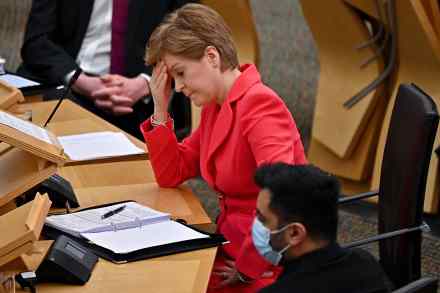
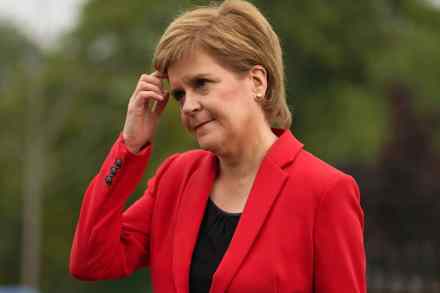
Nicola Sturgeon’s disturbing attack on the rule of law

Lawyers with an awkward agenda can be a thorn in the government’s side in Scotland as much as in England. Last year, for example, they persuaded the Court of Session to refuse a green light to Nicola Sturgeon’s bright idea for a unilateral Indyref2; and in a much higher profile case a couple of years earlier convinced the same court that the SNP had unlawfully and quite unfairly botched its investigation into Alex Salmond. But the Scots legal profession is by tradition forcefully independent, if anything even more so than its English counterpart. Broadly, Scottish solicitors are regulated by the Law Society of Scotland, and advocates by the Faulty of Advocates.
Scottish Tories should not bin Boris Johnson

Ideas, as a fictitious terrorist once said, are bulletproof. This might be stretching the truth a little, but at the very least they are not easily slain. So long as they appeal to someone’s sentiments or self-interest, no amount of logical dismemberment is enough to put them down for good. The zombie stalking the discourse today is the suggestion that the Scottish Conservatives should split away from the national party. This zombie has grown no less horrible since Tory members put it in the ground by electing Ruth Davidson ten years ago. So, let’s break out the gasoline and the matches and see if we can’t see it off for good this time. Boris Johnson has never been popular with the Scottish Conservatives.

Rees-Mogg does his bit for the Union

You know it’s bad when Rees-Mogg does the media round. Ever since his disastrous interview on Grenfell in the 2019 election, Tory party managers have been keen to keep the Old Etonian’s performances on national television to a minimum. But given both the dire straits in which Boris now finds himself and the half-hearted backing of his cabinet, it was cometh the hour, cometh the Mogg. And the leader of the Commons certainly brought the House down.  First Mogg went on LBC to dismiss those calling for Johnson to quit, claiming ‘The people who have come out so far are people like Roger Gale and Douglas Ross who never supported the Prime Minister.

Douglas Ross is right: Boris Johnson must go

In May 2020 Douglas Ross resigned from Boris Johnson’s government. Though only a junior minister in the Scotland Office – Ross was not at that time a member of the Holyrood parliament or leader of the Scottish Conservative and Unionist party – Ross was still the most senior figure to resign in protest at how the government handled the Dominic Cummings affair. Ross was clear: Cummings had plainly broken the government’s own Covid rules and, this being so, decency demanded he clear his desk. No-one, not even the great Cummings, could be thought indispensable. As it happens, the Cummings story broke just a couple of days after the Prime Minister and his then fiancee attended a BYOB post-work piss-up in Downing Street.

Edinburgh’s slavery review is strangely superficial

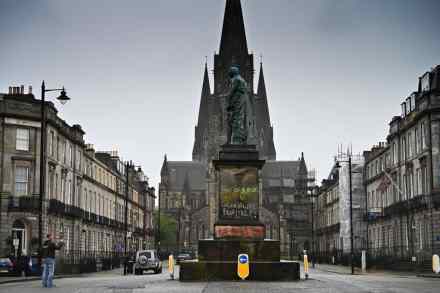
A couple of days ago a colleague alerted me to the opening of an online public consultation regarding proposals made by the Edinburgh Slavery and Colonialism Legacy Review Group, a scheme launched by Edinburgh City Council in 2020 to look at ways the city can acknowledge its historical connections with slavery and colonialism in the wake of the Black Lives Matter protests. The public consultation will close in January, and aims to find ‘constructive ways’ that the people of Edinburgh can address the city’s involvement in the slave trade. The Review Group list numerous sites in Edinburgh with various, and for the most part undeniable, associations with the reprehensible history of slavery.

Prepare for Sturgeon’s ‘Indyref 2’ stunt

This is the time of year when economists and political scientists make their predictions for the upcoming 12 months. Will we finally see the back of Covid and economic recovery? Will Boris Johnson survive as Prime Minister? In Scotland, the politerati are speculating on what Nicola Sturgeon's next move on the constitution will be. It seems likely the Scottish government will introduce a bill, without the agreement of Westminster, on a second independence referendum. This is expected to be challenged at the UK Supreme Court. The most likely outcome of that is the referendum bill failing on the grounds that it goes beyond the constitutional powers of the devolved parliament — a UK Supreme Court case earlier this year reinforced the view this will be the most probable conclusion.

Sturgeonomics would have crashed an independent Scotland

The Omicron variant is upon us, which means the return of the Scottish First Minister's news conferences. These can be testy affairs, as Michael Blackley, the Scottish Daily Mail's political editor, found out at a recent one. Blackley had the temerity to politely question the Scottish government's support for the hospitality sector, asking if Sturgeon had considered relaxing isolation rules for staff. 'Yeah, that would really help,' came the sarcastic response. Blackley was then asked if he had 'listened to a single word I said?' With the First Minister finishing off by complaining that she doesn't have the borrowing powers the Treasury has to fund support schemes. Who could have guessed Donald Trump would be the model for Sturgeon's presidential-style news conferences?

Did Sturgeon’s publicity trip break NHS rules?

Nicola Sturgeon is continuing her crusade against the Scottish press. Just yesterday, Mr S was pointing out the First Minister's habit of criticising journalists who question her Covid policies, only for her government to then abruptly U-turn a few days later.  Shortly after the article was published, Sturgeon took to Twitter to boast about her latest 'media-free volunteering session' at an Edinburgh vaccine centre, declaring that she was 'not sure I was much help' but that 'it gave me good insight into how it all works.' An apt metaphor for her party's handling of the Scottish health service. https://twitter.com/NicolaSturgeon/status/1473645812328583170?ref_src=twsrc%5Etfw Steerpike isn't exactly sure how a visit that is publicised to, er, 1.

Sturgeon’s sneers at the Scottish press

Nationalism, grievance politics and a refusal to accept results which don't go your way are not the only things Nicola Sturgeon has in common with Donald Trump. For Scotland's First Minister has launched something of a war on the press in recent weeks, repeatedly rubbishing reporters and outlets which dare to question her handling of Covid.  Unfortunately for Sturgeon, this crusade against supposed 'fake news' has worked about as well as the SNP's handling of education, health and criminal justice over the past 14 years. For her hapless Holyrood government has been forced into no less than three U-turns in five days – despite Sturgeon ridiculing journalists who point out the error of her ways, something noted by Sun hack Chris Musson.

SNP Hate-Finder General declares war on refs

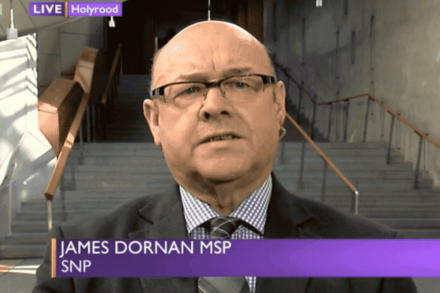
Ping! An email in Steerpike's inbox lands, subject line: 'SNP's attack on refs.' Is this, at last, a moment of nationalist self-reflection? Have the 45 per cent-ers finally clocked most Scots don't want another plebiscite? Could some SNP drone finally have switched off the autopilot to question the wisdom of a neverendum? Sadly for Scotland, the answer to all these questions is: no. For it seems that James Dornan, the hard-of-thinking MSP who frequently features in Steerpike's pages, is once again up to his usual tricks.

Can the Bank of England get a grip on soaring inflation?

Yet again, inflation has surged past expectations – this time hitting 5.1 per cent in November, a ten-year high, up from 4.2 per cent in October. This threatens a political crisis as well as tough economic times: unless inflation is quelled, next year will be one of declining living standards for most people. Anyone whose pay is not rising by at least five per cent will, in effect, feel like they’ve experienced a pay cut. It was assumed that five per cent would be about as high as inflation would go but all this is proving hard to predict. This has gone past the Bank of England’s peak forecast, which wasn’t expected to be hit until next year.

Sturgeon’s war on business is strangling Scotland’s economy

There was one minor and one big surprise in the Scottish government's latest budget, which was set out by Kate Forbes, the finance secretary, last week. The minor surprise was the Sturgeon administration's decision to provide less business rates relief, in comparison with England, to the retail, hospitality and leisure sectors during the next financial year. Businesses in Scotland will be eligible for 50 per cent relief, capped at £27,500 per rate payer, but only for the first three months of the 2022-23 financial year. In England, the same businesses will be eligible for 50 per cent relief for the whole financial year. A winding down of rates relief was anticipated, but the full withdrawal of support just three months into the next financial year was unexpected.

JK Rowling is right to call out Police Scotland’s transgender nonsense

How should police record a rape where the culprit has male genitalia? The answer might appear to be straightforward: a man is responsible. Yet in Scotland, where the SNP's obsession with avoiding offence appears to trump reality, things could soon be more complicated. Police Scotland have said that they may log rapes as being carried out by a woman if the alleged culprit identifies as such. This absurd situation was revealed by Gary Ritchie, assistant chief constable, who set out scenarios where this might happen. It includes 'where a person born male obtains a full gender recognition certificate (GRC) and then commits rape' and 'where a person born male but who identifies as a female and does not have a full GRC...commits rape'.

The SNP’s desperate bid to save sterlingisation

‘I hope the sterlingisation zombie now has a stake through the heart,’ tweeted SNP delegate Tim Rideout after getting his resolution on ‘The Scottish Reserve Bank Establishment Bill’ passed at his party’s conference last weekend. Rideout sits on the SNP’s policy committee and is part of a faction challenging the SNP leadership’s plan for Scotland to informally use the pound for a prolonged period after secession – a policy known as sterlingisation. This faction wants to see Scotland establish a new currency, controlled by a new Scottish central bank, as soon as possible after exit day. In his conference speech, Rideout was blunt.

The SNP’s mountain of mendacity

The Scottish National Party’s great and continuing success has been to mobilize a large part of the Scottish population to see England and the English as a more or less malign force. In this, the party has connected with and deepened strong currents of thought and belief in Scots culture, especially in the 20th century. The country’s most famed and lauded poet, Hugh MacDiarmid (Christopher Grieve), its most influential ideologist, Tom Nairn and its most prominent literary novelist, James Kelman have all adopted long-running acidic views of the southern neighbour.

SNP latest: ‘future of our planet’ demands indyref2

It's the SNP's second annual national conference this weekend and already the organ-grinders are turning out their favourite hits. The National – a self-described newspaper in breach of the Trade Descriptions Act – has again combined the stridency of Pravda with the editorial values of the Beano. Adoring coverage of the conference was kicked off with its opening day headline: "'Shameful' Tory plan for 'Union division' in the army" – a 'story' about the British Army being, er, proud of Britain. Elsewhere Kate Forbes, the neophyte nationalist, has insisted that independence, not health or education, will dominate the four-day rally – because God forbid the state of public services be of interest to the party or the nation.

Maverick MSP lauds St Andrew as a nationalist icon

All too often, the massed rows behind Nicola Sturgeon at FMQs can resemble a scene from one of Stalin's party congresses. Row after row of poker-faced nationalists dutifully banging their desks at the latest edict from on high, interjecting occasionally with the latest pre-approved attack line or standard softball question to the Dear Leader: an army of grey-suited cyber-men, without the heart. Yet the counter-argument to such a model of uninspired conformity can be found in the form of John Mason MSP, the maverick member for Glasgow Shettleston since 2011. Over the past decade, the nationalist nut has been more of a fixture in the national headlines than Rod Stewart or Kirsty Gallacher, so often has he blundered inelegantly into the political spotlight.

Is this the beginning of the end for Nicola Sturgeon?

The SNP are holding their annual conference this weekend and, the times being what they are, it is a virtual affair. Speeches have been recorded in advance and I understand at least one cabinet minister was informed his first effort failed to meet the required standard and needed to be recorded again. Perhaps it was insufficiently boosterish. As is by now a matter of time-honoured tradition, no SNP gathering — whether in person or via video — can take place without the announcement of a fresh push for a second independence referendum. These are launched every spring and then launched again every autumn. That none of them ever produce anything of substance must now be considered part of their charm. A sham performance for a party willing to believe in anything except reality.

Britain’s worst council leader given gong

For months now, Mr S has chronicled the tribulations of Susan Aitken, who is the first SNP leader of Glasgow City Council and appears determined to be the last, too. She has presided over a waste crisis in which refuse-strewn streets have become a familiar sight even in the city's leafier suburbs and which threatened to embarrass locals on the world stage ahead of COP26.  Challenged on this, Aitken insisted Glasgow needed only 'a spruce up’. When that didn't work, she trained her fire on her critics, detecting in the concerns of the GMB union ‘a real echo of the language that some far-right organisations have used’ and telling Sir Keir Starmer he was ‘on pretty shaky ground as a London MP, coming up and telling Glasgow that we’re filthy’.

Nicola Sturgeon’s desperate new misinformation drive

Less than a quarter of Scots believe Scotland is likely to leave the UK within the next five years, according to a new poll. The poll also shows that secession does not command majority support. As we approach the second anniversary of the start of the pandemic, it seems getting back to normal is more important to most people than the break up of the UK. Managing to holiday abroad over the next two years is likely to be a more popular aim than another referendum. Seemingly disconnected from that reality though are Scotland’s nationalist parties, which last week produced – in conjunction with the National newspaper and a separatist campaigning organisation called Believe in Scotland – an eight-page tabloid-style pull-out designed to make the case for secession.