Scotland

Things are looking up for Scottish Labour

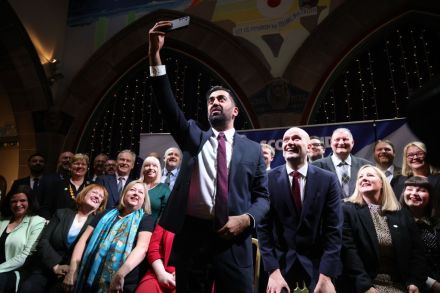
Scottish Labour gathers in Glasgow this weekend in both a mental and electoral state few thought achievable just a short few years ago. Having polled less than 10 per cent in the (albeit meaningless) European Parliament elections of 2019, followed by another humiliating third placed finish at the Holyrood elections of 2021 with less than 18 per cent of the regional vote, Labour looked helpless and hopeless. But things change. Quickly. Lenin said that there are decades where nothing happens, and there are weeks where decades happen. Scottish Labour’s ascent is not quite in that category, but nevertheless Anas Sarwar’s outfit has rapidly morphed from the irrelevant cousin-at-the-wedding to the bride-to-be.

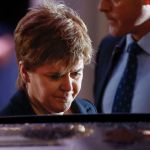
Nicola Sturgeon is the SNP’s biggest liability

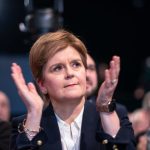
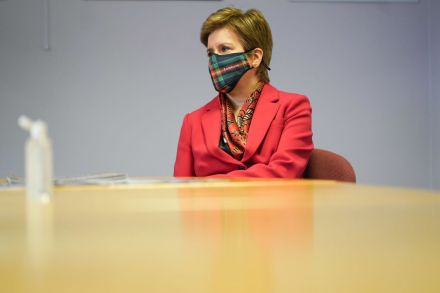
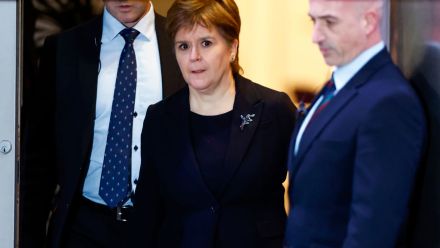
A year ago today, Nicola Sturgeon announced her resignation as SNP leader and First Minister of Scotland. The consensus was that her departure from the political frontline would be a blow to both her party and the wider Scottish independence movement. After almost nine years as First Minister, Sturgeon left office as a dominant figure in Scottish politics, with positive approval ratings and revered by her followers and respected by opponents as a significant talent. Of course her sudden resignation was going to have repercussions. But nobody could have predicted just how chaotic things would become.  Twelve months after Sturgeon’s announcement sent shockwaves through the British political establishment, support for the SNP continues to fall.

How Nicola Sturgeon saved the Union

It may seem perverse to claim that the former first minister of Scotland Nicola Sturgeon saved the Union between Scotland and England. She is after all a Scottish nationalist who has dedicated her life to the cause of Scottish independence. But her actions since she resigned exactly one year ago from her post as First Minister have set the independence cause back by at least 20 years, perhaps longer. Labour is back in contention in Scotland; no one is talking about an independence referendum any more; the SNP is now a divided party with a collapsing membership and a weak leader who has presided over a catalogue of policy failures. The dream, it seems, is over.

Edinburgh University’s new rector must save it from gender ideology

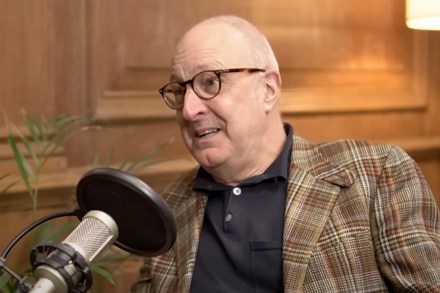
Simon Fanshawe has been installed as the rector of Edinburgh University. The arrival of the comedian and Stonewall dissident to the post will hopefully bring to an end a dismal episode in the life of one of Britain’s greatest academic institutions. But don’t bank on it. The campaign by transgender activists and others to uninstall Mr Fanshawe is already underway – and they know what they are doing.  For the past decade a collection of campus zealots has been allowed to run rampant in this supposed seat of higher learning. They have threatened the health and livelihoods of lecturers and banned freedom of speech – often with the tacit acquiescence of the university authorities.

Can the SNP claw back support in Scotland?

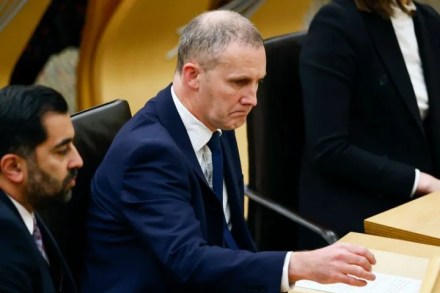
On Thursday, health secretary Michael Matheson resigned and Humza Yousaf undertook a ‘mini-reshuffle’ of his cabinet. The scandal of the £11,000 iPad bill was only ever going to end this way. That it was allowed to rumble on eroding public trust for months is symptomatic of the SNP’s wider fortunes, which began to rapidly deteriorate almost a year ago to this day. Fifty-one weeks ago a press conference was hastily arranged in the Drawing Room at Bute House. Nicola Sturgeon stood before Alexander Nasmyth’s pastoral portrait of Robert Burns, announced her resignation as first minister and set in motion a remarkable chain of events. The signs of the decline were even there in the final months of Nicola Sturgeon’s lengthy and electorally successful premiership.

Michael Matheson’s iPad scandal has tarnished the SNP

When the Scottish health secretary's inevitable resignation came, there was no apology, no recognition that he had done anything wrong. Michael Matheson quit with all the arrogance we’ve come to expect from SNP politicians, jumping ship on Thursday morning before the findings of an investigation into his expenses claims were published. After it emerged last November that Matheson had claimed around £11,000 for roaming data charges run up during a family holiday in Morocco, the MSP insisted his expenses were entirely legitimate and had come about while he carried out essential constituency work.

Michael Matheson quits as Scottish health minister

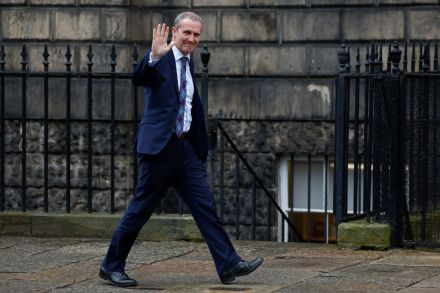
So. Farewell then Michael Matheson. The embattled SNP MSP threw in the towel today after three months battling in vain to save his job as health minister following the row over his £11,000 data bill. The announcement came just hours before he was set to give a major announcement to the Scottish Parliament on minimum unit pricing. Sub-optimal to say the least... The minister has been awaiting a report on the huge iPad roaming bill he ran up during a family holiday. Labour and the Scottish Tories have accused Matheson of lying over whether he knew how the large data usage had occurred, with the Glaswegian eventually admitting to MSPs that his sons had used the device’s hotspot to watch football.

Are Scots tiring of devolution?

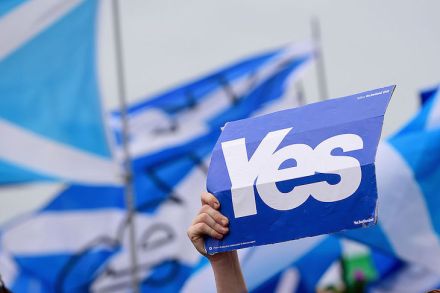
As Scottish devolution celebrates its 25th anniversary, are voters losing faith in Holyrood? A quarter of the country believes devolution has been bad for Scotland, with almost half of 'No' voters in the independence referendum now disillusioned. New polling for the Sunday Times finds that over a fifth of voters didn’t know if devolving powers to Scotland had been positive or negative, while 50 per cent still believe that overall devolution had been good.  There was a clear split on the devolution question based on how a person voted in the 2014 referendum, while age provided another dividing line: devolution was unpopular with half of those over 75 years old compared to only 14 per cent of 16-24 year olds.

Why Kate Forbes is right about high tax

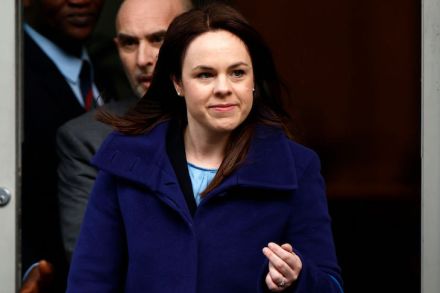
I was on BBC1's Question Time with Kate Forbes in Glasgow last week in which she was oddly loyal to the SNP government. She seems to have been the only member of Nicola Sturgeon’s government not to be deleting her WhatsApp during Covid and I suspect she’s appalled at the way Sturgeon & co placed secrecy at the heart of their Covid response. She said on Question Time that the way to grow Scotland’s economy was to attract people to come and work there. I put to her that having the highest tax rates in the UK (as Humza Yousaf has chosen to do) didn't exactly scream "come to Scotland!". She didn’t really respond. But she has been more candid in an as-yet-unpublished column in West World, a community newsletter that serves Mallaig and its environs.

Nicola Sturgeon wasn’t the only one to politicise the pandemic

Nicola Sturgeon ‘could cry from one eye if she wanted to,’ Alister Jack told the UK Covid Inquiry this morning. It was an interesting medical observation from the Scottish Secretary presumably intended to suggest that the former first minister’s emotional moments in her evidence yesterday were contrived. Sturgeon fought back tears a number of times when she insisted she just wanted ‘to be the best first minister I could be’ during the pandemic, resolute in her denials that she had had ulterior political motives. ‘I didn’t believe it for a minute,’ Jack, the Tory MP for Dumfries asserted, roundly accusing the former first minister of politicising the pandemic.

Spain and the mystery of Scotland’s Covid travel list

Nicola Sturgeon had a very rough time at the UK Covid-19 inquiry in Edinburgh yesterday. A sticky moment in particular was when Scottish cabinet minutes were raised showing that the former SNP leader and her senior ministers discussed how to marshal ‘the experience of the coronavirus crisis’ into a fresh campaign for independence, as Isabel Hardman wrote about here. But there was another piece of evidence that was arguably more troubling. This was an email that was sent by the office of John Swinney, the former deputy first minister and second-in-command of the Scottish government during the pandemic.

What’s going on with Nicola Sturgeon’s memory?

Nicola Sturgeon’s memory is a fascinating and frustrating thing. At times, the former First Minister of Scotland’s powers of recall are quite remarkable. No detail escapes Sturgeonian examination, no nuance goes unnoticed. On other occasions, it fails her completely. Take her appearance, in March 2021, before a committee of MSPs investigating the Scottish government’s handling of complaints of sexual assault levelled by a number of women against Alex Salmond. On that occasion, Sturgeon’s testimony was notable for its remarkable gaps. She simply didn’t remember details of a key meeting that had taken place just months previously. Even the extraordinary nature of the matters she was discussing could not help fill in the gaps in her recall.

Watch: Nicola Sturgeon breaks down in tears at Covid Inquiry

Even Nicola Sturgeon's enemies agree that the former first minister is a formidable politician. But at the Covid Inquiry, Sturgeon appears to be struggling to keep it together. Asked whether she was the 'right' person to lead Scotland following her earlier criticism that Boris Johnson was not up to the job, Sturgeon broke down in tears: 'I was the first minister when the pandemic struck. There's a large part of me that wishes I hadn't been. But I was, and I wanted to be the best first minister I could be during that period. It's for others to judge the extent to which I succeeded.' NEW: Nicola Sturgeon breaks down in tears about whether she was the “right” First Minister to lead Scotland after her earlier criticism that Boris Johnson was not up to the job. @SkyNews pic.twitter.

Sturgeon paints herself as perfect at Covid Inquiry

How and where did Nicola Sturgeon make her big decisions during the pandemic? Not on WhatsApp, and never badly, according to the evidence she has given to the UK Covid Inquiry so far this morning. The questions to the former first minister have largely focused on how she recorded discussions between ministers, and why she deleted WhatsApp messages. She admitted that she did delete them, but insisted that it was not her practice to have detailed discussions with colleagues about decision-making on this channel anyway. ‘It’s not my style’, she said, criticising the use of WhatsApp in government as being too common and that it was too open to misinterpretation.

Will Sturgeon face another police probe?

It's not been a great morning for Nicola Sturgeon at the Covid Inquiry. In August 2021, she promised bereaved families via Channel 4 News that she would disclose all her WhatsApps, even though by that stage she knew that her messages had been destroyed. Today she insisted that she thought 'anything of any relevance or substance' 'would be properly recorded in the Scottish Government system' – even though the Channel 4 question was specifically about handing over personal emails and WhatsApps. Sturgeon now claims she was trying to answer 'the substance of the question' adding that 'I apologise if that answer was not as clear'. You can say that again... It's not gone done too well with the Scottish Covid Bereaved Families' group.

The Scottish government’s bizarre egg donor drive

A bright pink box fills my screen; soon it’s filled with blue cartoon sperm swimming towards a large, wobbling egg, where they congregate to spell the word ‘joy’. Alongside it is a message, which reads: ‘By becoming an egg or sperm donor, you could give the joy of starting a family to more than 200 people in Scotland, who need help becoming a family.’ It’s accompanied with the hashtag ‘JoyLoveHope’.  I’m looking at a digital advert, part of a series rolled out across radio and the internet in Scotland from 2021 until last year, where it culminated in National Fertility Week. Advertising for egg donors (and sperm donors) is a common – if ethically questionable – practice, and many private clinics do it. But this advert is different.

The Covid Inquiry is finally hearing some enlightening evidence

The Scottish leg of the Covid-19 inquiry has, like the hearings in London, become bogged down in matters such as the deletion of WhatsApp messages on ministerial phones. But, with a slightly less attention-seeking counsel for the inquiry, it also seems to be getting to some of the nuts and bolts which should have been discussed in London. A few of the most revealing pieces of evidence so far have been presented by Mark Woolhouse, Professor of Infectious Disease Epidemiology at the University of Edinburgh and adviser to the Scottish government during the pandemic. Here are some of the highlights of his oral and written evidence. Woolhouse was deeply critical of Holyrood’s declaration 'there is no such thing as a level of acceptable' loss.

Sturgeon’s separatist scheme confirmed by Covid probe

No wonder so many SNP politicians deleted their WhatsApp messages: they really are rather damning. In today’s Covid hearings, former Nicola Sturgeon aide Liz Lloyd is being grilled by the bulldog-like Jamie Dawson KC. If the Dear Leader’s liberal cussing wasn’t bad enough, the Inquiry has now unearthed some startling admissions… Throughout the pandemic, the-then First Minister sought to present herself as a unifying ‘national’ figure above petty party politics. But back in November 2020, Sturgeon discussed a UK government proposal with one of her closest confidants. She begrudgingly admits that ‘on this, I (reluctantly) think there’s merit in UK-wide position’. Whatever happened to fostering constructive cross-party relations...

Sturgeon’s foul-mouthed Boris-bashing revealed

If there’s one thing that both Covid Inquiries have reliably provided, it’s expletives. Use of foul-mouthed language was popular among Boris Johnson’s top team, but members of the Scottish government were prone to the odd swear word or ten. And today’s Covid hearing has revealed that some obscenities came from, um, none other than the Dear Leader herself. This morning’s hearing in Edinburgh heard from former Sturgeon aide and self-confessed close confidant of the former first minister, Liz Lloyd.