Scotland

Welcome to buffer-zone Britain

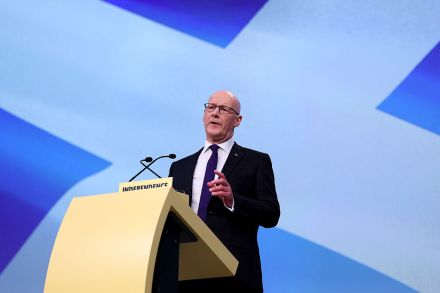
Are ‘buffer zones’ becoming the latest weapon in the political establishment’s clampdown on dissent? Scottish First Minister John Swinney says he will consider a buffer zone to ban protests outside migrant hotels. It comes after angry scenes at the Radisson Blu in Perth on Saturday, which saw competing pro- and anti-migration demonstrations. Anti-migration activists reportedly rushed up to the hotel and banged on the windows, though no arrests were made. Local MP Pete Wishart has described the actions of the anti-migration protesters as ‘disgraceful’ and called for ‘buffer zones’ around migrant accommodation.

The SNP is up to its old referendum tricks

There will not be another referendum on Scottish independence if the SNP wins a majority in May’s devolved elections. We can be certain of this because John Swinney has said there will be one and, as my old granny used to say, I wouldn’t believe a word he says if the Pope had just heard his confession. Keir Starmer will simply do what his predecessors did: tell the SNP to bog off The SNP leader was questioned on his independence strategy by ITV Border’s Kieran Andrews, who asked him to ‘guarantee 100 per cent’ his campaign rhetoric about a parliamentary majority for the Nationalists leading to another vote on breaking up Britain. Swinney told him: ‘Yes, because that’s what happened in 2011.

Stephen Flynn: Reform can learn from the SNP

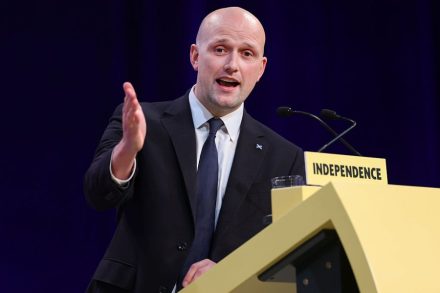
Stephen Flynn’s Westminster group may consist of only nine MPs, but the SNP has still managed to make its mark in London. Flynn’s performance in Prime Minister’s Questions – when his group get a question – has marked him out as a savvy political operator and earned him grudging respect from politicians from all sides of the Chamber. The SNP has used parliamentary procedure to pile pressure on Sir Keir Starmer’s Labour government – the Gaza vote last year, for example, saw the PM suspend six politicians, one of whom has now gone on to form her own new party. Ahead of an election year in Scotland, the SNP has also highlighted Labour’s weaknesses (on issues like new oil and gas licenses, of which Flynn is in favour) north of the border.

Stephen Flynn on Reform, Sturgeon & a second referendum

26 min listen

The SNP’s Westminster leader Stephen Flynn, MP for Aberdeen South, joins Lucy Dunn for a special episode to assess the place of the SNP in British politics as we approach the end of 2025. The SNP were ‘decimated’ to just nine MPs at the 2024 general election – yet, if polls are to be believed, they are on course for another record win in the 2026 Holyrood elections. But can the SNP really frame this election as a ‘fresh start’? Flynn explains what he made of the ‘bleak fallout’ of 2024, why he is standing for election to Holyrood next year and what he makes of SNP heavyweights such as John Swinney and Nicola Sturgeon. Plus, could a push for a second independence referendum be on the cards soon? Produced by Patrick Gibbons and Oscar Edmondson.

Why is the Scottish government so afraid of a grooming gangs inquiry?

The Scottish parliament has voted in favour of allowing government ministers to mislead it. That is the effect of a vote at Holyrood yesterday afternoon. The Scottish parliament is a failed institution that lurches between national irrelevance and terrible law-making The background is this: the SNP-run Scottish government is doing everything in its power to avoid holding a Scotland-wide inquiry into child grooming gangs, both by pivoting to the pre-existing but scope-limited Scottish Child Abuse Inquiry and by running a strategic review group to coordinate a re-examination by several institutions (Police Scotland, the NHS, etc) of their handling of past allegations.

Will Scotland switch course in 2026? with Gordon McKee

18 min listen

The Spectator heads into Christmas a little bit less Scottish as we bid farewell to our political correspondent Lucy Dunn. Before Lucy leaves for STV, she joins Coffee House Shots – with fellow Scots Michael Simmons and Labour MP Gordon McKee – for one final episode reflecting on the state of Scottish politics. They discuss whether the SNP has stabilised Scottish politics this year, make predictions for what could happen at the 2026 Holyrood elections and ponder whether the Scottish influence in Westminster has grown stronger under Starmer. Plus, from Reform to the SNP – how new is the threat of populism in Scotland? Produced by Patrick Gibbons.

Reform support in Scotland rises again

Another day, another bad poll for Sir Keir Starmer's Labour party. With less than six months until the Scottish parliament election, pollsters are ramping up their research north of the border. The latest Holyrood voting intention poll to have dropped is from Ipsos Scotland, carried out between 27 November and 3 December, which shows the gap between SNP and Scottish Labour has widened further. Constituency voting data shows that the Nats are consistently picking up more than a third of the vote on 35 per cent – while Labour has dropped seven points since June to sit 16 per cent. Crikey! And that spells good news for Reform UK – whose Scottish outfit is continuing to pick up support across the country.

The meaning of Lord Offord’s defection

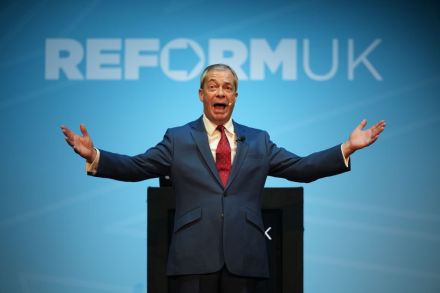
Malcolm Offord has today quit Kemi Badenoch’s Conservatives to join Reform UK. The peer was unveiled at a press conference today in Falkirk, as Nigel Farage’s party ramp up their campaigning ahead of the Holyrood elections next year. Offord, a former minister, becomes the second sitting frontbencher to quit the Conservatives in recent months, following Danny Kruger’s departure in September. It means that Reform UK now boast their first peer in the House of Lords. Offord will stand down from the Upper House if he is elected to the Scottish Parliament in May. It is worth remembering that Offord enthusiastically backed Kemi Badenoch for leader Offord cited his Unionism as the main motive for his defection.

Scottish Tory peer joins Reform

To Falkirk, where Nigel Farage has flown ahead of the Holyrood elections – to announce another big name member of Reform UK. Now Lord Offord has jumped ship to Reform – and he intends to stand for election in Scotland next year. The businessman was given a peerage in 2021 by Boris Johnson and even served as a minister of exports from 2023 until the election the following year.

Scotland bows to pressure to launch grooming gang review

The Scottish government is set to announce a national review of the grooming gang evidence in Scotland, after coming under pressure to take action on reports of organised sexual exploitation. An independent judge will assess the situation in Scotland, with their conclusions then used to help the government decide whether there should be full public inquiry. The Scottish Conservatives have been clear for some time that their position is to move straight to a national probe, while Scottish Labour leader Anas Sarwar has welcomed reports that a review is forthcoming.  The SNP government has, however, been accused of dragging its feet on the issue – with political opponents insisting that justice secretary Angela Constance has demonstrated a ‘lack of interest’ in the issue.

Labour’s Budget sparks North Sea fears

True to form, Rachel Reeves’s autumn Budget didn’t land smoothly. The publication of the OBR report she was supposed to unveil during her announcement meant that broadcasters, politicians and the public were more focused on scanning the leaked document than the speech she had been preparing for months. The headlines have focused on a huge uptick in welfare spending, stealth taxes which may or may not constitute a Labour manifesto pledge and the scrapping of the two-child benefit cap (Labour backbenchers can breathe a sigh of relief). What has received relatively less coverage is the North Sea – and just how energy-friendly Labour’s Budget is.

Covid report: governments acted ‘too little, too late’

Back to the Covid inquiry, where chair Baroness Heather Hallett has presented the findings of its report. The conclusions don’t particularly paint anyone in a good light and the report even claims that acting ‘too little , too late’ cost the country as many as 23,000 lives in England – although this figure is already being disputed given that, um, ‘modelling’ doesn’t establish anything. The report also suggests that lockdown could have been avoided altogether had social distancing and isolation been introduced earlier. Good heavens… Former prime minister Boris Johnson has been dragged back into the limelight too, after the report claimed that BoJo failed to tackle a ‘toxic and chaotic culture’ in No. 10 – and, it notes, even ‘actively [encouraged] it’.

The SNP have crossed the line on abortion

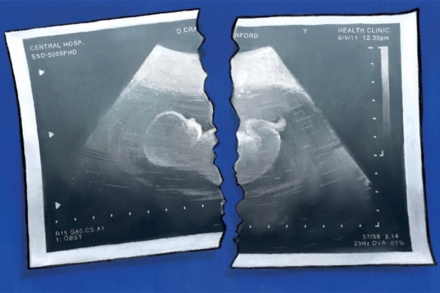
For years, the SNP has relied on a particular political alchemy. It takes on extremely liberal social positions to appeal to the left, while dangling independence as a carrot to those on the right. But with the publication of a recent abortion law review, it appears to have gone too far. In attempting to make Scotland one of the most permissive abortion regimes in the world, the review has not simply drifted from public opinion – it has rocketed past it. It is astonishing that this has been commissioned by a government that claims to champion women’s rights The proposals are extreme by any measure. At present, abortion is available in Scotland for almost any reason up to 24 weeks of pregnancy.

Poll: Scots are fed up with both governments

Another day, another bad poll for Labour. YouGov research has revealed that a whopping 75 per cent of Scots disapprove of the UK government, with just half of those who backed Labour in 2024 saying they would consider voting for the reds again. But this doesn't necessarily spell good news for the nationalists: while 37 per cent of Scots would consider backing the SNP in a future election, more than half of the country is fed up with John Swinney's government. Oh dear… Polling carried out between 31 October and 5 November shows that, with just six months to go until the 2026 Holyrood election, the SNP is in the lead – with just over a third of Scots admitting they would consider voting for the party next May.

Scotland does not need an LGBTQIA+ festival

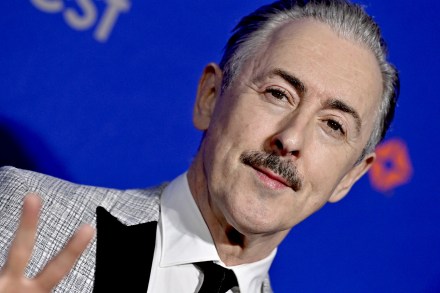
Around this time of year TV schedules groan under a blizzard of feel-good festive movies, all of which share essentially the same plot: a hard-charging corporate bigwig burnt out on life in the city returns home to Middle America for Christmas, where they learn important life lessons from folksy neighbours, fall in love with the quirky owner of a coffee shop, and use their business nous to save the local factory from closure. Eventually everyone gathers around an oversized Christmas tree and pretends to sip eggnog from patently empty mugs. The credits roll and so do our eyes. Alan Cumming seems to have stumbled into a real-life version of this plot.

Accused rapists aren’t getting a fair trial in Scotland

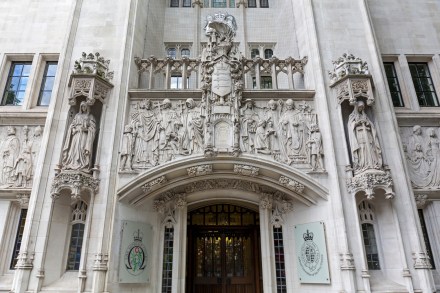
The UK Supreme Court has made a very confused ruling about whether or not Scottish courts are breaching the right to a fair trial in rape cases. Some believe this is a ‘landmark ruling’ that could, ‘trigger multiple appeals by men convicted of sexual offences in Scotland’. In my opinion the court is having its cake and eating it.   The ruling states that two rape cases they assessed in October last year were fair and there was no breach of the European Convention on Human Rights' Article 6, the right to a fair trial. But also: ‘The Scottish courts should modify their current approach to the admission of evidence in trials for sexual offences because it is liable to infringe defendants’ rights under Article 6 of the Convention’.

The SNP’s useless land revolution

Few would argue that Scotland’s present pattern of land tenure is ideal. Around half of private land is owned by fewer than 500 individuals, corporates or pension funds. The vast estates date from two centuries ago when landlords, often clan chiefs, expelled the Scottish peasantry from their villages in the interests of ‘improvement’ – mainly to create sheep walks, deer-hunting estates or, latterly, forestry. Had we had a French Revolution, landed estates might have been broken up. But we didn’t, and they weren’t.

What’s so fresh about ‘fresh hell’?

‘What fresh hell can this be?’ Dorothy Parker would ask if the doorbell rang. Now fresh hell has been freshly added to the Oxford English Dictionary. But was Parker the onlie begetter of the phrase? The hunt has been on to find earlier examples. The OED itself quotes a ghostly story within The Pickwick Papers (1837) for a parallel: ‘He started on the entrance of the stranger, and rose feebly to his feet. “What now, what now?” said the old man – “What fresh misery is this? What do you want here?”’ I’ve been doing what counts for me as research. In The Pickwick Papers, Dickens uses fresh twice as frequently as he does in Great Expectations 24 years later.

Blow for Scottish Tories as Reform gain another councillor

To Ayrshire, where a former Tory councillor who quit the party in July has defected to Reform UK. North Ayrshire councillor Todd Ferguson has made the leap to Nigel Farage's party, following in the footsteps of multiple independent and former Conservative councillors across Scotland. The blow is even more painful for Scottish Tory party leader Russell Findlay as he is a regional MSP for the area. Another one bites the dust… Ferguson, who has been a councillor since 2017, quit the Conservative party in summer and has sat as independent – until now. He has become the third Reform councillor on North Ayrshire council, alongside Matthew McLean and Stewart Ferguson.

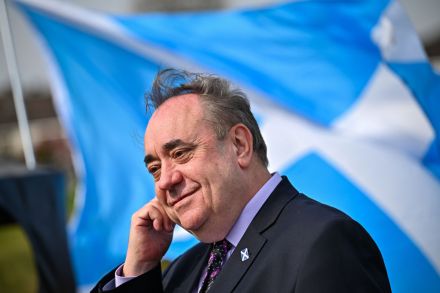
Salmond died almost penniless after court battles

Last year, Scotland's former first minister Alex Salmond had a heart attack during a trip to North Macedonia and passed away. Salmond brought his country to the brink of independence in 2014 and helped establish the Scottish National party as a mainstream group north of the border – but his career was also tainted by allegations of sexual assault and misconduct. As revealed by the Sunday Times, the ex-FM died almost penniless in 2024, after fighting two court battles in a bid to save his reputation. One of his supporters, former SNP MSP Fergus Ewing, has claimed that 'the prosecution against him arose, in substantial party, from motives of malice on the part of his enemies'. Good heavens.