Politics

Read about the latest political news, views and analysis

Is partygate no longer an issue for Boris Johnson?

14 min listen

The Tory spring conference is this weekend. Before the invasion of Ukraine, when partygate dominated the headlines, it was predicted to have the feel of a pageant show for potential candidates to replace Boris Johnson. But now, with even Labour quieting their cries for resignation, what will the atmosphere of this event be?Max Jeffery talks to James Forsyth and Katy Balls.
Is Boris channeling Churchill in his response to Russia?

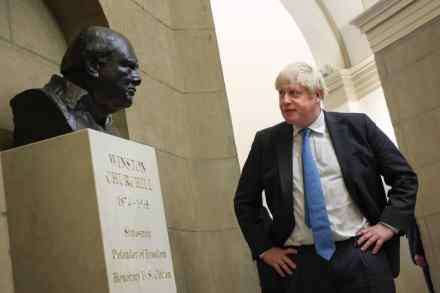
Boris Johnson’s hero – apart from himself – is Winston Churchill, who led Britain through the dark valley of World War Two. Our present PM has even written an adulatory biography of the great man, and clearly would like to channel Churchill as a war leader and emulate his success. Will the war in Ukraine give him the opportunity? Although Britain is not – yet – a direct belligerent in the current conflict, it is already playing a major role. It is supplying anti-tank NLAW weapons and missiles to the Ukrainians; it is ramping up diplomatic support for the invaded country; and – albeit unofficially – British Army veterans and volunteers have travelled to Ukraine to join the fight against the Russian invaders.

Kemi Badenoch: the curriculum does not need ‘decolonising’

When the government published a report last year by the Commission on Race and Ethnic Disparities (CRED) into racism in the UK, it was the subject of controversy. The report concluded the UK does not have a systemic problem with racism (while accepting there are issues), and a number of charities dubbed it 'deeply troubling'. A year later and the government finally set out its response to the report and how it intends to deal with the inequalities highlighted in it.  Taking its founding principles from the original report, it essentially accepts the chair Tony Sewell’s logic that the different outcomes for different minority groups means that it is the wrong approach to attribute every problem to racism.

The Western Front

45 min listen

In this week’s episode: Has Putin’s invasion of Ukraine exposed the West’s weakness - or its strength?For this week, Sergey Radchenko, a Cold War historian writes about the draconian anti-war measures that Putin has imposed in Russia. He joins the podcast along with Dr Jade Glynn, a specialist in Russian memory and foreign policy at the Monterey Initiative in Russian Studies. (01:00)Also this week: has Russia’s invasion of Ukraine highlighted the hubris of the West? While Western countries unite in a chorus of criticism against Russia’s invasion of Ukraine. Rod Liddle writes that the invasion only highlights the impotence of the West. He is joined by James Forsyth, The Spectator’s political editor.

The Bank of England is playing catch up with inflation

The Bank of England has voted to hike interest rates to 0.75 per cent, the third successive rise, which puts rates back to their pre-pandemic levels. Historically, we’re still at ultra low levels, but the rise is anything but insignificant. After the Federal Reserve made its first move to lift interest rates by 0.25 per cent (its first rise since 2018), it was all but guaranteed that the Bank would vote to lift interest rates again. The Fed had been holding out longer than most, with CPI in the United States hitting nearly 8 per cent, a 40-year high, before it took action. But the narrative that price hikes are ‘transitory’ finally broke down and no one – on either side of the pond – is credibly pretending this is a temporary phenomenon any longer.

Nazanin is free. But at what cost?

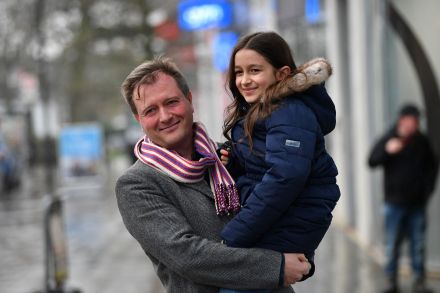
Nazanin Zaghari-Ratcliffe's release, alongside fellow prisoner Anoosheh Ashoori, has attracted enormous amounts of praise and joy at a time when the news has felt like a relentless stream of misery. How could you feel anything other than joy at the release of a young mother after six years away from her child? These freed Britons have endured an unimaginable plight, suffering horrific conditions in one of the world’s most notorious dictatorships.  But when these outpourings of relief and jubilation pass, a serious reckoning over how the Foreign Office secured their release must take place.

What can save China from Covid?

It is tempting to believe that we have gone from one crisis to another: Russia invaded Ukraine hours after Covid restrictions were lifted in England. Tempting, but wrong. Covid is now manageable because of high levels of immunity from vaccines and prior infection (just look at how our high case rate isn’t leading to calls for the reintroduction of restrictions). But it remains problematic in less highly vaccinated countries, particularly those pursuing a zero-Covid strategy. The most dramatic example is China. There are approximately 15 million unvaccinated over-eighties in the country (Beijing prioritised immunisation by profession rather than age).

Nobody will forget what Russia has done

At the heart of the West’s response to Russia’s invasion of Ukraine sits an ambiguity that it is convenient, perhaps even necessary, for our political leaders to maintain. If we can turn the clock back on Putin’s foolish endeavour – if he can be persuaded to withdraw his troops, disavow Russia’s territorial ambitions and return to the status quo ante – then, with Ukraine again an autonomous and independent country, does the West also return to the status quo ante in our own dealings with Russia?

How the Foreign Office secured Zaghari-Ratcliffe’s release

There was a rare display of unity in the Commons chamber this afternoon when Liz Truss gave a statement on the release of Nazanin Zaghari-Ratcliffe. While Labour deputy leader Angela Rayner went on the attack at PMQs, asking whether Johnson's comments when he was Foreign Secretary had made things worse, there was a far more conciliatory tone in the Commons when the Foreign Secretary updated MPs on the 43-year-old British-Iranian dual national's safe return, after being detained in Iran for more than five years on charges of plotting to overthrow the Tehran government.

Petrol states splash the cash for MPs

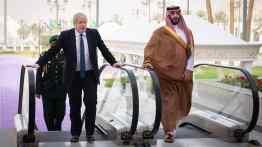
Boris Johnson is out in Saudi Arabia, urging Mohammed bin Salman to turn on the oil taps again. But the Prime Minister isn't the only politician who's been able to sample the delights of the Middle East this year. No less than nine of his parliamentary colleagues jetted out to the region last month, running up a total bill of more than £44,000 in flights and hospitality to Qatar and the UAE. The Qatar push is especially interesting, given the forthcoming World Cup scheduled to be held there. Some £15,460 was spent in February on flying four MPs including former Defence Secretary Sir Gavin Williamson out to the tiny Gulf state. Indeed Qatar's lobbying efforts in the UK since winning the right to host the FIFA tournament have been considerable.

Konstantin Kisin on the war in Ukraine

35 min listen

This week Winston is joined by Russian-British comedian, podcaster and author Konstantin Kisin. Konstantin gives his insight into the ongoing war in Ukraine, the Russian mindset, the potent myth of fighting Nazis and a little on his forthcoming new book ‘An Immigrant’s Love Letter To The West’.

Why has Iran finally released Zaghari-Ratcliffe from prison?

10 min listen

After 6 years in jail in Iran, Nazanin Zaghari-Ratcliffe has been released and will return home to her husband and their seven-year-old daughter. The UK has paid a debt of £400 million as part of this negotiation which has been an ongoing diplomatic dispute between Britain and the Iranian government. Who were the key players in her release negotiations? And is this a win for Boris Johnson?Also on the podcast, Boris Johnson's Saudi Arabia trip continues as he aims to encourage Mohammed bin Salman to increase oil exports to the UK.'Now we see a sort of Boris of Arabia heading off into Riyadh. He's always had a good relationship with bin Salman ever since he was Foreign Secretary, they are on texting terms' - Fraser Nelson.

Russia had nothing to do with Brexit

In light of Russia’s abhorrent invasion of Ukraine, certain corners of the internet have become obsessed – yet again – with Russia’s supposed involvement in the 2016 Brexit referendum. The connections are always left necessarily tenuous: there is very little in the way of logical reasoning that could really connect the two. Plenty of pro-Brexit figures have been hawkish on Russia since long before the 2016 referendum. Plenty of liberal remainers have, intentionally or not, acted as apologists to Russian wrongdoing. There is nothing to suggest Brexit enhanced Russia’s ability to invade Ukraine, either. The EU is not Europe’s primary security alliance, Nato is.

Rayner grills Raab over Lebedev and Saudi oil

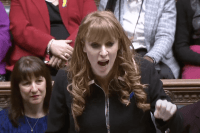
When Angela Rayner faces Boris Johnson at Prime Minister's Questions, it is obvious that both sides rather enjoy the exchanges. When she's up against Deputy Prime Minister Dominic Raab, as she was today, it feels like more of a grudge match. The session naturally centred around Ukraine, but as is Rayner's habit, it was more political than previous PMQs. Labour's deputy made her theme the government's failure to ensure Britain's oil security and links to Russian oligarchs. Much of her attack was about flaws in the absent Prime Minister's own character: the first question was whether Johnson's comments about Nazanin Zaghari-Ratcliffe when he was Foreign Secretary had made the situation worse.

Now the cybernats come for students

Something is rotten in the state of Scotland. No, not the creaking CalMac ferry fleet but rather the health of free speech in the birthplace of the Enlightenment. The warning signs have been there for years now, what with the Hate Crime Act, the Scottish government's efforts to evade Holyrood scrutiny and the SNP's own intolerance for any kind of internal party dissent. But now a minor episode at a leading university perhaps best illustrates the sorry state of the right to dissent in Nicola Sturgeon's Scotland. Students at the University of St Andrews last week published a short satirical article in their magazine the Saint, making fun of relations between London and Edinburgh.

Zaghari-Ratcliffe’s release will be a big relief for Boris Johnson

Nazanin Zaghari-Ratcliffe has been released from custody in Iran, according to Iranian government officials. Zaghari-Ratcliffe, the 43-year-old British-Iranian woman, was detained in Iran over five years ago when she was accused of plotting to overthrow the Tehran government. Her case became even more high profile when Boris Johnson was criticised for making a misleading statement during his time as foreign secretary when he claimed she had been 'teaching people journalism' in Iran. The comments were cited as proof by the Iranian government that Zaghari-Ratcliffe had engaged in 'propaganda against the regime'. She has always denied all charges.

The West has to bite its lip for Saudi oil

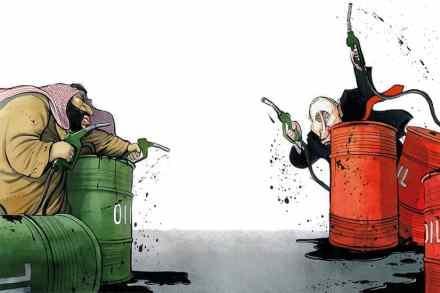
It would be ridiculous to claim that Boris Johnson’s visit to Saudi Arabia is not morally problematic. He is going to a country which held a mass execution for 81 people this weekend – a record number – and to visit a man who US intelligence blames for the brutal murder of the journalist Jamal Khashoggi. Yet, if the West wishes to reduce Vladimir Putin’s leverage – and stabilise the oil market – then it needs Saudi Arabia to pump more; no country has more spare capacity than Saudi Arabia, which could produce another 1.5 to 2 million barrels a day if it wanted to.