What will happen now Roe v Wade is overturned?
22 min listen
Inez Stepman returns to talk to Freddy Gray about the overturning of the 1973 Roe v Wade decision by the Supreme Court.
Read about the latest political news, views and analysis
22 min listen
Inez Stepman returns to talk to Freddy Gray about the overturning of the 1973 Roe v Wade decision by the Supreme Court.
Dmytro Savluchenko was one of Moscow’s useful idiots: a Ukrainian advocate of Russkiy Mir (or 'Russian world'), Putin’s idea of a kind of reich of Russian-speaking peoples. Back in 2014, when the Russian army stormed the Donbas region, Savluchenko campaigned for Kherson (an area bordering Crimea) to join Russia. More recently, Savluchenko has served as a senior official in the Russian-installed administration of Ukraine’s occupied Kherson region. His career ended this morning, when he was killed by a car bomb. His killing marks the start of a new phase in the war: guerilla warfare and targeted assassination.

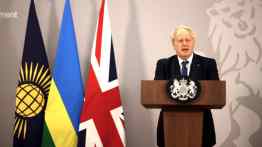
Boris Johnson has not accepted responsibility for the two by-election defeats. You could have written this line at any point today and it would be true – and it remains the case after the Prime Minister gave a press conference from the Commonwealth heads of government meeting in Kigali. He said the party needed to ‘listen to the messages that we are getting’ but made clear that the message he was hearing was that the government needed to focus not on Westminster matters but on delivering the things that mattered to the British people.
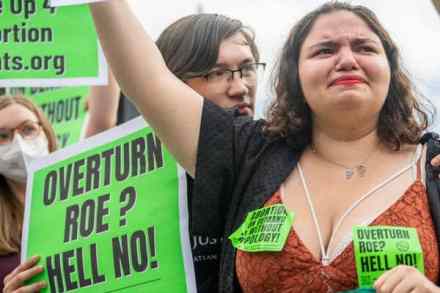
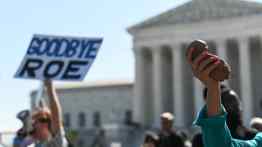
You wait decades for landmark reforms in America and then, like culture-war buses, two come along at once. Earlier this week, the Senate passed a gun control bill – the most significant firearm control legislation in US history. Now, the Supreme Court has voted 6-3 to overturn Roe v. Wade – as everyone expected since Justice Samuel Alito’s draft opinion was leaked on 2 May. 'The Constitution does not confer a right to abortion; Roe and Casey are overruled; and the authority to regulate abortion is returned to the people and their elected representatives,' a syllabus of the opinion said. Barack Obama has tweeted that the news is ‘devastating’ There will be lots of anger all over the world – on social media and the streets.
The resignation of the party chairman Oliver Dowden is so damaging for Boris Johnson because the issue in Tiverton was not the campaign that CCHQ ran. You can’t put a 30 point swing down to the choice of candidate or the campaign tactics. Dowden is a party man through and through, a loyalist to the core. He worked at CCHQ, then in David Cameron’s Downing Street before becoming an MP. He has helped prepare the last three Tory leaders for PMQs. He isn’t seen as particularly personally ambitious which makes his resignation all the more telling: no one can accuse him of being on leadership manoeuvres.
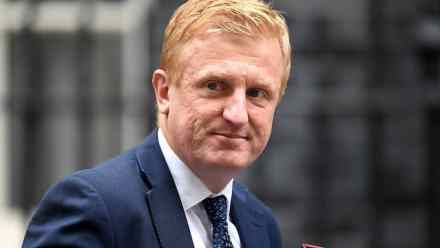
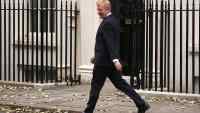
So. Farewell then Oliver Dowden. The Hertsmere MP resigned as co-chairman of the Conservative party this morning, following last night's by-election defeats in Tiverton and Wakefield. He was appointed to the post in September and was tasked with guiding the Tory machine through the mid-term blues and focus CCHQ on winning the next general election. Now though, he's gone, and a successor must be appointed. The Tories have opted in recent years to adopt a co-chairmanship model. Typically one is an oleaginous, wealthy individual whose job is to raise funds from other oleaginous, wealthy individuals. This role was performed with aplomb by Lord Feldman during the Cameron years and is now filled by Ben Elliot.
10 min listen
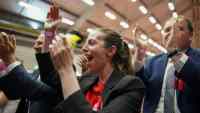
In a major blow, the Conservatives have lost two seats in the Tiverton and Wakefield by-elections. Immediately after, the Conservative party chairman, Oliver Dowden resigned citing 'a deeply personal decision' following a 'run of very poor results for our party'. The Lib Dems overturned a huge Tory majority in Tiverton and Honiton, Devon, their third by-election victory over Boris Johnson's party in a year. What does this suggest about the public mood towards their current government?
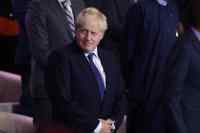
The partygate scandal has left a long hangover. Westminster is waking up to the news that Tory seats in both the ‘red’ and ‘blue wall’ have fallen respectively to the Lib Dems and Labour. In true form, Sir Ed Davey is claiming the Tiverton result is the ‘biggest by-election victory we’ve ever seen’ (it wasn’t) while it transpires that harping on about Harold Shipman in Wakefield isn’t a good strategy for holding a northern marginal either. Oliver Dowden, the Conservative party co-chair, has already bit the bullet this morning by resigning – but there’s one person who definitely isn’t to blame according to some of his colleagues: Boris Johnson.

If only they had waited until today. Had Tory MPs cleared the threshold for a confidence vote in Boris Johnson this morning – amid the smouldering embers of two blazing by-election defeats – rather than earlier in the month, then he would surely be toast. As it is, all that the Prime Minister’s many critics in the Conservative parliamentary party can do is seethe and wait a while for another opportunity to topple him. As someone determined to continue in office, Johnson is able to do so unchallenged until 6 June, 2023, absent of an emergency change in 1922 Committee rules. Some Tory MPs will now push for such a change.
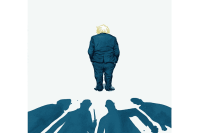
Looking at these Tory losses, it is hard not to conclude that the rebels would have got the 180 votes they needed to oust Boris Johnson if they had been organised enough to wait until after the by-elections before going for a vote of no confidence. But having had a vote two weeks ago, it is not credible to suggest changing the rules immediately to allow another one. However, judging from the conversations I have had with Tory MPs this morning, more of them would now like the option of having another vote sooner than a year from now. Some talk about the autumn, others about March. In a way, Oliver Dowden’s resignation is so devastating because no one thinks that it was tactical campaigning errors by Conservative Campaign Headquarters that led to these defeats.
Why was the Tory defeat in 1997 so heavy? One of the reasons was that the anti-Tory vote tended to coalesce around the candidate most likely to defeat the Tory in each place. Tactical voting in 1997 cost the Tories 30 seats, turning a bad defeat into a catastrophe. Last night provides evidence that this is happening again, that in British politics there are now two blocs, the Tories and the anti-Tories. Take Tiverton. In the last two elections, Labour came second there. But in this by-election, they lost their deposit as their vote share dropped by 16 per cent.
Last night's by-elections in Wakefield and Tiverton and Honiton have proved disastrous for the Tories. Labour took Wakefield by 4,925 votes – a swing of almost 13 per cent. The Liberal Democrats meanwhile put another dent in the ‘blue wall’ taking Tiverton by 6,144 and achieving a massive 30 per cent swing. The Tiverton and Honiton result highlights the trouble Boris’s government finds itself in. The seat has been Conservative – and with a large majority – since its creation in 1997. But even before that seats in the area had been Tory since Queen Victoria was on the throne. Turnout was well below general election levels. In Wakefield, just 39 per cent bothered to vote – the lowest ever in the seat.
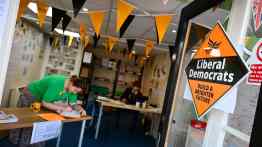
The optics this morning could not look any worse for the Conservative party. They have been defeated by Labour in a red wall constituency – demonstrating how vulnerable they are to losing seats newly won in 2019. And they have suffered a crushing defeat against the Lib Dems in a formerly (very) safe seat. The Tories appear to be in danger of leaking seats in several different directions at the next general election. There are clearly lessons to be learned and things the party can do to turn this around. The problem is the Tories don’t have any solutions at the moment. There are some who are saying that these two by-election losses look worse than they actually are.
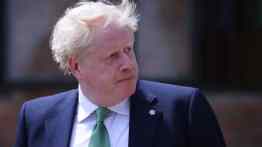
What now for Boris Johnson? He's lost two by-elections and a cabinet minister before breakfast, and isn't even in the country. His response from the Commonwealth heads of government meeting in Rwanda was that he would keep going, saying: I've got to listen to what people are saying, in particular to the difficulties people are facing over the cost of living, which is I think for most people the number one issue. I understand that the No. 10 plan to move on from these results had been to push up talk of an early general election in the autumn of this year. The Prime Minister had certainly been giving those signals to MPs who he has spoken to this week, suggesting it was time to 'get ready'.
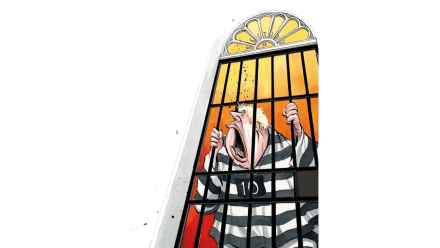
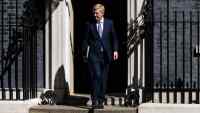
Below is Oliver Dowden's letter to Boris Johnson, explaining why he is resigning as chairman of the Conservative party, following this week’s two by-election losses. It is with great sadness that I must resign as Chairman of the Conservative Party with immediate effect. Yesterday’s Parliamentary by-elections are the latest in a run of very poor results for our party. Our supporters are distressed and disappointed by recent events, and I share their feelings. We cannot carry on with business as usual. Somebody must take responsibility and I have concluded that, in these circumstances, it would not be right for me to remain in office. It has been an honour to serve in your cabinets as Party Chairman, Culture Secretary and minister for the Cabinet Office.
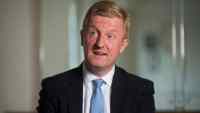
Boris Johnson has been clear that he will not resign in the face of by-election losses. But his party chairman just has done, saying someone needs to take responsibility for losses in both and Tiverton & Honiton. Tory chairman Oliver Dowden announced he is quitting as ‘we cannot carry on with business as usual’. In his resignation letter, he says ‘our supporters are distressed and disappointed by recent events and I share their feelings’. Dowden does not offer an endorsement of the Prime Minister – instead saying he remains loyal to the Conservative party.
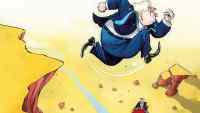
Boris Johnson is suffering a further blow to his leadership this morning after the Conservatives lost two by-elections overnight. Labour took Wakefield from the Tories by 4,925 votes – a swing of 12.7 per cent. Meanwhile, the Liberal Democrats managed to overturn a Tory majority of 24,239 in Tiverton and Honiton – beating the Conservatives by 6,144 votes, with a swing of nearly 30 per cent. Tory MPs with seats where the Lib Dems are the second largest party will be particularly nervous The opposition leaders have been quick to herald their successes.
10 min listen
Today, British Airways staff have voted have a strike of their own, adding to the government's woes as rail workers continue to strike throughout this week. On the podcast, James Forsyth adopts a term from the Americans and asks: can the government prevent a 'bummer summer', where nothing quite works? Cindy Yu also talks to Katy Balls, who gives the low down on the risks the Prime Minister is taking on with his eight days foreign trip at a time of two by-elections back home. Produced by Cindy Yu.
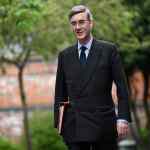
Jacob Rees-Mogg's war on Whitehall continues apace. The Minister for Brexit Opportunities and Government Efficiency has embraced his new role with relish, firing off notes to officials refusing to return to the office and launching his new 'EU law dashboard'. But it's his intention to trim the size of the state which has caused most upset among the Sir Humphreys of SW1, with Rees-Mogg pledging to cut the civil service headcount back to where it was before the pandemic. That would mean 91,000 job cuts: a figure that was briefed to the Daily Mail, which splashed on the story on Friday 13 May. This announcement, via the media, angered many mandarins across Whitehall.
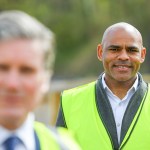
To Bristol, the right-on Remain capital of liberal Britain. The local Labour mayor Marvin Rees has been having a bit of a bad time recently. Elected in 2016, his constituents think he's done such a good job that they, er, voted to abolish the mayoralty in a referendum last month. Awkward. Since then, Rees has made national headlines for the first time in his life after flying 9,000 miles to Canada to deliver a 14-minute speech on cutting carbon emissions. The irony of such folly appears to have been lost on Rees, whose team don't take too kindly when the mayor's eco-hypocrisy is pointed out. A perfect example of this was provided this week at a Bristol City Council media briefing.