Politics

Read about the latest political news, views and analysis

Can Zelensky afford to freeze Ukraine’s gas prices?

This morning, Volodymyr Zelensky signed a moratorium on energy prices – so while gas bills are rising all over Europe, Ukraine will remain unaffected. This honours a pledge he made on his election. Freezing energy bills is a standard populist policy in Ukrainian politics (in a country where temperatures can reach -25ºC and the elderly can’t afford to buy medicine, it’s hard to win without making such promises). But there are now serious worries about whether it could bankrupt a government that needs all the money it can get to fight a war. Energy prices will be frozen until six months after martial law ends in Ukraine: the pledge is good for as long as the war lasts.

What does Mick Lynch want?

12 min listen

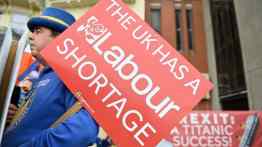
The UK has been hit by another round of rail strikes today with rising inflation and falling wages a recipe for continued disruption in the public sector. Labour rebels such as Sam Tarry are fast becoming celebrities among the unions. Could this leave Starmer in another predicament? Also on the podcast, as Liz Truss remains ahead in the leadership polls: is the special relationship safe in her hands? Natasha Feroze is joined by Fraser Nelson and Kate Andrews. Produced by Natasha Feroze and Oscar Edmondson.

Will inflation kill Truss’s tax cut plans?

This week, the Institute for Fiscal Studies offered tough words for those hoping for tax cuts: with inflation taking its toll on both government and household finances, the next prime minister would be forced to prioritise the most vulnerable and debt-servicing payments. This would require more revenue for the Treasury, not less. As the Office for National Statistics publishes the latest public sector finance data for July, are these warnings too pessimistic – or already proving apt? Inflation continues to ramp up debt interest payments – a grim reality for any government which wants to spend money on delivering new and better services, not on money it’s already spent.

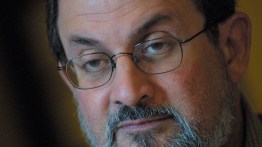
Salman Rushdie was never safe

The stabbing of Salman Rushdie sends a renewed message to the world: take Islamism – the transformation of the Islamic faith into a radical utopian ideology inspired by medieval goals – seriously. Ayatollah Ruhollah Khomeini, the most consequential Islamist of the past century, personally issued the edict (often called a fatwa) condemning Rushdie to death in 1989. Khomeini, responding to the title of Rushdie’s magical-realist novel The Satanic Verses, decided it blasphemed Islam and he deserved death. Initially alarmed by this edict, Rushdie spent over 11 years in hiding protected by the British police, furtively moving from one safe house to another under a pseudonym, his life totally disrupted.

Downing Street aides get their payout

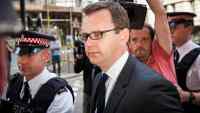
When you say the name ‘Andy Coulson,’ it’s hard not to think of the phone hacking scandal. The former News of the World editor served five months of an 18-month sentence for conspiracy to commit phone hacking in 2014 but has now managed to rebound from Belmarsh to business success, with a PR firm making half-a-million pounds a year. According to company accounts, the one-time Downing Street aide’s new outfit Coulson Partners Limited – for which Coulson is listed as the sole director and owner of 100 per cent of shares – declared total equity of £496,000 at the end of 2021. It pulled in more than a million last year, less £541,000 owed to creditors.

Star SNP economist fails to find the positive case for independence

You can imagine the glee with which Scottish government ministers and their advisers greeted the news they had a new convert arguing the case for Scotland exiting the UK, and that it was a Scots-born academic making a name for himself as an edgy, left-wing economist. Mark Blyth, hailing from Dundee but now professor of international economics at the Ivy League Brown University in Rhode Island, and co-author of anti-austerity book Angrynomics, was signed up to a new Scottish government economic advisory council last summer. The group, which had a remit to publish a strategy paper on turbo-charging Scotland's economy, replaced a previous Council of Economic Advisors set up by Alex Salmond.

The unedifying Afghan blame game

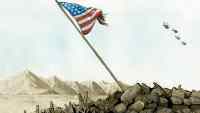
A year ago we scuttled out of Afghanistan. We abandoned the aim we and the Americans had proclaimed so noisily of bringing Afghanistan into the twenty-first century so that the Taliban could never triumph again. We left behind many Afghans who had helped us at the risk of their lives. To most of the world it was obvious that the Americans and their allies had been comprehensively defeated. Our own politicians, generals, diplomats, spies and aid advisers have been tumbling over one another to distance themselves from the mess. At first they tried to argue that it was too soon to reach such a depressing conclusion. After all, the Taliban had promised the Americans that they would no longer harbour international terrorists.

Prima donna: is Giorgia Meloni the most dangerous woman in Europe?

43 min listen

In this week’s episode:Is Giorgia Meloni the most dangerous woman in Europe?Spectator contributor, Nicholas Farrell is joined by Chiara Albanese, a political correspondent at Bloomberg, to discuss the road ahead for Italy’s next likely leader. (01.10)Also this week: Are we entering a new age of digital censorship?Lord Sumption unpicks the Online Safety Bill in this week’s magazine. He’s joined by Baroness Nicky Morgan, a firm supporter of the bill. (17.53)And finally: why has holiday hand luggage become such a hassle this summer?Spectator contributor and marketing guru, Rory Sutherland joins us to get to the bottom of this. (31.56)Hosted by Lara Prendergast and Gus CarterProduced by Natasha Feroze.

Is the Labour party in trouble?

13 min listen

It seems like Labour has a problem when it comes to the size of its membership. It lost 91,000 members last year and recorded a £4.8 million deficit. Is this the Keir Starmer effect on the Corbyn membership?Also on the podcast, Rishi Sunak has gone viral after sharing his McDonald's breakfast order on This Morning. Katy Balls tells us why it was such a controversial choice. Cindy Yu speaks to Isabel Hardman and Katy Balls. Produced by Cindy Yu & Natasha Feroze.

Rishi’s breakfast whoppers leave egg on his face

It's the scandal all Westminster is talking about. Appearing on ITV's This Morning Rishi Sunak told viewers that if he goes to McDonald's with his daughters they all get the breakfast wrap: 'My eldest daughter, we get the wrap so if I’m with her that wrap with the hashbrown and everything in it is what we do.' But as Times sleuth and self-proclaimed 'breakfast wrap aficionado' Geri Scott pointed out such wraps 'were taken off the menu in March 2020 due to Covid.' McDonald's themselves are yet to weigh in on the row today but in January the fast-food chain's official UK account confirmed that 'bagels and breakfast wraps are officially gone from the menu' declaring that 'it's now time to say "that's a wrap."' And there was Mr S thinking it was Burger King that sold Whoppers.

Amol Rajan’s University Challenge disaster

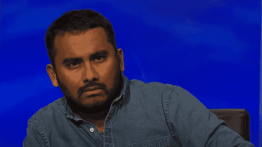
Congratulations to Amol Rajan, who adds the mantle of University Challenge host to his burgeoning portfolio of BBC jobs. Rajan will succeed Jeremy Paxman in the role when the latter steps down this autumn after 28 years hosting the show. On current trends, Mr S estimates the former Independent editor will have held every top job in the British media by the year 2024... Already there have been fears as to how well the new appointee can fill Paxo's formidable shoes though. Kate Phillips, the BBC’s director of unscripted insisted that 'If future student contestants think they’ll get an easier ride with Amol taking over, they can think again.' We shall see.

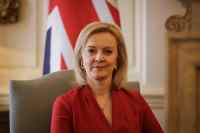
Who will Liz Truss send to political Siberia?

‘Whatever else you do, don’t step backwards,’ a man in the crowd shouts to Rishi Sunak as he stands on the edge of a swimming pool in the garden of a Tory councillor’s home in Bushey, Hertfordshire. About 100 party members have gathered to hear Sunak’s pitch. It’s the first of three stops he’s making before a hustings in Cheltenham. The leadership race will be decided by around 160,000 Tory members – and Sunak seems to be trying to meet as many of them as he can. On each visit he offers a version of his stump speech, including jokes about his height and how, unlike Boris Johnson, he looks as though his mother brushed his hair. Every address he gives has a common theme: the economy.

Letters: Blame the regulators, not the water companies

No competition Sir: Ross Clark’s compelling critique of the water companies comes to the wrong conclusion (‘Water isn’t working’, 13 August). He is right to say that water privatisation has been a failure, but this was inevitable given the nature of the industry – a monopoly providing an essential public service. Clark’s suggestion that there should be more competition is unworkable for the simple reason that there is too much fixed investment stretching back to the 19th century and we all have only one pipe into our homes. There are parallels with the rail industry, where a quarter of a century of trying to introduce competition has resulted in a handful of open access services and vastly higher costs.

In defence of Sanna Marin, Finland’s partying PM

Party politics is done somewhat differently in Finland. While Boris was hounded out in Westminster for some miserable looking cake and wine, over in Helsinki, his counterpart finds herself in hot water for simply having too much (legal) fun. Sanna Marin, the country's 36-year-old Prime Minister, is now facing criticism after a video of her partying with friends was leaked online. It features the Social Democrat leader throwing shapes to music and all seems a fairly innocuous affair. Not so for her critics. Talk show host Aleksi Valavuori led the charge, sneering at the suggestion that she is 'a responsible leader for a country in crisis'. He dubbed her 'the most incompetent PM we ever had' and suggested she should 'take your leather jacket and resign.

The Chinese spy ship and the dangers of debt-trap diplomacy

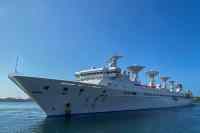
A Chinese spy ship that docked in Sri Lanka on Tuesday in defiance of Indian and western protests is the latest symbol of China’s power and ambition in the Indian Ocean. It is also a stark demonstration and warning of the harder edges of Beijing’s debt trap diplomacy. The Yuan Wang 5, bristling with satellite dishes and antennas, is described by China as a ‘research and scientific vessel’. In reality it is one of the latest generation of space-tracking ships, able to monitor satellites, as well as rocket and intercontinental ballistic missile launches. There is speculation that it carries a fleet of underwater drones. It is in other words, a formidable piece of surveillance kit.

Spare a thought for the A-level class of 2022

If you have an 18-year-old in your life, as I do, or even if you vaguely know of one, please take a moment to think kindly of them and wish them well today. Today is A level results day and for my son and his peers, taking their A Levels in May and June was their first ever attempt at sitting a formal exam. Can you imagine just how unprepared most of them must have felt? In March 2020 they had the GCSE rug suddenly and unexpectedly whipped out from under their young feet, just as they were preparing to ramp up for the final push towards exams which never happened. I remember only too vividly the feeling of total freefall and bewilderment that descended following the government announcement that there would be no exams whatsoever for the foreseeable future.

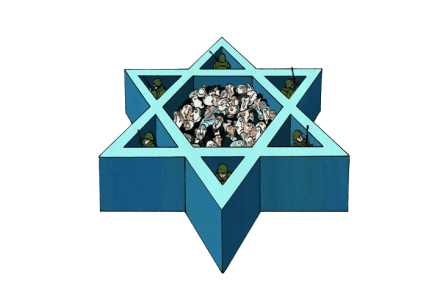
Can Israelis trust the UN?

You probably think you’ve heard every story there is to hear about people getting fired over their tweets. Well, here’s the story of Sarah Muscroft. She’s got them all beat. Until last Friday, Muscroft was the head of the UN Office for the Coordination of Humanitarian Affairs in the Occupied Palestinian Territory (OCHA). For 72 hours beginning on 5 August, Islamic Jihad fired 1,000 rockets into Israel and Israel responded with 170 counterstrikes, with the terrorist group citing as its pretext Israel’s targeted killing of two of its senior commanders and the arrest of dozens of its members. Eventually, a ceasefire was brokered with the assistance of Egypt.

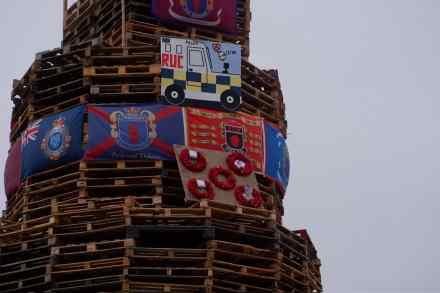
Northern Ireland is descending back into sectarianism

Nearly 25 years after the Good Friday Agreement, the embers of sectarianism in Northern Ireland are still glowing bright. This week thousands of young nationalists at a west Belfast community and music festival ended the night by chanting pro-IRA slogans. They were seemingly oblivious to the fact that the IRA murdered more Roman Catholics in the Troubles than any other combatants. The spectacle of kids, born after the guns went silent, gleefully venerating terrorists who brought such pain and suffering to the whole community was depressing enough. But it gets worse. The West Belfast based Féile (festival), where the chanting took place, is publicly funded by Belfast City Council, the Arts Council of Northern Ireland and NI tourism board.