Politics

Read about the latest political news, views and analysis

Is the Conservative Democratic Organisation the Tory Momentum?

As a Labour member and supporter, I feel a certain schadenfreude watching the newly-formed Conservative Democratic Organisation (CDO) take the fight to the Tories. The CDO – set up in response to falling rates of Conservative party membership – appears to be a Tory version of Momentum. It’s certainly making the same mistakes. In the early days, Momentum was a force for good within the Labour party: I remember seeing its members flooding the streets of Ilford North to ensure the election of Wes Streeting, who was hardly from their wing of the party. It was a movement that attracted idealistic people who shared Labour's values – not just the Trotskyists of old.
Will Tory sleaze hurt Sunak?

12 min listen

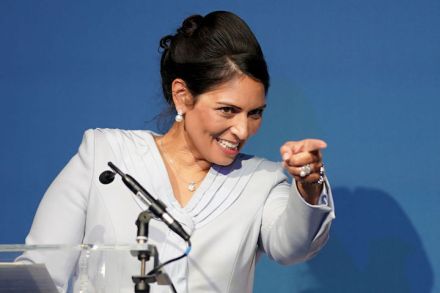
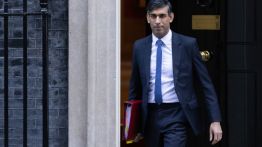
Having just recovered from his own seatbelt fine saga, Rishi Sunak spent the weekend fighting two more Tory sleaze scandals. First over the ongoing investigation into Nadhim Zahawi's taxes and the second linked to the BBC chairman Richard Sharp's £800,000 loan guarantee. Both stories link back to Boris Johnson's time as Prime Minister, but how much damage could this do to Rishi Sunak? Natasha Feroze speaks to Katy Balls and Fraser Nelson.

Ukraine is paying a heavy price for Nato’s dithering

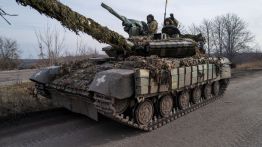
It is winter in Ukraine. The ground is frozen and hard. Groups of soldiers on both sides struggle in the cold. The Ukrainians insist they have one advantage over the Russians: their soldiers, unlike mobilised Russian troops, have some effective winter clothing.   Traditionally, armies stop moving in winter. They hunker down. It’s less true in Ukraine, where winter does not mean paralysis for civilian or army life. But in much of the country, the frontline does appear frozen – figuratively and literally. But winter ends quickly, especially in wartime.  Western intelligence agencies believe that a new Russian offensive is in the offing. They say a new attack will begin in either early spring or, possibly, at the tail end of the winter.

Can Nadhim Zahawi survive his tax troubles?

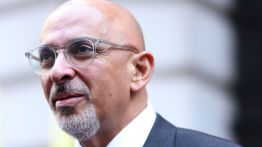
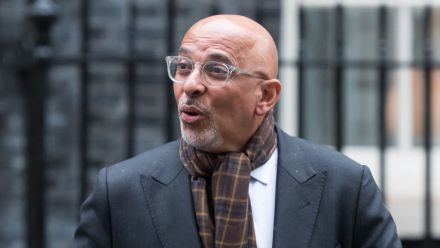
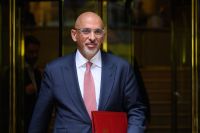
As a new week begins in Westminster, Nadhim Zahawi is under increasing pressure over his tax affairs. It's one of two stories - the second being whether the BBC chairman Richard Sharp helped Boris Johnson secure an £800,000 - loan that is leading to talk of Tory sleaze. The Conservative party chairman is facing questions over his suitability to remain in government after reports emerged last week that he had agreed to pay millions of pounds to settle his tax affairs. Last year it was reported that HMRC was investigating whether Zahawi ought to have paid capital gains tax following the sale of a stake in YouGov, held by Balshore Investments. Over the weekend, Zahawi issued a statement admitting he had agreed to settle unpaid tax relating to shares held in an offshore trust.

Putin’s desperate recruits are in a life-and-death scramble for kit

As Vladimir Putin seemingly dithers over the question of whether to send a further 500,000 of his citizens onto the battlefield this winter, one reason against – as reported on Coffee House – is surely a lack of basic equipment for them. Since the ‘partial mobilisation’ of up to 300,000 hapless men last September, there have been numerous reports of the army’s failure to properly kit them out. Russian soldiers have been sent to the front with children-sized gloves, uselessly thin rubber boots and, for facial protection, paintball masks. ‘They think we’ll walk around in this sh** like in Star Wars,’ one Russian soldier jokes in clip recorded by those sent to fight in Ukraine.

Will Prince Harry and Meghan spoil the King’s coronation?

As the furore caused by the publication of Spare may – or may not – be dying down, there are some signs that the Royal Family are beginning to take back control of the media narrative, while refusing to make any public comment on Prince Harry’s revelations. Firstly, there was the announcement that Prince Charles will be handing back up to £250 million a year from profits that the Crown Estate have harvested from offshore wind farms. Now the first details of the coronation on Saturday 6 May have emerged. Anyone who saw the King’s speech at Christmas will have realised that this is intended to be a different kind of reign to his mother’s, with a more liberal and inclusive attitude, and so his coronation will continue this new regime.

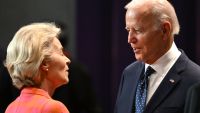
Why Britain will lose from America’s trade wars

Davos this year marked the start of a great economic divorce of the United States and Europe. Katherine Tai, the US trade chief, said that globalised capitalism is not working anymore. It leaves workers behind and gives fuel to populists, she said. Really, the Biden administration wants reassert US dominance in the world, and is using the country’s economic weight to do it. The Europeans, meanwhile, seem happy to become more protectionist too, with France’s Europe minister Laurence Boone calling the new US stance a ‘wake-up call’ and saying that Europe should respond in kind. Europe’s leaders are reacting to the reality that, with high energy prices, their manufacturing cannot remain competitive without tariffs.

Labour’s women problem gets worse

As the Conservatives face another round of allegations of Tory sleaze, Labour is doing what it does best: having an internal row about trans rights. After Labour MP Rosie Duffield found herself heckled by her own side for speaking out on her concerns over the SNP"s Scottish gender recognition bill, she penned an article likening being in the Labour Party to an abusive relationship and criticising Keir Starmer over his 'silence' following the incident. Those claims do not appear to have landed well in the Leader's Office. Rather than entering a period of reflection, the Mail on Sunday reports that a senior aide to Keir Starmer said 'it would be nice' if Duffield 'spent a bit more time' in her constituency of Canterbury rather than 'hanging out with JK Rowling'.

It’s time to make Boris Johnson special envoy to Ukraine

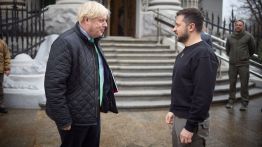
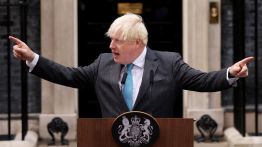
The videos showed a typical summit: Volodymyr Zelensky next to Ukraine’s flag and Boris Johnson next to the Union Flag. But there’s a difference. Johnson is no longer the prime minister and was visiting Kyiv as a private citizen – yet was greeted and treated like he was still calling the shots. A video of the meeting, with rousingly patriotic music, has been released. ‘I will do whatever I can’ says BoJo: but with what? In what capacity did his summit with Zelensky take place? Some may see this in the context of an attempted Boris Johnson comeback, but in the leading article in this week’s Spectator we make the case for his defence. Every Prime Minister wants a legacy, and what does Johnson have?

France’s protestors are just getting started

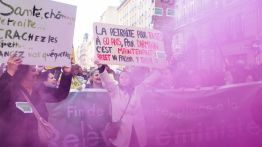
There was another protest in Paris on Saturday. According to the organisers, Jean-Luc Melenchon’s La France Insoumise, 150,000 turned out on a crisp winter’s afternoon to opposeEmmanuel Macron’s pension reform. The French President wants to lower the retirement age from 64 to 62. But independent analysis put the numer at the protest at 14,045. It was the latter. I was there. I’m now something of a seasoned observer of the French street protest. From Yellow Vests to Covid Passports, and from the far right to the far left, I’ve rubbed shoulder with all manner of disgruntled French citizen. Yesterday’s protest was one of the jollier.

The Tories are tired of Boris’s ceaseless scandals

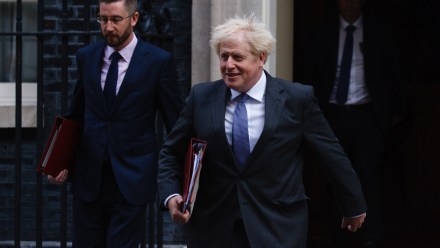
The political world splits in two whenever fresh evidence emerges that Boris Johnson does not think that life’s rules and norms apply to him. One faction, the majority, humourlessly harrumphs about standards and brands him unfit for high office. Another tries to excuse the latest infraction. It’s a grey area. It’s not a serious matter. There’s a vendetta against him. Today we saw the latest case of Johnson finding it churlish to expect him to stick to the ‘network of obligation that binds everyone’ (a phrase that should be copyright of his Eton classics teacher, Martin Hammond).

Sunday round-up: ‘I don’t know’ about Zahawi’s taxes

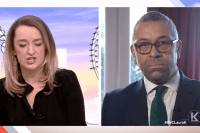
James Cleverly – ‘I don’t know’ any more detail about Zahawi’s taxes This morning was always going to be tough for whichever minister was landed with the morning media round. So followed an hour or so of pain for the Foreign Secretary James Cleverly, who was asked to address two highly inconvenient issues of integrity for the Sunak administration. Laura Kuenssberg raised the issue of the Conservative party chairman Nadhim Zahawi, who has reached a settlement with HMRC over his tax affairs, amounting to a recovery of £4.

How much trouble is Sunak in?

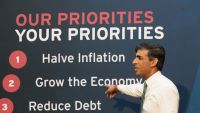
This week Rishi Sunak will meet with his Cabinet at Chequers as he tries to focus minds in his government and party towards the next election. However, while the Prime Minister wants to focus on his five priorities – half inflation, reduce debt, grow the economy, cut waiting lists and stop the boats – a Tory sleaze row threatens to overshadow his best efforts. Sunak is fighting fire on multiple fronts. First, his party chairman Nadhim Zahawi has had to issue a statement on his tax affairs in which he says an error that has reportedly resulted in him paying millions belatedly was ‘careless and not deliberate’. This has already led to calls from the opposition for Zahawi to go.

Watch: James Cleverly struggles on Zahawi tax questions

Oh dear, things are not exactly going well for the Tory party this weekend, with the government now facing potential scandals on two separate fronts. Yesterday, the chairman of the Tory party Nadhim Zahawi was forced to concede that HMRC had found that he had made ‘careless and not deliberate’ errors over his tax affairs when being appointed Chancellor of the Exchequer last year. Meanwhile the Sunday Times reports today that Richard Sharp, the chairman of the BBC, was involved in procuring an £800,000 loan for Boris Johnson, weeks before he was recommended for the role. So you can imagine that James Cleverly was not exactly jubilant about embarking on the Sunday broadcast round this morning, to defend the government’s record.

The whiff of decay hangs over the Tories  

‘To suffer one scandal,’ as Oscar Wilde didn’t quite write, ‘may be regarded as a misfortune. But to suffer three at once looks like carelessness.’  ‘Careless’ is indeed the very word used by Tory party chairman Nadim Zahawi to describe his handling of his own tax affairs – just one of several potential scandalettes gathering around the government like flies around a carcass.

Will Christopher Luxon be New Zealand’s prime minister?

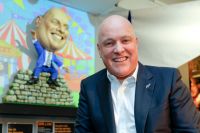
Following the resignation of Jacinda Ardern, New Zealand’s Labour government will select its new leader, and the country’s next prime minister, in the coming days. There will then be a general election on the 14 October. And with Ardern’s departure the spotlight is already beginning to shine on Christopher Luxon, the head of National, New Zealand’s main opposition party. For some time, National has shuffled through a succession of leaders. In the shadow of Jacinda Ardern’s incandescent profile the party has lacked relevance, especially during the domestic trauma of a mosque shooting, and then international crisis of a pandemic.

The tragic decline of political rhetoric

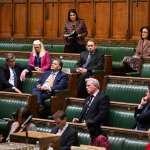
After the first regular BBC TV broadcasts in 1930, it took the House of Commons 60 years to agree to televise its proceedings. Proposals to do so were discussed on a regular basis from the 1960s onwards, but repeatedly rejected; as late as 1985 the idea was voted down by 275 to 263. Not until 1990 did MPs vote in favour of making the broadcasts permanent. One theme constantly reiterated by MPs opposed to televising the Chamber was that TV cameras would fundamentally change the nature of Parliament, encouraging Members to think of themselves as performers and to reach for soundbites rather than arguments. Gerald Howarth put it this way during the 1985 debate: ‘The television cameras would intrude; the intimacy of the Chamber would be lost. It would become a studio or theatre.

The night train to Kyiv

After several months in the UK, the lady sleeping on the opposite bunk on the night train to Kyiv told me she had had enough. Welcomed under the Homes for Ukraine scheme into a small English village, she had watched as the thermostat in the house was turned down and then turned down again. ‘Finally they set it to 15 degrees’, she said. ‘I know they were trying to save money but for all the water bottles I used I just couldn’t keep warm. I decided life back in Kyiv had to be better.’ An hour before our conversation I had arrived at Lviv station in western Ukraine. I sat on an ancient curved wooden chair in a barely-lit waiting hall. Near me were three men in uniform holding Kalashnikov assault rifles. They were yawning.