Politics

Read about the latest political news, views and analysis

Unions split over NHS pay

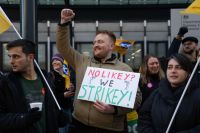
There’s disappointment in Downing Street this evening after nurses at the Royal College of Nursing voted to reject the government’s offer of a 5 per cent pay rise for 2023-24, along with a one-off lump sum payment. It was a close result, with 54 per cent rejecting the offer and 46 per cent voting to accept it. Following the result, the union promised fresh strikes as they attempt to put pressure on the government to come up with a more generous offer. The first of these is a 48-hour walkout over the May Bank Holiday weekend. In response, a government spokesperson branded the move ‘hugely disappointing’ and blasted the escalation of ‘strike action with no derogations, based on a vote from the minority of the nursing workforce’.
The US intelligence leak and the hypocrisy of the spy world

So what did everyone learn from the massive trove of more than a hundred top secret US documents a 21-year-old Air National Guardsman apparently put on a gaming server to wow some fellow God-fearing gun enthusiasts? Both little and a lot. Despite some clumsy cut-and-paste editing of casualty figures, as well as some carefully-worded claims that, as a British defence official put it, ‘a significant proportion of the content of these reports is untrue, manipulated, or both,’ the Americans are shamefacedly admitting that these are genuine documents. There will no doubt continue to be suspicions in some quarters that there is some baroque plot at work, whether a Russian long con or a US attempt to spread disinformation.

When will Steve Barclay compromise with striking doctors and nurses?

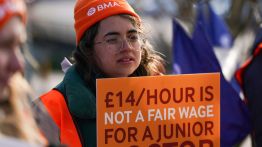
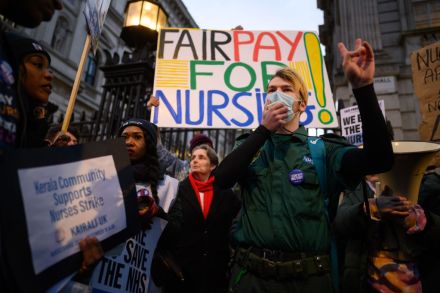
Nurses in England have today rejected the government’s pay deal and have announced a fresh round of strike action. The next strikes will take place over 48 hours from 8.p.m on 30 April to 8.p.m. on 2 May, with no emergency cover. The Royal College of Nursing ballot showed that 61 per cent of eligible voters turned out. The vote was close: 54 per cent voted to reject the government's offer - of a pay rise between 4.5 and 5 per cent - while 46 per cent voted to accept the deal. The staffing crisis only exacerbates the pressures felt by junior doctors. Many tell me how consultants and hospital managers alike have resorted to intimidation in attempts to force juniors to cover rota gaps.

Biden can no longer afford to indulge Irish nationalism

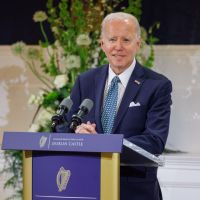
For the British government, the Biden visit to Belfast posed one major exam question: would the pageantry of a pan-nationalist juggernaut rolling into town, led by the most tribally Irish-American President of all time, make it appreciably harder for the DUP to accept the Windsor Framework and so to re-establish the Stormont Executive as the cornerstone of the Good Friday Agreement? For as it stands, Rishi Sunak’s mission to stabilise the Union in all its constituent parts is not yet complete. Put simply, the UK is an infinitely more important partner for the US in maintaining world stability than the still neutral Republic of Ireland Every moment of the US President’s brief time in the province had to be evaluated according to that exacting yardstick.

The Martha Lane Fox Edition

33 min listen

Baroness Martha Lane Fox is a dotcom pioneer having started lastminute.com in 1997. She sits on the board of some of the country's most prominent brands, including Marks & Spencer and Channel 4, and has made significant contributions to the government's digital agenda. On the podcast, Martha talks about the early years of the dotcom bubble; the car crash which led to her spending two years in hospital; and some of the campaigning work she has done to promote more accessibility for women in tech. Produced by Natasha Feroze.

Labour has a near-impossible job to do in Scotland

Every leader of Scottish Labour has, since 2007, felt they were turning the corner to recovery – only to discover they were actually on a roundabout. Every new dawn has proven itself to be sometimes agonisingly, and always painfully, false. But now, as the SNP is mired by scandal after scandal, Labour's odds in Scotland are looking better, even if Labour cannot quite relax yet. Keir Starmer must not only persuade soft-SNP voters to return to the party but simultaneously those who left Labour for the Conservatives in 2019.  There are signs that at the next general election things could actually change – for real this time.

SNP ‘power couple’ face dissent from within

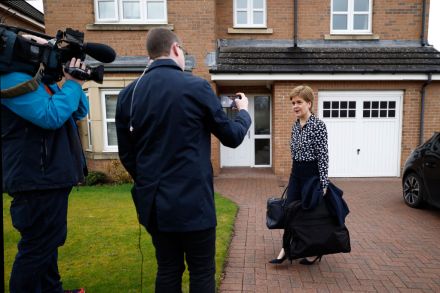
There’s more trouble in Scotland’s nationalist paradise. A storm is brewing amongst members of the SNP’s innermost ruling group as it is revealed that party secrets have been kept from its very own National Executive Committee. The resignation of the party's auditors, details on finances and the exodus of party members all came as much as a surprise to the party’s ruling group as they had to the rest of the nation.  But it doesn't stop there. Fresh allegations have sprung from a source deep within the party: an NEC whistleblower described how a group of senior figures including ‘power couple’ Sturgeon and Murrell demanded that the NEC be ‘disbanded’ in order to launch an inquiry meant to save the party from electoral disaster.

Is Starmer worried about Sunak?

23 min listen

Fraser Nelson speaks to Katy Balls and Stephen Bush from the Financial Times about the two party leaders as Britain starts to think about the next year's general election. As Labour's lead in the polls narrows, is their campaigning strategy working? And how is a fractious Conservative party responding to having Rishi Sunak as their leader? Produced by Natasha Feroze.

The new elite: the rise of the progressive aristocracy

40 min listen

On the podcast this week:  In his cover piece for The Spectator, Adrian Wooldridge argues that meritocracy is under attack. He says that the traditional societal pyramid – with the upper class at the top and the lower class at the base – has been inverted by a new culture which prizes virtue over meritocracy. He joins the podcast alongside journalist and author of Chums: How a tiny caste of Oxford Tories took over the UK, Simon Kuper, to debate (01:04).  Also this week:  In the magazine, ad-man Paul Burke suggests how the Tories should respond to Labour’s attack adverts. Released last week, the adverts have caused a stir for attacking the Conservative's recent record on curbing child abuse, and accuses Rishi Sunak directly of negligence on the issue.

Mary Quant 1930–2023

The fashion designer and icon Mary Quant has died at the age of 93. Brigid Keenan wrote the following piece in 2019. It is almost impossible to explain to today’s readers why Mary Quant (and the other Young Designers, as they became known) had such a huge impact. Over the half-century since, there have been so many ‘new’ ideas in fashion that her and their initial shock value has been diluted. Luckily, though, the Christian Dior exhibition is also showing at the V&A, and a quick visit there — look particularly at the fashions of the 1950s — will give you a clue. Pre-Quant, clothes were constricted: fussy, fitted, buttoned, cuffed, boned. They demanded a lot of the wearer. Mary’s were unstructured and she took her inspiration from surprising places.

Gove’s war on buy-to-lets will kill the holiday economy

The term ‘hostile environment’ was dreamt up by the Home Office to describe a policy of making migrants lives’ so difficult that they would be minded to pack up and leave the country. But it could equally well have been coined to apply to the government’s policies towards buy-to-let investors. For years, governments of all colours sat back and did nothing as rampant house price inflation priced many young people out of the market. Then something clicked and George Osborne, together with his successors at No. 11, decided that it was not a good idea to have investors and speculators scoop up properties by the armful, outbidding aspirant owner-occupiers.

France won’t be able to escape conflict in Taiwan

The last month or so has been an active time in Chinese-western relations. Early March saw President Xi threaten the US with conflict unless Washington stopped trying to ‘suppress’ his country; shortly afterwards he flew to Moscow to reaffirm his ‘no-limits’ friendship with President Putin. Next, Taiwan’s President Tsai travelled to the US to meet with lawmakers there. In response, Beijing ordered massive military incursions into Taiwan’s sovereign waters, announced that it would be able to inspect Taiwanese shipping, and briefly cut off the island using ships and aircraft in what many took to be a dress-rehearsal for a blockade.

Labour aren’t the first to fight dirty with attack ads

If you believe Britain’s commentariat, Labour’s new series of political ads, which make a variety of claims about Rishi Sunak, have polluted the nation’s politics. A consensus has emerged among them that they mark a 'new low' in political debate, are undoubtedly 'immoral' and could possibly encourage Q-Anon-like conspiracy theories. Even Labour front benchers Yvette Cooper and Lucy Powell seemed to want to distance themselves from the ads. It is certainly true that the first of these ads was especially contentious. Asking if the reader thought adults convicted of assaulting children should go to prison, it claimed, juxtaposed next to a smiling Sunak, that the Prime Minister did not.

Was Biden’s visit to Belfast gaffe-free?

12 min listen

President Joe Biden landed in Belfast this week to mark the 25th anniversary of the Good Friday Agreement. For the podcast, Washington editor, Amber Athey is joined by Lew Lukens, former deputy chief of mission at the US Embassy in London to talk about the significance of this state visit for Biden who now embarks on a four-day trip visiting family in Ireland. With proud Irish roots, a hostility to Brexit, and someone famous for his gaffes, has the trip passed by without any awkward moments? Produced by Natasha Feroze and Saby Kulkarni.

The strikes are taking their toll on UK growth

February was a no-growth month, according to the latest update from the Office for National Statistics, published this morning. A rise in construction was offset by a fall in services, resulting in zero headline growth. The strikes are taking their toll. The biggest contribution to the fall in services came from education and public administration, as striking teachers downed tools. Education fell by 1.7 per cent. Meanwhile public administration fell by 1.1 per cent, as ‘this industry also saw industrial action take place within the civil service during February 2023.’ An optimist might note that while the strikes offset economic activity in other sectors, at least there was some growth to point to: monthly construction figures had a comeback, registering a 2.

Junior doctors’ pay demands aren’t reasonable

Is a 35 per cent pay rise reasonable? That's the question which, rightly or wrongly, is at the heart of the junior doctors row.  We are part way through a 96-hour walkout which the NHS national medical director for England warned would cause ‘unparalleled levels of disruption’. Coming straight after the Easter weekend, coinciding with Ramadan and Passover, and lasting longer than any other walkout in NHS history, it has been timed for maximum impact. The health of sick people will be compromised: hernias will rupture, appendixes burst, cancer treatments will be delayed. But it will have subtler effects, too. One letter in yesterday’s Telegraph expressed dismay at the advice to ‘avoid risky behaviour’ during the strikes.

Will Sunak’s charm offensive on Biden pay off?

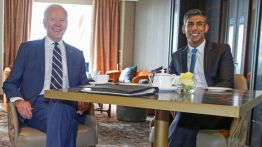
Joe Biden’s trip to Belfast was seen in government as a chance to strengthen the special relationship. The initial hope had been that by the time the US President jetted to Northern Ireland to mark the 25th anniversary of the Good Friday Agreement, power-sharing would have returned to Stormont. However, after the DUP voted against Rishi Sunak’s renegotiation of the Northern Ireland Protocol, Biden instead used his speech in Belfast to praise the Windsor Framework and express his ‘hope’ that ‘the assembly and executive will soon be restored’.

Europe is falling apart on the world stage

There is rather more than meets the eye to Emmanuel Macron’s inept visit to Beijing last week. The immediate fallout – Xi’s flat refusal to change tack on Ukraine, and Macron’s subsequent insistence that France was not beholden to the US or for that matter over-concerned with what China might do in Taiwan – looks like a stinging national rebuff to France and a face-saving retreat by Paris to curry favour with China. And so it is. But it goes further. There is a strong EU dimension to this whole debacle: what it really shows is the increasing weakness and disunity of Europe when it tries its hand at power projection on the world stage.