Politics

Read about the latest political news, views and analysis

Humza Yousaf can still turn things around for the SNP. Here’s how

Humza Yousaf’s government is adrift, of that there can be no doubt. The question is how much longer the drift will be allowed to continue before the SNP leader corrects course. In the four months since he replaced Nicola Sturgeon, Yousaf has staggered from one catastrophe to another. The First Minister has seen his predecessor and other senior figures arrested (and released without charge) by police investigating the SNP’s financial affairs. His government’s flagship deposit return scheme has imploded after failing to gain the support of business and Westminster. He has been forced to U-turn on plans to ban fishing in 10 per cent of Scottish waters. A scandal-wracked ferry-building


Sunak’s mother-in-law has divided India with her views on spoons

Sudha Murty, the Indian billionaire and philanthropist, who also happens to be Rishi Sunak’s mother-in-law, has something of a fixation with the cleanliness of spoons. Speaking on a popular food show, Murty revealed herself to be quite the tyrant in the kitchen: ‘I am a pure vegetarian, I don’t even eat eggs or garlic. What I am scared of is that the same spoon will be used for both vegetarian and non-vegetarian food. It weighs on my mind a lot!’ The sensible reaction to these somewhat innocuous comments might be to think Murty a touch obsessional, and wonder at the impractical and time-consuming nature of her kitchen habits. Instead her

Backing motorists won’t save Rishi Sunak

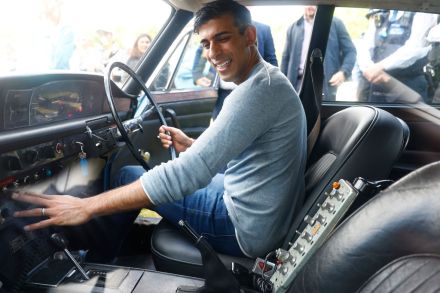
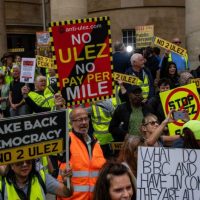
The lesson from the Uxbridge by-election was clear to both parties: the public will not accept green policies at any price. Whilst in general, the public support cutting carbon emissions and other forms of pollution – support drifts away fast when people are confronted with measures which threaten to make them poorer and their lives more difficult. But now Rishi Sunak risks falling into another trap: aligning himself too closely with his party’s Mr Toad tendency. Announcing a Department for Transport review into low traffic neighbourhoods (LTN), the Prime Minister this morning has sided heavily with motorists, declaring ‘the vast majority of people in the country use their cars to get

Rishi Sunak’s trade-off ideology

In his interview with the Sunday Telegraph proclaiming himself to be pro-car, Rishi Sunak made an interesting point: that this was not about post-Uxbridge opportunism but about his values. ‘I have a set of principles and values that are important to me, and that anchor my approach to life and to government.’ He added, as a drive-by, that “I don’t see that across the despatch box”” – but let’s set Starmer aside. What are his values? I’d say that his driving principle is what you might call tradeoff-ism: a belief in the need to be frank about the choices facing a country and its government. And those values may rub

What does Japan make of Oppenheimer?

Christopher Nolan’s blockbuster epic Oppenheimer is wowing critics and selling out cinemas across the world. It’s already threatening to eclipse the disappointing Indiana Jones remake and even Tom Cruise’s raved about latest instalment of the Mission Impossible series. But it’s a worldwide hit with one notable exception: the film hasn’t been released in Japan yet, and no word has been given of when it will be. Some are speculating that there may be no Japanese release at all. That would be highly unusual. Japan, unlike some of its neighbours, very rarely bans films and has accepted WW2 offerings, such as Clint Eastwood’s Flags of our Fathers and Michael Bay’s Pearl

The triumph of oil

If you want a laugh, I recommend an article which appeared in the March 1998 issue of Scientific American, ‘The End of Cheap Oil’. In it, oil geologists Colin J Campbell and Jean H Laherrere used terribly clever models to tell us that global oil production would peak around 2004-05, after which we would be trying to rely on an ever-dwindling, ever more expensive supply of oil, with huge consequences for the global economy. Campbell was so sure of his thesis that three years later he formed the Association for the Study of Peak Oil, coining a new term which would be thrown about over the next couple of decades.

America’s sub-literate generation

30 min listen

Only 72% of Americans can read to 6th grade level. Freddy is joined by Peter Wood to talk about how this has happened, and why it is getting worse. What political and cultural factors have diminished the importance of reading and writing in education, and with students already using AI, where does America go from here?

Spectator Out Loud: James Heale, Melanie McDonagh and Sam McPhail

18 min listen

This week (01.07) James Heale meets the Conservative London Mayoral Candidate, Susan Hall, who is ready and willing to take the fight to Sadiq Khan in next year’s elections, (06.51) Melanie McDonagh examines the effects on children’s publishing as sensitivity readers gain more and more influence and (12.39) Sam McPhail explains why football clubs could be in big trouble if fans start following superstar players, rather than the clubs. Produced and presented by Linden Kemkaran

Nigel Farage faces another media battle

It never stops for Nigel ‘Rocky’ Farage. Having seen off the chief executive of both NatWest and Coutts in successive days, he faces another cancel culture battle: this time involving the media group that employs him. Not GB News, at which he remains the golden boy, thanks to the interest garnered over his bank accounts. But rather Reach, which owns Express Online, for which he is writing a column on the upcoming American presidential race. It seems that not all within Reach have taken too kindly to their latest signing: hardly surprising perhaps, given the company owns the Daily Mirror too. A group called Reach Culture has now dissolved themselves

The French police have lost faith in the judiciary

Emmanuel Macron broke his silence about the recent riots in France at the start of this week. In a speech in New Caledonia in the southwest Pacific, the president of the Republic declared that the country required a ‘return to authority at every level’.  He added: ‘The lesson I draw from this is order, order, order.’ There was a certain irony to the president’s proclamation. He spoke as a crisis erupted in France, at the heart of which is a power struggle between the police and the justice system.  Resentment has been festering for a number of years within the police – among senior officers as well as the rank and

Who killed comedy?

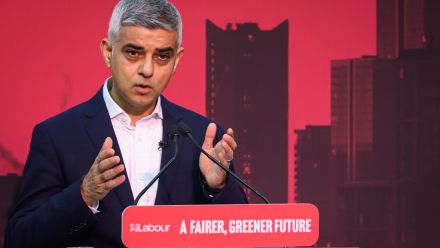
Wading into the Sadiq Khan #HaveAWord brouhaha, Laurence Fox had a pop at Khan’s ally Romesh Ranganathan thus: ‘You are not a “comedian” #Maaate’. The dig came after Ranganathan teamed up with the London mayor in his campaign urging men to challenge their mates on their behaviour towards women. Fox had a point; when is a droll not a droll, but principally a state-sanctioned lapdog with a few lame gags on the side? Far too often in recent times. One of the most striking things about our modern culture is the lack of creativity, even amongst those who work in the actual creative industries. Writers are now routinely sensitivity-read, censored

The political battle for net zero is only just beginning

This may come to be remembered as the year where the global warming debate became serious. Until now, there has been a shrill quality to the discussion with emotive language used in place of reason. Yes, there’s a serious problem facing the planet – but to what extent would the proposed solutions address this problem? What are the trade offs involved? How does decarbonisation rub up against other obligations, like alleviating cost-of-living pressures and protecting the elderly from the cold? Deadlines that once seemed far away – like the 2030 ban on new petrol cars – are now getting rather close and focusing minds. The public certainly are concerned about

Watch: David Lammy slapped down over Ulez

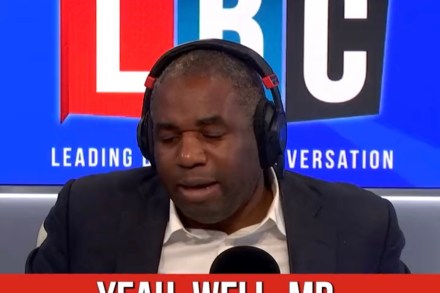
Labour frontbencher David Lammy was today confronted by a furious voter on his LBC show about the Ulez extension. It’s been causing a row over the past week, since the Tories unexpectedly held onto Uxbridge and South Ruislip in last week’s by-election. The caller said: To be honest with you, I’ve had my wife in tears on the phone now. This has done us. It’s finished. We have £150 to £200 a month to spare. Some months, on a good month. That’s now going to go on a tax. I really weren’t gonna vote anymore because obviously the Tories and how much they lie… I was actually going to give

The US economy is bouncing back – unlike Europe’s

Every country that imposed a lockdown during the pandemic accepted that there would be an economic price to pay. But governments hoped that, on this measure, their own nation would fare better than others. The objective here was simple: don’t be the ugliest country of the bunch. Now, with some distance between those lockdowns and life today, we’re returning to a more established form of economic competition. Rather than focusing on whose economy looks particularly bad, the emphasis has returned to who is looking good. And on this metric, the United States is putting Europe – and Britain – to shame. The US government reports that its economy grew by

Why was a Ukrainian fencer punished for not shaking a Russian’s hand?

Must politics stay separate from sport? Ukrainian fencer Olha Kharlan has been disqualified from the World Fencing Championships in Milan after declining to shake hands with her Russian opponent having won the match yesterday. As it concluded, both athletes removed their masks and Anna Smirnova (who competed under a neutral flag) extended her hand. Kharlan responded by presenting her sword as if suggesting they touch sabres instead. Smirnova did not react.  Kharlan left the stage. Smirnova stood there for almost an hour, waiting for a handshake. Afterwards, Smirnova filed a complaint for lack of ‘show of respect’. The Ukrainian fencer was disqualified from the competition and suspended for 60 days from all

Tories should never have taken their Ulez challenge to court

Expanding London’s Ultra Low Emission Zone (Ulez) may be a bad policy, a regressive tax which will impact on people of modest means while leaving the not-very-much-less-polluting cars of the wealthy untouched. But that doesn’t mean the High Court is wrong to reject the case brought by Conservative councils against the scheme. On the contrary, anyone who values democracy should be pleased that Ulez has been thrown back into the political arena, where it belongs. It is alarming the way that so many matters of public policy now end up being dragged through the courts under the judicial review process. How we impose motorist taxes, whether we build rail lines, runways

Iran’s morality police can’t save the mullahs forever

Iran’s so-called morality police, loathed and feared in equal measure, are back patrolling the streets of the country. They temporarily disappeared from view in the wake of the widespread public protests over the death last September of Mahsa Amini, a young Kurdish woman. She was arrested and beaten, and subsequently died in police custody. Her crime? Not wearing the hijab ‘properly’. She had a few strands of hair showing, enough to be deemed a violation of the strict dress code for women. She paid for this with her life.  Iran’s leaders were rattled by the furious public reaction to her death. Thousands marched in protest, demanding rights and protections for