Politics

Read about the latest political news, views and analysis

Boris Johnson faces a backlash over his burka comments

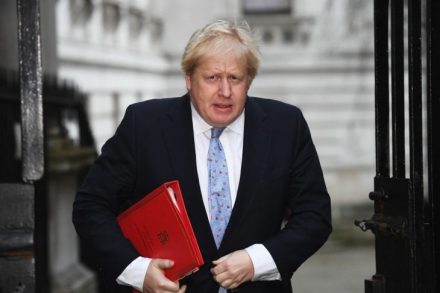
Boris Johnson caused a stir this morning with an article in the Daily Telegraph. The former foreign secretary used his weekly column to argue that the Danish government were wrong to bring in a burka ban. Johnson said that although he thought that it was frankly 'absolutely ridiculous that people should choose to go around looking like letter boxes', he was uncomfortable with the idea of the state telling a 'free-born adult woman what she may or may not wear, in a public place, when she is simply minding her own business'. Critics were quick to go on the offensive over his decision to compare Muslim women dressed in full veils to postboxes and 'bank robbers'. The Muslim Council of Britain issued a statement condemning Johnson's 'regrettable' comments.
Man who supported a burka ban to speak at Corbynista festival

Boris Johnson has found himself in a spot of bother today over an article in the Telegraph. The former Foreign Secretary uses his column to say that he disagrees with the Danish government's decision to ban burkas. However, he has been criticised for also saying that Muslim women wearing burkas 'look like letter boxes'. A number of top Corbynistas have been quick to denounce him for trying to appeal to the hard-right: https://twitter.com/OwenJones84/status/1026422370293227520 https://twitter.com/evolvepolitics/status/1026420556680372224 https://twitter.com/DawnHFoster/status/1026398500869865472 Only Mr S can't help but wonder if they're all up to date with the programme for Corbynista favourite The World Transformed festival that coincides with Labour conference.

George Osborne learns his lesson

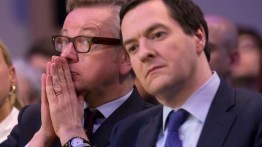
While David Cameron has reportedly busied himself of late telling friends how his old mate Michael Gove is 'mad' and behaved like a 'lunatic' during the EU referendum, his comrade George Osborne appears to take a rather different view. Rather than hold a grudge, the former Chancellor was spotted on holiday with Gove last month. Osborne and Gove embarked on a lads' holiday which consisted of taking in four Wagner operas on four consecutive days. While some have been quick to poke fun at their idea of fun, Mr S is just glad that Osborne and Gove have learnt their lesson.

The latest green belt warning highlights the choice facing the Tories

Good news for people who want the government to make it easier to build homes? The papers today carry news that local authorities are proposing nearly half a million (459,000) homes on green belt land, up from 425,000 a year ago. While on the surface more homes at a time of housing shortages might seem like welcome news, there are two problems. According to the report by the Campaign to Protect Rural England, (a) the bulk of it isn't aimed at struggling first time buyers (b) it risks making Britain's green spaces an endangered species in the long term. The report claims that the green belt is being sacrificed to build expensive homes that young families may never be able to afford.

The BBC’s new female panel show is patronising to women

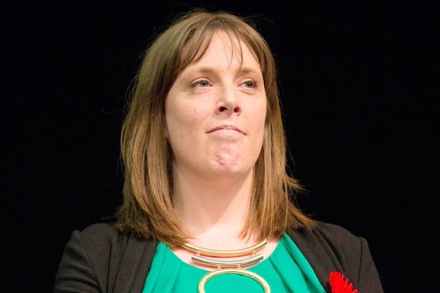
Where’s the F in News, new on Radio 4, is ‘an energetic, intelligent female-anchored show with a female panel’, according to its BBC description, of ‘fresh and funny challenges’. I listened to the latest episode. The panel of two comedians, one restaurateur and the Labour MP Jess Phillips were unanimous in their prejudices. The subjects were: vegetarianism (good, unless producing food that tastes like meat), Brexit (bad), Jacob Rees-Mogg (bad), Theresa May (bad/robot), parliamentary traditions (bad), Sir Christopher Chope (bad), new Girl Guide badges (good because they’ve abolished the ones for ironing and vermin control and introduced ones for ‘protesting’).

Juncker and Barnier have made me rethink my Remain vote

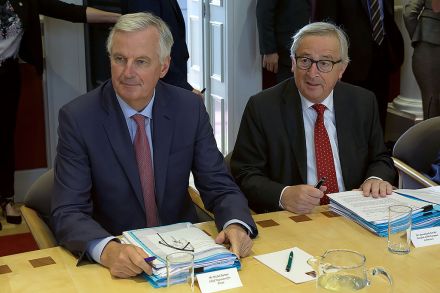
I completely agree with David Harris. Like him a Remain voter and a Londoner, I was utterly shocked by the result of the referendum, spending some hours trawling the online results in an attempt to understand what had happened. It was a salutary experience, yielding many surprises (Sevenoaks voted out!) and forced me to reappraise my initial generalised assumptions about the vote. We on the Remain side lost, and fairly. Since then I have been so angered and repelled by the behaviour of Messrs Juncker and Barnier that should we be obliged to vote again I will vote to Leave.

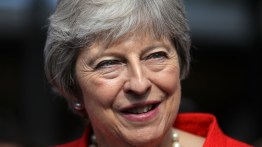
Theresa May needs a Brexit back-up plan

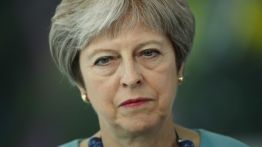
Since Chequers, the UK has been making a big diplomatic push to try and move the Brexit talks along. As I say in The Sun this morning, this has had some success. Inside government, the view is that the chances of a deal are inching up. There is also cautious optimism that the British message on the Irish backstop, that a customs border between Northern Ireland and the rest of the United Kingdom is unacceptable, has finally been understood. But Mrs May hasn’t had a breakthrough yet. There is no sign of the European Commission moving away from its position that the four freedoms of the single market can’t be separated.

Jeremy Corbyn’s cut and paste job

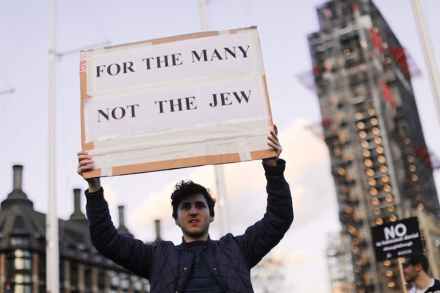
You have a tight deadline and if you miss it there will be trouble. Only it's a Friday and you've got plans so you do a slapdash job and copy and paste from a previous piece of work hoping no-one will notice. This at least appears to be what happened to Jeremy Corbyn on Friday. After a week of tawdry allegations of anti-Semitism, the Labour leader attempted to stem the anger growing at his handling of the situation by penning an article for the Guardian. Only readers were quick to point out that it bears a striking resemblance to the last article on anti-Semitism he wrote for the Evening Standard. Guardian, August 2018: 'Denying the continuing problem doesn’t help.

The Labour party is no longer a place for a Jew

As I’m writing this, I can’t stop thinking about my sixteen year old self: a naïve, optimistic teenager who had just joined the Labour party, sure that Ed Miliband was going to put the country to rights, and that being one of the party members who would help him do that was an honour and a duty. How times have changed. In the wake of Labour's anti-Semitism scandal, I've now left the party. Here's why. I should start by saying I’m Jewish. When I was growing up, I thought that that meant that I belonged to the religion of Judaism, and that I couldn’t eat bacon.

Labour’s universal basic income would leave the poorest worst off

Google the words ‘Universal Basic Income’ and you will be find high praise and excitement from a wide-ranging collection of people. Richard Branson, Mark Zuckerberg and now John McDonnell have all announced they believe that ‘free money for all’ is a good policy. UBI has fans on both the left and the right. Dutch author Rutger Bregman published his bestseller Utopia for Realists earlier this year that championed a basic income for all; while American Conservative author Charles Murray has also supported the roll-out of a similar programme. Understood simply as a single cash transfer to each individual, regardless of how rich or poor they are, it would guarantee a minimum income and economic security for all. The idea is nothing new.

Corbyn breaks his silence on anti-Semitism row – will it make any difference?

After a tawdry week for Labour which saw a flurry of fresh allegations of anti-Semitism in the party's upper ranks, Jeremy Corbyn has finally broken his silence. Writing an op-ed for the Guardian, the Labour leader admits that there is a 'real problem' – and says the party has been too slow in tackling anti-Semitism within its ranks. He promises that things will change: 'I want Jewish people to feel at home in the Labour party and be able to play their full part in our work to take our country forward. And I appreciate that this cannot happen while anti-Semitic attitudes still surface within Labour, and while trust between our party and the community is at such a low ebb.

Barometer | 2 August 2018

Ranking railways A director of the Rail Delivery Group claimed that Britain’s railways were the ‘envy of Europe’. Could it be true? For an independent analysis, the Boston Consulting Group compiles a Rail Performance Index of European rail systems (latest ed. 2015). — The UK came 8th out of 25 countries, behind Switzerland, Sweden, Denmark, France, Finland, Germany and Austria. — The UK came top for safety, but dropped to joint 15th place for quality of service (which includes fares as well as punctuality). — The index is also plotted against the public cost of the rail system. Britain’s railways came out at average value. The best-value rail systems were Finland, Switzerland, France, Sweden and the Netherlands.

How to negotiate

Ever since Theresa May declared that ‘no deal is better than a bad deal’ she has seemed to be drifting towards the ‘bad deal’ option. The government has put forward numerous constructive proposals, only for them to be shot down by Michel Barnier — who goes on to warn of ticking clocks and the need for Britain to cede ever more ground. His strategy is logical and amply rewarded: every time he rejects a British plan, more concessions are offered. All along, Barnier’s approach has been to portray a post-Brexit trade deal as if it were a favour to Britain rather than an agreement of mutual interest. Britain, he has asserted, has everything to lose — while the EU could carry on after a ‘no deal’ Brexit as if nothing had happened.

The Spectator’s Notes | 2 August 2018

Early in his career — and mine — I got to know Frank Field. Then, as now, he was being persecuted by extremists in his local Labour party. Then, as now, he was serenely uncompromising. Then, he won. But then — the early 1980s — the Bennite faction had not taken over the national party. Even Michael Foot, though fairly feeble in his fights with the hard left, came to Frank’s constituency and declared ‘If we lose Birkenhead, we lose the party.’ Now Benn’s most fervent disciple is Labour’s leader, and Frank has had not one word of support from the party’s central machine.

Why a no-deal Brexit is nothing to fear

Warnings by Remainers about the consequences of a ‘no deal’ Brexit are beginning to resemble a game of oneupmanship worthy of Monty Python’s Yorkshiremen. Not content with claims that the M20 to Dover will be gridlocked with lorries waiting to undergo customs checks and that the North Ireland peace process will break down, Doug Gurr, Amazon’s chief in the UK, apparently told Dominic Raab at a recent meeting that there will be ‘civil unrest’ within a fortnight of Britain leaving the EU without a deal. Next, they will have us living 150 to a shoebox. Those who peddle this relentless doom-mongering fail to understand the protections which will remain in place for the UK under international law.

Michel Barnier attempts to reassert his Brexit red lines

This morning a number of reports in the papers prompted talk of a small breakthrough in the Brexit negotiations. Among them, the Financial Times – a paper not known for always seeing the sunny side of the referendum result – reported that the mood in Brussels was changing with the EU now more willing to ‘fudge’ certain aspects of the negotiations in order to avoid no deal. With Theresa May en route to visit Emmanuel Macron at his holiday retreat tomorrow in the south of France, things appeared to be looking up for No 10. So, perhaps it should come as little surprise that right on cue the rigid European Commission have popped up to pour cold water on any such claims.

Labour’s anti-Semitism row has left Jeremy Corbyn isolated within his own party

When Labour’s leadership and the NEC were debating how to tackle anti-Semitism in the party, Andrew Murray – Jeremy Corbyn’s close adviser and chief of staff to Unite’s general secretary Len McCluskey – argued that Labour should embrace a much simpler and less contentious code of conduct than what its ruling National Executive ultimately adopted. His recommendation, I understand, was that the Labour Party should employ the widely used IHRA definition of anti-Semitism with all-but-one of its examples – rather than seeking, as it has done, to resile from four of the examples, and create its own illustrations of anti-Semitic language and conduct.

The City’s resilience after Brexit could be bad news for the EU

The Gherkin would be re-zoned as social housing. The Walkie Talkie would be turned into a massive TK Maxx with a couple of fried chicken shacks at ground level. Canary Wharf would be paved over and turned into a giant trampoline park, while houses in the better parts of Chelsea and Notting Hill would fall in price so much that just about anyone could buy them again. When the UK voted to leave the EU, it was confidently predicted that the City of London would be wiped out, with the loss of tens of thousands of jobs and billions in tax revenues. And what happened? According a report by the City of London Corporation, due to be released in September, the number of jobs lost might be as low as 5,000, and will probably be no higher than 10,000. Five thousand.

Cabinet Brexiteers want May to ready her Brexit back up plan

Number 10 have long been convinced that if they could talk to the member states, rather than the Commission, they’d have a better chance of getting a reasonable Brexit deal. So, the Salzburg meeting on the 20th of September, where May will get to speak to the leaders of the EU27 directly, has taken on huge importance. But, as I say in the magazine this week, while the heads of government might be more understanding of May’s political predicament, they still won’t accept her Chequers plan. Rather, they’ll—at best—push for further concessions from her. What May must decide over the summer, is what she’ll do when they ask for this. The remaining Brexiteers in her Cabinet take the view that Chequers mustn’t be seen as merely an opening offer.