Politics

Read about the latest political news, views and analysis

Can the government deliver apprenticeship guarantees?

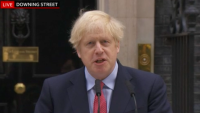
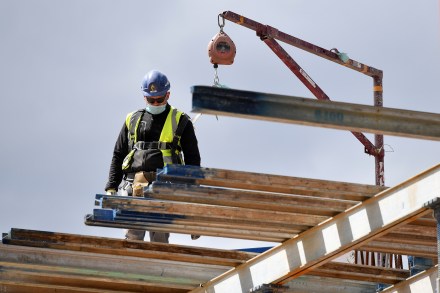
What exactly is an apprenticeship guarantee? That’s the major question to come out of Wednesday night's Covid press conference after Boris Johnson committed to offering an apprenticeship to all young people:   I think it is going to be vital that we guarantee apprenticeships for young people. We will have to look after people across the board, but young people in particular, I think, should be guaranteed an apprenticeship. While the commitment was there, the detail was not. Is this really a guarantee for all young people? In the first quarter of this year, over 350,000 people aged 16 to 24 were unemployed (excluding those in full-time education); another 1.5 million aged 18 to 24-year-olds were registered as economically inactive.
Tory MPs might not like No. 10’s quarantine policy – but the public do

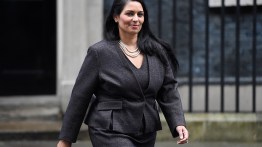
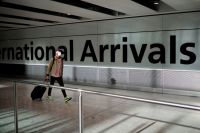
Boris Johnson is in the firing line today over his government's plan to impose a two-week quarantine for anyone arriving in the UK from Monday. The Prime Minister's policy was criticised by both Labour and Tory MPs during PMQs. When Home Secretary Priti Patel confirmed the details in the Chamber this afternoon, former ministers Liam Fox, Theresa Villiers, and 1922 committee chair Sir Graham Brady were among those who questioned the timing and the effectiveness of the new measures.With a growing backlash building among MPs and industry, Patel is under pressure to publish the scientific advice behind the decision. However, there is one group that appears to be on No. 10's side: the general public.

Starmer is struggling against Boris at PMQs

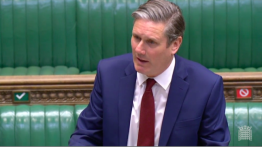
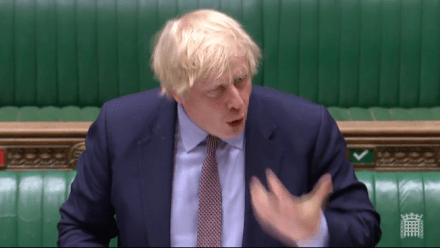
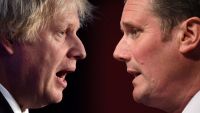
A testy, ill-tempered PMQs. Sir Keir Starmer accused Boris of presiding over a corona-shambles. The PM fired back and asked the Labour leader to show ‘signs of co-operation’ with the government’s efforts. Sir Keir was able to cite a ‘sign of co-operation’. A letter written to the PM two weeks ago about helping to reopen schools. He hadn’t received a reply. ‘I’m surprised he should take that tone,’ said Boris aggressively. ‘I took the trouble to ring him up and we had a long conversation in which I briefed him about all the steps we were taking...He thoroughly endorsed our approach.’ Sir Keir sniffed grandly that the letter had been ‘confidential’. And he waved a piece of paper. The letter, presumably.

PMQs is increasingly tetchy

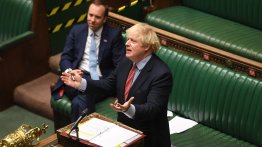
The clashes between Boris Johnson and Keir Starmer are becoming increasingly bad-tempered. Starmer’s strategy is to ask Boris Johnson a series of questions to which there are no good answers. Boris Johnson, informed by focus group research showing that voters don’t want to see a return to partisan politics, responds by accusing Starmer of not being constructive and of undermining public confidence. The result is testy exchanges that don’t shed a huge amount of light on the situation. Interestingly, Boris Johnson took a more emollient tone with Jeremy Hunt than he did at the liaison committee last week, when the former health secretary asked a question.

The end of Keir Starmer’s ‘constructive opposition’

14 min listen

The time for constructive opposition is over, as Keir Starmer picks up a new tone in his interview to the Guardian, which he continued in PMQs. Cindy Yu talks to James Forsyth and Katy Balls about this strategy; and other issues of proxy voting, Scottish care homes, the BAME impact, and a new testing target.

Why are teachers’ unions so reluctant to reopen schools?

You might have thought that of all people, leaders of teaching unions would be concerned about the effect of lockdown on children’s education and, in particular, on the gap in attainment between children from the wealthiest and least-wealthy households. From the beginning of lockdown in March, it became clear that children were going to have a very different experience depending on where they are educated. Many private schools and some of the best state schools immediately made arrangements for teaching to continue online, uninterrupted. For many other children, it has been a case of being set only the odd homework assignment.

Boris Johnson’s backbench problem

After spending Tuesday afternoon queuing in a socially distanced conga line across the parliamentary estate, many MPs found themselves in a bad mood. Even Conservative MPs who backed the government's plan to change to a system of socially distanced physical voting were complaining. Speaking to Coffee House afterwards, Tory MPs complained the process was 'humiliating', a 'clusterf--k' and most kindly 'a work in progress'. Despite this, the system is here to stay for the time being. However, yesterday's episode just adds to a growing sense of unease among Tory MPs over the government's direction. As I say in this week's magazine, No. 10 has a growing backbench problem.

Watch: MPs struggle with the new voting system

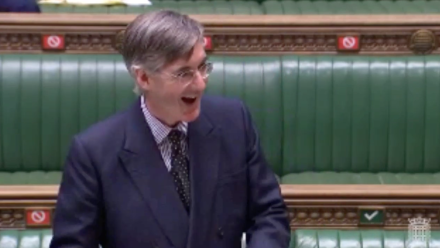
MPs tried out Jacob Rees-Mogg’s new voting system for the first time today, as they prepared for a return to the House of Commons and the end of the virtual voting system. The reforms have already proven controversial among MPs, who have complained that the new system will involve long queues, will take at least 40 minutes for a vote, and shielded members will not be able to take part. In order to keep socially distanced, the politicians were forced to form an orderly queue which ended up stretching for almost a kilometre around the Parliamentary estate, so MPs could remain two metres apart at all times.

The UK isn’t taking the risk of contact tracing fraud seriously

Experts have a get-out clause of which politicians can only dream when they are speaking from the podium at press briefings. While ministers are expected to be able to answer questions on any matter, there and then, and have details at their fingertips, advisors can escape most tricky questions with a simple few words: that’s outside my area of expertise. That makes it all the more baffling that when asked by journalists about the risk of fraudsters exploiting the government’s new track and trace system, not one, but two deputy chief medical officers decided to comment and belittle the risks involved. Deputy chief medical officer Dr Jenny Harries was particularly sanguine.

Parliament’s socially distanced voting system may just fall apart

Parliament is back. However, its inhabitants are having to adjust to a new way of doing things. While MPs are supposed to be on the estate and are no longer able to intervene in debates remotely, only 50 MPs may occupy the Chamber at any one time and they cannot vote in the traditional manner as the voting lobbies are not deemed Covid-secure. In place of this, the proposal that's been put forward is for a socially distanced, kilometre-long queue through parliament each time there is a vote. MPs are then to file past the left side of the despatch box table to vote Aye, and to the right side to vote No. The proposals have led to complaints from both opposition and Conservative MPs.

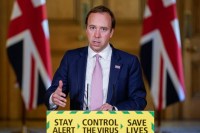
UK Statistics Authority questions Hancock’s figures

Last month, Mr S did a little digging into Matt Hancock's claims that he managed to reach 100,000 tests a day – finding that Health Secretary had been fudging his figures by including tests that had merely been posted rather than just tests that had actually been completed. The expert verdict is now in, with the UK Statistics Authority pointing out the same problem.   Sir David Norgrove, chair of the monitoring body, has criticised the government's counting methods, stating that ministers have continued to include posted tests in the figure for tests carried out.

The evidence on school re-openings is being ignored

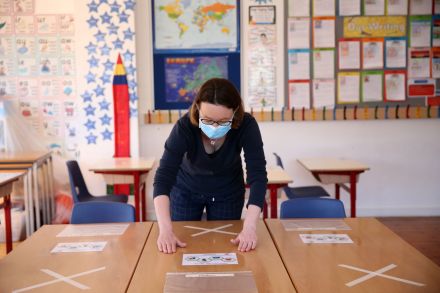
One of the benefits of the UK exiting lockdown so slowly is supposedly that evidence from other countries can help mould our decisions. If liberalising parts of society in other countries doesn’t cause a Covid-19 flare-up, the UK can proceed with cautious optimism. If lockdown easing leads to a spike in infection rates, the UK can row back its plans before its too late, or put off making changes for a while longer. Around 50 per cent of people polled oppose the partial re-opening Based on this logic, the return of Reception, Year 1 and Year 6 to school today should be warmly embraced, as reports from Denmark over the weekend (which reopened daycare and schools for kids aged two to 12 in mid-April) confirmed that doing so has not led to an increase in infections.

The over-70s plot a return to the House of Commons

Tomorrow MPs will swap dodgy internet connections and politics by Zoom for a real life journey into the House of Commons. Under government orders, MPs who can are to return to Parliament, as part of the government’s drive to encourage those who cannot work from home to travel to the office. For one group of MPs though, the changes will be more dramatic. At the moment, the government is advising that those over 70 are in a high-risk category and should therefore not really be travelling in to work. So where does that leave the over-70 MPs who can no longer take part in proceedings via video link? And will it change the composition of the Commons?

The lethal combination of Brexit and Covid

The combination of Covid-19 and Brexit is a double whammy. The first was a haymaker that hit Britain from nowhere. The follow up will come when Britain, quite deliberately and with malice aforethought, winds up its fist and punches itself in the face. The economic impact of the virus will be accentuated by the UK leaving the EU without a deal or with a meagre free-trade agreement, warns a grim report, sponsored by the Best for Britain think tank. Business leaders do not generally get much sympathy. Watch any thriller made in the last two decades and as soon as the corporate executive appears on screen you can guess with a fair degree of certainty that the hero will unmask him as the villain in the final reel. They deserve our sympathy now.

The growing rebellion against quarantine for UK arrivals

The government’s most unpopular policy on its own benches is its plan to make almost everyone arriving in this country quarantine for 14 days. Among backbenchers and the outer cabinet this policy is disliked with an increasing intensity. ‘Colleagues absolutely hate it’, one cabinet minister tells me. Some backbenchers dislike it because it will hit their own constituencies particularly hard – airlines and airports will lay off more staff because of it. Others dislike the ‘Britain is closed for business’ message it sends out. While for a growing number of ministers it has become a focus of their resentment at how policy is made with their minimal involvement – cabinet committees are meeting far less frequently than they did.