Politics

Read about the latest political news, views and analysis

Four in five UK Covid cases are asymptomatic

Finally we are getting a clue to the most vital statistic of the Covid-19 epidemic: how many people in Britain have had to disease – and who therefore might be expected to have some kind of immunity to it? Today, the ONS published the results of antibody tests on a randomised sample of nearly 19,000 people. On those, 885 – 6.78 per cent – were found to have antibodies to Covid-19, suggesting that they have had the disease. That so many people infected with SARS-CoV-2 have no symptoms explains why the disease has proved so difficult to control That is a little higher than the five per cent reported in Spain, but a lot lower than the 21 per cent reported for New York City.

Is it really ‘case closed’ on the Cummings affair?

13 min listen

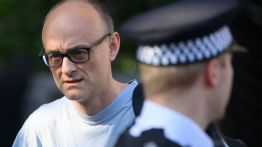
Chris Whitty and Patrick Vallance refused to give their opinions on the Dominic Cummings affair at today's press conference; while Durham police indicated that they will not be investigating the Barnard Castle trip any further, after announcing that it might have been a minor breach. Downing Street says it's 'case closed' - is it really?

What happened to Brexit meaning the end of Nissan’s Sunderland plant?

It would have to close down its factories. Thousands of job would be lost. Suppliers would be abandoned, and the local economy would be shattered for a generation. It was sometimes a little hard to work out why a few hardcore Remainers cared quite so much about Nissan. Its range of mid-market, family SUVs were not the kind of cars they would usually be seen dead in. But somehow the company became emblematic of the whole bitter debate about how the British economy would suffer if we left the European Union. If we weren’t in the Single Market, we were told again and again, the business was doomed. So today’s news from the company is, to put it mildly, slightly surprising.

Boris Johnson isn’t fit to lead

Danny Kruger, formerly Johnson’s political secretary and now the MP for Devizes, has – perhaps inadvertently – done the country some small service. In a note sent to newly-elected Tory MPs, Mr Kruger has reportedly advised his colleagues that ‘calling for Dominic Cummings to go is basically declaring no confidence in [the] prime minister.’ Well, yes, indeed. That is the point. Because, in the end, this is not a story about Dominic Cummings but, rather, one about the Prime Minister.

Will track and trace really work?

I wonder if Matt Hancock, or anyone else who has been developing the track and trace system for coronavirus, has set themselves this little test: get a blank sheet of paper and write down the names, addresses and telephone numbers of the people you sat next to on your last tube, train or bus journey, and the same for people on the surrounding tables on that last restaurant meal before lockdown. Er, where to start? As it happens I can name one fellow passenger on my last train journey: Lord Smith of Finsbury was sitting across the aisle – talking on his phone, interestingly enough, about a colleague who was suspected of having Covid. But I can’t even begin to picture the rest of the carriage. Was there a pair of girls a couple of seats down?

Newsnight presenter deletes misleading Cummings tweets

The Newsnight team were rapped on the knuckles by the BBC yesterday, after presenter Emily Maitlis opened Tuesday's show with a monologue saying Dominic Cummings had broken the rules with his lockdown trip to Durham. The corporation ruled that the introduction ‘did not meet our standards of due impartiality'. Safe to say, those working on Newsnight were not happy with the BBC’s reprimand. In response Maitlis ducked out of presenting the show last night, while policy editor Lewis Goodall sent tweets praising the ‘world class presenter’ and reiterating his support for the programme. So you can imagine Goodall’s delight this afternoon when it was reported that Durham police had concluded that Cummings had broken the lockdown rules.

Cummings may have committed minor lockdown breach, says Durham police

Dominic Cummings may have committed a minor breach of lockdown restrictions during a trip to Barnard Castle, an investigation by Durham police has concluded. The force has said that the journey 'might have been a minor breach of the regulations that would have warranted police intervention'.  The statement released earlier today says that while his trip up from London to self-isolate in Durham was in line with the regulations, the journey on 12 April might have constituted a breach. The police have also said that if Cummings and his family had been stopped by officers, they would have been asked to return to his father's farm.

Prepare for a big Huawei U-turn

The UK has made a strategic choice to get ‘off the trajectory of ever-increasing dependence’ on China, I reveal in the magazine this week. This is important as the UK was about to go over the precipice in terms of dependence on China with the decision to allow Huawei to construct a lasting part of the UK’s 5G network. That is now not going to happen. Downing Street describes its previous Huawei decision as a ‘legacy issue’, emphasising how no one was particularly comfortable with the compromise they came up with—Huawei’s role would be capped and it would be kept away from ‘the core’ of the network.

We can’t see the wood for the trees

I was relieved to discover, earlier this week, that the Prime Minister’s special adviser, Dominic Cummings, was a symbol of inequality in modern Britain. Relieved because I have been scouring the country for such a symbol for ages and had hitherto not succeeded in finding one. Cummings is just that symbol, according to Robert Peston, because his father has a garden with some trees in it. Cummings was thus able to walk through these trees, whereas people who do not have fathers with a garden with some trees in it are not able to do so. Privileged bastard. There is, however, one small problem.

It’s not only Cummings whose fate is at stake

When the cabinet met by conference call on Monday, three ministers spoke in support of Dominic Cummings: Jacob Rees-Mogg, Suella Braverman and Priti Patel. Their sentiments were not universally shared. ‘Several of us started feeling ill when Jacob opened his mouth,’ says one attendee. ‘Silence from the parliamentary party is damning.’ But many critics of Cummings now think that, having dug in so deeply, the Prime Minster has to keep his man. To need to fight this much for an aide is bad enough. But to fight and lose would be devastating. This explains the energy behind the pursuit of Cummings in the past few days.

What did Boris’s evidence to MPs reveal?

17 min listen

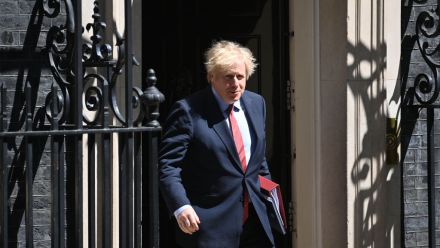
The Prime Minister appeared for the first time in his premiership in front of the Liaison Committee today. The group, formed of select committee chairs, grilled him on a range of issues from Dominic Cummings to pandemic support, and more.

Could Boris’s evidence to MPs signal a coming U-turn?

This morning, some allies of Boris Johnson were very worried about the Dominic Cummings section of the PM’s appearance before the liaison committee. They were concerned it’d produce some news line that would keep this story, which has been so damaging for the government, in lights for another day. But in the end, that section was not actually that bad for Boris Johnson.  Several of the select committee chairs chose to deliver speeches rather than asking sharp questions. The one exception to this was Meg Hillier who pressed Boris Johnson on whether he had seen the evidence Dominic Cummings referred to at his press conference on Monday. Johnson said he had, at which point Hillier asked him if he had shared it with the Cabinet Secretary. Johnson said he had not.

Boris Johnson’s women problem

Today, Boris Johnson was grilled by MPs on the Liaison committee, which is made up of select committee chairs. The Prime Minister was asked about a range of topics in the marathon session, including about his adviser Dominic Cummings’s trip to Durham during lockdown. But while the Prime Minister seemed to survive arguably the trickiest part of the session involving Cummings – after MPs mainly used the opportunity to grandstand, rather than ask probing questions – Boris seemed to struggle when asked about female participation in his top team. Former Home Office minister Caroline Nokes began by asking the Prime Minister about his comment that ‘enough’ women were involved in the decision-making process during the coronavirus crisis.

Is this the week the magic died for Boris Johnson?

What is really going on here? The via dolorosa Boris Johnson is trudging along is about more than Dominic Cummings’s actions and the Prime Minister’s refusal to acknowledge they were wrong, let alone ask the bloke for his ticket. The government’s Covid-19 messaging has been eviscerated, health guidance undermined, public goodwill forfeited and political capital amassed across ten months expended in a few days. The Prime Minister believes all this is worth it. The 40 Conservative MPs who have called for Cummings to go do not understand why, nor does Scotland Office minister Douglas Ross, who resigned over the matter yesterday. Other Tory politicians privately despair at the high decadence of prolonging a political scandal in the middle of a national emergency.

Emily Maitlis’s Cummings grandstanding sparks complaints

Emily Maitlis opened Newsnight last night with a monologue in which she declared that Dominic Cummings broke the rules and the country shocked that the government cannot see this: 'Good evening, Dominic Cummings broke the rules. The country can see that and it’s shocked the Government cannot. The longer minister and the Prime Minister tell us he worked within them, the more angry the response to this scandal is likely to be.  He was the man remember who always got the public mood –  who tagged the lazy label of elite on those who disagreed. He should understand that public mood now – one of fury contempt and anguish.

The challenge we face coming out of lockdown

The public reaction to the Dominic Cummings saga shows how difficult many people have found the lockdown. It has disrupted the lives of everyone in the country and the education of all schoolchildren, caused an unprecedented recession, soaring unemployment, kept families and lovers apart and led to worrying mental health problems. Tens of thousands have died. Many people were not able to say good-bye to or go to funerals of loved ones. So it is perhaps rather surprising that a poll for the Daily Mail a week ago found that actually many people seem to be liking it. Asked if they were enjoying being at home more, 43 per cent said yes and just 25 per cent said no. More feel better off financially (33 per cent) than worse off (29 per cent).

Why Boris Johnson needs Dominic Cummings

Danny Kruger, the Tory MP who is an old friend of Dominic Cummings and his spouse, got it right last night. The 'affaire Cummings' – as the French would put it – is no longer about the most powerful aide to the prime minister and the minutiae of how he interpreted coronavirus quarantine rules differently from most of the country. Kruger argued that attacks on Cummings are attacks on Boris Johnson, because the PM has so conspicuously become Cummings’s human shield. So as another Tory MP told me – a grandee no less – this is now all about the PM himself and how he governs. It is about why Boris Johnson rates Cummings so highly, and why he needs him at the centre of his government.

What the Dominic Cummings saga tells us about lockdown

Remember 'following the science' on Covid? It feels like a while. That was supposed to be about how we responded to a new virus posing an existential threat to society. But we now seem to have moved on to a purely political phase, focussed on rules written in the early phase of the epidemic (based on incomplete and mistaken information) before it became clearer that the threat we face is pretty far from existential. While there’s plenty we don’t know about Covid, the big-picture science has been settled for some time already. As epidemics go it’s not that bad. It kills mainly the very old and infirm; children and fit people under 60ish often get away with mild or asymptomatic infection. Those who become ill do not, in fact, die like flies.