Politics

Read about the latest political news, views and analysis

The real north-south Covid divide is in London

From Friday night, southerners are set to be cooped up in their homes because of high Covid rates in the north. I’m talking, of course, about the decision to impose tier two restrictions on London. The capital’s nine million people will be banned from socialising indoors with people they don’t live with and commuters urged to stay off public transport. It’s clear that the rising rate of infection in London meant that something needed to be one. But treating the capital as one is a big mistake. Nine out of the ten boroughs with the highest infection rates in the capital are north of the river. And the eight boroughs with the lowest number of cases per 100,000 people are all in south London.


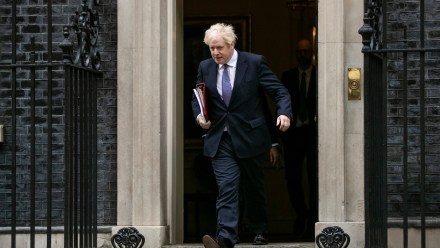
There are no good choices for Boris Johnson

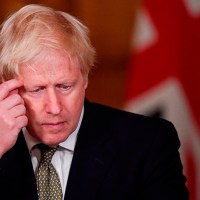
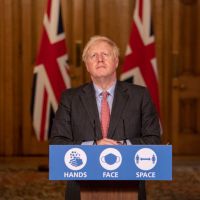
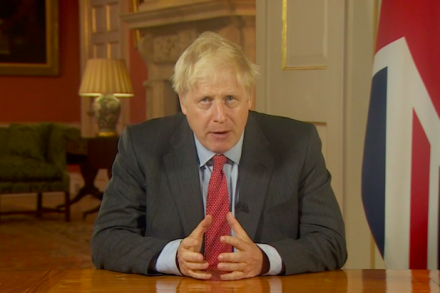
Boris Johnson used to be defined by his commitment to having his cake and eating it. But now he isn’t having any cake, let alone getting a chance to enjoy it. He is in a hideously difficult position as he tries to balance the needs of public health and the economy. There are no good choices. He is damned if he does and damned if he doesn’t. Since the end of the first lockdown, the government’s policy has been to try to control the virus without shutting down the economy. This is becoming increasingly difficult.

Why now is the perfect time to invest in art

The Bank of England has told commercial banks to prepare for the possibility of negative interest rates. This last hypothetical spanner in the toolbox of monetary stimulus — since rates are stuck close to zero anyway and quantitative easing through bond-buying programmes has diminishing effects — sounds weird and worrying but has already been in use in Europe for some time. Its intended effect is to push the commercial banks to lend more to business by penalising them for depositing cash with central banks. But what on earth does it mean for personal savers? The fact is that all monetary policy since 2008 has been designed to stimulate moribund economies and keep companies alive on a broad front — with collateral impacts on individuals.

Test and trace has been a phenomenal waste of money

Test and trace, according to the leaked minutes of Sage’s meeting on 21 September, has had a ‘marginal’ impact on the infection rate of Covid-19. But let no one say it has not achieved anything. It has succeeded in the virtually impossible: making HS2 look relatively good value for money. Documents revealed to Sky News have shown that consultants from the Boston Consulting Group who have been working on the scheme have been paid day rates of up to £7,360 – which if annualised would work out at a salary of £1.5 million. It makes them the highest-paid public sector workers in the country, earning ten times as much as the Prime Minister.

Boris’s Covid policy is finally starting to make some sense

Boris Johnson probably thought he emerged from Prime Minister’s Questions this week having maximised his freedom of manoeuvre in the battle against coronavirus. Indeed, at one point he made it explicitly clear that he was not promising that there would be no second national lockdown, declaring: 'I rule out nothing.' While that may be the formal position, the politics of the issue now make it much less likely that the Prime Minister will go down this track. That should be a cause for optimism among all of us who believe further nationwide lockdowns will do immense economic harm while securing little if any lasting public health advantages.

Brexiteers beware – a bad deal is still a real risk

The UK’s negotiating efforts with the EU this year have been dramatically better than under the May administration. But a bad deal is still a real risk as a result of political and time pressures.  Some recent reports suggest the UK may be flirting with dangerous compromises in key areas. The temptation to give ground just to get a deal over the line must be avoided. The government needs to remember that its key aim – re-establishing the UK as a genuinely independent state – can be met by simply leaving the transition period without a deal. Moreover, the government should bear in mind how limited the benefits of a thin trade deal with the EU are, especially one hedged around with various EU-friendly restrictions on UK action.

Can parliament reform its toxic culture?

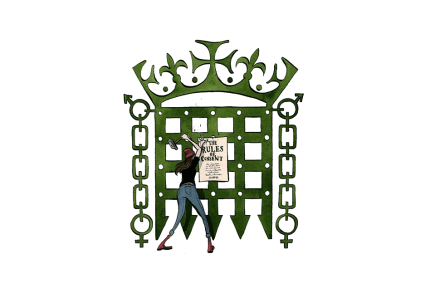
It is hardly surprising that the new parliamentary complaints system has had what might politely be termed teething problems when it comes to helping staffers and others who turned to it. This week the Times reports that complainants had been given incorrect advice, had not received the mental health support they needed, and were even discouraged from pursuing some complaints. Ever since MPs started discussing the need for this independent complaints and grievance scheme, there has been serious confusion about its remit, including over whether it can deal with older complaints and who is able to complain.

The arguments that will win or lose indyref2

Our latest poll in Scotland makes grim reading for unionists and offers much to celebrate for supporters of Scottish independence. Support for independence is now at a record high of 58 per cent. The SNP appear on course for a majority at next year’s Scottish parliamentary elections. And around two-thirds of Scots tell us that such a majority would provide a mandate for another independence referendum within the next five years. For now, Boris Johnson is holding to the line that the 2014 referendum was a ‘once in a generation’ vote. This will become a harder task if the SNP win a majority come next May. So if a future referendum campaign is imminent, which arguments could win or lose the battle for independence?

Has Keir Starmer managed to unite the Tory party?

This week's Prime Minister's Questions stood out from previous sessions. Boris Johnson appeared the most comfortable he has in recent weeks – boosted by the loud support of the Tory MPs allowed in the socially distanced Commons chamber. In a way this was strange – Conservative MPs have become grumpier with each week when it comes to the government's coronavirus strategy. So, what's changed? Keir Starmer's intervention on Tuesday calling for a circuit break has had a unifying effect on the party. One of the common complaints against Johnson from lockdown sceptic MPs is that his coronavirus strategy is too restrictive. The three tier system announced on Monday was seen as a further ratcheting up of measures.

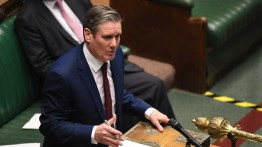
PMQs: Keir Starmer is too clever by half

Sir Keir’s approach to PMQs is so brilliant it might be rather foolish. He shows up each Wednesday as if he were attending a particularly complicated fraud trial, full of unique and intriguing features, which will one day furnish material for a lecture at Inner Temple. It’s super-technical. It makes your brain itch. And anyone can see why the Labour leader enjoys this fact-based approach — his head actually looks like a filing cabinet. The last seven months have created a huge archive of evidence, statistics and scientific statements which Sir Keir seems to have learned by rote. Today he started with a history lesson. He took us back to early May when the Prime Minister said something. Then he skipped to mid-September when Sage said something else.

The fatal trio that could finish the Union

When he assumed the Office of Prime Minister, Boris Johnson also took upon himself the responsibility of being, he said, 'Minister for the Union'. Whatever you may feel about the manner in which he has performed as First Lord of the Treasury, his record in his other post has been miserable. So much so, indeed, that it is evident Johnson is as great a threat to the Union as Nicola Sturgeon. That is not merely my view, it is the view of an increasing number of Scottish Tories. And, still more relevant, the view of the Scottish people themselves. Fewer than one in five voters in Scotland are impressed by Johnson’s performance. It is hard to banish the thought that some of these plucky few must be diehard independence supporters who can identify a significant asset when they see one.

How new Covid restrictions are stalling the economy

The theory behind a V-shaped recovery relied on the assumption that the economy would open up almost as quickly as it shut down. This did not happen. The UK moved at a much slower pace than its European counterparts exiting stringent lockdown measures. And already restrictions are being implemented again. August's GDP figures were surprisingly dismal, and now all future monthly updates for economic growth will be affected by a longer list of restrictions that are bound to impact recovery. As a result, scenarios for the UK’s economic recovery are being revised to reflect this. In the last day, we’ve had two updates: one from the IFS’s Green Budget (in association with Citi), the other from Capital Economics.

Starmer’s circuit breaker is smart politics

Keir Starmer's strategy has always been to wait cautiously for events to unfold, rarely playing too bold a move. When he does act, it is usually after a long period of hibernation.  Starmer sat in Corbyn’s shadow cabinet while many Labour MPs who felt roughly the same way he did about Corbyn’s project either rebelled from the backbenches or even left the party altogether. He ran for leader on a Corbyn-continuity platform, even though it’s fairly clear by now that this isn’t what he truly believes in, simply because it was the safest option. Since becoming leader of the opposition, he has avoided making policy announcements and has instead waited to pick off the government when it has been seen to make a mistake.

What would we gain from a circuit break?

Could a two-week ‘circuit-breaker’ lockdown really ‘save’ nearly 8,000 lives, as is being widely reported this morning? Not according to one of the authors of the paper on which the claim is based. Matt Keeling, a mathematician at the University of Warwick, was questioned on BBC Radio 4's Today programme this morning about the paper — which predicts that there will be a further 19,900 deaths by the end of the year if no circuit breaker is introduced, falling to 12,100 if we do have a two-week lockdown. The crucial point is that the figures quoted above relate only to what may happen by the end of 2020. But neither time nor Covid will stop on 31 December.

Inside Boris Johnson’s Zoom call with Tory MPs

As Tory MPs vent over the government's new three-tier coronavirus system, Boris Johnson appeared this evening before his party for an impromptu meeting of the 1922 committee.  Ahead of votes on the measures, the Prime Minister used Zoom to address MPs dialling in from their offices. With many Conservative MPs grumpy over the latest restriction guidelines, Johnson's charm offensive got off to a bad start when he was over 15 minutes late. As MPs waited, they wrote complaints in the Zoom chat function – one attendee asked if this was what a circuit breaker looked like. Michael Fabricant's offer to sing Rule Britannia once again (he began a rendition on a similar call) went unheeded.

Why I’m resigning from the government

The Greater Manchester 'local lockdown' and the more extreme economic lockdowns have both failed to control the number of positive tests within the Borough of Bolton, which has inexorably risen.  During the lockdown, Bolton has seen 20,000 fewer GP referrals to hospital when compared to last year, while many others have not accessed vital treatment because they have been too frightened to do so. By taking our current approach to Covid-19, we are creating many other health problems that are leading to pain, suffering and death.

Starmer backs a circuit break — putting pressure on Johnson

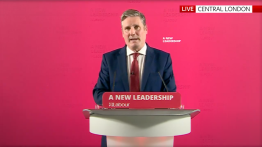
Keir Starmer has called for more drastic measures in a bid to control coronavirus infections. After Sage minutes were published on Monday that revealed the scientists advising the government recommended a two-week lockdown — the so-called 'circuit breaker' approach — Starmer used a press conference this evening to urge the Prime Minister to act.  The Labour leader called for 'a two-to-three week circuit break in England, in line with Sage's recommendation'. Starmer suggested that this could be run 'across half-term to minimise disruption' — and offered Johnson Labour votes to get it through the Commons. His intervention means there is now clear blue water between the government and the opposition’s coronavirus response.

Keir Starmer: why we need a two week lockdown

In a press conference this evening, Keir Starmer has called for a two week 'circuit break' lockdown. Below is a transcript of his remarks. Good afternoon. We’re at a decisive moment in the fight against coronavirus. The figures are stark and I’m afraid they’re all heading in the wrong direction. The number of Covid cases has quadrupled in the last three weeks. Cases may be doubling as quickly as every seven to eight days. There are now more people in hospital with Covid than on 23 March when we went into national lockdown. And while the number of cases is rising more sharply in some areas it is increasing across all regions of the UK and in all age groups. We know from bitter experience and great personal loss where all this leads.