Russia

Is Putin paving the way for a crackdown?

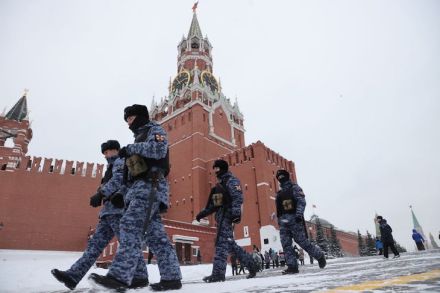
It may sound like a rather arcane development, but a change in the command structure of the Rosgvardiya, Russia's National Guard, offers some clues about both the state of the country and the Ukraine war – and the Kremlin's fears for the future. Zolotov has been lobbying for some time for the Rosgvardiya to have its own General Staff. This week, he got it The Rosgvardiya is an internal security force of some 180,000 personnel, ranging from the blue-camouflaged OMON riot police who patrol the streets alongside the regular police, through to the Interior Troops, a virtual parallel army with its own tanks and artillery. (There are also at least as many in FGUP Okhrana, its private security firm.

Can Russia’s shadow fleet be stopped?

Of all the weapons in Vladimir Putin’s arsenal, the most strategically crucial has proved to be not hypersonic missiles but the motley fleet of oil tankers that have allowed Russian oil to keep flowing to international markets. Oil dollars have been the lifeblood of Russia’s war economy during four years of conflict. And the West’s failure to shut that export business down has, so far, been the single most important factor behind Putin’s continued military resilience. Economic sanctions were supposed to be the West’s superpower to punish the Kremlin for invading Ukraine in February 2022. So how come Russia now exports more oil by sea than it did at the beginning of the war?

shadow fleet

Chechnya’s looming succession crisis spells trouble for Putin

For years, we have heard rumors that Ramzan Kadyrov, dictator of Chechnya, is mortally ill. Unlike the lurid tales about Vladimir Putin, these rumors appear to be true, and the Kremlin is bracing itself for a potential succession crisis at the very worst time. This week, one of the official news agencies even quietly updated their canned obituary of him, just in case. This means Putin may soon face a fearsome dilemma: risk losing Chechnya or lose what momentum he has in Ukraine?

Trump is playing geopolitical Monopoly with Greenland

Donald Trump is playing hemispheric monopoly. Depending on what day of the week it is, the President's focus alternates between Venezuela, Canada, the Panama canal – and for the last twelve months or so, Greenland. Given what Trump and his team have said over the past week, their acquisition plans for the island are well advanced. But why exactly does he want Greenland? The world’s largest island is an integral part of the Kingdom of Denmark and is about three times larger than Texas. While the term du jour is geopolitics, perhaps the most plausible reason for why Trump is gunning for Greenland is ego-politics. We have a president eager to make America great again and complete the task that his predecessor President Monroe started some 200 years ago.

greenland

Maduro’s capture is mixed news for the Kremlin

For the Kremlin, the US’s snatching of Venezuela’s President Nicolás Maduro is a humiliation with a silver lining. True, little more than a year after the precipitous fall of Syria’s Bashar al-Assad, Russia has been shown to be completely hopeless when it comes to keeping its allies in power. In Caracas, US airborne forces breezed past Russian-supplied S-300 air defense systems, which were part of a $20 billion package of maybe not-so-great Russian military equipment that Moscow sold the Venezuelans. The Kremlin has lost a strategic bridgehead in South America which it could, potentially, have used to disrupt and challenge Washington’s regional hegemony – if Moscow weren’t so committed financially and militarily to its war in Ukraine.