World

Who actually gets hurt by sanctioning Russia?

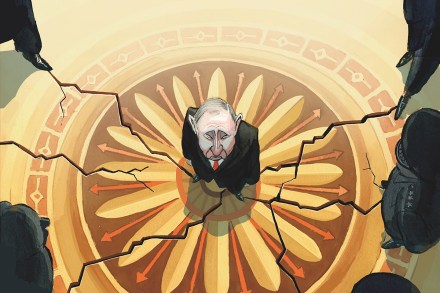
The US crackdown on trade finance for Russia from international banks — designed to impede imports needed for the continuing assault on Ukraine — is biting hard, reports the FT, quoting an investor who thinks “the logical endpoint of this is turning Russia into Iran.” Quite right too: sanctions like these are a vital non-military way to hobble Vladimir Putin’s campaign. But war and finance intersect in many different ways. Consider also the fate of 400 western-owned commercial aircraft that were leased to Russian airlines before the invasion in February 2022. Now stuck in Russia or its satellites, unmaintained to western standards and unfit to fly back into our airspace, they’re a potential multibillion loss for their owners and insurers.

Russia
Trump

Is Europe ready for Trump 2.0?

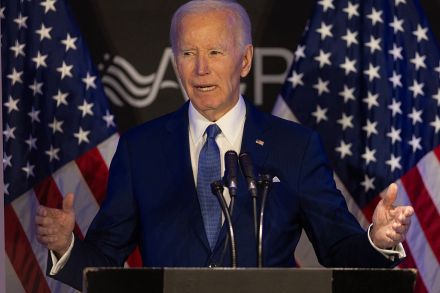
The 2024 presidential race between Joe Biden and Donald Trump is a dead heat. At most, a few percentage points separate them in the polls. Thousands of miles away, however, European leaders are operating as if Trump has already won, not wanting to be caught flat-footed yet again. When Trump defeated Hillary Clinton in 2016, European officials scrambled to establish contacts with the incoming administration. This time, the same wonks are proactively reaching out to Trump-friendly lawmakers and think-tankers, not only to understand what Trump’s foreign policy would look like in a second term but to press their own priorities. The Europeans, of course, are right to be worried.

Ex-TikTok employees sound the alarm over ties to China

Cocaine Mitch may be onto something. Last week, the senator called on his colleagues to pass a bill banning TikTok unless it is sold by its Chinese parent company, ByteDance. Now ex-TikTok employees are coming forward with stories detailing the company's entanglement with China.  According to eleven former employees interviewed by Fortune, TikTok has deep ties to Beijing through ByteDance which the company has tried to conceal. Some of the employees were with the company as late as last year, after the launch of Project Texas, a $1.5 billion initiative to store data of American citizens in the US. Evan Turner, a former senior data scientist at TikTok, worked for a Beijing executive during his time at the company.

tiktok
NatCon

Brussels police tries to shut down NatCon

Happy NatCon day, one and all. Yes, it’s that time of year again, when some of Europe’s most vocal right-wing exponents get together in a room for the annual National Conservatism conference. Last year’s shindig was in Westminster and spawned numerous headlines about British Members of Parliament Miriam Cates and Lee Anderson. This time though it’s being held in Brussels: home of well-paid Eurocrats and overzealous officials. Where better to make a stand for conservatism? The line-up includes Hungarian prime minister Viktor Orbán and Nigel Farage. The former UKIP leader encountered some difficulty this morning after arriving on stage at the Claridge venue in the Belgian capital.

invasion

Why do neoliberals get let off the Iraq War hook?

Given the worldwide climate of political intolerance, I often try to deflect hostility by prefacing my comments with the old saw that “reasonable people can disagree.” As a strong believer in intellectual freedom and Socratic dialogue, I do in fact feel duty-bound to listen to the other side, or sides, of an argument. Yet there’s one subject about which I’m as close-minded as the wokest opponent of liberal debate — a topic about which I won’t brook any disagreement because there simply isn’t any reasonable form it can take: that is, George W. Bush’s and British prime minister Tony Blair’s disastrous decision to invade Iraq in 2003 and its deadly, still hugely malignant consequences in the Middle East.

Mauritania

Modern-day slavery in Mauritania

In April 1864, the US Senate passed a bill that set in motion what would become the Thirteenth Amendment to the Constitution. Slavery was to be abolished. Seven months later, Union forces would burn Atlanta to the ground, a year after Lincoln’s address at Gettysburg marked the battle that began the South’s collapse and the April 1865 surrender of General Robert E. Lee and his Confederate army. The Civil War remains the bloodiest and most divisive conflict in American history with at least a million dead, including soldiers and civilians from both sides. You might think that given American history, if slavery had an in-your-face visibility anywhere on the planet, Congress would call for intervention by the UN, perhaps threaten to send in the Marines. Think again.

Khrushchev and me

It was December 1968, and I was a twelve-year-old English schoolboy seriously obsessed with cricket. The sport’s headline news at the time concerned a thirty-seven-year-old South African-born, dark-skinned player named Basil D’Oliveira. The previous August, D’Oliveira had scored a magnificent century (baseball fans need only think of Reggie Jackson hitting three consecutive homers in the clinching game of the 1977 World Series to get the flavor) while representing his adopted home team of England in a match against Australia. Despite this achievement, just days later the English team’s selectors omitted D’Oliveira from a tour of South Africa that was due to follow in the winter. Was the decision taken on purely technical cricketing grounds?

nikita khrushchev

David Cameron meets Trump at Mar-a-Lago

Lord Cameron, the UK foreign secretary, is stopping off at Mar-a-Lago tonight before once again making the rounds in Washington, DC to tub-thump for Ukraine aid. Cameron, who served as Britain's prime minister from 2010 to 2016, is meeting with Republican presidential candidate Donald Trump, who has been skeptical about Ukraine’s prospects of beating back the Russian invaders. A spokesperson for the UK Foreign Office downplayed the significance of Cameron meeting Trump as "standard practice." “The foreign secretary is on his way to Washington DC, where he will hold discussions with US secretary of state Blinken, other Biden administration figures and members of Congress," the spokesperson said.

david cameron

Should Biden change his Venezuela approach?

Venezuela has been leading the United States on, maintaining the pretense that they will ensure that the upcoming presidential elections are free and fair. That's despite the US relieving sanctions, releasing prisoners and months of “diplomacy.” The Nicolás Maduro regime has also gone on offense, threatening to take back the Esequibo, an area now under Guyana’s jurisdiction, where American oil companies have invested billions. This Wednesday, Maduro mocked the Biden administration once again, arresting two high-level officials from opposition candidate María Corina Machado’s team and issuing arrest warrants against several others.

nicolas maduro venezuela

Does the Bolsonaro indictment show a legal double standard in Brazil?

The “Trump of the Tropics,” former Brazilian president Jair Bolsonaro, was indicted Tuesday for falsifying his Covid-19 vaccination status for his Florida vacation. The indictment is the first faced by the conservative leader, who has already been barred from running for office. More are headed his way, in what he is describing as a lawfare effort spearheaded by President Luiz Inácio “Lula” da Silva. The indictment was signed by Detective Fábio Alvarez Shor, who says in his report that the former president and his aides “issue[d] their respective [vaccination] certificates and use[d] them to cheat current health restrictions.

brazil jair bolsonaro

Lessons from costly wars past

Money is often a substitute for strategy in US foreign policy. We spent $2 trillion in Afghanistan, only to lose the country the minute our troops began to pull out. How much will it realistically cost, then, to beat Russia in Ukraine? Will the next $100 or $200 billion do the trick? This is not a question that supporters of war-spending ask themselves. As in Afghanistan, spending is a way to defer thinking about actually winning — or facing the serious possibility of losing. Our aid buys delay, not results. Ironically, while the specter of World War Two is invoked every time there’s a conflict, our experience then teaches the same lesson as recent attempts to purchase victory.

wars
BRICS

Nixing BRICS: how to counter the China-led alliance

Americans are used to exercising influence through international entities such as NATO, the World Trade Organization or the World Bank. Each of these groups was set up with American leadership or at its instigation; all have been used to advance Washington’s vision of global liberal-democratic capitalism. No comparable international organization or collection of nations has been influential since the Soviet Union’s collapse. That may be changing. The so-called BRICS alliance (its founding countries were Brazil, Russia, India, China and South Africa) recently added new members Iran, Ethiopia, Egypt and the United Arab Emirates.

Resisting the escalation in Ukraine

The drums of war are reverberating across Eastern Europe. Every geopolitical decision made by global powers carries immense weight. Amid the fear of growing conflict, one figure has emerged, wielding a sharp tongue and a pointed finger, challenging hesitant American lawmakers to bolster Ukraine’s defense against Russian aggression. Polish foreign minister Radek Sikorski has embarked on a media offensive, chastising Republicans for their reluctance to green-light the Biden administration’s proposed $60 billion military aid package for Ukraine. Despite his purported noble objectives, Sikorski’s appeal deserves closer examination.

ukraine

Pope Francis’s Ukraine war faux-pas

If you didn’t know any better, you might think that Pope Francis was no longer welcome in Ukraine. His recent interview with a Swiss broadcaster, excerpts of which were released over the weekend, has caused a whirlwind of disappointment and anger in Ukrainian policy circles as well as with some of Ukraine’s staunchest supporters in the West. The subject of derision: whether Ukraine should do a little less fighting and a lot more talking. Asked to comment about the debate between those who seek a negotiated end to Russia’s two-year-long war in Ukraine and those who oppose such a stance, Pope Francis chose the side of dialogue.

pope francis

Victoria Nuland was the Kremlin’s princess of darkness

It was not a Super Tuesday for either Senator Kyrsten Sinema or State Department official Victoria J. Nuland. Each announced that they were stepping down from their positions. Sinema is declining to run once more in Arizona for the Senate. Nuland is exiting her post as the number three official at State, where she was widely seen as the champion of a hawkish approach to foreign policy. Sinema delivered a mawkish message that essentially blamed the American people for failing to recognize, let alone value, her valorous attempt to restore American power and prosperity. Nuland, by contrast, had to be satisfied with a statement from secretary of state Antony J. Blinken: “She always speaks her mind.

victoria nuland

Haiti is only getting more chaotic

The Haitian government declared a state of emergency Sunday evening, following two prison breaks, as major gang leader Jimmy “Barbecue” Chérizier seeks to oust prime minister Ariel Henry. “Barbecue” — a nickname that originates either from having set people on fire, his mother having worked as a fried chicken vendor or both  — is a former cop who is now the head of the Revolutionary Forces of the G9 Family and Allies.

haiti

Behind the Venezuelan migrant crime wave

Jose Antonio Ibarra, a twenty-six-year-old Venezuelan illegal immigrant, was charged in connection with the gruesome murder of Laken Riley, a nursing student at the University of Georgia last week. Another Venezuelan, thirty-two-year-old Renzo Mendoza, was arrested last week on two felony charges for sexually assaulting an underage child in Virginia.  These cases, along with a series of others connected to Venezuelan migrants, have become central to the debate on immigration policy. Tuesday morning, for instance, Republican members of the House Judiciary Committee sent a letter to the Department of Homeland Security asking for more information about Ibarra.

tren de aragua venezuela

Bring back the Marilyn Monroe Doctrine

The death of Alexei Navalny has dramatically increased the risk for other key figures currently imprisoned by Vladimir Putin, whether for reasons of dissident behavior, protest against the war in Ukraine or supposed suspicion of espionage. The fact that Putin would cross this line, and do so with impunity in the midst of both the Munich Security Conference and a western influence push spearheaded by willing patsy Tucker Carlson, is a sign that we are now in a new reality — one that it is the duty of the next administration to irrevocably reverse. In the past, when the United States’s top officials identified an American citizen or important dissident held in another nation and said “do not touch this person, lest you find out what terror awaits you,” it meant something.

marilyn monroe

Alexei Navalny won’t be the last of Putin’s martyrs

Alexei Navalny, Russia’s most prominent opposition leader and a constant irritant to Russian president Vladimir Putin’s regime for more than a decade, has died in a remote penal colony in the Arctic Circle at the age of forty-seven. The news was greeted with shock, outrage and sadness across the US and Europe and came at a time when the West’s most high-profile politicians and security figures were in Germany for the annual Munich Security Conference.   There’s no denying Navalny’s bravery. Most high-profile Russian figures who criticize Putin and live long enough to tell the tale choose to live a life in exile. Navalny, however, was never interested in that option.

alexei navalny