Middle East

Who is actually talking to the Iranians?

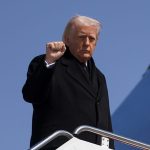
On Friday night, Donald Trump announced that America was “very close to meeting our objectives as we consider winding down our great military efforts in the Middle East.”  He even pinned the announcement to the top of his Truth Social account to make sure everyone realized he meant it. That did little to settle the markets over the weekend, however, so this morning he took to Truth Social again to go further in ALL CAPS:  The lingering fear is that the truth may be more TCCO (Trump Can’t Chicken Out) I AM PLEASED TO REPORT THAT THE UNITED STATES OF AMERICA, AND THE COUNTRY OF IRAN, HAVE HAD, OVER THE LAST TWO DAYS,
Has Trump averted an energy crisis?

Have markets and governments horribly underestimated the fallout from the Iran war, or is it the doomsters who have got it horribly wrong? President Trump’s announcement has rather caught the world off guard. This morning, he posted on Truth social saying that he is seeking a negotiated settlement with Iran and has postponed his planned attacks on energy infrastructure. Many expected a huge escalation in hostilities this week. Could this be yet another example of TACO (Trump Always Chickens Out), or was his threat to bomb energy infrastructure another crafted bluff – and that order to the global economy will be swiftly restored? At the end of this crisis, the

iran

How Trump can ‘win’ in Iran

The United States is once again in a terrible predicament: a war where the definition of “victory” grows murkier by the day, against an adversary whose advantages lie in the tyranny of geography and its determination to fight. While the US and Israel enjoy overwhelming conventional superiority, a handful of cheap Iranian drones or weaponized IRGC dinghies have been able to take America’s Gulf oil allies offline and render the strategic Strait of Hormuz unnavigable. Donald Trump faces what we might call the “Corleone problem”: the don can end the war, but only if peace looks like a gift he’s granting, not a price he’s paying. America has been trapped

Israel can’t assassinate its way to victory over Iran

The killing of the Iranian senior security official Ali Larijani this week is the most significant “targeted assassination” undertaken since Israel’s killing (in cooperation with the US) of supreme leader Ali Khamenei on the opening day of the war. These two very high-level hits have been accompanied by a long list of killings of less well-known senior Iranian officials. These have included Islamic Revolutionary Guards (IRGC) commander Mohammad Pakpour, intelligence minister Esmail Khatib, armed forces chief of staff Abdolrahim Mousavi, defense minister Aziz Nasirzadeh, military intelligence chief Saleh Asadi and many others. Around 30 officials in all have met their deaths at the hands of this campaign. The borders between conventional

The Iran war won’t help Russia defeat Ukraine

For Vladimir Putin, Donald Trump is the gift that keeps on giving. Just as Moscow was tiring of the American president’s assurances that he could strong-arm Volodymyr Zelensky into accepting Russia’s terms for peace in Ukraine, the US-Israeli intervention in Iran caused a spike in the oil price. This has given Russia the chance to supply more oil to the global market and boost its flagging budget revenues. On balance, the war in the Middle East is set to bring significant benefits for Russia, but they will not be enough to bring about Putin’s most urgent desire: the defeat of Ukraine. Of course, the Russian president can bask in the

russia

Decapitating Iran’s leadership might not topple the mullahs

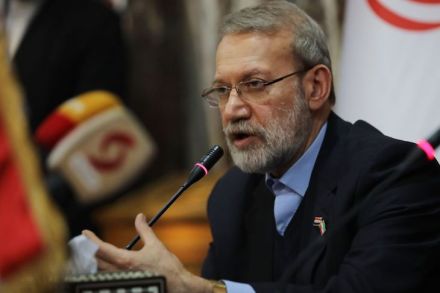
Iran’s most powerful leaders are being picked off one by one by Israeli and American military strikes. The latest scalp claimed by Israel is Ali Larjani, Iran’s security chief, and widely believed to be the most powerful figure in the present Iranian leadership. The reported killing comes just days after Larjani went on a public walkabout in Tehran, all defiance and bombast as he greeted members of the public during the Quds Day rally last Friday in the capital. Larjani also spoke to state media during the march, claiming that the Americans and Israelis were “running out of steam”. Well, not quite in his case, it turns out. Few will mourn the demise of Larjani.

larjani

The illusion of Iranian regime change

Supporters of regime change in Iran have long argued that if the United States and Israel weakened the country’s rulers then the Iranian people would finish the job. But the likely outcome is instead a wounded regime, one that emerges more paranoid, more repressive, and more convinced that only force ensures its survival. Iran has experienced mass protests every two to three years for more than a decade. What often begins as economic unrest frequently evolves into broader anti-regime demonstrations, drawing thousands of Iranians into the streets. People outside the country see these protests and believe they could ultimately topple the government. Such arguments come from parts of the Iranian

Should NATO help America defend the Strait of Hormuz?

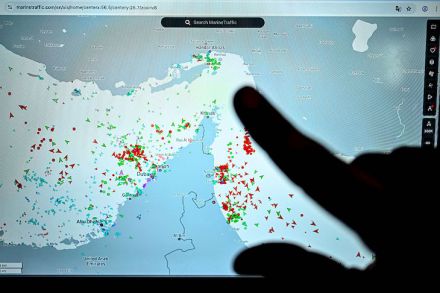
As soon as Operation Epic Fury, America’s latest campaign against the Islamic Republic of Iran, got underway on the last day of February, political, military and economic minds around the world should have turned their attention to the Strait of Hormuz. The waterway provided the only shipping route from the Persian Gulf to the Gulf of Oman and the open seas beyond. That has long made the strait the dagger Iran holds at the throat of the world. At its narrowest, it is less than 25 miles across, and Iran controls the northern shore; to the south is the Musandam Peninsula, shared by the United Arab Emirates and an exclave

NATO STRAIT

What Signalgate tells us about Iran

Remember Signalgate? It was quite the story, and worth revisiting now in light of Operation Epic Fury, the ongoing crisis in the Strait of Hormuz and its dire implications for the global economy.  In March last year, Donald Trump’s then National Security Advisor, Mike Waltz, somehow added Jeffrey Goldberg, the editor-in-chief of the Atlantic, to a Signal messaging group for senior government officials to discuss top secret military action against the Houthis in Yemen. The group included the Vice President J.D. Vance, Secretary of State Marco Rubio, Defense Secretary Pete Hegseth, Director of National Intelligence Tulsi Gabbard, White House Chief of Staff Susie Wiles and deputy chief of staff Stephen Miller,

hegseth signalgate walt

War on Iran was not ‘unprovoked’

I’ve been thinking a lot about the phrase “unprovoked war.” It’s been rolling off leftist tongues since the explosion of hostilities in Iran. This week, Jeremy Corbyn, Zarah Sultana and scores of hoary peaceniks wrote a letter to the Guardian insisting Britain should have nothing to do with America and Israel’s “unprovoked war” in Iran. Trump’s noisy doubters and Israel’s legion haters are using language as a weapon Here’s my question: is the rape and murder of Jews not a provocation? Was the worst anti-Jewish atrocity since the Holocaust – 7 October – not a provocation? The tyrants of Tehran were the paymasters of the jihadist brutes who carried out

The Iran war has exposed the world’s maritime chokepoint

The war with Iran is exposing a vulnerability at the heart of the global gas market: the extraordinary concentration of liquefied natural gas supply in the Persian Gulf. Qatar alone accounts for roughly a fifth of global LNG exports, almost all of it passing through the narrow Strait of Hormuz. The conflict has illustrated how easily a single maritime chokepoint could interrupt a significant share of the world’s gas trade. Even if the war ends soon, the vulnerability it has exposed will not disappear President Donald Trump has suggested the conflict may soon end, describing the campaign as largely achieved and possibly over “very soon.” The Gulf monarchies also appear eager for a quick

How the Islamic Republic tried – and failed – to destroy Iranian culture

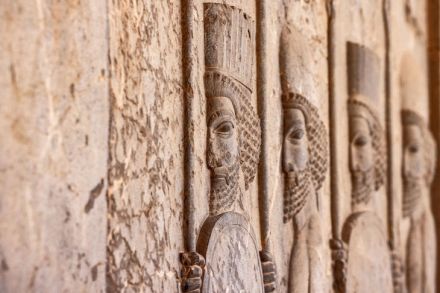
The Islamic Republic in Iran is not only at war with the United States and Israel. For years, the country’s government has been waging war on Iranian culture. Music, poetry, storytelling, dogs, dancing, singing, art, dice and card games, romance, tolerance and the honoring of women are central to Persian culture and its ancient history. Yet under the Islamic Republic, these cherished expressions are banned or stigmatized, especially when pursued by women. The departure of Iran’s enlightened and educated from the country they love is one of the most poignant brain drains in history In the dark, dystopian times immediately following the Islamic Revolution in 1979, couples holding hands or

Why the Venezuela model would be a disaster for Iran

What next for Iran? Donald Trump appears to have a plan: the Venezuela model. The US president has hinted that, just as with the South American nation, he wants to try working with elements inside the existing regime, rather than backing exiled opposition figures. The biggest massacres in Iran’s recent history happened under so-called reformers “We have a formula, Venezuela, smart country,” he said this week. “We’ve taken out 100 million barrels of oil which is now in Houston…being taken care of and made so beautiful in refineries.” But if Trump really is planning on copying his playbook for Venezuela in Iran, he should be warned: it will be a

The Iran war is just what Putin’s depleted coffers need

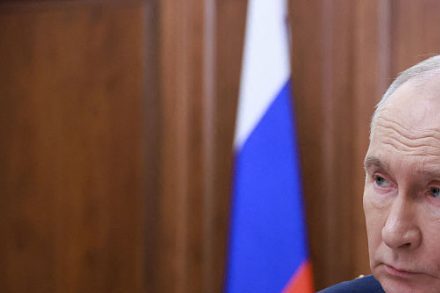
Of all the parties watching the chaos in the Middle East unfold, one should be rubbing its hands together with particular satisfaction. Russia has not fired a shot in this conflict, lost no allies it cannot afford to lose and has so far gained rather a lot, with more to come. A cynic might call it the perfect war for Vladimir Putin. Moscow’s public reaction has been characteristically theatrical. The Foreign Ministry denounced American and Israeli actions as a “reckless step” and a “dangerous adventure.” Things have gone no further. There has been no announcement of political or military support for Iran from the Kremlin – nor is there likely

putin

The Iran war has exacerbated the failure of European energy policies

The history of the global trading system is a story of narrow and vulnerable waterways: the Suez and Panama Canals, the St. Lawrence Seaway, the Straits of Dover and the Skagerrak, which defends the entrance to the Baltic. But none has the power to seize up the global economy as much as the Strait of Hormuz. Barely 30 miles wide at the narrowest point and bounded on one side by the state of Iran, this passage is used for a quarter of the world’s oil supplies and a fifth of its liquified natural gas (LNG). As we have now discovered, the consequences of disruption are severe: on the day that

energy

Why Iran marks the end of neoconservatism

45 min listen

Spectator columnist and Heritage Foundation fellow Daniel McCarthy joins Freddy to explain how Trump’s war with Iran could mark the end of an era, that of neoconservatism. For Daniel, there is no contradiction between Trump’s “America First” policy and its overseas interventions: Trump is pursuing a version of hegemony that will reduce the need for future interventions. If all goes to plan, this could mark an ideological watershed that stretches back to the first Gulf War in the early 1990s – but it’s a big “if.” What if the conflict spirals out of control? To what extent was this driven by Trump, or by Netanyahu? And what are the dynamics

Why Iran is not Iraq

At the moment, a lot of people – notably including the British Prime Minister, Sir Keir Starmer – are comparing the current war with Iran with the Iraq invasion of 2003. Do they have a point? There are several common claims of comparison, some good, some bad. When Saddam fell, there was little appetite in Iraq for a western-aligned replacement The principal claim, in Starmer’s case, is that what happened in Iraq means the UK should steer well clear of any further involvement anywhere. It reminds me of the final scene in that magnificent film, Chinatown. A private detective moves to intervene to stop a horror unfolding but one of

Did Israel bounce the US into war?

Operation Epic Fury has developed from a war to deprive Iran of nuclear weapons into a political war of blame. “We knew that there was going to be an Israeli action,” Marco Rubio told reporters at the Capitol last night. “We knew that that would precipitate an attack against American forces. And we knew that if we didn’t pre-emptively go after them [Iran] before they launched those attacks, we would suffer higher casualties.” The rationale came as a surprise to lawmakers. It sounded as though Israel had effectively bounced America into military action. Trump had told the American people from the outset that the war was to defang Iran of

The Middle East’s Muslims are cheering Khamenei’s death

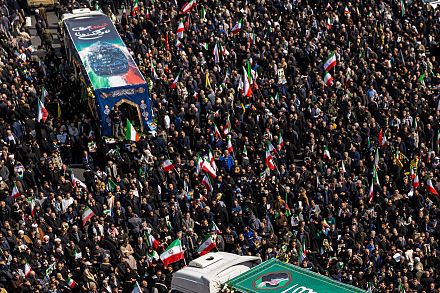
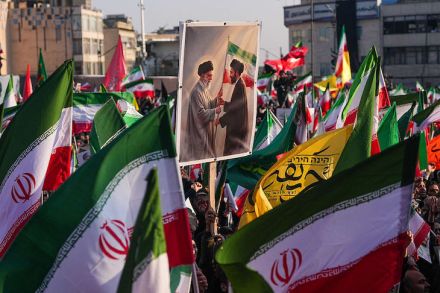
The killing of ayatollah Ali Khamenei in US-Israeli strikes on Saturday was cheered by many Iranians who have suffered innumerable atrocities under his ruthless Islamist rule of the country. While the diaspora were vociferous in their jubilation over the death of Iran’s supreme leader, many in the country also braved violent crackdowns to rejoice in the streets. These Iranians chanted the slogan that has become a common anti-Khamenei refrain over the past four decades: “Death to the Islamic Republic.” The chant has echoed alongside others: “death to the dictator… death to Khamenei” of the 1999 student marches; the 2009 election protests; the 2019 agitation against economic policies; the 2022 demonstrations over

What Iran means for the world

The Israeli-American air campaign against Iran will have profound global repercussions. What those repercussions will be depends on two crucial factors. First, will the bombing campaign remove the Shi’ite Islamist regime from power? We do not yet know if the campaign can accomplish that ambitious goal without foreign troops on the ground. If the US and Israel can do that, it would be an unprecedented achievement. Second, if the Islamists are removed, will the successor regime be stable and effective? Will it be able to control the streets and countryside, prevent successful breakaway regional movements, and begin the arduous process of rebuilding the country? Can the factions currently opposing the