Food & Drink

Portuguese wines are back

Regular readers will recall my fondness for Lord Falkland’s observation that “when it is not necessary to change, it is necessary not to change.” That crisp declaration is not only elegantly framed but (in my view) true. In this it differs, it saddens me to acknowledge, from the Duke of Cambridge’s even more robust confidence that he was “opposed to all change, at any time, for whatever reason.” I am not sure whether that mot was a testimony to the duke’s utopian inclinations or merely his stubbornness. But it is sharply at odds with the realities, if not, perhaps, with the governing temperament, of most of its main actors in the world of wine.

Portuguese

Trying the best coffee in the world

It was nine on a Monday morning, and whereas my fellow commuters were heading to the office, or their classrooms or a lecture hall, I was on my way to Parcafé in the Dorchester Hotel, right next to London’s bougie shopping district, Mayfair. It’s a place to buy Ferraris and Bugattis and shop at the Row and Goyard and be passed by an endless convoy of black Rolls-Royce SUVs. Waiting for me at the hotel would be a man with a little golden cup, containing a freshly brewed portion of mankind’s favorite black nectar. And his is the best, uncut stuff on the market. The man is Amir Gehl, founder and CEO of Difference Coffee, which sources some of the best, rarest coffee beans in the world.

coffee
Balaton

Natural wine and tacos on the Hungarian Riviera

In the summer of 2020, as impatience with quarantine and the urge to get out of town gradually displaced fears of Covid, a joke circulated on Hungarian social media about Lake Balaton, a favorite destination for domestic holidaygoers. The post-quarantine stampede had driven up prices at the lake to such an extent, the joke went, that penny-pinching travelers should consider less expensive destinations, such as Monaco or the French Riviera. Until recently, Balaton had always been the inexpensive Hungarian alternative to pricier (and, during the Cold War, politically restricted) foreign getaways.

greek wine

The rebirth of Greek wine

One of the great stories in the world of wine over the last half century is the rebirth of Greek wine. I say “rebirth” because wine has been an inextricable part of the story of Greece from time immemorial. What would Plato’s Symposium — literally “drinking party” — be without wine? And the story of Greek wine goes back much further than that. According to experts, wine grapes have been cultivated in Greece from about 6000 BC. Anyone who has read Homer recalls his frequent deployment of the epithet “οἶνοψ πόντος.” That is usually translated as “wine-dark sea,” though it literally means “wine-faced” or “wine-eyed” (οἶνος + ὄψις) sea. What color do you suppose “wine-dark” is?

What’s behind all the buzz about non-alcoholic beer?

There’s nothing quite like the third swig of a gin and tonic at the end of a long summer’s day. Or of an Old-Fashioned combating Old Man Winter’s chill. The bite on the tongue. The slow burn in the belly. The gradual easing of emotional and physical tension. Except for the hangovers. There’s nothing quite like those, either. As I — sigh — age, I’ve developed a relationship with alcohol that has become increasingly love-hate: I love it, it hates me. A slight intolerance to booze, German/Irish heritage notwithstanding, has always given me a rosy flush that on round three deepens to an unflattering scarlet that could be mistaken for theatrical rouge.

non-alcoholic
margaritas

Margarita magnificence: a consummately customizable cocktail

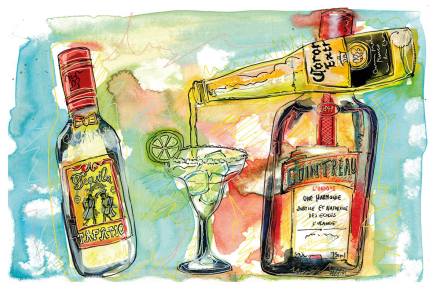
Despite being one of the most popular cocktails in the world, most margaritas are made poorly — intentionally. Nobody buys a margarita in a plastic cup for its complex flavor and balanced profile. They’re for long days out on the beach, to cool you down and kick things up — and they’re mostly made quickly and sweetly, like slushies with crushed ice. Frozen margaritas are the invention of Dallas restaurateur Mariano Martinez, who started serving them in 1971 from a converted soft-serve ice-cream machine, but the exact origin of the classic margarita was at some unknown far earlier date. Margaritas were introduced to Americans in the 1950s, with the arrival of Sauza and Cuervo tequilas, and by the 1960s, had secured their place as one of the nation’s most popular cocktails.

wines

Outdoor wines for the summer

There are some cramped, unimaginative people who — I have been told — maintain that writing about wine is a bootless enterprise. Even more extraordinary, I have heard it rumored that there exist unfortunate sods who believe that it is a waste of time to gather with friends over food and wine while discussing the events of the day, the state of the republic, the repair of one’s soul. Fortunately, neither you nor I are acquainted with any such freaks, otherwise you wouldn’t be reading this column and I would not be sitting down to write it. At the end of his brief, tantalizing book The Educated Imagination, Northrop Frye, the great Canadian literary critic (do you sense a passing adumbration of contradiction there?

The boozed-up beers of summer

Some undetermined time in the long past, possibly in 1890s Montana, a miner had finished a long and tiring day and needed a refreshing beer. But after aparticularly taxing shift, a beer wasn’t going to cut it alone. He asked the barman for a shot of whisky as well — and washed it down with his pint. It’s hard to call the boilermaker a cocktail, and inventing one certainly wasn’t on the mind of our tired protagonist. To this day, mixing beer and spirits is not generally the province of mixologists; it’s a combination more often favored by partygoers looking to get slammed as entertainingly and quickly as possible.

beers
South Africa

The secrets of South African wine

What do you suppose the grandest wine was in the early 1800s? The wine that populated the sideboards and dining tables of the courts and palaces of Europe? That consoled Napoleon as he moldered on St. Helena? That John Adams judged among “the most delicious in the world?” That Baudelaire apostrophized along with his lover’s lips in Les Fleurs du Mal? That Queen Victoria quaffed nightly after dinner as a digestif? That Hugh Johnson says many kings and consorts preferred to Yquem, Tokay or Madeira? If you said “Constantia, the sweet wine from the eponymous town southeast of Cape Town,” go to the head of the class and collect a golden star reminiscent of the honey-colored, late-harvest Muscat Blanc à Petits Grains that today makes up the wine.

Loving and tweaking the Long Island Iced Tea

Want to get drunk, fast? To most, that’s the point of the Long Island Iced Tea. It’s not so much a drink as a chemical formula designed to make an enormous percentage of alcohol consumable in a single glass. When I worked at a cocktail bar, a man once ordered two, and I asked if he would like me to hold on the second until his guest arrived. He replied, “No thanks, they’re just for me.” He proceeded to down both within a few minutes, for what surely began either a wild or very bad night. For the unfamiliar, Long Island Iced Tea contains almost every liquor you can imagine and no actual iced tea (though it shares its color).

Long Island Iced Tea
Pessac-Léognan

The thoroughly underrated Pessac-Léognan

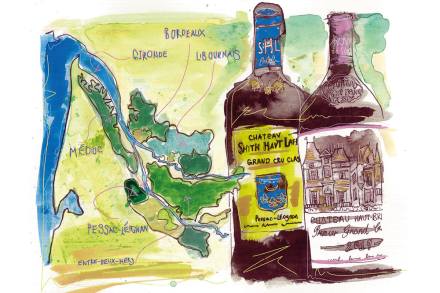
When someone says “Bordeaux wine” most of us think first of wines from the Médoc, home of Pauillac, Saint-Julien, Saint-Estèphe, Margaux and other celebrated names. For some reason — marketing prowess, perhaps — the great region of Pessac-Léognan, directly to the south in Graves, cheek by jowl with the town of Bordeaux, comes up mostly as an afterthought. This is both odd and regrettable. It is odd because, as a matter of history, Pessac-Léognan takes precedence. I suppose the story begins with the marriage of Eleanor of Aquitaine to the future Henry II in 1152. Eleanor brought vast lands from that region of France to the marriage, so there is a sense in which the French wines the English have loved since the Middle Ages were originally English.

The grapes of wealth

Are the rich different from you and me as F. Scott Fitzgerald posited in 1926? Or do they just have more money, as Ernest Hemingway allegedly retorted? Whatever the answer, they’ve certainly become wealthier. While many of us normies have been sweating fallout from inflation and skyrocketing interest rates — buying a dozen eggs, never mind a new home, requires major budget adjustments — we can take comfort that at least the 0.001 percent are doing fine. According to the latest Oxfam International Inequality Report, the five richest men in the world have doubled their fortunes since 2020 — from a measly $405 billion to $869 billion. What do they sip as they stroke their fat white purebred cats atop piles of gold? It’s wine you won’t find at a store.

wine

The magic of Charleston’s Gin Joint

There are few greater joys in life than to wander the streets of Charleston in the evening, the light and shadow of the holy city and the sea salt in the air guiding you near the haunted past, toward cobblestones and the maze of the French Quarter. The quiet of the port pierced by the occasional gull and the stopped-up cannons at every turn bring you back to the age of Henry Timrod, when ships brought the Carolinas “Saxon steel and iron to her hands, And summer to her courts.” As a believer that liquor has seasons, in the summer I shift to good gin, and for the most inventive cocktails on the East Coast there is no comparison to Gin Joint.

gin

The espresso martini is the best cocktail template

Try making up your own cocktail. It's hard. Really hard. Cocktails are balanced chemical concoctions, delicious flavors and fun textures that result from a trick of various dancing ingredients, and usually, when you come up with a cocktail idea and try to make it — even if you’ve read great theory books — it is either too sweet or too nothing, too flat. The best way to come up with one, then, is to play on existing templates. It’s not difficult to make your own sour or spritz, but the best of the best, perhaps the most fun cocktail ever, is the espresso martini. And no cocktail is easier to play with. Many of today’s classic cocktails trace their heritage to the Prohibition Era, but the espresso martini comes from the swinging nightlife of 1980s London.

espresso

The blessing of a good wine shop

There are good wine shops and bad wine shops. Among their various attributes, the good ones have a broad selection of interesting wines from interesting places and — important add-on — a knowledgeable staff whose members can talk intelligently about their wares and can steer you in the right direction. The bad ones — well, you know. Their shelves are full of the stuff the distributors tell them to buy and their staff is not really sure whether Morgon is the name of the boss’s pet or a place in Beaujolais that produces good wine. My office in New York is close to an excellent wine shop called Flatiron Wine & Spirits. It is a big shop on Broadway at 18th Street and it boasts a large, expert and helpful staff.

wine

The classic charm of Exiles

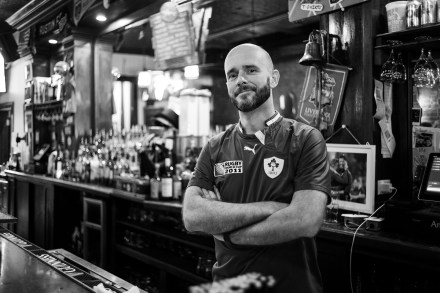
On Washington’s U Street, nestled between a dry-cleaners and the city’s most notorious gay gym, lies Exiles, a modest Irish sports bar marked by a warm blue neon sign and a Bills flag. “It’s a Bills bar and they’ll play a Jets game for me,” boasts Carmen, a local sitting at the long wooden bar. Red Liverpool soccer scarves drape over bottles of whiskey. A large Guinness bell hangs in the middle of the bar. “What can I get for you darling? I almost didn’t recognize you with your glasses on,” says a tender voice with an Irish accent. It’s Donagh. Pronounced “DUN-AHH” according to a sign at the bar. He’s a bartender and one of the owners. “Donagh and Paul will make you feel right at home...

exiles
wine

A French symposium

Just as night watchmen are constrained by duty to make their rounds, so are writers about wine. Sometimes the rounds are seasonal. Beaujolais Nouveau, for example, is released every year on the third Thursday of November at 12:01 a.m., just a few weeks after the September harvest. Gamay, the grape that makes Beaujolais, can be fresh, floral and ruby-like in this nymphet incarnation. Beaujolais Nouveau lacks the depth, succulence and complexity of more mature instances of Gamay — especially in Morgon and Côte du Py — but it is an agreeable, undemanding picnic wine that goes well with your preferred instantiation of déjeuner sur l’herbe.

The Long Room, a reliable Chicago bar with all the essentials

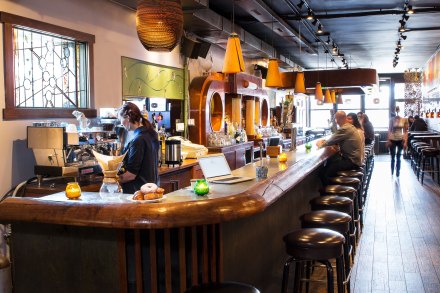
I was sipping a beer on the patio behind Ten Cat Tavern with my friend Charlie, debating which was the better Chicago bar: the Long Room up the street, or the Ten Cat. The Long Room was a neighborhood bar that had once been a dive bar. Ten Cat, according to Yelp, is a dive bar now. This requires explanation. For old-school relics like me, calling a tavern a dive bar has not, historically, been a compliment. When we moved into the neighborhood thirty years ago, the Long Room was Blue Bird Liquors, a Chicago dive bar in the traditional mold — a combination packaged-goods store and neighborhood shot-and-a-beer joint. Blue Bird Liquors didn’t have the wall of TVs obligatory in modern bars. Considering how dark it was, I’m not 100 percent sure it had electricity.

long room
St. Patrick's

How to do St. Patrick’s Day like an Irish American

For a country like Ireland, as devoted to its faith as to a good party, the fact that St. Patrick’s Day falls during Lent poses a problem. The saint himself is said to have broken his fast during Lent, eating meat instead of fish, for which he was so apologetic that an angel came to give him comfort. Put your meat into a dish of water, the angel said, and it will turn to fish. This Patrick did and was very pleased to see that the angel was right. The meat had turned to fish, and he could partake of it without guilt. The Irish call this miracle “St. Patrick’s Fish,” and feel no qualms about eating a pork roast to celebrate the day. You can also keep a holy day and drink to excess, if you’re drinking for the right reasons. St.

truffle

Truffle shuffle

Regular readers may recall the trip we took to St. Émilion on the right bank of the Gironde-Dordogne river system a while back. It being truffle season, some enterprising chaps organized a dinner revolving around that delectable fungus and one of the very best wines from St. Émilion, Château Angélus, a Premier Grand Cru Classé A, and its second label, Carillon d’Angélus. Note the bell motif: a single bell features on the label of Château Angélus, three on that of Carillon d’Angélus, so named because in the vineyards one can hear the bells from three neighboring churches ringing out that prayer to Mary (Angelus Domini nuntiavit Mariæ...) in the morning, noon and around vespers. Those of you who were along for our last foray to St.