Food & Drink

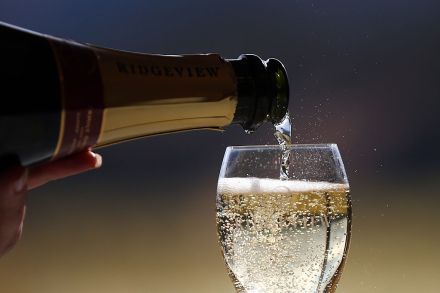
Wine highlights from Inauguration Day

I write a few days after the Big Event in Washington, DC on January 20, 2025. For us deplorables, it was a celebratory occasion. I am told that non-deplorables entertained different feelings that day. Since they had been used to having the run of our capital city, I can understand their sentiments. But, perhaps by some process of selfselection, very few non-deplorables were in evidence at the haunts I visited during my stay. Every hotel, restaurant and event space I stopped off at was full of red caps — yes, those red caps — and the mood was almost giddy with anticipation and glee. It brought to mind a passage from one of my favorite Psalms, number 23: Thou preparest a table before me in the presence of mine enemies:thou anointest my head with oil; my cup runneth over.

wine

How beer cracked France

Only a fool tries to guess exactly what awaits at a French karaoke bar. But on a Saturday night in Avignon, I wasn’t expecting to find a crowd of twentysomething hipsters drinking American-style IPA and singing “Mr. Brightside” and “Friday I’m in Love.” France, in all its stereotypical glory, has always been a wine country. Edward Lear wrote no limericks about a “young man from Saint-Étienne, who liked drinking Old Speckled Hen” but things are changing. France has the most breweries in Europe and beer is now the most bought alcohol in supermarkets, though if you ask a middle-aged Frenchman why young people are embracing beer instead of burgundy, you are met with the most Gallic of shrugs and a “bof... je ne sais pas.” So, why are they doing it?

beer
Bloody Mary

The Bloody Mary deserves more than brunch

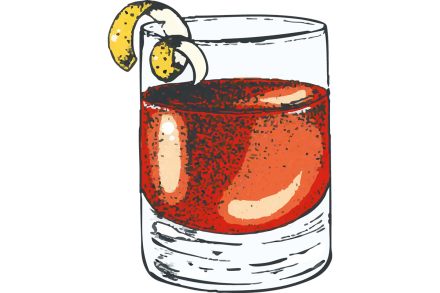
Regular readers of my cocktail column probably get the formula by now: I give a short history of the drink in question, probably with an anecdote about my time in bartending, then provide a classic recipe, following by various flavor and format variations. But the Bloody Mary doesn’t fit neatly into that structure. For one thing, the drink’s origin has never been firmly established — given that it started as a spiked tomato juice, how could there be? Do we really care who invented the vodka-cranberry? The Bloody Mary is the same way. It probably came around during the 1920s, gaining popularity in the 1930s. By 1939, you see the first real mentions of it in print.

winter

The best winter wines

Winter is a natural moment for a little recherche du temps perdu. For my band of serious thinkers, the usual aides-mémoire are not petites madeleines dipped in tea but some of the various wines the holidays afforded us. Wordsworth said that poetry “takes its origin from emotion recollected in tranquility.” The jury is still out on the accuracy of that neatly phrased observation. But regardless of its pertinence to the art of poetry, its pertinence to the art of wine appreciation can hardly be gainsaid. With that in mind, I offer, as a minor public service, a brief recollection of some of the wines that a beneficent providence vouchsafed us as the winter solstice came and went and the house was redolent of evergreen and wood fires.

My thoughts on Malört

It was January in Chicago and the forecast was for heavy snow followed by bitter cold — high time, I thought, for a shot of malört, the most undrinkable beverage on earth. Or so I’d always heard — and therein lies a tale I didn’t expect to tell. Chances are you’ve never heard of malört, formally known as Jeppson’s Malört, Carl Jeppson being the Swedish immigrant who invented the liqueur a century ago. However, it’s legendary in Chicago, where it’s commonly described as a rite of passage. That tells you a lot right there. Lest there be any doubt, readers are invited to search for #malortface on X, formerly known as Twitter, or Instagram or Flickr.

Malört
mocktails

Strong stuff for a Dry January

If you spent your holiday season right, you’re reading this magazine with a hangover, fueled by seasonal excesses in eggnog, wine, whisky and other alcoholic indulgences. January is the month to clean out, to convince yourself you’re going to start running regularly this year, burn off some of the holiday fat and detox your thoroughly tox’d body. However, just because you’re having a dry January doesn’t mean it should be a dreary one — and there are some great drinks to fuel you through it. So most of this month’s drinks will be mocktails; fortunately the non-alcoholic scene is not what it was a few years ago.

Kyè

The master Kyè

Last month we took a quick trip to Tuscany. Among the wines we sampled was Sassicaia, the fabled Cabernet blend from Bolgheri on the Tuscan coast. I said that the wine was an “instant sensation,” but an alert reader pointed out that it was only when it was sold commercially, in the late 1960s, that it took the wine world by storm. Before that, it was the private province of its creator, the marchese Mario Incisa della Rocchetta, who began experimenting with Bordeaux grapes in the 1940s. I also said that Tignanello was another superlative Super Tuscan from “the region.” But that same alert reader noted that while the region was Tuscany, Tignanello comes not from Bolgheri but from Chianti, several miles to the East.

Where Trump’s Washington will actually be hanging out

Where will conservatives and Donald Trump's disciples spend their non-working hours in DC for the president-elect’s term? The Washingtonian provided a list by Jessica Sidman last week, but by Cockburn’s estimation, it’s not totally over the target. Contenders on Sidman’s list include the Big Board, Cafe Milano, Capital Grille, Dirty Water, RPM Italian, Royal Sands Social Club, Shelly’s Back Room and the Waldorf Astoria — which used to be the Trump Hotel DC but was sold back in 2021. Shelly’s is Cockburn-approved, especially for the cigar smokers. Rudy Giuliani has been spotted in there before. But Cafe Milano, Capital Grille and Dirty Water are not necessarily “hangouts” for conservatives or the MAGA crowd in particular.

washington trump

Cocktails for a merry, tipsy Christmas

Not to live up to Irish stereotypes, but for me, Christmas wouldn’t be complete without booze; and so, for this seasonal column, it’s only fitting that I recommend some perfect yuletide drinks to get you slammed under the Christmas tree. There are two broad bases you can work with for Christmas drinks — creamy ones and those with seasonal spices. You can do both, but these are the two broad playing fields, and just because you don’t like one kind doesn’t mean you won’t like the other. There aren’t a lot of cocktails using cream (the classic or the alcoholic Irish one); the trick is to use a good Irish cream and add it to existing non-alcoholic drinks. Want a nice boozy milkshake? Want a hot chocolate that gets you blitzed? A creamier espresso martini?

Christmas
Tuscans

The secrets of Super Tuscans

I suspect that most readers, asked to name the most important red-wine grapes of Italy, would focus mainly on Nebbiolo, Barbera and Sangiovese, the most widely planted grape in Italy. Lovers of Sicily might also mention Nerello Mascalese and Nero D’Avola. What if I told you that some of the most spectacular wines in Italy were made from the Cabernets (Sauvignon and Franc) and Merlot? Have I gotten lost in the Médoc? No, I am in Tuscany, ancient home of the Etruscans, northwest of Rome. To be specific, I am in Bolgheri, a few miles from the Ligurian coast. On a clear day, if you cast your eyes south, you might just see Napoleon padding around the island of Elba plotting his escape. Everyone has heard of “Super Tuscans.” Not everyone knows the story of their origin.

A sip of the Vieux Carré

It’s 1951 and the Hotel Monteleone burns bright, a gilded island of light and liquor adrift in the New Orleans dark. Inside, the air is thick with the sweet tang of cigar smoke and the murmurs of polished conversation. Over in the Swan Room, the trumpets blare, their brassy notes cutting through the gentle chatter, their absence filled with the lively, gravelly voice of Louis Prima. The crowd sways in rhythm, caught between the pulse of jazz and the flicker of chandelier light. Outside, the French Quarter is still alive.

Vieux Carré
vineyards

The objectively, subjectively, best vineyards in the world

The October 15 issue of the Wine Spectator carries two intriguing features. The first is a series of reports, with lavish photographs, on “The World’s Greatest Vineyards.” This list of ten superstars is followed by a cast of twenty supporting actors, wineries the editors regard as “world class” but relegate to slightly lower rungs on the scale of vinous celebrity. You might think that any such listing would be powerfully subjective. Isn’t one’s taste in wine a classic instance of de gustibus non disputandum est? Well, yes and no. You don’t have to be Immanuel Kant to appreciate that in judging wine there are some objective, or objective-like, features, as well as wholly subjective ones.

DC bar Political Pattie’s gets hazed for being bipartisan

A new DC bar dedicated to crossing partisan lines, “Political Pattie’s,” has taken the “political” out of its name... though Cockburn will note the removal is “temporary.” Owners Drew Benbow and Sydney Bradford dropped an Instagram post on Tuesday about their name and logo change, as the “representation of the red elephant was hurtful to the community.”  “Political Pattie’s aims to be a fun, inclusive space that pokes fun at politics, not the pain politics often causes,” the post read. The disclaimer and apology (or more accurately, apologia) came after “mean-spirited online backlash.” But here’s the tea: Benbow and Bradford bought out “the Dirty Goose,” an LGBTQ bar.

Political Pattie’s

Kombucha future: my scoby is taking over my life

I once read the back cover of a book with a brilliant premise: a Silicon Valley wage-slave with a dull, lizard-person sort of existence suddenly has the care and feeding of a legacy sourdough starter thrust upon her. The thing promptly takes over her life and she emerges from the grayscale of soulless app-designed routine into the wild drama of an existence ruled by the whims of a yeast-ridden bacterial culture. Some are born to fermentation cultures, others acquire fermentation cultures, and yet others have fermentation cultures thrust upon them. I am among the latter school, a mostly grateful victim of fermentation-culture imposition. (Is this what they mean by Stockholm syndrome?

kombucha

Prosecco goes posh

Compromises are odious. They reek of disappointments both large and small, when no one really gets his way — there’s never a loser per se, but also rarely a winner. But very occasionally, seemingly disparate concepts can come together and create a new thing that is technically a compromise but ends up feeling like more than the sum of its parts, thanks to felicitous, and often impossible to predict, synergies. See: the bánh mì sandwich, the Constitution of the United States, Disney and Pixar. And now: Prosecco. The world’s favorite cheap, cheerful, reliably tasty tipple is dipping its toes into profundity — and the results are surprisingly successful.

Prosecco

Shaking up the mojito

Barmen despise making mojitos. The descendant of various Caribbean rum-based cocktails, they only became truly popular in the early 2000s. It’s not that they’re that difficult or require too many ingredients — and they’re nothing compared to hellish drinks like the Ramos gin fizz — but the mojito has several qualities that, combined, make it intensely frustrating. Namely, the mojito is very refreshing, can be drunk quickly and looks pretty, and therefore one order will spark a rush of others.

mojito

Portuguese wines are back

Regular readers will recall my fondness for Lord Falkland’s observation that “when it is not necessary to change, it is necessary not to change.” That crisp declaration is not only elegantly framed but (in my view) true. In this it differs, it saddens me to acknowledge, from the Duke of Cambridge’s even more robust confidence that he was “opposed to all change, at any time, for whatever reason.” I am not sure whether that mot was a testimony to the duke’s utopian inclinations or merely his stubbornness. But it is sharply at odds with the realities, if not, perhaps, with the governing temperament, of most of its main actors in the world of wine.

Portuguese

Trying the best coffee in the world

It was nine on a Monday morning, and whereas my fellow commuters were heading to the office, or their classrooms or a lecture hall, I was on my way to Parcafé in the Dorchester Hotel, right next to London’s bougie shopping district, Mayfair. It’s a place to buy Ferraris and Bugattis and shop at the Row and Goyard and be passed by an endless convoy of black Rolls-Royce SUVs. Waiting for me at the hotel would be a man with a little golden cup, containing a freshly brewed portion of mankind’s favorite black nectar. And his is the best, uncut stuff on the market. The man is Amir Gehl, founder and CEO of Difference Coffee, which sources some of the best, rarest coffee beans in the world.

coffee
Balaton

Natural wine and tacos on the Hungarian Riviera

In the summer of 2020, as impatience with quarantine and the urge to get out of town gradually displaced fears of Covid, a joke circulated on Hungarian social media about Lake Balaton, a favorite destination for domestic holidaygoers. The post-quarantine stampede had driven up prices at the lake to such an extent, the joke went, that penny-pinching travelers should consider less expensive destinations, such as Monaco or the French Riviera. Until recently, Balaton had always been the inexpensive Hungarian alternative to pricier (and, during the Cold War, politically restricted) foreign getaways.

greek wine

The rebirth of Greek wine

One of the great stories in the world of wine over the last half century is the rebirth of Greek wine. I say “rebirth” because wine has been an inextricable part of the story of Greece from time immemorial. What would Plato’s Symposium — literally “drinking party” — be without wine? And the story of Greek wine goes back much further than that. According to experts, wine grapes have been cultivated in Greece from about 6000 BC. Anyone who has read Homer recalls his frequent deployment of the epithet “οἶνοψ πόντος.” That is usually translated as “wine-dark sea,” though it literally means “wine-faced” or “wine-eyed” (οἶνος + ὄψις) sea. What color do you suppose “wine-dark” is?