Europe

Freedom of speech in the UK is very, very under threat

With all the transatlantic back-and-forth over Ukraine, and J.D. Vance’s contentious remarks on Fox News about some “random country that hasn’t fought a war in thirty or forty years,” it’s easy to forget that just three weeks ago, the vice president gave a landmark address about free speech in Europe and Britain, in particular. Last week, when Keir Starmer visited Washington, DC, Vance raised his concerns more directly with the prime minister about “infringements on free speech … that affect American technology companies and by extension American citizens.

Will Trump’s pause of Ukrainian military aid force Zelensky to the negotiating table?

The decision couldn’t have come as a surprise to Ukrainian president Volodymyr Zelensky. And if it did, then his capacity to read the room is even worse than imagined. Last night, the Trump administration paused all US military aid to Ukraine. The move came after an extremely tumultuous few weeks, which started on February 19 when Zelensky claimed that Trump was living in a Kremlin-orchestrated disinformation bubble. Trump wasted no time howling back by calling Zelensky a dictator because he canceled elections during a time of war. The spat accelerated on Friday, when the two men, egged on by Vice President J.D.

ukraine military aid pause

Zelensky goes to town

If the president of Ukraine, Volodymyr Zelensky, were on my Christmas list, I think I might give him a copy of Thucydides’ history of the Peloponnesian War. I’d mark that bit in book five we call “The Melian Dialogue.”  It tells the story of how Athens confronts the tiny island of Melos, a neutral ally of Sparta. Athens demands that the island surrender its neutrality. The leaders of Melos resist. Athens delivers an ultimatum: surrender or be destroyed.   The Melians offer a number of arguments about why they should not be forced to capitulate. Athens is not being fair, the Melians have right on their side, et cetera.

zelensky
ukraine zelensky white house

Zelensky’s White House visit goes off the rails

An astonishing flare-up in the White House between President Donald Trump, Vice President J.D. Vance and Ukrainian president Volodymyr Zelensky appears to have thrown any Russia-Ukraine peace deal — or US-Ukraine mineral deal — into jeopardy. Trump met Zelensky at the door of the White House where he gave reporters a thumbs up ahead of his arrival. However, the mood quickly turned sour when they sat down for initial remarks ahead of talks and a press conference where the pair were expected to sign the US-proposed minerals deal with Ukraine. Sat in the Oval Office, Trump was accompanied by key members of his team including J.D. Vance and Marco Rubio.

Europe learns the facts of MAGA life

Panic, even hysteria, has swept Europe. Its leaders realize that in their case Trump should be taken literally as well as seriously, and he seems prepared to trade the transatlantic alliance for détente with Russia. Eight decades of good times for the continent might be coming to a dramatic end. Trump demonstrated contempt for Europe during his first term; however, his top aides moderated his antagonism, carrying on policy as normal. While out of office he evidently decided never again. Today he is firmly driving American foreign policy. As ever, Trump’s tactics are often dubious, even counterproductive. However, only shock treatment is likely to cause Europe to take its own defense seriously.

europe

Were Trump’s comments about Ukraine a gambit to bring about peace?

If you have a pot that needs stirring, call Donald Trump.  A couple of days ago Trump made heads explode when he claimed (among other things) that Volodymyr Zelensky was “a dictator without elections” who started the war with Russia. “Oh my God, can you believe it? Trump doesn’t know Russia was the aggressor in the war. What an idiot.” The BBC, CNN and many other news sites ran little “fact-checking” stories. Politicians dusted off their most serious faces to deplore Trump’s lies/exaggerations (the US hasn’t given $350 billion to Ukraine, it was “only” $180 billion or whatever)/historical ignorance. “Ukraine did not start the war,” CNN intoned. “Russia started the war by invading Ukraine in 2022.

trump ukraine

Donald Trump speaks his ‘Truth’ about Ukraine in attack on Zelensky

Negotiating peace can be delicate business. Often it requires a steady hand, a strong sense of compassion and inexhaustible patience. As Senator George J. Mitchell, a leading architect of the Northern Ireland peace process, once wrote, "In order to understand what another person is saying, you must assume it is true and try to imagine what it might be true of." Cockburn was reminded of Mitchell's sage words when he read the president's Truth Social post about Volodymyr Zelensky on Wednesday afternoon, which he republishes in full below: Think of it, a modestly successful comedian, Volodymyr Zelenskyy, talked the United States of America into spending $350 Billion Dollars, to go into a War that couldn’t be won, that never had to start, but a War that he, without the U.S.

donald trump zelensky

The Europe of American imaginations no longer exists

Since the United Kingdom left the European Union five years ago, the pair have been in battle to prove who has performed better. But the real story of the past five years is not a stagnant UK falling behind a buoyant EU, but of Britain and Europe being trapped in the same cycle of relative decline. It’s America that has quietly raced ahead of Europe this century. Following the pandemic it has become impossible to ignore the gulf in economic vitality between the US and Europe, the former growing by 16.3 percent per capita since 2008. There are very good reasons for America’s success, or rather, Europe’s decline. The EU and the UK increasingly treat their industries as pieces of heritage which must be preserved against disruptors and foreign competition.

Europe

Vance is right — Britain really has ‘thoughts-and-prayers’ policing

"Free speech, I fear, is in retreat," said Vice President J.D. Vance to an audience of world leaders at a security conference in Munich on Friday, with a rhetorical punch comparable to Reagan's "Mr. Gorbachev, tear down this wall!" Vance pointed to various censorial "hate speech" policies spewed out from Brussels and across Europe, and to the troubling arrest of a Christian in Sweden who used his freedom of expression to burn a Qur’an. Building to a crescendo, Vance then highlighted the "most concerning" case of Adam Smith-Connor — the British army veteran and father of two who was convicted in November 2024 for praying silently, for a few minutes, on a public space across the road from an abortion facility.

j.d. vance

Europe should be careful in wishing for their own Trump

When I visited Toronto with a UK delegation last winter, conversation focused on the issues of immigration, housing and inflation that were contributing to the unpopularity of Justin Trudeau, who finally announced his resignation as prime minister last month. The prospect of Donald Trump’s return to the White House was the slumbering python in the chandelier above the conference table: I sensed our hosts preferred not to think about how bad it might turn out to be. Well, now they know. In response to Trump’s declaration of 25 percent tariffs on Canadian goods, plus 10 percent on imported energy, Trudeau retorted with tariffs on many billions worth of US products.

Trump
Trump

A ‘Trump tornado’ is about to hit Europe

There is a wind of change blowing through the West. It emanates from Washington DC, where President Donald Trump continues to dash off executive orders; more than fifty by the end of last week, the highest number in a president’s first 100 days in four decades. The liberal mainstream media is rattled. The New York Times magazine ran a piece at the weekend in which it described Trump as "the leading light of a spate of illiberal leaders and parties flourishing in democracies around the world." The paper namechecked some of them: Poland, Holland, India, France, Germany, Italy, Brazil, Hungary and Russia. What unites and motivates these "illiberal" parties is their opposition to what the NYT called "liberal creep," which they regard as a civilizational threat.

mandelson

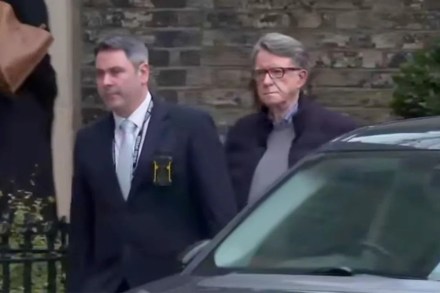
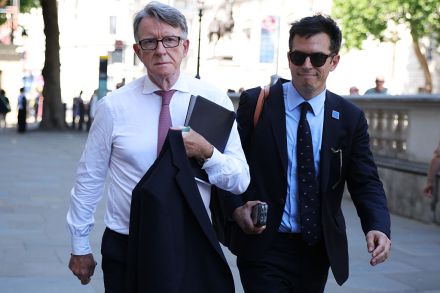
Will Peter Mandelson thrive in Trump’s Washington?

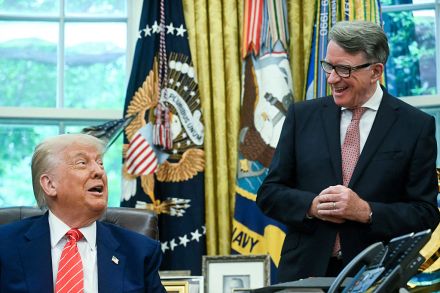
Amid the blizzard of earth-shaking Trump news, the appointment of a new British ambassador may not seem the most pressing story coming out of the nation’s capital. Yet today, Peter Mandelson will hand over his credentials to the Chief of State Protocol in Washington, DC and his arrival as His Majesty King Charles III’s man in America is certain to keep the "special relationship" gossip mill whirring for months to come. It could prove a brilliant appointment. Or it could blow up in the British government’s face. The proof will be in the diplomatic pudding.

A pleasant respite from the tumult in Cambridge

Cambridge, England Inscribed on the lid of a two-manual harpsichord in Holy Trinity Church at Hildersham in Cambridgeshire is the Latin tag Musica Donum Dei — music is a gift of God. It was a sentiment I could hardly quarrel with as I listened in the little twelfth-century church to a variety of baroque sonatas for violin, recorder, cello and harpsichord. They were expertly performed by the Azur Ensemble, which is comprised of recent graduates of the Royal College of Music. A particular standout was the French harpsichordist Apolline Khou, who has performed widely in Europe and in a solo concert for King Charles III.

Cambridge

Bureaucrat Main Character Syndrome is killing Ukraine — and America

Kyiv Last week, Texas congressman Pat Fallon asked why Ronald Rowe, the acting director of the US Secret Service, appeared in a 9/11 memorial photo op rather than focusing on his duty to protect Presidents Biden and Trump — just two months after an assassination attempt left Trump grazed by a bullet. Instead of addressing the concern, Rowe, an unelected bureaucrat, lashed out: “Do not invoke 9/11 for political purposes!” Citing his presence at Ground Zero on 9/11, Rowe seemed insulted by the congressman’s challenge to his judgment. But Rowe’s job wasn’t to be part of the story — it was to protect those who actually are the key players, current and former presidents.

Ukraine becomes another battlefront in the American election

They were the odd couple, one lumbering in his trademark oversized Brioni suit, the other ripped in his olive green military attire. The two had been engaged in a kind of mano-a-mano verbal combat before their official meeting in Manhattan at Trump Tower. It was getting ugly. Ukrainian president Volodymyr Zelensky suggested that J.D. Vance’s plan, such as it was, for ending the war between Ukraine and Russia was “too radical.” Add in Zelensky’s visit to an armaments factory together with Pennsylvania governor Josh Shapiro, and Trump and his flunkeys went nuts. House Speaker Mike Johnson wrote a sniveling letter demanding the ouster of Ukrainian ambassador Oksana Marakarova.

zelensky

The end of the Orbán era

Over the headline “Peace Mission,” a recent cover from the conservative Hungarian periodical Mandiner shows an awkwardly photoshopped Viktor Orbán mediating between a bemused-looking Vladimir Putin and a grim Volodymyr Zelensky. Behind Orbán, a map of the world connects Kyiv, Moscow, Beijing, Washington and Budapest. One of these capitals, as they say, is not like the others. Even before Ukraine’s Kursk offensive, the chances of Orbán’s July trips to Kyiv and Moscow producing a peace settlement were slim. The Mandiner cover, however, is a revealing window into the mindset of Orbán’s conservative fans. The idea of a Hungarian prime minister mediating between squabbling great powers is both attractive and plausible to many of Orbán’s fervent supporters.

Orbán

Despite defeat, Le Pen’s party has made steady progress

I have been in Paris the last few days and by coincidence am staying cheek by jowl (joue contre joue?) with the Eiffel Tower, site of France’s version of those “mostly peaceful” and of course eminently wonderful protests against “the far right” last week in the aftermath of Marine Le Pen’s strong showing in the first round of voting for seats in the National Assembly. The second round took place yesterday, and there were some of us who hoped that Le Pen’s Rassemblement National Party would sweep the field. France has an excellent law that neither the media nor politicians may comment publicly on an election until the polls close, which last night was at 8 p.m.

marine le pen

Seized Russian assets should be used against Putin

The seizure of enemy treasure, formerly known as plunder and pillage, is an ancient tool of war. Though still practiced in the world’s nastiest conflict zones, it’s a tricky business within a rules-based international order. The G7’s agreement to lend $50 billion to Ukraine — using income from $300 billion of frozen Russian assets to cover interest and repayments on the loan — is a vivid case in point. And some would say, a lily-livered half-measure. The key feature of the deal is that it does not actually claim ownership of Russian loot — which however ill-gotten is mostly held in EU banks in the form of western government bonds. It merely diverts interest payments due on the bonds from the issuing governments.

Russian
nato

Inside the debate over Ukraine joining NATO

NATO’s summit in Washington, DC will be full of pomp and circumstance. The gathering, from July 9-11, is intended in part to celebrate the Alliance’s seventy-fifth anniversary, a symbolic and emotional event for the leaders in attendance. You can expect the red carpet to cover the entire city. Dozens of speeches will be given about how NATO is the oldest and most successful military alliance in history and why the bloc remains a crucial check on Russian expansionism. Some will even claim matter-of-factly that NATO enlargement over the last twenty-five years — NATO has doubled its membership during that period of time — was sound policy and had nothing to do with Russia’s decision-making calculus on Ukraine.

Meloni and her lieutenants plan their takeover of Europe

Cosenza, Italy On a dreary afternoon in May, hundreds of well-dressed Italians crowded into a regal government building in Cosenza, aptly named The Provincial Palace of the Hall of Mirrors. It was a campaign event for Fratelli D’Italia, Italy’s ruling political party. The supporters listened attentively for more than two hours. The mood was triumphant and the politicians spoke as if victory was inevitable. They spoke about a plan for when, not if, the right assumed greater power in Europe.  “This confidence is due to the fact that we, as Italy, have acquired centrality in a very important way,” said Giovanni Donzelli, the party’s national organization manager.  “This centrality is all thanks to the great work done by our leader Giorgia Meloni.

Meloni