Economy

  • AAPL

    213.43 (+0.29%)

  • BARC-LN

    1205.7 (-1.46%)

  • NKE

    94.05 (+0.39%)

  • CVX

    152.67 (-1.00%)

  • CRM

    230.27 (-2.34%)

  • INTC

    30.5 (-0.87%)

  • DIS

    100.16 (-0.67%)

  • DOW

    55.79 (-0.82%)

UBI will make us miserable

It’s hard to avoid the constant prophecies of doom about how AI is going to take our jobs – with some of these already being borne out. However, AI leaders such as Elon Musk have declared that the population will be supported by Universal Basic Income (UBI) instead, in which the government will financially support everyone through the huge revenues produced by AI. “Universal HIGH INCOME via checks issued by the Federal government is the best way to deal with unemployment caused by AI,” Musk posted on X earlier this year. Musk imagines that we wouldn’t be unemployed but rather liberated – UBI would allow us to live without the mundane tasks of everyday life, like making PowerPoint presentations, writing emails or finding synergies in our deliverables.

Spotlight

Featured economics news and data.

Cutting Britain’s giant welfare bill would be an act of kindness

Does having money really matter that much? There are those, usually with quite a bit of it, who want us to care less about materialism. But, unequivocally, money really does matter – not because of any status it supposedly brings, but for the freedom it buys: freedom to choose how we live and how we look after others. Considering this, it seems that the deep disillusionment with mainstream politicians in recent years stems from a protracted and ongoing period of stagnant living standards over which they have presided. But the truth is that the average person has not got poorer since the global financial crisis. They have got a little bit richer. Employment levels are still exceptionally high. And, both historically and internationally, we are a very rich country.

Introducing Wokeyleaks

A regular column by an anonymous whistleblower operating deep within heart of the Social Justice Movement that is the entertainment industry. To protect their identity, they will go under the code-name ‘They/Them’. Wokeyleaks will also function as a confidential news leak organization for any other sources who wish to divulge classified information (and hilarious anecdotes) about woke culture without fear of getting canceled. My disillusionment with the Social Justice ‘left’ was less a road to Damascus moment and more death by a thousand cucks. It was when a friend told me that ‘people are concerned about your use of POC hand emojis on Instagram’. Apparently, it’s ‘the equivalent of blackface’ (it’s really not).

wokeyleaks

Sell bitcoin, buy Tesla

Which is madder, bitcoin at $41,500 — oops, make that $31,000 on Monday — or Tesla shares at $880 apiece? Don’t get me started on the crypto-mania in which the UK Financial Conduct Authority has warned gamblers ‘they should be prepared to lose all their money’. But Tesla, relatively speaking, is a real thing: a California-based carmaker which has expanded the frontiers of the electric vehicle market that’s going to become huge in the next decade and could soon make carbon-fueled road transport extinct. Put that way, it’s not so surprising — in tech stock terms — that investors should value Tesla higher than the rest of the US auto industry combined. But those investors are not making an objective calculation based on projected profits or dividend flows.

tesla

Stop Andrew Cuomo’s war on restaurants

New York Cuomo to New York City restaurants: drop dead. This is the unmistakable message from Gov. Andrew Cuomo to the cornerstone dining industry in America’s premier city. Thankfully, Cuomo’s veritable kiss of death for these establishments is earning him nothing but rotten tomatoes. Cuomo is being fricasseed like a cartoon rabbit for his policy on Gotham’s eateries. New Yorkers across the political spectrum are baffled and revolted at his treatment of these signature local enterprises. Cuomo deserves every spoon of hot gravy ladled down his back. The Emperor of the Empire State has unleashed a policy that makes zero scientific, meteorological, or economic sense. Aside from that, it couldn’t be more brilliant.

new york city restaurants

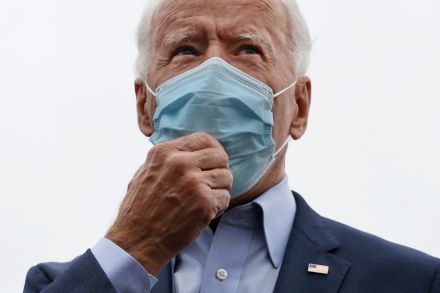
Do you want a Trump or Biden economy?

It would be great if the President was an icon of virtue and goodness, but he isn’t. As much as my Democratic friends want to parse otherwise, neither was Bill Clinton, but we overlooked Clinton’s repugnancy because we loved his booming economy. When you strip away the media noise, the fundamental question is: do you want a Trump or Biden economy in 2021 and beyond? Thankfully, both men have records in leading the country so the question isn’t a speculative one. Additionally, given that the states are experiencing dramatically different post-pandemic economic recoveries, we can see what a Trump economy is doing under conservative leadership and policies compared to what a Biden economy is doing under progressive leadership and policies.

economy

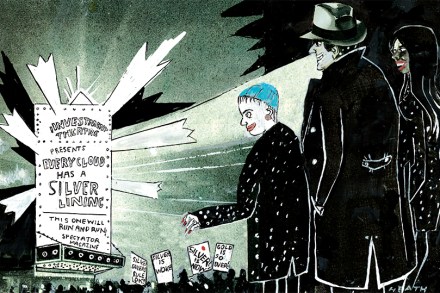
Silver linings: the asset that’s outperforming gold

It could have been technology stocks such as Amazon and Zoom, of course; or government bonds; or cash; or a property, preferably in the countryside. As the COVID-19 crisis rippled around the world and locked-down economies crashed into one of the worst recessions ever recorded, there were plenty of different ways investors might have tried to ride out the storm. But there was one asset they could easily have overlooked, and yet which would have outperformed almost any of them: silver. For much of the past decade, silver has been ignored as a largely irrelevant alternative to gold. In the past few months, however, it has started to shine. The precious metal has soared in price, outperforming most alternatives.

silver

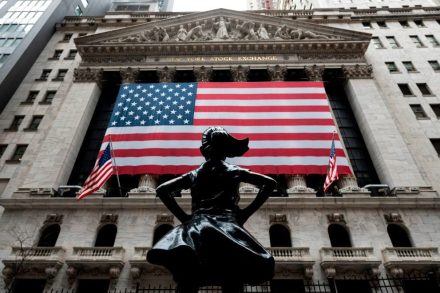
The stock market isn’t the success story Trump thinks it is

COVID-19 is still raging, with little sign of coming under control. The economy is already a tenth smaller than it was at the start of the year. Joblessness is soaring. And the budget deficit? Don’t even ask. But, hey, perhaps we shouldn’t worry about any of that. As the President of the United States keeps pointing out, the stock market is doing great, and, in his opinion, anyway, that means America, to borrow the kind of slogan that fits neatly onto a baseball cap, is great again as well. There is a problem, however, with Trump’s breezy 21-character analysis. It is not really true. The main equity indices reflect many different things, and the health of the economy is not always one of them. https://twitter.

stock market

Get ready for Trump’s second term

President Trump’s adversaries are running Joe Biden, a fallback Beltway lifer who is credibly accused of selling his office, leaking false intel about Gen. Flynn to the Washington Post and handsiness with female political allies. Oh, and it appears that a prosecutor in Ukraine is digging into the potential criminal liability of the one or more persons who gorged on Burisma’s trove of US taxpayer funds. Joe’s son Hunter is named, and so Joe, in a context not yet fully disclosed. If there’s a criminal investigation in Ukraine, no problem: Joe’s plea of cognitive impairment will let him walk. And the hosannas reaped by doughty old Jim Clyburn for picking Joe up off the floor in South Carolina now seem no more than a feel-good story.

second

How liberal globalism went bankrupt

When future historians chronicle the period after the Cold War, the rise of China will dominate their accounts. Beginning in the 2000s, China unleashed a flood of state-sponsored manufactures, many of them produced by western multinational corporations using Chinese labor on Chinese soil. This impoverished much of the already pressured industrial working class in the US and Europe, triggering populist revolts in rustbelts like the American Midwest, the north of England and eastern Germany. The recycling of profits from China’s chronic trade surpluses through the global financial system enriched western financial interests and helped to inflate bubbles in the real estate and stock markets. These burst in 2008, causing the Great Recession.

china

Media referees PPP loans

No single industry was happier to see the government release Paycheck Protection Program (PPP) data Monday than the media. While there wasn’t any sort of significant media bailout, journalists successfully turned the news of the program into profitable clicks of their own. Newsweek: ‘Religious Organizations Receive $7.3 Billion in PPP Loans, Megachurches Amass Millions’ Forbes: ‘Vocal Opponents Of Federal Spending Took PPP Loans, Including Ayn Rand Institute, Grover Norquist Group’ Associated Press: ‘Kanye West? The Girl Scouts? Hedge funds? All got PPP loans’ Deadline: ‘Who Got PPP Loans?

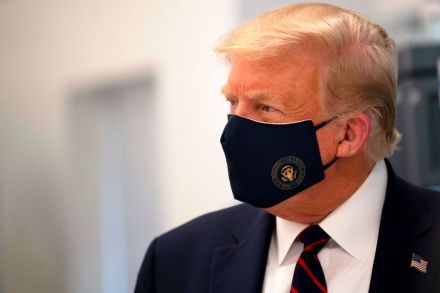
ppp Treasury Sec. Steve Mnuchin and President Donald Trump

Nigel Farage: Trump is taking us back to more traditional alliances

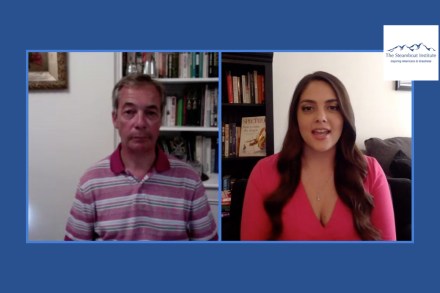
Our Washington editor Amber Athey interviewed Nigel Farage, founder of the UK Brexit party, for a Steamboat Institute livestream. We've published the transcript below.Amber Athey: Welcome everyone to the Steamboat Institute's live broadcast. I'm Amber Athey, the Washington editor for Spectator USA. And I am joined by Nigel Farage, the leader of the UK Brexit party, who will also be a keynote speaker at the Steamboat Institute's annual Freedom Conference this year from August 28 to 29. Nigel, thank you so much for joining us again.Nigel Farage: Thank you. No problem at all.AA: So I want to go ahead and get started by giving you a chance to respond to a little bit of a controversy. People are very upset with you for attending Trump's rally in Tulsa, Oklahoma.

farage

Trump unveils sweeping immigration changes

President Trump will be signing an executive order and implementing a series of new regulations that will temporarily halt specific types of guest worker visas and make permanent changes to the H-1B visa program. In April, Trump signed an executive order preventing the issuance of new green cards for 60 days. The new order extends that guidance through December 31, 2020 and also temporarily suspends the issuance of new visas through the H-1B and H-2B programs, as well as some visas through the J-1 and L-1 programs. The order intends to lower foreign competition for the tens of millions of newly unemployed Americans during the economic shutdown resulting from the COVID-19 outbreak. The May unemployment rate dropped slightly to 13.3 percent from 14.

immigration President Donald Trump

Cut meat industry’s red tape, House Republicans argue

Republicans on the House Antitrust Subcommittee sent a letter to Agriculture Secretary Sonny Perdue on Tuesday urging deregulation of the meat industry. The members of the subcommittee argued that the consolidation of the industry has pushed out local meat processors and caused supply chain failures, according to a copy of the letter obtained by The Spectator. Americans faced meat shortages during the COVID-19 outbreak because of large processing plants closing down after workers contracted the virus. Meat packaging in the United States is largely controlled by just a few big corporations, so one plant closing down has a severe effect on supply across the industry. The subcommittee members, Reps.

Ground beef meat

We need a Pompeo Plan to tame the dragon

It is traditional that the serious statesperson should respond to a crisis such as COVID-19 by calling for a ‘new Marshall Plan’. The New York Democrat Chuck Schumer wants one for the domestic economy. The Texas Democrat Julián Castro wants one in Central America. A chorus of European leaders, some of them democratically elected, wants one for the European Union. It is only a matter of time before the Trump administration wants one too, but on its own terms, in order to counter the threat of China. Call it Marshall’s Law. Between 1948 and 1951, the Marshall Plan or European Recovery Program (ERP) transferred $12 billion (c. $130 billion in today’s money) to western Europe, most of it to Britain, France and Germany.

marshall plan

Why are US shares performing so well when the economy isn’t?

A staggering 20 million Americans lost their jobs in April and yet the US stock market had its best month for decades, with the S&P 500 up 13 percent. Since then job losses have continued to mount, and yet the market is still higher. How can US shares be doing so well when the evidence of economic devastation is overwhelming? Even odder, the US stock market (S&P 500, down 13 percent year to date) is doing far better than the UK (FTSE 100, down 23 percent YTD) and European indices (Eurostoxx, down 26 percent YTD), and yet UK and European governments have protected millions of jobs through various furloughing schemes.

market shares

Boycotting China is not that easy

China’s various human rights abuses, their treatment of women, their savagery toward religious people and their chokehold on Taiwan and Hong Kong, has long made them a target for economic boycotts by Westerners. But executing a successful one is exceedingly difficult to achieve. In 2003, disappointed that the George W. Bush administration reaffirmed their ‘One China’ policy in regards to Taiwan, I launched my own boycott of Chinese goods. It was difficult but felt worthwhile to spend extra time looking for the ‘made in’ label on goods I was buying. And then I needed a shower curtain. I visited store after store and could not find one made anywhere except in China. I lived without a curtain for months before giving in and buying a Chinese-made one.

boycotting

When money dies

‘Money for Nothing’ is more than just the name of a Dire Straits hit from 35 years ago. Today it’s the guiding principle of an increasingly wide spectrum of American political thought. Andrew Yang built his campaign for the 2020 Democratic presidential nomination on a call for a universal basic income — a $1,000 monthly payout from the federal government to every adult in the country. When Congress in March fumbled for something grand to do in response to the coronavirus crisis, a consensus quickly settled on sending out $1,200 checks to most Americans. But free money isn’t just an emergency measure or a faddish idea from the left.

money stimulus

The 2020 question: which candidate will stand up to China?

Imagine you are in your late thirties living in Ohio working at a steel or other manufacturing plant in the late 1990s. You are the second or third generation of your family working at the local plant. Perhaps even your dad is still working at the plant as a union steward. You’ve already seen the impact the 1994 North American Free Trade Agreement had on your plant and other parts of Ohio. Under President Bill Clinton, who you voted for and your union heavily backed, China did enough of what the experts and policymakers in Washington wanted it to do to gain entry to the World Trade Organization, which became final in December 2001.

biden trump craziest 2020

Dear politicians, life must go on

The worst day of my childhood was in 1995 when my father lost his job. He worked close by as a cook in a local restaurant, just a mile or two from our modest home in Cranston, Rhode Island. I recall what it felt like when he broke the news:  I felt my legs start to go under me. I still see him walking up the small hill that led to our home: his head down, his spirit crushed. I still see the look on his face, a man whose purpose had been taken away. My mother cried. We had to sell our house. Nothing would ever be the same. I suspect many American families know what I’m talking about. Nearly 30 million have lost their jobs in just six weeks alone. Millions more will follow.

life unemployment job
oil

Could President Trump lose the oil war?

In a cover story for The Spectator that appeared just after Saudi Arabia launched an oil war against Russia in March, I wrote: 'One wonders how Donald Trump — who hates personal disloyalty more than anything — will react when he wakes up to the fact that the Saudi leader he has stuck with through thick and thin is now out to destroy the domestic industry Trump is most proud of.' Well, now we know. By the first week of April, Trump was so concerned about the impact of dramatically lower prices on the domestic fracking industry that he called the Saudi leaders and gave them a stark ultimatum. Unless they pressured OPEC members to cut oil production, he would be powerless to stop lawmakers from passing legislation to withdraw US troops from the kingdom.

‘Trust but don’t verify’: US-China relations in the 21st century

It seems this virus is fiercely contagious but far less lethal than first supposed. The argument now is whether we should be emerging from lockdown and getting back to the business of business. The Trump faction, some 50 percent of our country, are straining at the bit to go back to work. Democratic leadership and the left-leaning media are against breaking lockdown. Why? It’s the usual knee-jerk ‘Orange Man Bad’ anti-Trumpism and a shivering fear that Trump can rebuild our economy in time for the coming election. But the economy cannot be fully restored without addressing the most complicated question: what to do about China? Twenty years ago China was a developing nation, albeit one shaking a military fist externally and crushing dissent internally.

trust verify