Economy

  • AAPL

    213.43 (+0.29%)

  • BARC-LN

    1205.7 (-1.46%)

  • NKE

    94.05 (+0.39%)

  • CVX

    152.67 (-1.00%)

  • CRM

    230.27 (-2.34%)

  • INTC

    30.5 (-0.87%)

  • DIS

    100.16 (-0.67%)

  • DOW

    55.79 (-0.82%)

The IMF growth downgrade is more bad news for Rachel Reeves

Rachel Reeves lands in Washington tonight to be greeted with bad news. The International Monetary Fund (IMF) – whose spring meeting the Chancellor is attending – has just handed Britain the largest GDP downgrade of any G7 country.  In the freshly released update to their world economic outlook, the IMF forecast growth for the UK this year of just 0.8 per cent – down from the 1.3 per cent they’d previously projected. Things don’t get much better next year either, with just 1.3 per cent growth forecast, again downgraded from 1.5 per cent.  This downgrade singles out Britain and our European neighbours. While the IMF calls the overall effect of

Spotlight

Featured economics news and data.

Cutting Britain’s giant welfare bill would be an act of kindness

Does having money really matter that much? There are those, usually with quite a bit of it, who want us to care less about materialism. But, unequivocally, money really does matter – not because of any status it supposedly brings, but for the freedom it buys: freedom to choose how we live and how we look after others. Considering this, it seems that the deep disillusionment with mainstream politicians in recent years stems from a protracted and ongoing period of stagnant living standards over which they have presided. But the truth is that the average person has not got poorer since the global financial crisis. They have got a little

Why private equity sharks are shopping at Morrisons

The late Sir Ken Morrison — founder of the eponymous supermarket chain that’s the latest UK target for US private equity — had the blunt manner of the Yorkshire cattle farmer he became in reluctant retirement after he was ousted by his own board. Criticising his successors from the floor at one of his last AGM attendances, he roared: ‘I have 1,000 bullocks… but you’ve got a lot more bullshit than me.’ So I’m sorry he’s not around to accost the suits from the New York firm of Clayton, Dubilier & Rice (and their adviser, former Tesco chief Sir Terry Leahy) on the intentions behind the takeover bid that sent

Can the EU save Italy?

There’s been a lot of hype around the green light given by the European Commission yesterday to Italy’s recovery plan. But let’s break it down: the final headline numbers are €68.9 billion in EU grants by the year 2026 and €123 billion in loans. If you take the grant component, and divide it over the six-year duration, you arrive at an average of 0.6-0.7 per cent of Italy’s 2019 GDP each year. It is front-loaded, and it’s by no means a modest sum. What’s harder to accept however, is folding in the loan component to arrive at some giant fake headline number. The whole point of this exercise is not

Can Britain ever build its own Silicon Valley?

36 min listen

Ever since the advent of the internet, respective British governments have sought to make the UK a world leader. Surely, it has been argued, a country with some of the world’s best universities and tech skills can rival America’s success? From the coalition-era Silicon Roundabout to more recent plans for a British DARPA (the US military body which has supercharged scientific research), the idea of turning Britain into a tech superpower remains an evergreen fixation. This year has seen two big tech debuts in the city, albeit with slightly different results. The much-hyped arrival of takeaway giant Deliveroo, for example, turned out to be a bit of a flop, with

Is the green list enough to save tourism?

Will there be any new countries on the ‘green list’ when the latest revisions are announced tomorrow? Last time around there was expected to be some kind of relaxation – yet no countries were added to the green list. Instead, Portugal was removed and several countries were added to the red list. However, media minister John Whittingdale certainly seemed to hold hope when interviewed on the Today programme this morning, saying “hopefully it will be possible to increase that number [of countries]”. It is hard to escape the conclusion that the government will face serious difficulties if it does not allow some relaxation. The travel industry is getting restive and

It’s time to take back control of the public finances

It is called managing expectations: priming the public for really bad news so that when modestly bad news arrives it comes across as good news. Today’s public finance figures is a case in point. We have become so used to ever-grimmer predictions of the size of the government’s deficit that the latest figures released this morning ended up being reported in the form ‘borrowing is much lower than expected’.  In May the government borrowed £24.3 billion which, we are told in a government press release, is a whacking £19.4 billion less than last May. Furthermore, total borrowing for the financial year 2020/21, came in at £299.2 billion — which, we

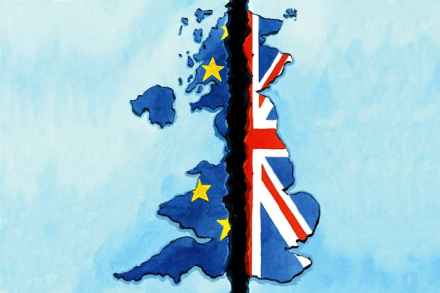
Boris’s Brexit battle isn’t over yet

On the eve of the five-year anniversary of the Brexit referendum, it’s hard to shake the feeling that Brexit was the dog that never barked. Project Fear portended half a million job losses – a hard measure to test given a year of lockdowns and furlough, but before Covid hit (and now) the unemployment rate is lower than it was five years’ ago. We were warned of a ‘punishment Budget,’ as though there is ever any other kind. The hysteria, the stalling of Parliamentary machinery, the well-documented family rifts – was it all for nothing? First, a few caveats. There are many problems that still need fixing – especially in

The Tories should ignore the Amersham by-election

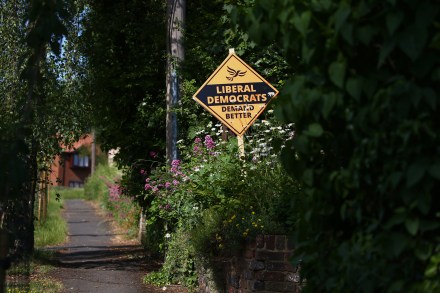
Chesham and Amersham has fallen. The once uber-Tory Chilterns citadel has been snatched by the Lib Dems, with local campaigners citing planning reform and HS2 as the main drivers for their success. After the ginormous swing — from a 16,000 majority to an 8,000-vote deficit — fears are growing that the Tories’ planning reforms might become a victim to demographic subsidence. Many of the government’s backbenchers are keen to undermine the party’s house-building efforts. They fear Amersham-style retribution from similar voters, eager to punish them for devaluing their most-prized asset and adding congestion to their quaint country lanes. The Nimbyist revolt has been a major political force for yonks Isle of Wight

The EU’s debt bondage expansion

In the global market for government debt, worth an estimated $92 trillion (£66 trillion), it amounts to little more than a drop in the ocean. The European Union this week issued the first €20 billion (£17 billion) of bonds to pay for its Coronavirus Rescue Fund. The money itself doesn’t amount to very much one way or another. And yet, the Commission’s President Ursula von der Leyen was surely right when she described it as a ‘truly historic day’. Why? Because, the Commission is already using it to seize control of fiscal policy, just as it used vaccine procurement to take control of health policy. Its enthusiasts have already hailed the

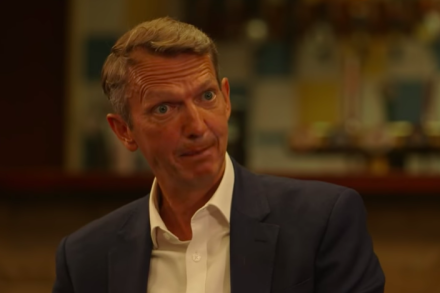
The true cost of cheap money: an interview with Andy Haldane

Britain’s economy is growing at the fastest rate in 200 years. Job adverts are 29 per cent above their pre-pandemic levels and employers say they can’t reopen because they can’t find staff. Wages are rising at the fastest rate in ten years. But here’s the question: how much more support does the economy need from the Bank of England’s printing press? Should the BoE stick to its pledge to bring QE up to £895 billion or stop £50 billion short? Its members met to discuss this last month and decided (as they always do) to press ahead — by eight votes to one. The dissenting vote — the first time

Foreign opportunists are turning Britain into a corporate car-boot sale

The snatching of a 12 per cent stake in BT by French entrepreneur Patrick Drahi, last seen here when he bagged Sotheby’s for $3.7 billion two years ago, could be a good thing if it injects dynamism into the telecoms giant’s late-running plans to install high-speed broadband across the UK. But it’s also part of a wave of fast–moving foreign money hunting undervalued UK assets — which is positive if it fuels capital investment for growth, negative if it makes nothing but fast bucks for private investors. The logic is simple. The private equity fraternity is laden with cash and global in outlook; what it sees in London is an

Is lockdown’s tech bubble about to burst?

Netflix is not signing up subscribers at the rate it once did. Disney+ has stalled. At Boohoo, growth is not as red hot as it was just a few months ago, while Deliveroo’s float on the London stock market was quickly dubbed ‘flopperoo’ by City wags. Zoom’s shares price has stopped, er, zooming, at least in the upward direction. A random collection of snippets of business news? Well, to some degree. But there is also a common theme to all these stories, and one that is significant for investors. We are about to witness a serious bout of what might be termed the post-pandemic blues. The companies that did brilliantly

Rishi Sunak: I’m a fiscal Conservative (unlike Boris)

When Rishi Sunak told Andrew Neil this evening that he had his eyes on the future, he was ostensibly talking about the nation’s finances. But it was difficult not to conclude from his interview on GB News that he wasn’t also keeping at least one eye on his own future, too. A particularly striking exchange came when Neil asked him what kind of Conservative he is: Andrew Neil: ‘Beyond the pandemic are you a One Nation conservative, are you a big Government Conservative like the Prime Minister or are you a small government, fiscal Conservative?’ Rishi Sunak: ‘Of course I’m a fiscal Conservative, Andrew, because as we talked about it’s

Is inflation about to bite?

The signs were there for all to see — pubs, restaurants, hairdressers and so on all pushing up their prices. Businesses have to make a profit while observing social distancing, dealing with soaring fuel prices and fast-accelerating wages. Yet the latest inflation figures seem to have caught many people by surprise. The Consumer Prices Index (CPI) is back above the Bank of England’s target at 2.1 per cent. Fears that Brexit would lead to a surge in food prices appear to be unfounded Drill down into the figures and you can see that, while the current level of CPI is not in itself a problem, inflationary pressures are building. Producer price inflation —

Is furlough holding back the jobs market?

The latest employment figures, published this morning, confirm a remarkable aspect of the Covid pandemic: that it appears to have caused no more than a little bump in the jobs miracle of the past decade. That is in spite of the economy shrinking by nearly 10 per cent in 2020 — a performance that in the past would have led to millions out of work. In May the unemployment rate fell by 0.3 per cent to 4.7 per cent. By contrast, it reached over 8 per cent during and after the 2008 financial crash. But of course, the unemployment figures don’t tell the whole story — not when we have a

We don’t have to swap sovereignty for trade

A new court will be established with powers over both countries. Labour and product laws will be harmonised. Flags with kangaroos and crowns will flutter over buildings, there will be a special parliament moving weekly from Cairns to Coventry and an anthem that mashes up Rolf Harris and The Beatles will be played at every opportunity.  For years, we have been lectured by europhiles that free trade requires a pooling of sovereignty There were lots of things that could have been in the Australian-UK trade deal that was finally agreed today but which aren’t. In truth, the most significant point about the deal is not what it includes, but what

The cost of delaying ‘freedom day’

When Boris Johnson announced that unlocking would be guided by ‘data not dates’ he handed detractors ample scope for derision and defiance. In the four months since, lockdown critics have rightly insisted that he uphold the slogan and accelerate a roadmap, designed to move at such a glacial speed, that it risked fraying the DNA of our economy and permanently crushing our joie de vivre.  Why did we spend Easter isolated from loved ones? April in wintry beer gardens? Why did we roll out the vaccine at phenomenal pace only to keep restrictions in place as the number of Covid deaths hit single digits? Contrary to expectation, however, that mantra

How to fix the protocol

The blame game between London and Brussels over the Northern Ireland protocol obscures the fact that there are solutions waiting to be found. There are, as I say in the Times today, ways to reform the protocol and better protect the Good Friday Agreement while not threatening the integrity of the single market. Three changes would render the protocol far more acceptable Three changes would render the protocol far more acceptable and would better position it to withstand the undoubted pressures it will come under when the EU and UK start to diverge their regulations.  The first of these is a trusted trader scheme for food. This would allow registered

Will the third wave stop our economic recovery?

The UK economy continued to rebound in April, with this morning’s update from theOffice for National Statistics showing GDP grew 2.3 per cent — slightly better than the consensus prediction of 2.2 per cent. The reopening of non-essential shops and outdoor hospitality on 12 April contributed to the boost. GDP now sits 3.7 per cent below its pre-pandemic levels, the closest we’ve come to achieving full recovery. Forecasters are increasingly confident that we’ll be back to pre-pandemic levels in 2021, even possibly before Q4. Capital Economics says ‘early indicators suggest that GDP growth was strong in May as well,’ when more indoor activity opened and numbers on indoor and outdoor socialising relaxed further. Oxford

Two reasons why Andy Haldane is right to worry about inflation

Companies are facing critical shortages of staff. Commodity prices keep spiking upwards. Central banks are printing money on an unprecedented scale, and governments are running deficits of a size that haven’t been seen in peacetime before. What could possibly go wrong?  Well, quite a bit, as it happens. And the departing chief economist of the Bank of England Andy Haldane is completely right to warn that the real risk we face over the next couple of years is not a prolonged slump, but a re-run of the spiralling prices of the 1970s.  To his credit, Haldane was seldom afraid of challenging orthodox views during his time at the Bank. Now

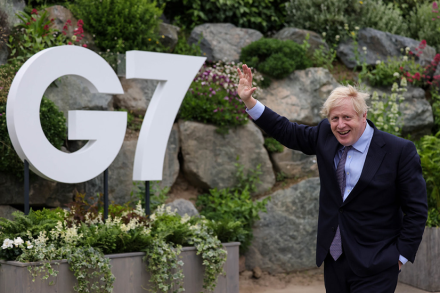
Why this G7 summit matters more than most

It’s risky planning a trip to the British seaside at any time of year. But if the weather forecast is to be believed, Boris Johnson will get away with this gamble at the weekend’s meeting of the G7 at Carbis Bay in Cornwall. Brexit’s critics were always going to seize on any evidence that Britain was being sidelined by the rest of the world after we left the EU. So it is fortunate for the government that the UK is the host of this year’s summit because it has placed this country at the centre of things. This G7 is unusually consequential. It is the first time that these leaders