Books

Churchill was all in favour of a united Europe — as long as it didn’t include Britain

Dr Felix Klos is an extremely personable, highly intelligent American-Dutch historian who has undertaken much archival research, worked extremely hard and is an excellent writer. In trying to persuade us that Churchill favoured Britain joining a federal Europe, however, he comes up against several immovable obstacles. The most serious of these is that in the four years that Churchill was prime minister, between 1951 and 1955, he personally, regularly and decisively blocked all movement towards Britain joining any of the European federal institutions that existed. However engaging Klos may be, and however well written his book, he is utterly wrong in his central thesis.

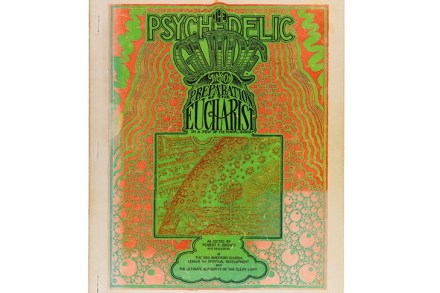
What do Walt Whitman, Jackson Pollock and Jimi Hendrix have in common?

On 3 September 1968, Allen Ginsberg appeared on William F. Buckley’s Firing Line. Buckley exposed Ginsberg’s politics as fatuous — the blarney, stoned — but Ginsberg stole the aesthetic victory by reading ‘Wales Visitation’, a homage to William Blake. ‘White fog lifting and falling on mountain brow,’ Ginsberg intones, ‘…teeming ferns/ exquisitely swayed/ along a green crag/ glimpsed through mullioned glass in valley rain.’ ‘Nice,’ Buckley nods. He lets Ginsberg read the whole poem.

Blake
Ulysses S Grant

It’s time to rehabilitate Ulysses S. Grant — scorned hero of the Civil War

Last year, more than 6,000,000 people visited the Lincoln Memorial in Washington DC. By contrast, barely 80,000 went to General Ulysses S. Grant’s tomb in New York City. Some would argue that the neglect is no better than Grant deserves. But others, notably Ron Chernow, believe it’s time for a rehabilitation. Why do Americans pay so little attention to the man who beat the South in the Civil War and went on to become the 18th president of the United States? At least part of the answer can be found in the terrible alchemy of war. It spews out vast quantities of lead but, for some people, also spins gold. Grant was a failure in his early life. He was born in Ohio in 1822 to a domineering father and emotionally distant mother.

How the CIA lost Afghanistan

Early every morning through the spring of 2002, US troops at Bagram airfield on the Shomali plains north of Kabul assembled on a makeshift parade ground. After the daily briefing, an officer announced the number of days since 9/11, read a short obituary of a victim of the attack and reminded the troops of their mission: to capture or kill those responsible for the worst terrorist strike ever in the US. Only a year previously, Bagram had been captured by the Taliban, who then exercised nominal control over 80 per cent of Afghanistan. Reduced to bombed-out buildings and a potholed, unusable airstrip, it was of limited strategic importance. Within weeks of the US-led invasion the runway was in constant use. Helicopters rotored throughout the night.

Boxing not so clever

For Horace Hopper, the half-breed protagonist of Willy Vlautin’s bleak new novel, essential truths come slowly, and usually too late to do him any good. Abandoned by his Native American mother and Irish American father, he has exiled himself from the only people who love him, an elderly couple on a sheep ranch in deepest Nevada. His one idea for becoming ‘somebody’ is to transform himself into a world-champion lightweight boxer with a wholly fabricated Mexican identity. ‘Mexican boxers are the toughest... true warriors who never quit,’ he believes. Only well into the novel does it dawn on him that his self-inflicted loneliness is ‘a sort of disease’, not a manly test of character that will redeem his young life.

Will white supremacy always haunt America?

I found Ta-Nehisi Coates’ book We Were Eight Years in Power surprisingly engaging. It combines a calm, friendly voice with a message of cold extremity. The message is that the sin of white supremacy is the true plot of US history. By trying to cure it, Obama exposed its true torrential force. The geniality of the voice makes the message oddly persuasive. Coates uses memoir with great skill, presenting himself as a normal struggling bloke who had an amazingly lucky break. Writers normally sound as if it’s their absolute right to hold forth, that they deserve every column inch they get, and far more money. This humbler attitude (or pose, if you’re cynical) feels very fresh. And it opens one to his radical reading of American history.

Will white supremacy always haunt America?

I found Ta-Nehisi Coates’ book We Were Eight Years in Power surprisingly engaging. It combines a calm, friendly voice with a message of cold extremity. The message is that the sin of white supremacy is the true plot of US history. By trying to cure it, Obama exposed its true torrential force. The geniality of the voice makes the message oddly persuasive. Coates uses memoir with great skill, presenting himself as a normal struggling bloke who had an amazingly lucky break. Writers normally sound as if it’s their absolute right to hold forth, that they deserve every column inch they get, and far more money. This humbler attitude (or pose, if you’re cynical) feels very fresh. And it opens one to his radical reading of American history.

Culinary cold war at the White House

‘Tell me what you eat and I shall tell you what you are.’ The best known adage in food literature, penned by the French politician and gastronome Jean Anthelme Brillat-Savarin, divides all of us generally: the gourmands from the picky, the greedy from the careful, one nation from another, one culture from the next. Laura Shapiro’s book about six famous women and their ‘food stories’ made me want to re-read a few biographies for those food moments. Shapiro claims that food in life stories is undervalued as a subject, considering how much time people spend eating.

What America needs is another Franklin D. Roosevelt

Franklin D. Roosevelt isn’t as popular as he once was. When Barack Obama won the 2008 election, he let it be known that he was reading a book about FDR, and tumbleweed blew through the newsrooms. Which is odd because for many decades FDR was every bit the model liberal as Ronald Reagan was the model conservative. Roosevelt was credited with ending the Great Depression, laying the foundations of a welfare state and leading America through the second world war — achievements for which he was rewarded with not one, not two but four election victories. And he did all of this despite being an elitist East Coaster with a wife who was very probably a lesbian.

On the run with Martin Luther King’s assassin

This newly translated novel by the Spanish writer Antonio Muñoz Molina is really two books, spliced together in alternating chapters. One is a deeply researched account of the squalid peregrinations of James Earl Ray, who spent two months on the run after murdering Martin Luther King, Jr., in 1968. The other is a memoir charting the gradual attainment of personal and professional happiness on the part of the author himself. The reader feels confident that both protagonists will eventually arrive at their historically appointed destinies: handcuffs at Heathrow airport for Ray; a career as a celebrated author for Muñoz Molina. But considerable suspense surrounds the question of what on earth these two stories will have to do with each other.

His dark materials

In this giant, prodigiously sourced and insightful biography, John A. Farrell shows how Richard Milhous Nixon was the nightmare of the age for many Americans, even as he won years of near-adulation from many others. One can only think of Donald Trump. Nixon appealed to lower- and  lower-middle-class whites from the heartland, whose hatred of the press and the east-coast elite, and feelings of having been short-changed and despised by snobs, held steady until their hero and champion unmistakably broke the law and had to resign his second-term presidency. Nixon won a smashing re-election in 1972, even as it was apparent that the White House was awash with skulduggery.

His dark materials

In this giant, prodigiously sourced and insightful biography, John A. Farrell shows how Richard Milhous Nixon was the nightmare of the age for many Americans, even as he won years of near-adulation from many others. One can only think of Donald Trump. Nixon appealed to lower- and  lower-middle-class whites from the heartland, whose hatred of the press and the east-coast elite, and feelings of having been short-changed and despised by snobs, held steady until their hero and champion unmistakably broke the law and had to resign his second-term presidency. Nixon won a smashing re-election in 1972, even as it was apparent that the White House was awash with skulduggery.