Books

The faulty towers of higher education

One of the few issues about which the American left and right agree is that higher education is, as Orwell would say, in a bad way. But even in that source of agreement lurk countless points of dispute, regarding the sources of dysfunction (corporate greed, grade inflation, libezoomers?) and possible solutions (ending tenure, forgiving debt, creating safe spaces?). In After the Ivory Tower Falls: How College Broke the American Dream and Blew Up Our Politics — and How to Fix It, Will Bunch, a columnist for the Philadelphia Inquirer, argues that the cause of the higher-education crisis is conceptual: we see higher education as a personal privilege rather than a public good, something to be earned rather than a right that is owed.

bunch
conservatism

Frank Buckley’s right direction

You think life is complicated enough now? Try factoring in the arguments and counter-arguments that adorn — or something like it — the drive to define conservative instinct and policy. I mean, once upon a time, a true conservative subscribed to National Review and wore an “AuH2O in 64” lapel pin to tout the presidential aptitudes of Senator Barry Goldwater. (Pssst: I did both.) Ah, well. Today, as everyone presumably knows, we have libertarian conservatives; we have common-good conservatives; we have constitutional conservatives; we have integralist conservatives — all generally identified with the Republican Party. Amid this mélange of the outspoken, as well as the agreeably entertaining, the law professor Francis H.

Reading Flannery O’Connor under quarantine

I recently had a bout of Covid. The symptoms were pretty mild aside from persistent brain fog, which in my case has been a good cover for creeping senility. A much younger friend of mine confessed that she and her family celebrated their defeat of Covid with a summer beach holiday in Delaware. She and her husband still had a bit of Covid-brain — enough, apparently, that when they drove back, they came back in one car. They had driven up in two. It took them four days to figure this out. My own sense of disorientation, confusion, and fatigue has not been so dramatic. I might have fired off the odd, undiplomatic email. But I often do that. I might have wondered about where I left my reading glasses. But they are invariably suavely tilted back on my head.

parental rights

The liberal arts are worth defending against ‘multiculturalists’

It’s the end of August — which means the kids are heading back to school. Time, then, to think about the quality and content of the education most young Americans are receiving. What to ponder? Well, we award more bachelor’s degrees in “parks, recreation, leisure, and fitness studies” than in English. And what students learn in their liberal arts courses is less the intellectual and civilizational inheritance of the West than a cruel mimicry that preferences “multiculturalism” and “critical thinking.

The unfortunate misogyny of Philip Larkin

Philip Larkin — whose centenary was this week — was a misogynist. A “casual, habitual racist and an easy misogynist,” according to the literary critic Lisa Jardine. Alan Bennet, Britain’s favorite playwright and supposedly a friend of Larkin’s, even described the poet as looking “like a rapist.” Not content with one insult, he even compared him to the necrophiliac serial killer John Christie. Tough review, that one. The sheer number of reviews, essays, and articles which decry Larkin’s character and attitudes — “a porn-addled, two-timing, racist misogynist” reads the headline for one — seem to suggest this is a settled judgment. And, indeed, the evidence is all but damning.

philip larkin

The attack on Salman Rushdie is an ominous warning

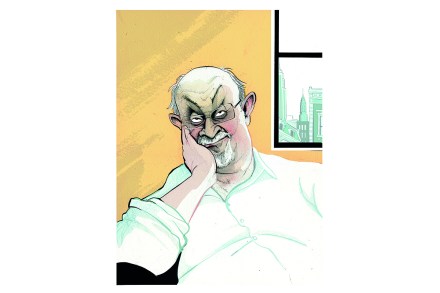
The news coming from New York State that the author Salman Rushdie has been stabbed onstage is both frightening and grim. It is frightening because, without full details of how seriously injured Rushdie has been, it is tempting to fear the worst. Media reports initially suggested that Rushdie was well enough to walk off stage, but the news that he has been transported by air ambulance to a hospital after being stabbed in the neck suggests his injuries are severe. It is grim because any violence being done to a public figure is abhorrent, but in the case of Rushdie, it is almost inevitable that this particular incident has been occasioned by one of the most notorious cause celébrès that has ever been seen in the publishing world, namely the publication of The Satanic Verses in 1988.

Blake Bailey deserves to be heard one more time

At the beginning of 2021, author Blake Bailey might have been forgiven for thinking that his literary career was not merely assured but stellar. He had gathered significant accolades for his writing, including a Guggenheim Fellowship and the National Books Critics Circle Award, and he was a Pulitzer Prize finalist. He had specialized in writing about heavy-drinking Great American Novelists, including the perennially underrated Richard Yates, John Cheever and The Lost Weekend’s Charles Jackson. His most recent subject was the elusive Philip Roth, a man whose literary brilliance was matched by his checkered reputation both on and off the page. Eighteen months later, matters have changed beyond recognition.

Evelyn Waugh’s sincerest form of flattery

T.S. Eliot once made the significant point, in an essay on Philip Massinger, that “Immature poets imitate; mature poets steal; bad poets deface what they take, and good poets make it into something better, or at least something different.” Eliot knew exactly what he was talking about (himself). However, change “poets” to “novelists” and the same pertinence applies. In fact, this wholesale, covert purloining may be true of all artists in all ages in all the seven arts. Let’s start with some backstory. Evelyn Waugh (1903-66), as they say, needs no introduction. William Gerhardie (1895-1977) is almost wholly forgotten today, but in the 1920s he was the luminous young wunderkind of English literature — a kind of Donna Tartt or Sally Rooney of his times.

gerhardie

Henry Kissinger’s likely last book is on leadership

Leadership, Henry Kissinger writes in his latest book, is a medium by which a society moves from the past of its memory to the future of imagination. It is “indispensable.” As Kissinger says, “Decisions must be made, trust earned, promises kept, a way forward proposed.” Without leadership, ordinary people are, he argues, incapable of “reach[ing] from where they are to where they have never been and, sometimes, can scarcely imagine going.” But leadership is also, in Andrew Roberts’s phrase, “a ‘protean’ thing with little fixed definition.” Leadership is ultimately what leaders do; it goes in whatever direction they choose.

kissinger

Mary Gaitskill and the body electric

A man bites a woman’s breast with the aim of drawing blood, before taking a cigarette lighter to her stomach. The woman’s lack of arousal at this cruelty causes the man to enquire angrily why she lied when she told him she was “a masochist.” A young secretary is spanked by her boss for mistakes in her typing, before he masturbates over her naked behind. In a conversation between two young adulterous lovers, a woman casually admits to “flirting... like wild” with a man after she discovered he had “broke his girlfriend’s jaw.” These snapshots of masochism, warped desire and sexual depravity made Mary Gaitskill famous when her short story collection Bad Behavior first appeared in 1988.

Gaitskill sex pill sex

Berlin as the unreal city

"Berlin has too much [history]." Sinclair McKay cites this rueful observation in the preface to his new book about the city. Given that he is not simply discussing Berlin between the wars, or during the second of those wars, or in the Cold War that followed, but all of it, this may come off as a cry for help. History may — in those words attributed to, well, take your pick — be “one damned thing after another,” but when it came to Berlin, those things hurtled through time in a horde, colliding, overlapping and refusing to form an orderly line. And, in Berlin’s case, they had a way of mattering. Not for nothing does this book’s subtitle refer to Berlin as “the city at the center of the world.” Bad news for a writer aiming, presumably, at a degree of concision.

berlin

Literature reminds us that indolence is underrated

I put off writing this article for ages. Initially, I decided I would write it from bed, but the temptation of simply giving up and falling asleep again was too great. A change of tactic proved no less helpful: out of bed, it took every ounce of effort I had to avoid getting straight back in again. Not a jot was left over for the exertion of writing and typing. This isn’t the status quo for my productivity, I promise; it is more a reflection of the subject matter. It is absolutely impossible to write about indolence while running around busily ticking off a to-do list. You have to relax into it. Call it method article-writing, if you will. Indolence gets something of a bad rap these days.

Books you should plan to read this fall

Summer has arrived in full force — at least here in southeastern Virginia, where the temperature has been creeping up towards 100 degrees — and so, too, have those lists of the best beach books, hottest summer reads, high temp tomes, etc. But fall is just around the corner, so why not take a peek at what’s in store? Here are a few forthcoming books that piqued my interest for one reason or another. This isn’t a list of the fall’s “biggest” books. Some of these might not be covered at all in the national press. But if you want a list like that, just wait. You’ll have 20 to choose from before long. Here is mine. Robert Crawford’s Eliot after The Waste Land (August 23, FSG), the second volume of his biography of T.S.

substack

The rise of gay Washington

Anyone under fifty may be unaware of how largely invisible gay Americans were until at least the 1980s. James Kirchick’s incredibly rich and impressively thorough Secret City does not mention Bowers v. Hardwick, the notorious 1986 Supreme Court ruling that upheld the criminalization of gay sexuality, but only post-Bowers did the push for gay equality, and eventually same-sex marriage, rapidly become what he rightly calls “the most successful social movement in American history.” In 1992, a Gallup poll indicated that 43 percent of Americans said they knew a gay person — double the figure from just seven years earlier — and across all of America it was that growing knowledge of the presence of gay people that allowed such a dramatic political transformation to take place.

gay
original sins

How not to live a life

When Thomas de Quincey wrote Confessions of an English Opium-Eater in 1821, he could not possibly have guessed what he would set in motion. Over two hundred years later, the addiction memoir looks different: less subversive, more sentimental, undeniably more commercial. Since the advent of Alcoholics Anonymous in Akron, Ohio, in 1935, the formula of the recovery memoir now yokes the moral to the medical: alcoholism may be a moral disorder, but it is underwritten by a chemical condition marked by incessant craving — in recovery parlance, an “allergy,” a state of “dis-ease.” For Matt Rowland Hill, the two are inextricably combined. Original Sins is the debut memoir from a writer whose two great loves, “Jesus and heroin,” never quite slip out of one another’s grasp.

yimby

NIMBYs to the left of me, YIMBYs to the left

First disclosure: I do not appear in this book. I say that only because — second disclosure — I consider myself a YIMBY, and I am familiar, at least online, with many of the characters and figures quoted or interviewed. However, I learned a lot about this loose movement and found it fascinating to read a book on a phenomenon that I would have trouble viewing with a detached, scholarly distance. Yes to the City, by the cultural sociologist and urban policy scholar Max Holleran, must have been a difficult book to write, not least because YIMBY (“Yes in my backyard”) is as much a rallying cry or a slogan as it is a movement, let alone an organization. The YIMBY nemesis, NIMBY (“Not in my backyard”), is equally amorphous.

dewitt

Helen DeWitt’s brilliance and unsuccess

No one ever expects an author simply to minuet her way into a book deal and, if lucky — merely “talented” doesn’t usually do the trick — into commercial success. But the publishing jukes and vaults that have earned Helen DeWitt the title of “America’s Great Unlucky Novelist” rather resemble the vertiginous motions of a mazurka on pogo sticks. Disagreements with her editors led DeWitt to attempt suicide twice. Her first novel, The Last Samurai, remained out of print for eleven years after its publisher went bankrupt. Before DeWitt was able to publish her second novel, Lightning Rod, another ten years lapsed.

translation

Lost in translation

Picture the scene: a twenty-something college student, desperately trying to impress a girl he’s met for a date. He's early, but that isn’t a problem as it gives him a chance to sit nonchalantly with his ever-so-artfully-battered paperback. It’s Rimbaud’s Collected Poems: intellectual, sensual, rebellious — everything he wants to be perceived as. He props the book up so that the poet’s name is visible and waits for his delicate intellectualism to be applauded. The only thing missing from this tableau is the name of the poems’ translator, assuming that the student isn’t pretentious enough to be carrying around the original French. A smaller name on the fragile paperback, the translator is generally unmentioned, forgotten, and obscured.

The Marxist writer who railed against Lenin

The writer Maxim Gorky edited the Menshevik newspaper New Life during its short run from May 1, 1917 to July 16, 1918, before Vladimir Lenin gave the personal order to shut it down. Gorky was a one-time friend of Lenin’s and a committed socialist (when Lenin gave the order to shut down New Life, he is reported to have said, “Gorky is one of us”), but he was also a frequent critic of the Bolshevists. In his column for the paper, which ran under the heading “Untimely” — because it focused on culture and morality rather than on practical matters of the revolution — he complained frequently about the politicking of party leaders and the stupidity of the masses.