Arts Reviews

The good, bad and ugly in arts and exhbitions

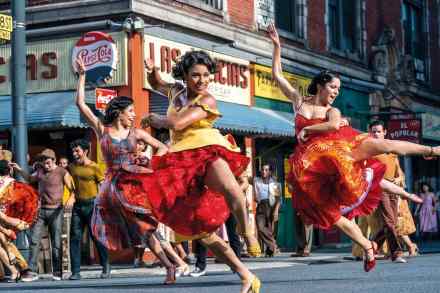
Why? Spielberg’s remake of West Side Story reviewed

When you first hear that a remake of West Side Story is on the cards, it’s: God, why? Why would anyone look at West Side Story, which won ten Oscars in 1961, and think: that needs doing again? Who would do that? Steven Spielberg, that’s who, and as it had garnered mostly five-star reviews before I’d had a chance to watch, the question became: how? What wonders might he have brought to a film that was great and beautiful in the first instance? Not much. It is more authentic. The back stories are more substantial. The singing and dance numbers are bigger. There’s a part for Rita Moreno, which is
Modernism’s back, baby: Huddersfield Contemporary Music Festival reviewed

It’s not everyone’s idea of fun, a trip to Huddersfield in the depths of November. But as any veteran of Huddersfield Contemporary Music Festival knows, it usually pays off. Sure, none of the venues has a bar; the programming is as carefully curated as a b2b trade show, the main hall about as cosy as a care home. And true, calling all this a ‘festival’ sometimes feels like wishful thinking. And yes, you are in Huddersfield. (In November.) But HCMF remains one of the few places in this country where you can get a high-quality hit of musical modernism — and always freshly served piping hot straight from the continent’s

Even worse than the book: Amazon Prime’s The Wheel of Time reviewed

A couple of years ago, in that near-forgotten era when we could travel almost freely, I canvassed social media as to what should be my relaxing but involving holiday read during a fortnight in Greece. One suggestion — and this is why you should never trust the literary advice of random strangers — was Robert Jordan’s The Wheel of Time series. I started the first book full of bright hope. It would be my new Tolkien-meets-Game of Thrones. Besides the strong personal recommendation and the slew of five-star reviews on Amazon, what persuaded me was the fact that the late author had served two heavily decorated tours of duty as

‘I am not able to answer your question’: an irascible Paolo Sorrentino interviewed

Loving the films of the Italian auteur Paolo Sorrentino, I thought he’d be easy to chat to. But a maestro is a maestro, as I was reminded when I interviewed him in London last week. Masked and communicating through a translator, I semaphored my admiration for his new film The Hand of God, starting with its spectacular opening shot. Like a bird, the camera flies over the sea, then focuses on a vintage car tooling along the promenade, before panning over the city again. But he rejected my praise: ‘It’s not complicated. It’s a normal shot by helicopter.’ He’s right, of course, that his new classic coming-of-age story represents a

An amazing technical achievement: Life of Pi at Wyndham’s Theatre reviewed

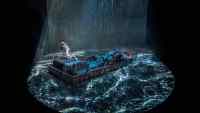
Yann Martel’s novel Life of Pi is a complicated organism. The action starts in southern India where we meet a precocious teenager, Piscine, who tells his parents that he wants to be known as Pi. The family own a failing zoo and they buy a Bengal tiger to attract fresh customers. The new arrival promptly rips the head off Pi’s pet goat and eats it. Next they take a ship to Canada, with the zoo stowed in the luggage hold, but the vessel hits stormy weather. The beasts break out of their cages and start to eat each other. And when the ship sinks, Pi finds himself on a life

A show of ample and eerie majesty: British Museum’s Peru: A Journey in Time reviewed

Growing up on a farm outside Lima, I was aware that indigenous Peruvians did not understand time in the same way that their white countrymen did. On our visits to the highlands, we would encounter a very different mode of thinking. Ask an Andean villager where the next settlement was and you’d be told, ‘aquisito no más’ — just over here. Whether ‘aquisito’ meant around the next bend or four days’ schlep across the mountains was, for aboriginal people, a meaningless question. They were not ruled, as their European-descended neighbours were, by clocks. You’d sometimes see Quechua-speaking herdsmen sitting motionless for so long that they seemed to have switched off

Reprehensible – but fun: Orpheus Chamber Orchestra’s Complete DG Recordings reviewed

 Grade: B It must have been an interesting day in the Orpheus Chamber Orchestra’s press office when Blair Tindall’s memoir Mozart in the Jungle hit the bookshops in 2005. ‘He sat in the desk chair, pushed aside the first oboe part of Rossini’s Italian Girl in Algiers and tapped a pile of cocaine on the glass’ runs a typical anecdote. Even in 2005, it wasn’t really what anyone expected to hear from a former member of Orpheus — a youthful, conductor-less New York outfit who used to pose for album covers dressed in spotless white. For a brief moment during the 1980s CD boom, Orpheus was going to save classical

More mesmerising than it should be – Disney+’s The Beatles: Get Back reviewed

My late friend Alexander Nekrassov loathed the Beatles, which I used to think was a wantonly contrary position akin to hating kittens or blue skies or Christmas carols. What could there possibly be not to like, love and admire about the band that gave us ‘Eleanor Rigby’, ‘A Day In the Life’ and ‘Strawberry Fields Forever’? Since then I’ve encountered so many Beatles sceptics that it has given me pause for thought. Some think that the Beatles were just mediocre and not nearly as talented as, say, the Kinks; some even claim that they were as manufactured as the Monkees, that like their bad-guy opposites the Stones they were a

Nostalgic, episodic and Joanna Hogg-ish: Hand of God reviewed

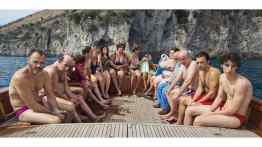
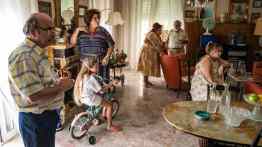
Hand of God is the latest film from Paolo Sorrentino, the Italian filmmaker who won an Oscar with The Great Beauty, made the political thriller Il Divo and, for television, created the wonderfully crazed The Young Pope and The New Pope. (Jude Law, who knew he had it in him? Not I.) But this time it’s personal as it’s about his life as a teenager growing up in 1980s Naples. It’s mostly anecdotal and episodic and quite Joanna Hogg-ish but this isn’t to say it is without event. Midway through there is a pivotal moment, a shocking tragedy, but I don’t wish to say what it is as that would

In defence of the earworm

That strain again… it’s the morning after the concert and one tune is still there, playing in the head upon waking, running around and around on an unbreakable loop over breakfast. I’ve never liked the term ‘earworm’. It suggests an alien parasite, an aural violation, when in fact some part of the musical brain is clearly in love with this scrap of melody, and getting a microgram of a dopamine hit every time it presses ‘repeat’. It’s consensual, even pleasurable. Why fight it? There’s an Arthur C. Clarke story about a scientist obsessed by the finale of Sibelius’s Second Symphony. He invents an algorithm for musical catchiness and promptly starves

When will the Nineties revival end?

We’ve been living through a nostalgia for the 1990s that has lasted longer than the decade itself. That was back when music was cool, the only Batman movie wasn’t a fascistic fantasy of surveillance and control, and dresses over jeans looked good. Podcasts and documentary series have really dug into the decade to reinvestigate and reappraise everything that went down in those ten years. I’ve listened to a podcast that takes the top hits of the decade one by one and defends each song, I’ve watched specials on why every maligned woman of the era (Lorena Bobbitt or Tonya Harding or Monica Lewinsky) was good actually and the only bad

The National has become the graveyard of talent: Manor, at the Lyttelton, reviewed

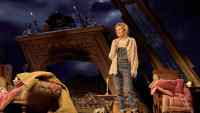
Somewhere in the wilds of England a stately home is collapsing. Rising floodwaters threaten the foundations. Storms break over the leaking roofs. Inside, an argument rages between a snooty moron, Lady Diana, and her drunken Marxist husband who used to be rock star. This is the chaotic opening of Moira Buffini’s country-house drama Manor. The angry husband picks up a hunting rifle and blasts ornaments to smithereens. Then he chases his wife to the top of a staircase where she hits him with a candlestick. Once the fight ends, more commotion erupts as various groups of evacuees rush in through the front doors. Two women arrive from south London. They’re

Ignore the wall text and focus on the magnificent paintings: Tate Britain’s Hogarth and Europe reviewed

There are, perhaps, two types of exhibition visitor. Those who read the texts on the walls and those who don’t. Personally, I instinctively tend towards the latter group, which is no doubt often my loss. In the case of Hogarth and Europe at Tate Britain, however, ignoring all the verbiage would be a huge advantage. This concentrates with anxious obsessiveness on the topics of empire and slavery (with a little condemnation of sexism on the side) and has infuriated several of my colleagues: ‘wokeish drivel’ (Sunday Times), ‘non-aperçus — which range from the crass to the asinine’ (New Statesman), ‘some quite drastic misreadings’ (Observer). Well, I’m not going to dissent

A soulful man with a blistering voice: Sipho, at Studio 9294, reviewed

When I were a lad — back when you could buy the entire back catalogue of the Fall for thruppence and still have change to get into a New Order show on the way home — record labels mattered. Well, a cohort of independent labels mattered, because their imprints stood for something. There was Creation, with its dedication to a twin axis of 1977 and 1967 as the only years that counted; 4AD, with its arty sleeves and its wafty, diaphanous music; there was Factory, somewhere between an elaborate practical joke and home to the most forward-thinking musicians in the country. You don’t get many labels like that any longer.

Meet climber, photographer and filmmaker extraordinaire Jimmy Chin

‘Why did you want to climb Everest?’ reporters quizzed mountaineer George Mallory in 1922. That the question even needed asking shows mountaineering is fundamentally different from other pursuits. No journalist would ever ask a footballer why they kick a ball around. But mountaineering is gruelling and you’re way more likely to perish from it than to make a fortune. So why would anyone climb any mountain, let alone Everest? Mallory’s rationale was short and sweet: ‘Because it’s there.’ And what about Jimmy Chin? Why does he climb? Chin, 48, is part Bear Grylls, part David Attenborough. He has not only climbed snow, ice and rock terrain on all seven continents,

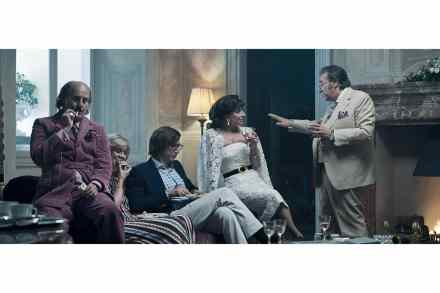
Worth seeing for Lady Gaga but little else: House of Gucci reviewed

Ridley Scott’s House of Gucci has been much anticipated. The cast is stellar. It’s based on a luscious, true story (so juicy) featuring vicious family infighting and culminating in a murder. I was thinking Succession, but with luxury leather goods and the hiring of a hit man. It can’t miss, I was thinking. Except it can. Not entirely. It has its moments. But the middle act drags (it’s two hours and 40 minutes long) and also the decision to have the English-speaking cast a-speak-a in Italian accents may not have been the wisest one. There were many times I thought Gino D’Acampo was in the room-a. This stars Lady Gaga

Guilt-free hilarity: Vanya and Sonia and Masha and Spike at Charing Cross Theatre reviewed

World-class sex bomb Janie Dee stars in a fabulously silly revival of the American comedy Vanya and Sonia and Masha and Spike. She plays a movie diva, Masha, who loves to flaunt her wealth in front of her mousy sister and bookish brother. Striding into the family home with her long hair flying and her scarlet lips curling, she narrows her eyes and flings shafts of desire in all directions. Then she arches her neck and tosses back her head to give her bust an extra half-inch of uplift. A stunning display. The show is about three middle-aged siblings whose over-intellectual parents named them after characters in Chekhov plays. Vanya

His final paintings are like Jackson Pollocks: RA’s Late Constable reviewed

On 13 July 1815, John Constable wrote to his fiancée, Maria Bicknell, about this and that. Interspersed with a discussion of the fine weather and the lack of village gossip, he added a disclaimer on the subject posterity would most like to hear about: his art. ‘You know that I do not like to talk of what I am about in painting (I am such a conjuror).’ Perhaps by that he meant he did not like to give away how he did his tricks. As Late Constable, the magnificent exhibition currently at the Royal Academy, makes clear, he was a true magician with paintbrush and palette. Before your eye he