Arts Reviews

The good, bad and ugly in arts and exhbitions

An affectionate exercise in comic sabotage: Pride & Prejudice* (*sort of) reviewed

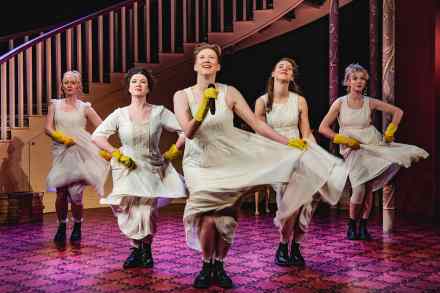
Let’s be honest. Jane Austen is popular because War and Peace doesn’t fit inside a handbag. Austen’s best-loved novel, Pride and Prejudice, has been updated in a fetching new production that treats the sacred text as a screwball comedy. The fun starts before curtain-up with the cast of five girls messing about on stage and struggling with a chandelier that almost shatters but doesn’t. This improv bit is irritatingly predictable. Then the show begins and the girls start to curse, laugh and pontificate their way through the tale. We get a feminist lecture explaining that Mrs Bennet’s predicament owes itself to the laws of bequest that prevented women from inheriting

The best podcasts about money

Stories about money are never about money. They are about pain, about family, about atrocity, about luck, about health, about politics. And while we get a kind of vicarious thrill from listening to other people’s financial tales of woe, whether we are morally condemning a millennial for buying a daily flat white when she could be putting that $3 into a savings account that earns zero interest in the hopes that the city she lives in won’t be underwater from rising sea levels by the time she has enough for a deposit or just feeling gratitude that we are better off than the poor shmuck explaining their hundreds of thousands

The unseen Victoria Wood

For a few years now I have been living with Victoria Wood. That sounds all wrong, obviously, and yet no more apt phrase suggests itself. Not long after her death I was invited to write her authorised biography, and in due course a vast collection of documents was delivered to my address. Packed into storage boxes, which I stacked in corners and stuffed under beds, her intellectual legacy became a physical fact. It was in sifting through this remarkable archive that I started to come across work — masses of it — that had never seen the light of day. At its core was a stash of 100 television sketches.

A riveting cheese dream of a film: Spencer reviewed

Go see Pablo Larrain’s Spencer, which stars Kristen Stewart as Princess Diana, and the next day you will wonder: did I go to the cinema last night or did I have a cheese dream? Did she really clear the room of staff by saying she wished to masturbate, or was it the cheddar and crackers I foolishly had before bed? This is a total cheese dream of a film —did she really just eat a pearl? — but also it’s a riveting one as well as a thrillingly entertaining one. Plus it all somehow feels true even if it isn’t. Broken woman, unfeeling family. That seems about right. This is

The tyranny of the visual

In 1450, the Duke of Urbino, Federico da Montefeltro, became monocular after losing vision in his right eye following a jousting accident. In order to improve the peripheral vision of his left eye, he had surgeons cut off the bridge of his nose. In Piero della Francesca’s 1472 portrait, the Duke is depicted in profile, so we can see that an equilateral triangle of flesh and bone has been chopped from what must have been an elegant aquiline beak. I have been more fortunate. In the past year I’ve had four operations at Moorfields Eye Hospital in London to repair a detached retina that made me blind in one eye.

The genius of Caveh Zahedi

365 Stories I Want To Tell You Before We Both Die is a podcast that experimental filmmaker Caveh Zahedi started at the beginning of this year. Each episode is a short story, ranging from six minutes to 30 seconds, told directly to the audience. Zahedi has been a quiet star of the American indie scene for decades. His films are almost always autobiographical, and his podcast, with episodes titled ‘My Least Favorite Person’ and ‘My Therapist Insists I Tell Suzanne About the Prostitute’ and ‘What Richard Linklater Said To Me About Why I Was a Failure’, is no different. The subject matter ranges from past sexual experiences, failed film projects

Like Alan Bennett but less funny: 'night, Mother at Hampstead Theatre reviewed

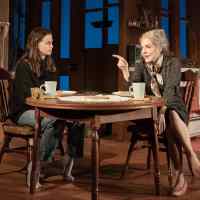
’night, Mother is a two-hander that opens like a comedy sketch. ‘I’m going to kill myself, Mama,’ says Jessie. She’s cleaning a pistol and loading it with bullets. ‘I’ll shoot myself in a couple of hours.’ The pair live together in a lonely farmhouse, and Jessie wants to make sure her mother will be able to cope after her death. She tours the kitchen explaining where the fuses and the cleaning materials are kept. Mama, who doesn’t seem unduly alarmed, offers to phone her son and get him to thwart the suicide attempt. ‘I’ll just have to do it before he gets here,’ says Jessie. This is an intensely dramatic

A blisteringly bonkers first episode: Doctor Who – Flux reviewed

BBC1 continuity excitedly introduced the first in the new series of Doctor Who as ‘bigger and better than ever’ — presumably because the more accurate ‘bigger and better than it’s been for a bit’ doesn’t have quite the same punch. Still, Sunday’s programme was a definite, even exhilarating improvement on those of recent years. Since Chris Chibnall became the showrunner in 2018, thrills have taken a firm second place to solemn lectures on how the most dangerous monster of all is human prejudice. Yet at no stage here did the Doctor (Jodie Whittaker) encounter some acknowledged hero of black and/or women’s history — and so allow us a self-satisfied bask

This is how G&S should be staged: ENO's HMS Pinafore reviewed

Until 1881, HMS Pinafore was the second-longest-running show in West End history. Within a year of its première it had broken America too; at one point there were eight competing productions on Broadway alone. The single most wrongheaded notion that still clings to Gilbert and Sullivan’s operas is that they’re somehow low-rent or parochial. They were blockbuster international hits, superbly written, lavishly staged and exported far beyond the Anglosphere. Pinafore was performed in Denmark as Frigate Jutland and in Vienna, Johann Strauss was driven off stage by the runaway success of The Mikado. In the words of the operetta historian Richard Traubner, Gilbert and Sullivan’s collaborations were ‘simply the best

Grimy, echt and gripping: Netflix's The Forgotten Battle reviewed

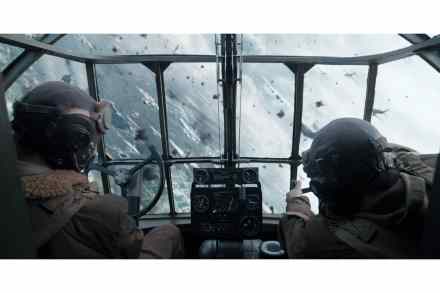
The Forgotten Battle is a Dutch feature film commemorating the desperate and relatively little-known Allied assault on the Scheldt estuary in October and November 1944. When I went to the battlefield decades later with veterans of 47 RM Commando, they told me it was worse than D-Day because the Germans knew they were coming and had prepared stronger defences. Nearly 13,000 Allied soldiers were killed or wounded (about the same as the German casualties), half of them Canadians. It has been a long time since I watched a half-decent second world war movie, mostly because they hardly bother making them any more. In the past decade, I can think only

Every MP must see this play: Value Engineering – Scenes from the Grenfell Inquiry reviewed

Scenes from the Grenfell Inquiry is a gripping, horrifying drama. Nicolas Kent and Richard Norton-Taylor have sifted through the public hearings and dramatised the most arresting exchanges. Ron Cook, often miscast as a comedian, is superb as the frosty and occasionally irascible inquisitor, Richard Millett. Early on, he asks the witnesses ‘not to indulge in a merry-go-round of buck-passing’. Later, he comments acidly, ‘That invitation has not been accepted.’ Every witness has something to hide and something to be ashamed of. A fireman searching for a child on the upper floors can’t explain why he didn’t rouse families from their flats and help them escape. A witness describes the inferno’s

'What do you think the English will say?' Pablo Larrain on his pop horror Diana film

It all looks ever so Sandringham. Formal evening garb, dining table the length of a cricket pitch, royalty nibbling in silence. As a tableau vivant it might be lit by Lichfield and styled by Hartnell. And yet something is awry. The beautiful princess feels stifled. She grabs at the tourniquet of pearls roped round her neck, whereupon it snaps. Huge gems plop into her gloopy green soup. Dauntlessly she dips a spoon in, feeds a pearl into her mouth and takes a pulverising bite. This royal Christmas is not normal for Norfolk. Spencer is the latest entertainment seeking to decrypt the myth of Diana, Princess of Wales. Its opening credits

Small but perfectly formed: the Royal College of Music Museum reopening reviewed

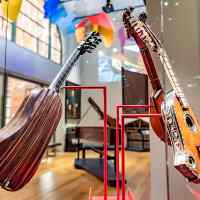
Haydn is looking well — in fact, he’s positively glowing. The dignified pose; the modest, intelligent smile: it’s only when you squint closely at the portrait that Thomas Hardy painted in London in 1791 that you clock the full peachy-pink smoothness of his complexion. It’s curious, because Haydn suffered disfiguring smallpox as a child, and a contemporary waxwork bust in Vienna is cratered like a moon in a periwig. Hardy’s portrait is a promotional image, commissioned by the music publisher John Bland. This is the Georgian equivalent of a celebrity headshot: a photoshopped, endlessly-reproduceable selling tool, so potent that it’s still being used to shift recordings 230 years later. Well,

Exquisite to look at, strangely tense and wholly riveting: Netflix's Passing reviewed

Passing is Rebecca Hall’s adaptation of the Nella Larsen novella (1929) about two biracial women, one of whom chooses to pass for white, and one who does not, and the effect they have on each other, and it’s superbly done. It’s tightly made, exquisite to look at, strangely tense, wholly riveting and it’s also, let’s be honest, just the right length for a film (90 minutes). Hall — who wrote the screenplay and directs, and is otherwise an actress — is the daughter of theatre director Peter Hall and opera singer Maria Ewing and you could say she has skin in the game. When she was growing up, she has

Richly layered and intricate: Royal Ballet's The Dante Project reviewed

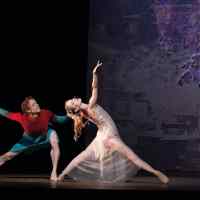
Where does the artist end and their work begin? Like 2015’s Woolf Works, Wayne McGregor’s new ballet swirls creator and creation to meditate on a journey of self-realisation. The subject this time is Dante, the Italian poet who redirected the course of western art and literature with The Divine Comedy. Over three acts, each based on a realm of the afterlife, an Everyman navigates sin, penance and salvation. There’s a lot to unpack — as ever, McGregor crafts a rich, layered choreographic language, and Thomas Adès’s accompanying score is just as intricate — but density is The Dante Project’s forte, elevating it to cosmic heights. The stellar Edward Watson —

Somewhere in this production lies Shakespeare's tragedy: Almeida's Macbeth reviewed

Yaël Farber’s Macbeth sets out to be a great work of art. The director crams the Almeida’s stage with suggestive props, glass panels, microphones, a wheelbarrow full of jackboots. The witches are not the usual vagrants or carbuncled mystics. These grim-looking ladies have expensive hairdos and nicely ironed shirts — like a panel of disgruntled academics at a tribunal. William Gaunt is a decrepit Duncan who looks ready to receive his telegram from the Queen. He can barely rise from his NHS wheelchair. But one wonders why this frail old chap had to be knifed to death? Much easier to smother him with a pillow and claim he expired naturally.

You'll tire of the wackiness and the whimsy: The French Dispatch reviewed

The American filmmaker Wes Anderson has an apartment in Paris and has always yearned to make a French movie but also he has always yearned to make a film about the New Yorker, the magazine with subscribers all round the world, some of whom actually get round to reading it before binning it, and some of whom don’t. (She says, guiltily.) So The French Dispatch is, he has said, the ‘smooching’ of these two ideas, and it is, alas, a ‘smooch’ of a film. That is, not one thing or the other. I would further add it’s as if all the cast had been instructed to act wackily and off-kilter

A highly polished exercise in treading water: Season 3 of Succession reviewed

At one point in an early Simpsons, Homer comes across an old issue of TV Guide, and finds the listing for the sitcom Gomer Pyle, U.S.M.C. ‘Gomer upsets Sergeant Carter,’ he reads — adding with a fond chuckle, ‘I’ll never forget that episode.’ Even for British viewers unfamiliar with the show, the joke is clear: that’s what happens in every episode. Sad to say, this popped into my head while watching the first in the new series of Succession. The acting, script and direction are as brilliant as ever. Nonetheless, once Logan Roy began yet again to dangle the possibility of becoming the next CEO of his media empire before