Arts Reviews

The good, bad and ugly in arts and exhbitions

Blow up

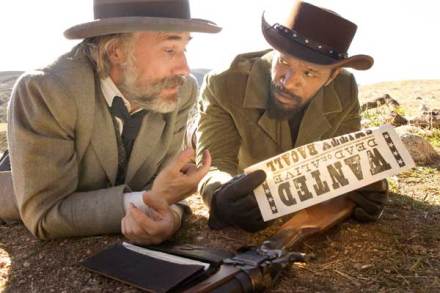
Here is a Quentin Tarantino film that, like all Quentin Tarantino films, is a typical Quentin Tarantino film, in the style of Quentin Tarantino, in that he takes a familiar trope, nods at it, toys with it, pokes it about, swills it round his mouth, then blows the whole thing up. I wonder if he was like this as a little boy. I wonder if his mother ever said to him, ‘Quentin. I love you. You’re my son. But if you keep stringing the other kids along so exploitatively and then blowing everything up in their poor faces they aren’t going to want to play with you. I don’t know
Acting up | 17 January 2013

There was a time when the major objection to operatic performances, by those who were wondering whether or not to give them a try, was the level of acting in them. That was in the days before ‘elitism’ and other excuses had been invented. I haven’t heard much about that lately, though of course there are complaints about specific singers and performances. But 30 to 40 years ago people who were used to going to plays would regularly contrast the level of acting in them with the alleged level in opera. So I’m led to wonder whether there’s a general feeling that things have improved. My own feeling is that

Curiouser and curiouser | 17 January 2013

A tragicomic curiosity at the Finborough written by Hebridean exile Iain Finlay Macleod. The show opens with James, a young Gaelic-speaker, running an internet start-up in London. Business booms. He grows rich and marries his gorgeous university squeeze. The only snag in his life, and it’s quite a serious one, is that he suffers from a constant urge to turn a somersault whenever something remarkable happens. Bust-up with the wife. Somersault! Best mate arrives from college. Somersault! Business goes broke. Somersault! Dad contracts cancer. Somersault! Short of cash and plunged into despair, James is visited by a creepy bailiff who engages him in obliquely amiable conversation while bagging up his

Delish!

An English peculiar, the -ish feeling comes from arriving at eightish, peckish, giving one’s hostess a warm kiss, at home among Leticia’s crowd, sardonic, lusty and brisk. Between the lettuce and the liquorice, I talk to an egyptologist who dabbles in hypnosis; intrigued, I let her practice, and see my parents farming radishes on a precipice… out of the mist I emerge …then pish! my boyhood vanishes, my new friend’s turned to someone in financial services – do you know, they both summer in villas in the Tamarisk? Raptly they discuss the likelihood of a zombocalypse… my napkin slips away, I languish, familiar with the interstice between the skating plates,

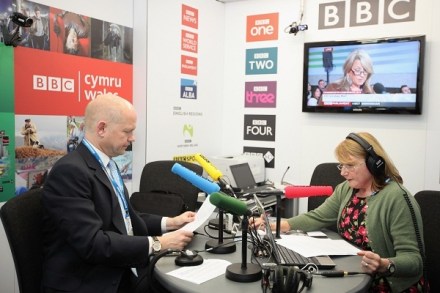
Any suggestions for ‘Any Questions’?

I’m doing Radio 4’s ‘Any Questions?’ tonight with Harriet Harman and Simon Hughes. It’s a strange news week, in which almost anything could come up.  But I wondered if Spectator readers had any ideas, points or questions they think should be put to my fellow guests?

Sex and sensibility

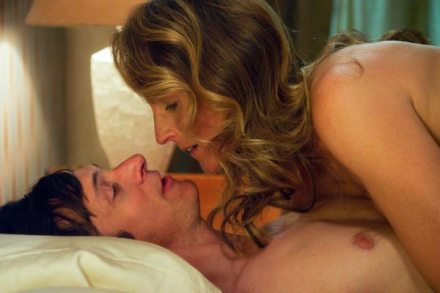
Being wary of men who wear novelty braces is one of those rules of thumb I’ve always tried to adhere to. So when I’m introduced to Ben Lewin, the writer and director of the lauded new film The Sessions and spy his bright-yellow braces, designed to look like a tape measure, my heart sinks for a moment. Am I, as my instinct suggests, about to be overwhelmed by ‘zaniness’? Thankfully, the answer proves to be no. Lewin, a short, slightly portly man who looks a touch older than his 66 years, is far quieter than his choice of braces suggests. He’s a happy man, too, smiling as he does throughout

Nexus of opposites

Francesco Clemente (born Naples 1952) began his rise to prominence in this country with two exhibitions at the Royal Academy — the famous New Spirit in Painting of 1981, when figuration was officially relaunched on London (though for some it had never gone away); and Italian Art in the 20th Century eight years later. A third RA venture was a Clemente solo show in 1991, a touring exhibition entitled Three Worlds, memorable as much for its plethora of exciting and witty images (many in pastel or watercolour), as for the beautiful girls thronging the private view. Clemente has long been a fashion icon; in him popular art and high art

Insomniac’s heaven

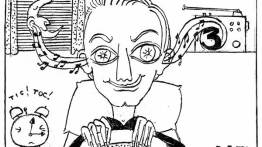
If I wake up at too rude an hour to get up — before four o’clock, let’s say — Through the Night is my reward: I switch on the radio and find it to be inhabited not by humans but by music. This six-hour programme, which runs every night on Radio 3 from half-past 12 (on weeknights) or one o’clock (at weekends), is scarcely interrupted by the spoken word. Each piece is introduced with friendly brevity, and then left to speak for itself. No one tries to wake me up, divert or entertain me. My attention must be — and invariably is — engaged by the music alone. At this

Death watch | 10 January 2013

Some people say TV is a bad thing for families but I say don’t knock it. It was thanks to TV this school holidays that I almost got vaguely, slightly, accepted by Boy. Fathers of young teenage males will know exactly what I’m on about here. There comes a point — quite often bang on your son’s 13th birthday — when he suddenly decides that you’re the lamest, dumbest, uncoolest Dad in the entire history of fatherhood. And you spend many anxious months wondering how on earth you’re ever going to win him back. Well, in my case TV has been the answer. We have bonded through our shared love

Decline and fall | 10 January 2013

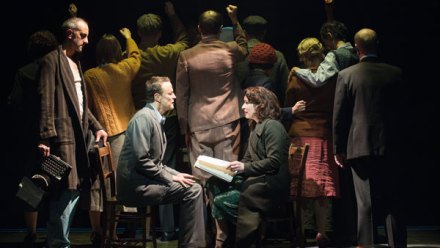
Filmic structures are always tricky on stage. David Mamet, an exception, can get away with writing long chains of scenes that last a couple of minutes each. But the theatre prefers to relax, to snuggle down, to linger slowly over every morsel of a many-layered spread. Encountering a screenplay on stage is like receiving a box of Milk Tray in a restaurant and being told it’s a 32-course meal. David Gooderson’s made-for-TV script concerns an Edwardian sex scandal featuring teenage boys and lauded grandees. Sir Hector MacDonald (aka Fighting Mac) was a crofter’s son who enlisted as an infantryman and reached the rank of major-general during a 20-year career. To

The monotony of Les Misérables

Les Misérables is one of the longest-running, most popular stage musicals in history, having been seen by 60 million people in 42 countries — sit on that, Cats! — and although I can’t comment on the live show, as I’ve never seen it, I can tell you this film, which comes in at around 140 hours, boils down to a lot of fuss and singing (of the jaw-straining variety) about a very minor parole offence. I’m telling you, if I’d ever Dreamed a Dream, whether In Time Gone By or In My Local Starbucks, that so many jaws would strain so much for so little, I’d feel completely satisfied, but

The Afterlife of Literary Fame

I can’t read fiction any more And that’s a fact. Don’t ask me why. God only knows, old fruit. If a poem doesn’t rhyme, forget it. I certainly have. Today’s lunch Was a damned good salmon en croute, And tomorrow more tests, more tests To hear my ticker count its beats Like Tennyson. So put in the boot With the old one two. Pour me a double Straight down the horse’s neck And sound mortality’s horn. Toot toot. As I sit here in the tweeds of bufferdom I try to forget myself. Who’s in, Who’s out? Why should I give a hoot? You won’t persuade me otherwise, Lord Cobber, I’m

Best in show | 3 January 2013

The National Gallery is limiting itself to two major shows a year in the Sainsbury Wing. The spring exhibition is Barocci: Brilliance and Grace (27 February to 19 May), the first major showing of Federico Barocci (1535–1612), who managed to fuse Venetian colour with the sense of drawing and pictorial design favoured in Central Italy. The autumn show is The Portrait in Vienna 1867–1918 (9 October 2013 to 12 January 2014), an examination of the punchy Viennese avant-garde of Klimt, Schiele and Kokoschka. Both sound very promising, and for lighter entertainment, there are smaller shows of Frederic Church’s oil sketches (6 February to 28 April) and Michael Landy’s kinetic sculptures

Vision on

Something strange, very strange is going on. Take two sparky young, very young men, watch them launch their media careers a couple of years ago by creating zany videos and putting them up on YouTube. Witness the impish, imaginative duo going viral, followed by millions across the globe. Note that what they’re famous for are the videos, the visual gags; not for music, for sound, for aural wizardry. Who, then, might you expect to snap them up as the next best thing? The head of Sky TV? Or the controller of Radio 1? In this topsy-turvy world, it’s Radio 1 who’ll be hosting Dan and Phil from 13 January onwards,

What the doctor ordered

I don’t know whose idea it was to put New Year at the beginning of January, but it seems like an odd one. Why not begin each new year on, let’s say, the first of April or May? It might bring at least a dash of new dawn-ishness — a flicker of sunlight, scampering clouds, hello birds and a hey nonny no — to New Year’s Day. There’s no spring in the step of 1 January. She has neither the time nor the inclination for good cheer. She is as tired, headachey and whey-faced as if she had stayed up half the night dancing to ‘Yes Sir, I Can Boogie’

Friends reunited | 3 January 2013

You know how television is becoming like the movies, more expansive and more expensive? Well, what if the movies were to meet television halfway, becoming smaller and more routine? The result, I’m sure, would be something like Quartet, Dustin Hoffman’s first directorial effort since 1978’s Straight Time. If you ran past this film at speed, you could almost mistake it for an episode of Downton Abbey. It’s set in a country house. Maggie Smith is among its cast members. And it’s borrowed actors from small-screen series such as Gavin and Stacey and The Vicar of Dibley. Just the ticket for a lazy Sunday night in. Except Quartet is not nearly