Arts Reviews

The good, bad and ugly in arts and exhbitions

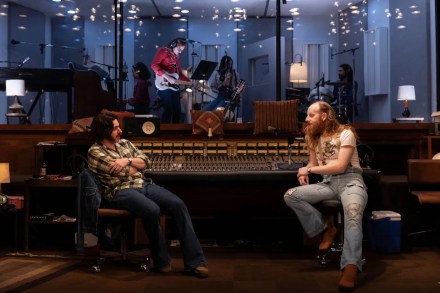
Oliver Anthony and the sorry state of Rolling Stone

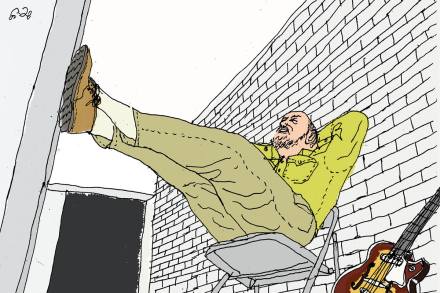
I must confess, I often forget Rolling Stone magazine still exists. Once the zeitgeist-surfing Holy Writ of American counter-culture, it hosted the pioneering writers of the boomer generation: Tom Wolfe, Lester Bangs, P.J. O’Rourke, Hunter S. Thompson. Even as recently as 2020 the magazine boasted accomplished journalists such as Matt Taibbi. But over five decades, the magazine withdrew into the Establishment, just as their boomer readers did. And every now and then the Rolling Stone’s pale cadaver makes a misjudged groaning gasp for life, if only to remind us it’s not quite dead. The rag mustered one such gasp this weekend.

oliver anthony rolling stone counterculture

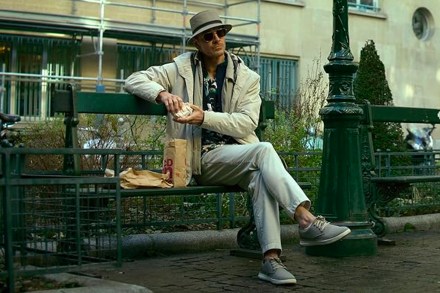
Why didn’t William Friedkin get much credit when he was alive?

Ask your average man on the street — or at least your average clued-up man with a decent knowledge of modern Hollywood — about the films of William Friedkin, who has died aged eighty-seven, and he will confidently sing the praises of Friedkin’s legendary pictures, The French Connection and The Exorcist. Then if he is pressed on the other eighteen films Friedkin directed, ranging from the excellent and underrated to the dismal, and a look of panic is likely to come over his face before he excuses himself and rushes into a nearby subway (or, if he is in New York, flees to an overground railway in homage to the legendary car chase scene in The French Connection). It is your choice whether you do a Popeye Doyle and head off in frantic pursuit, or leave him be.

william friedkin

The Real Housewives of the Picket Line

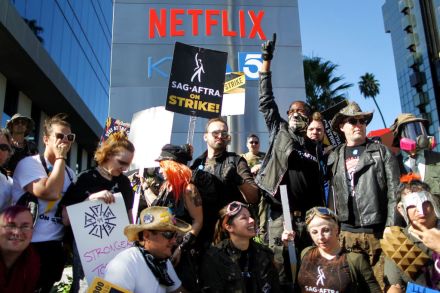
When TV is in trouble, it runs to one group. They usually have big hair and even bigger silicon boobs. They also possess filthy mouths, drink rosé like water and have rich husbands. They are the Housewives — and in dry spells, on Sunday afternoons, or in the middle of a writers’ and actors’ strike, you will see their ilk plastered on your screen more than the news. There are plenty to choose from: there are eleven Real Housewives franchises in the US, twenty international versions and twenty-seven spin offs.  But will the Housewives continue to be the entertainment executive's solution to a strike-induced content drought? Or are they set to join the picket lines? The simultaneous Hollywood writer and actor strikes which started in May are gaining traction and glamor.

real housewives picket line

Paul Reubens lived life on his own terms

The death of actor Paul Reubens of cancer at the age of seventy was an oddly low-key departure for a man who created one of the twentieth century’s iconic comic characters, and also found himself mired in scandal that threatened to destroy his career, and to a large extent took him away from the A-list fame that he would have expected to attain. Yet throughout his more than four-decade career, Reubens was nothing if not a survivor, even a fighter. The fact that incidents that would have ruined most other men were treated by him as obstacles to be overcome indicated both his resilience and — to some — a refusal to kowtow to the expected demands of the industry that both made and ruined him.

paul reubens

Cardi B is dangerous with a mic — literally

2023 has the summer of unruly concertgoers. So far, bras, phones and a woman’s ashes have been thrown, pelted, and flung at the likes of Bebe Rexha, Drake, Kelsea Ballerini, Kid Cudi, Pink and Harry Styles. Now that Cardi B has become the latest victim, the celebrities are finally fighting back.   On Saturday, Cardi B was performing her 2018 hit “Bodak Yellow” at Drai’s Beach Club in Las Vegas when a concertgoer threw her drink at the rapper. Cardi B immediately hurled her microphone into the audience before unleashing a string of expletives. Cockburn commends Cardi for her excellent aim — she hit the culprit squarely in the chest.  https://www.youtube.com/watch?v=WlYU3Lpx9b0&ab_channel=CNN Cardi had warmed up her throwing arm the night before.

cardi b
Hollywood

Barbenheimer, strikes and Hollywood’s uncertain tomorrow

It’s December 2020, in the middle of the pandemic, and Kara Swisher has invited Jason Kilar, CEO of Warner Bros onto her New York Times podcast, Sway. Kilar has just announced that his company will be breaking its theatrical windows, simultaneously releasing their full slate in cinemas and on their streaming service, HBO Max. Swisher sees him as the first CEO pushing ahead into an obvious streaming future, without cinemas. In Swisher’s words: “I’ve said movie theaters are dead men walking… their bad popcorn, their idea of innovation is a comfy seat; this [COVID] is just accelerating a trend that’s already been happening.” Her argument is simple: why spend the money to go out, and bring the family to a cinema, when you can watch it in your living room?

The dishonesty of Netflix’s Eldorado: Everything the Nazis Hate

If you don’t subscribe to every last detail of the LGBTQ+ agenda, then basically you are a Nazi. This was the subtle message of Eldorado, a documentary that pretended to inform us about the real-life background sexual milieu to Cabaret and Babylon Berlin, but was really much more interested in promoting its political view that Weimar Germany with its sexual promiscuity, rampant drug use and anything-goes view on "gender" represented some kind of paradise on Earth which we should seek to emulate. A voice-over told us what to think: "They feel intimidated by this rapid change. The pace of change is a source of frustration to just about everybody. If you’re a radical, then change is happening much too slowly for you.

Eldorado

Allan’s big moment: discontinued doll’s price rises thanks to Barbie

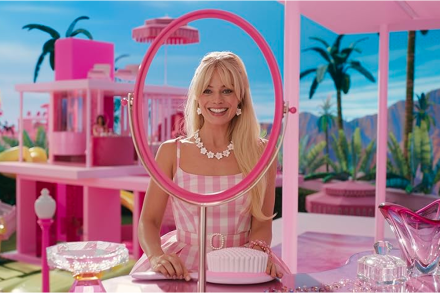
If you saw the Barbie movie this week, chances are you enjoyed Michael Cera's performance as the long forgotten Allan doll. Cockburn must admit he doesn’t have much experience with kids’ toys (thanks to his lawyers, who fight paternity suits like pitbulls), but even he’s surprised at how lucrative a market the doll market is becoming. After its opening weekend, where Barbie raked in an estimated $155 million, now anyone with an Allan doll can make their own small fortune by selling it. Over the weekend, several eBay listings for old Allan dolls increased their prices. Before the film came out, some were priced as low as $30; now, the valuation has increased to over $300.  Since the movie's release, Allan has turned into a fan favorite.

michael cera allen barbie
barbie elon musk

Elon Musk slams Barbie, echoing the right’s lamest pundits

Elon Musk joined the war against fun this week. After changing Twitter's iconic blue bird to a boring X, the eccentric billionaire bandwagoned on joyless conservative hate for the Barbie movie’s "feminist" messages. Cockburn wants to know: would it kill just one middle-aged man to admit that he liked the movie?   “If you take a shot every time Barbie says the word 'patriarchy,' you will pass out before the movie ends,” Musk tweeted Monday, in a rip-off of someone else's joke. He was responding to a "Barbenheimer" meme mocking his decision to rebrand Twitter’s logo from colorful and playful to somber and gray, much like the difference between Barbie and Oppenheimer. Twitter users quickly accepted Musk’s challenge with confidence.

strikers

The Hollywood strikers have a Schrödinger’s Cat problem

It is the best of times and the worst of times in Hollywood, where the phenomenal success of Barbenheimer elevated both movies to soaring box offices even as virtually the entire entertainment industry is on strike. But the success of these two films — one backed by the branding power of nostalgia and the desire to wear the color pink, the other by one of the last mainstream auteur directors with the power to do whatever he wants — also contrasts with the big problem facing the strikers. We know how many people saw these movies. We don't know how many people see much of anything else. The great cord-cutting has led us into a world with unprecedented opportunities to make all kinds of content.

Oppenheimer and the triumph of Christopher Nolan

The Barbenheimer phenomenon — thought of by many as just idle chatter on the internet — has enduring power. Last weekend, Barbie and Oppenheimer earned a combined $511 million in global box office receipts; an unprecedented number where neither film is a superhero picture or a sequel. Barbie made more money, on the grounds that it’s an hour shorter and is PG-13 rated, but the vast box office success of the R-rated Oppenheimer, which made over $170 million in its opening weekend, is testament both to Barbenheimer excitement, and to the film’s very own brand: its powerful writer-director-producer, Christopher Nolan.  James Cameron aside, it is hard to think of any filmmaker who wields such power and influence in contemporary Hollywood.

Christopher Nolan
mick jagger

Mick Jagger at eighty: the beginnings of a Rolling Stone

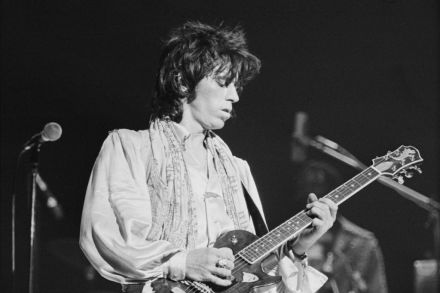
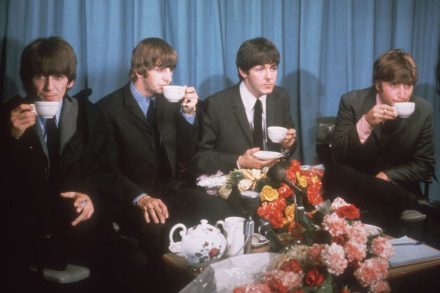
Among the other jewels in the crown of Sir Mick Jagger’s songwriting career is a number he and his longtime creative partner Keith Richards knocked off in December 1963 to promote the Kellogg’s company products. Don’t laugh — it’s an infectious little tune in its way, even if the key lyrical message — “Wake up in the morning/ There’s a pop that really says/ Rice Krispies for you and you and you!”) falls some way short of the same duo’s “(I Can’t Get No) Satisfaction,” which followed barely twelve months later. But then Jagger, who turns eighty on July 26, was always a quick study. Last year’s four-part EPIX documentary series My Life as a Rolling Stone may be numbingly banal (“They set the bar for what a rock ’n’ roll band should sound like, look like..

Japan deserves to see Oppenheimer

As millions of people across the world rush into cinemas this week to see Christopher Nolan’s latest epic thriller Oppenheimer, one notable country will not be part of the film’s initial release window despite the relevant subject matter — Japan. For reasons that are still unclear, Universal Pictures has not announced a Japanese release date. Yet if any place deserves to see a film based on the life of the theoretical physicist who played an essential role in developing the atomic bombs which ended World War Two, it should be the country that was most affected by them. Hollywood films being delayed for release in Japan is a very common occurrence, and it rarely ever has anything to do with politics.

japan oppenheimer
oppenheimer

Oppenheimer’s passenger

Ripples appear in courtyard puddle outside the Cavendish Laboratory at the University of Cambridge; a tornadic funnel erupts from the black atmosphere toward Earth. Between these images — the small one of intimate life and the colossal one of planetary death — a haunted young man looks on in curiosity and horror.  The man is Robert Oppenheimer, played to perfection by Cillian Murphy, a theoretical physicist “troubled by visions of a hidden universe.” This visionary, capable of conjuring apocalypse from the particles stowed inside atoms, spends the first fifteen minutes of the film looking bewildered — a gaunt, gray sliver of a man wandering through his life like a ghost.

Why What We Do in the Shadows works

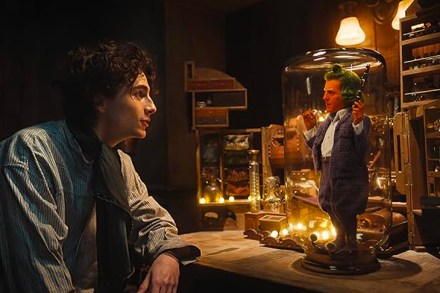
Before Taika Waititi achieved his current state of half-ironic, half-irritating ubiquity, he made small, often brilliant films. One of the most notable ones was the 2014 New Zealand comedy horror picture What We Do in the Shadows, which he co-created and co-directed with Flight of the Conchords star Jemaine Clement. Horror comedies are notoriously tricky to get right tonally, but the film — which admittedly leant far more heavily on the comedic aspects — was a modest box-office hit and became yet another step on Waititi’s stroll to Hollywood dominance.

what we do in the shadows

Arnold Schwarzenegger is back

It would be presumptuous to call 2023 the comeback of Arnold Schwarzenegger: he never went away. From his first starring role in 1982’s Conan the Barbarian to an illustriously memorable life and career that have included everything from the Terminator films to his term as governor of California, he has judiciously created an existence for himself as an all-American success story; a sort of Scott Fitzgerald character for the Reaganite age. Not bad, really, for a man born seventy-six years ago in a small town in Austria, the son of an unrepentant Nazi. Should you turn on Netflix, you will now be greeted by two incarnations of Der Arnold.

Arnold
Richier

The brilliant, underappreciated work of Germaine Richier

In the spring of 1951, there was a commotion in Assy, a remote part of the Alps where France and Italy are only separated by mountains and valleys. In a town normally famed for its tuberculosis-healing properties and its winter sports, a debate about sacred art was beginning to make itself heard. After nine years of construction, the Église Notre-Dame de Toute Grâce du Plateau d’Assy was finally finished in 1946. A low, squat building, designed by architect Maurice Novarina and fashioned out of sandstone, it looked more like a chalet than a church.

art revolution Milano Painting Academy

Inside the traditional art revolution

More and more often lately, people are rejecting tired modern art. They often find solace in the art of the past; online accounts admiring “traditional art” have amassed hundreds of thousands of followers, but they act as online repositories for a bittersweet recognition: what once was, no longer is. But the kind of art they seek, involving detail, meaning and skill, still exists, and it is growing. The cultural hegemony of contemporary, abstract art is slowly beginning to crack; through those cracks we can see new art surfacing. As I have become increasingly disillusioned with the state of politics, an observation from Ernst Jünger, the German philosopher and skeptic of the extreme politics of his day, rings true to me.

tom cruise running

Tom Cruise must run to save the world

Tom Cruise runs as he does all things — nothing held back, nothing in reserve, nothing but the motion of arms and legs in the action of an automaton bent toward a single direction: forward, all systems go.  He has run across Red Square and the Charles Bridge. He has run across Abu Dhabi and Shanghai. He has run all over London, enough to be your tour guide for the particularly cardio-focused tourist, though his ankle bit it on a jump in Blackfriars. No matter: his recovery left his gait unchanged, that karate chopping, chest down, head forward momentum that turns the edge of the screen into the tape of a finish line. For Hollywood, it is the most iconic depiction of movement on film since The Horse in Motion. What would happen to Hollywood if he stopped?