Arts Reviews

The good, bad and ugly in arts and exhbitions

Stereophonic is a love letter to creation

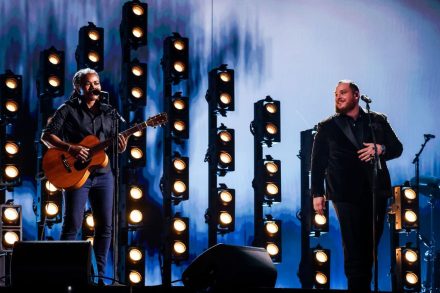
A chart-topping album. A drummer that can’t stand up straight without the aid of his giant bag of coke. Bickering bandmates and lovers. A rock band on the verge of break-up. These are some of the things on offer in just the first few minutes of Stereophonic. While I’m far from The Spectator’s resident theater critic, I do see my fair share of plays each year. Sometimes I’m compelled to write about them, but only when I’ve found something truly delightful. So let me start by saying this: Stereophonic is the best play I’ve seen in years.  On its surface the play is the story of a mid-Seventies rock band coming to terms with success while navigating tumultuous internal relationships with each other.

stereophonic

When you Wish upon a star: is the Disney shine fading?

Did you see Wish last weekend? Chances are, according to the box office receipts, you didn’t. The latest big-budget Disney extravaganza, with the voices of Ariana DeBose and Chris Pine, was expected to be a hit, grossing a decent $50 million on its opening weekend. Instead, to the studio’s chagrin, it came in third with a comparatively measly gross of $31.7 million, bested not only by the second weekend of the Hunger Games prequel, The Ballad of Songbirds and Snakes, but, considerably more surprisingly, Ridley Scott’s Napoleon, which soared past early estimates to come in with an impressive $32.5 million. Not bad for a film without any bankable movie stars (sorry, Joaquin), mixed reviews, a B- CinemaScore rating and a subject with which American audiences are not intimately familiar.

wish

Sir Ridley Scott and the subtle art of not giving a damn

Most men approaching the age of eighty-six would be forgiven for taking it easy. Not so Sir Ridley Scott: legendary filmmaker, director of the eagerly anticipated epic Napoleon and, it appears from the recent interviews he has given, someone who does not give a single solitary cuss about how he, or his film, are received. He is fresh from telling historians who have criticized his film’s factual accuracy that they should “get a life” and that “when I have issues with [them], I ask: ‘Excuse me, mate were you there? No? Well, shut the fuck up then.

ridley scott

The Crown season six: a regal return to form?

Say what you like about Netflix’s The Crown, now coming into its final series — the first four episodes launch on the service today, with the concluding half-dozen coming next month — but it is one of the few shows that has combined winning truckloads of awards with compelling its viewers to have an opinion on its often surprising manipulations of history. Its creator Peter Morgan has been both praised and vilified for the liberties with fact he has taken, all of which he has dismissed on the grounds that he is creating fact-based entertainment, rather than a documentary series. That invention can often illuminate, rather than obscure, the workings of the forever secretive British royal family.

the crown diana

The birth, death and rebirth of American Psycho: The Musical

American Psycho was never supposed to be a hit. Bret Easton Ellis thought Glamorama would be his big seller, and Psycho was just an odd interlude; an experiment with form that mocked the disconnection, inanity and opulent obliviousness of America’s new, young, hyper-materialist upper crust. It was also a cloaked reflection of repressed homosexuality, written by a gay author who once dated a closeted financier. It’s not even that violent. Most of it is just the interior monologue of this cold man listing the clothes and food and bad music that occupies his hollow mind. And it was intensely funny, but dryly, darkly so. In short, it wasn’t an obvious literary smash.

american psycho musical

Have we misunderstood David Fincher?

The trailer for David Fincher’s latest movie, the hitman thriller The Killer, promises that admirers of one of cinema’s most talented directors will be getting their money’s worth, whether they see it during its theater release or wait for it to premiere on Netflix (which paid for it), just as they did Fincher’s previous film, Mank, and his serial-killer series Mindhunter. There will be a lead performance by Michael Fassbender — returning from several years away from the big screen racing cars — that will, as usual, combine icy charisma with brute physicality. There will be impressively gloomy cinematography, courtesy of Erik Messerschmidt.

rudy

Admit it — you love Rudy

As we wander our way through life, we encounter all manner of guilty pleasures. Some — say, watching reality television or consuming fast food — can be said to properly induce feelings of guilt, but many others really ought to make no claim on our conscience. Surely the least guilty of all guilty pleasures is the cinematic subgenre known as the inspirational sports movie. This perfectly respectable form has spawned countless enduring films, from National Velvet to Rocky. Their makers recognized that few things rouse an audience like the spectacle of an underdog mastering an athletic pursuit. With the 1986 release of Hoosiers, filmmaker David Anspaugh presented himself as the most gifted modern practitioner of the form.

The Killer is a black-comic masterpiece

When David Fincher’s latest picture The Killer premiered at the Venice Film Festival in September, it was to a more muted reception than might have been anticipated. Part of this may have been because, with the actors’ strike very much in force, its stars Michael Fassbender and Tilda Swinton were nowhere to be seen, with Fincher himself the only A-lister on the red carpet. But it was also undoubtedly because the finished film was not remotely what many had anticipated. Early hype suggested that The Killer would follow the exploits of Fassbender’s anonymous assassin as he (inconveniently) develops a conscience, presumably setting up an existential quandary.

killer

SAG strike resolution: what happens next?

After a paralyzing 118 days, the actors’ strike is now, finally, looking like it’s over, following hard in the footsteps of the similarly resolved WGA strike a couple of weeks ago. The SAG are claiming victory over the studios, who took an exceptionally long time to ratify demands that included everything from increased fees for work appearing on streaming services, to protections regarding the use of AI, to reproduce actors’ images on screen. There were many times during the strike when it looked as if both sides were simply too far apart to achieve a resolution. In the end, money talks: the major Hollywood studios and streaming services realized that without the swift agreement they needed, there would be a drought of product in the marketplace next year, and beyond.

sag-aftra

Internet poet Rupi Kaur boycotts White House Diwali celebration for Palestine

Cockburn was surprised to learn the war in Israel has a more global impact than he had previously imagined. The carnage in Gaza is affecting the way that Indian women living in the United States celebrate Diwali, at least according to the Canadian-Indian poet Rupi Kaur. South Asian women are now the latest group with a moral imperative to weigh in on the war.  Kaur’s crusade to involve an Indian holiday in a regional conflict all started when the internet poet, famous only to her 4 million Instagram followers and readers of New York women’s websites, rejected an invitation to a Diwali celebration that will be hosted by Kamala Harris on Wednesday. https://twitter.

rupi kaur
marvels marvel

How Marvel lost its way

Are you excited about seeing The Marvels, the mega-budget sequel to 2019’s billion-dollar grossing Captain Marvel? Judging by the advance box office predictions, not very many of you are. Current tracking has the film opening at around between $50 and $75 million on its first weekend. For most non-superhero franchise pictures, this would be excellent, but for a film that was budgeted at between $220 and $280 million, depending on whom you talk to, it has all the hallmarks of a colossal flop, capping off what has been a truly terrible year for Marvel Studios. It was never supposed to be this way.

‘Now and Then’: the Beatles are back

In the Sixties, the rivalry between the Beatles and the Rolling Stones  — even if it was more of a hype battle dreamt up by their respective publicity departments — meant that whenever one band released an album or single, the other was never too far behind. Sometimes, they even explicitly referenced their competitor’s work; the Stones’s 1967 album Their Satanic Majesties Request was “inspired” by the Beatles’s LP Sgt. Pepper’s Lonely Hearts Club Band, released earlier that year. Yet after the Beatles split up in 1970, the rivalry seemed to be at an end, and the deaths of John Lennon in 1980 and George Harrison in 2001 apparently put paid to any possibility of the Liverpudlian band continuing in any form. Oh, how wrong we were.

beatles

Rest in peace Matthew Perry

Everyone had their favorite character in Friends, although I’m not entirely sure who liked Monica most. For me, the best one was always Chandler Bing: sarcastic, ironic and perpetually outraged at some unexpected or unwelcome development. Naturally, in the safe and unchallenging world of Friends, there had to be an explanation for the character’s sardonic demeanor, and so his cutting sense of humor is explained to be a defense mechanism, derived from the hurt he underwent after his flamboyant parents’ divorce. But thanks to the peerless comic skills of Matthew Perry, the actor who played Chandler, any suggestion of laborious cod-Freudianism was swiftly dispelled. The character was, above all things, very, very funny.

Killers of the Flower Moon captures the singular sensation of outside-ness

In the summers my grandmother would drive us south of town to where the black oaks thinned out and the world opened into pasture land and sky: prairie grass as far as you could see. Here, on their tribal land, the Seminole People would hold an annual powwow. Folks congregated to visit and eat frybread tacos, and I would skateboard with my Muskogee friends, Mike and Bobby Harjo on the cement basketball court, or along sections of sidewalk outside the aluminum-sided lodge. Around sundown, when the whippoorwills began to call from the sparse stands of blackjack and the fireflies winked on and off, the sound of drums started to pound the earth. You could feel them coming up through the soles of your shoes.

killers of the flower moon

Fans of a hit teen drama are trying to cancel its star actor

Fans of The Summer I Turned Pretty, a hit teen drama on Amazon Prime adapted from a young adult book series of the same name, are furious after discovering that one of the show's lead actors “liked” some conservative social media posts. Cockburn was first alerted to the controversy by his niece, who describes herself as the show's "biggest fan" and regularly trawls Reddit threads about the Amazon streaming series. The Summer I Turned Pretty is a coming-of-age story about a teenage girl, Isabella or "Belly,” who finds herself caught in a love triangle with a pair of brothers, Conrad and Jeremiah Fisher. Just like with the love triangles in the Twilight and Hunger Games series, fans endlessly debate over who Belly should end up with.

gavin casalegno
taylor swift eras

I took my daughter to see Taylor Swift: The Eras Tour

As I wrote a few weeks ago, there is a marvelous opportunity to bond with one’s children when you both conceive an interest, even an obsession, with the same musical act. Once upon a time, it might have been the Beatles, or Bowie or Madonna: now, it’s Taylor Swift, the all-conquering pop songstress who has not only taken over the world, but has made yet more untold millions with her concert film Taylor Swift: The Eras Tour. In practice, most of those seeing it will not have been able to get tickets to see her three-and-half-hour live show, so this slightly abbreviated version (a mere two and three quarter hours) will have to do. And my seven-year old daughter Rose is a Swiftie par excellence. We are going to have fun, I declare, and she rolls her eyes and says, “If you say so, Dad.

The great Marty Stuart, possessor of one of popular music’s legendary guitars

He stands five-foot-seven in his stocking feet — five-nine in boots — but with Clarence White’s Telecaster slung around his neck and a thick head of gray hair roostered up, he looks ten feet tall. John Marty Stuart has plucked the strings of every major figure in country music. Growing up in Philadelphia, Mississippi, his heroes were bluegrass legend Lester Flatt and American prophet Johnny Cash. Before going out on his own, Stuart only had two jobs: he joined Flatt’s band in 1972 as a fourteen-year-old mandolin virtuoso, and after Flatt retired in 1978, he joined Cash’s band as a guitarist.

stuart

Age is catching up with our much-beloved musicians

On the Who’s 1965 single “My Generation,” the band’s twenty-one-year-old lead singer Roger Daltrey half-sang, half-sneered, “Hope I die before I get old.” The song, written by the then-twenty-year-old Peter Townshend, has remained a classic for nearly sixty years, boasting both a fantastic tune and unforgettable lyrics. Yet even as the Who continue to tour the world — often in the company of that invaluable accessory for any self-regarding rock band, a full orchestra — it is now with self-aware amusement that the seventy-nine-year-old Daltrey and seventy-eight-year-old Townshend perform it.

musicians

George Harrison at eighty

All I got to do is to, to love youAll I got to be is, be happyAll it’s got to take is some warmth to make it blow away That’s the chorus of George Harrison’s bubbly 1979 single “Blow Away,” an update of sorts to his Beatles hit “Here Comes the Sun.” At the close of the 1970s, the respite from the “long, cold, lonely winter” had become less assured. There is a pleading tone in Harrison’s voice as he sings “be happy” that infuses “Blow Away” with pathos. That, plus his cavernous stare in the otherwise goofy video, indicates that summiting Mount Everest might have been easier than the chorus’s stated goal.

Harrison

John Waters, the pope of cliché

A decade or so ago, I was on the phone with the filmmaker John Waters, discussing Juggalos, Jesus and Justin Bieber, when I called someone “white trash.” The once-cult-now-mainstream director cut me off. I don’t remember exactly what he said — the transcript is long since deleted — but Waters berated me, called me racist, and rehashed some version of his 1994 statement that “talking trash about ‘white trash’ is ‘the last racist thing you can say and get away with.

waters