Arts Reviews

The good, bad and ugly in arts and exhbitions

Order, order | 10 November 2016

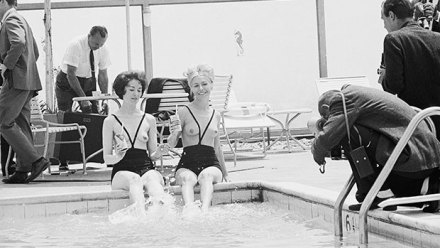
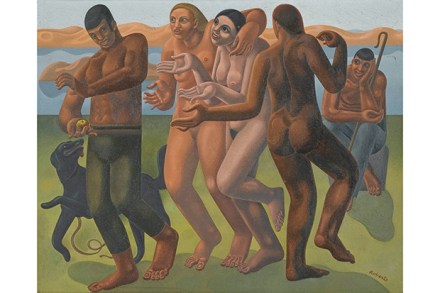
The catalogue to Pallant House Gallery’s latest exhibition features a favourite anecdote. It is 1924 and a competition is being held to find the woman with the most pleasing vital statistics. As a paradigm, the judges choose the Venus de Milo. Thousands of women queue up to find out whether their measurements — not only bust, waist and hips, but thighs, calves, neck, wrists even —approximate closely enough to those of the ancient sculpture to earn them the prize of £5. No one thinks to mention that the Venus is missing both arms. Classical myth was all the rage after the first world war. When the world felt like chaos,
Brief encounters

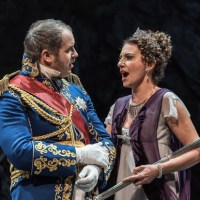
When Mozart was commissioned to write an opera for the coronation of Emperor Leopold II, he produced La clemenza di Tito: a hymn to the benevolence of a Roman despot. When Matt Rogers and Sally O’Reilly were commissioned by the Inner Temple, they came up with an opera in which the protagonist is a law student who tries to obstruct the emergency services. The Fire of London is spreading, you say. And the only way to save life and property is by creating firebreaks? Sorry, I think you’ll find that, under Section 15 (4) of the Irresponsible Pettifogging Jobsworth Act 1661, you can’t do that. Truly, an operatic hero for

Country music | 10 November 2016

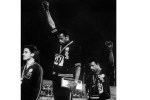
There was something unexpectedly moving about hearing not just one but several renditions of the somewhat naive and rose-tinted but always heartfelt ‘The Star-Spangled Banner’ when I switched on the radio after several days’ absence. America has been so much in our thoughts these past few weeks, but a distasteful, shameful version of itself. It was just so refreshing to hear something different, something meaningful, yet still so American, like a glass of ice-cold water after a long walk in the heat. Last Saturday’s edition of the series Soul Music (produced by Sara Conkey) gave us Jimi Hendrix’s electrifying version of the American national anthem at Woodstock in 1969 as

Crown jewels

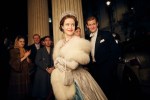
Nairobi. February 1952. Laughing children brandishing sticks are driving an indignant bustle of ostriches up a rudimentary 1950s-Africa semi-bush runway towards the camera, when — WHOOSH! — right over their heads skims the exact BOAC aircraft in which the actual soon-to-be Queen Elizabeth flew to Kenya, as painstakingly rebuilt by the world’s top aircraft restorers at a cost of only $27 million… Actually, I made up the last detail. But if you want to know why the drama departments at the BBC, Channel 4 and ITV are quaking in their boots just watch a couple of episodes of Netflix’s sumptuous, leisurely and immaculate recreation of the Queen’s early years on

Angry bird

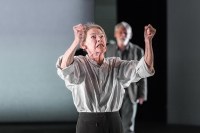
Dynastic affairs and international relations were once a seamless continuum. Royal weddings accompanied peace treaties. An heirless realm was vulnerable to invasion. Botched successions led to war. This is the political context of King Lear but Deborah Warner sets the play in modern times, which muddles everything. Britain in the Dark Ages is represented by a scout hut or a therapy suite. Plain walls, bleached flooring, a semi-circle of blue plastic chairs. Enter the king’s court led by a crownless Glenda Jackson (Lear), sporting a black ensemble topped by a chic scarlet cardigan. Is this a brutal tyrant on the brink of a psychotic meltdown? Nope. It looks like Granny

Napoleon dynamite

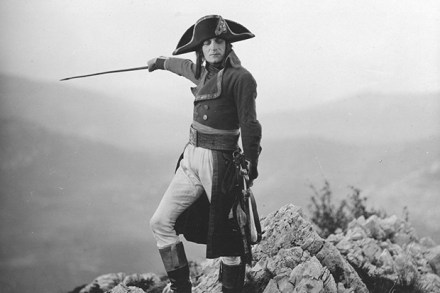
I shall never forget my first encounter with Abel Gance’s Napoleon. I saw it under the most unpromising circumstances — fragments of the great original, shown on a home projector, 25 years after its original release. Yet those fragments changed my life. I was 15, still at school in Hampstead, and already obsessed by the cinema. My parents had given me a projector for my 11th birthday. Since the only films available to me were silent films, I found myself immersed in the rarefied atmosphere of a forgotten art. As home movies were being abandoned in favour of television, I found a surprising number in London’s junk shops. Among the

Losing heart | 3 November 2016

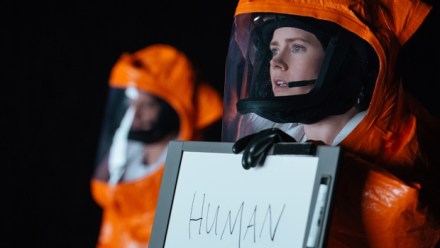
In 2015, the first series of Humans (Sunday) was apparently Channel 4’s most watched home grown drama since The Camomile Lawn: a programme broadcast when Neil Kinnock was still the Labour leader and given a obvious ratings boost by the tabloid outrage about its many nude scenes (and by its many nude scenes). In the case of Humans, though, the British people can’t be accused of ulterior motives, because this is a winningly intelligent piece of sci fi that ponders, among other things, the nature of consciousness and the future of the human race. Cleverly, too, it’s set, not in a domed city of jet packing commuters, but in a

Mistaken identity

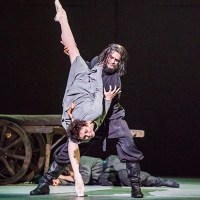
The Romanovs were a hot topic in 1967: it was the 50th anniversary of the Russian Revolution, memories of Ingrid Bergman’s Oscar winning Anastasia were still fresh and Robert Massie’s Nicholas and Alexandra was on every bestseller list. Kenneth MacMillan was ‘sick to death of fairy tales’ and his one act treatment of the Anna Anderson story, with its groundbreaking use of archive film and uncompromising Martinu score, was a ballet for grown ups that wrestled with the very nature of human identity. Lynn Seymour, the greatest dance actress of her generation, created the role of the mental patient who might (or might not) be a Grand Duchess and the

Heaven knows they’re miserable now

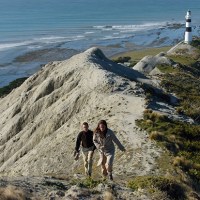
The Light Between Oceans is one of those films that comes issued with a handy how-to-use manual. Shudder as hero arrives on remote Australian island to man lighthouse. Cheer when in swift dash to mainland he secures hot bride to join him. Grimace when her womb proves incapable of holding anything in for a whole nine months. Bring heart to mouth as baby is somewhat implausibly washed ashore in rowing boat. For rest of film, carry on weeping. The source material is the 2012 novel by M.L. Stedman, which has sold millions in loads of languages. It features a Hardy-esque plot of flatpack sadism in which punishment is administered even-handedly

Just kidding

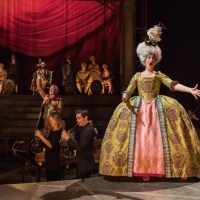
Amadeus by Peter Shaffer is haunted by its own antecedents. Viewers are apt to feel that a new production lacks the beauties they’ve seen, or believe they’ve seen, in previous versions. Director Michael Longhurst opens with a fusion of time zones. The courtiers are attired in silk curtains like proper 18th-century toffs, while the musicians on stage wear the baggy subfusc of a contemporary orchestra. Electronic cries of ‘Salieri, Salieri’ are broadcast through a Tannoy as if the tardy Kapellmeister were being chivvied from his dressing-room by an irate stage hand. Early on we get the famous ‘voice of an obscene child’ speech, which is perhaps the most sublime piece

Buried treasure | 3 November 2016

Wexford is to opera-goers what casinos are to gamblers. The uncertainty, the hope, the exhilaration — they’re all a crucial part of a festival that annually rolls the dice, plucking three obscure, often all but unknown, operas from the repertoire and giving them a staging. Dealing the cards is David Agler, the artistic director whose canny choices ensure that not only the house but also the audience always wins. Add to the mix Wexford’s ear for an up-and-coming star (Juan Diego Flórez, Mirella Freni, Joseph Calleja and Daniela Barcellona have all made their mark here), and you can understand the festival’s uniquely addictive quality. It’s somewhere between the Bacchanale, the

Contours of the mind

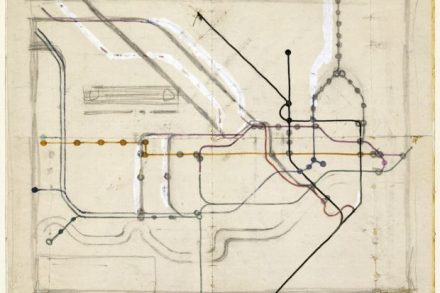
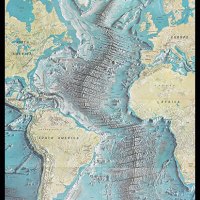
In Australia, I have been told, the female pubic area is sometimes known as a ‘mapatasi’ because its triangular shape resembles a map of Tasmania. And since we are discussing cartography and the nether regions, it is wonderful to find in the British Library’s new exhibition, Maps and the 20th Century, that Countess Mountbatten wore knickers made out of second world war airmen’s silk escape maps. Maps certainly colonise our imaginations in many different ways. The allies in Iraq had a ‘road map’ rather than a strategy. So much of personal value can be lost in the creases and folds of our own ‘mental maps’. And couples who often travel

Romantic modern

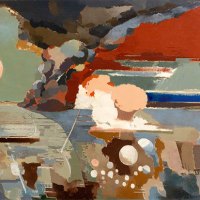
In 1932 Paul Nash posed the question, is it possible to ‘go modern’ and still ‘be British?’ — a conundrum that still perplexes the national consciousness more than 80 years later. It is true that the artist himself answered that query with an emphatic ‘yes’. But, as the fine exhibition at Tate Britain makes clear, his modernism was deeply traditional. The truth is that Nash (1889–1946) was what the author Alexandra Harris has termed a ‘romantic modern’. In other words, his art was a characteristic Anglo-Saxon attempt to have things both ways. Equally typically, he managed to do so — but only some of the time. Nash’s early drawings and

Going Dutch | 27 October 2016

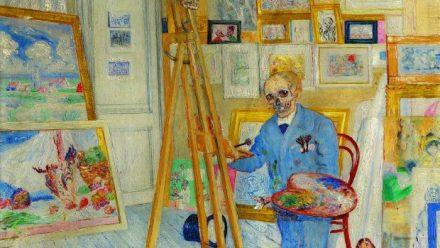
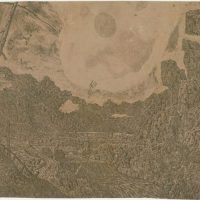
In debates about what should and should not be taught in art school, the subject of survival skills almost never comes up. Yet the Dutch, who more or less invented the art market, were already aware of its importance in the 17th century. In his Introduction to the Academy of Painting (1678), Samuel van Hoogstraten included a chapter headed ‘How an Artist Should Conduct Himself in the Face of Fortune’s Blows’. Top of his casualty list of artists ‘murdered by poverty …because of the one-sidedness of supposed art connoisseurs’ was the landscape painter and printmaker Hercules Segers (c.1589–1633). This year, the Rijksmuseum in Amsterdam has mounted three shows devoted to

Barometer | 27 October 2016

Folio society A new collection of Shakespeare’s work credits Christopher Marlowe as co-author of the three Henry VI plays. Some other candidates claimed to have written Shakespeare plays: FRANCIS BACON (1561-1626). His poems are said to share a similar structure. But lacks motive to use Shakespeare as a pen name. WILLIAM STANLEY, 6th EARL OF DERBY (1561-1642): A Jesuit spy claimed he was secretly writing plays. EDWARD DE WERE, 17th EARL OF OXFORD (1550-1604): Theatre patron said to have used pen name because an aristocrat could not take credit for public plays. Dead for the last 12 years of Shakespeare’s life. ROGER MANNERS 5th EARL OF RUTLAND. Said to have

The lying game | 27 October 2016

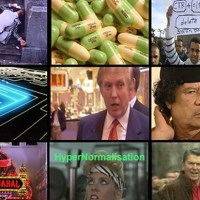
‘Adam Curtis believed that 200,000 Guardian readers watching BBC2 could change the world. But this was a fantasy. In fact, he had created the televisual equivalent of a drunken late-night Wikipedia binge with pretentions to narrative coherence…’ You really must watch Ben Woodhams’s brilliant 2011 Adam Curtis-pastiche mini-documentary The Loving Trap, which you’ll find on YouTube. It’s so devastatingly cruel, funny and accurate that when I first saw it I speculated that Curtis would never be able to work again. But this was fantasy. Of course, I knew that Curtis would be back, not least because to be parodied in this way is not an insult but a sure sign