Arts Reviews

The good, bad and ugly in arts and exhbitions

A new Beethoven cycle to keep – but hide

Grade: C In the 1990s the young Italian pianist Giovanni Bellucci gave us a reading of Beethoven’s Hammerklavier Sonata whose thrilling athleticism bore comparison with those of Maurizio Pollini and Charles Rosen. A few years later Bellucci began a complete cycle of the piano sonatas – but, rather than include his existing Hammerklavier, he produced a version that was in keeping with the style of the cycle: deliberately perverse, reinterpreting (that is, ignoring) the composer’s precise instructions in the score. Only now has Bellucci finished the cycle, explaining in his pretentious liner notes that he was held up by his meditations on Beethoven’s true intentions. So, for example, the first

The mystical hold of the 1990s over Gen Z

At some point during the past decade and a half, it was decided that the 1990s were a golden age. While Britpop, New Labour and acid house do not immediately evoke the same spirit as, say, Versailles under Louis XIV or Augustan Rome, compared with what followed they were certainly characteristic of something. Appetites for what the energetic Sawyer calls ‘the last nutty pre-internet age’ have never been greater Members of Gen Z who have known only the colourless, anodyne first years of the new millennium speak of the Nineties in mystical tones. At a party last week, I found myself holding court over some twentysomethings who’d discovered that I

The decline of Edinburgh International Festival

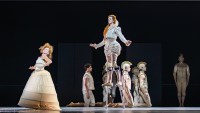
Edinburgh International Festival was established to champion the civilising power of European high culture in a spirit of postwar healing. But its lustre and mission have now been largely eclipsed by the viral spread of its anarchic bastard offspring, the Fringe. In competition with the latter’s potty-mouthed stand-ups and numberless student hopefuls, the dignified old Festival proper struggles to make much mark on the hordes who descend on the city in August, inflating prices and infuriating the residents. Perhaps the kids will love it, but if this is the future of ballet, then count me out Nicola Benedetti, a splendid woman and a wonderful violinist, is now in her third

A Brigadoon better than most of us ever hoped to see

The village of Brigadoon rises from the Scotch mists once every 100 years, and revivals of Lerner and Loewe’s musical are only slightly more frequent. The last major London production closed in 1989; and if you know Brigadoon at all it’s probably through the lush 1954 movie. The new staging at Regent’s Park takes a very different approach. The songs, the basic story and the heather (lots of it, pink and looking only slightly artificial) are all still there, but the director Rona Munro has rewritten the book, backdating the action to the second world war and turning Lerner and Loewe’s American tourists into a pair of shot-down bomber pilots.

How the railways shaped modern culture

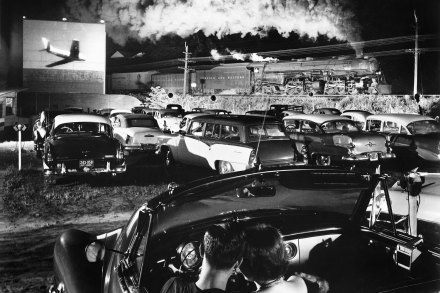
Cue track seven of Frank Sinatra’s 1957 album Only the Lonely and you can hear Ol’ Blue Eyes pretending to be a train. It’s not that he’s a railway enthusiast (though Sinatra, like many musicians, was an enthusiastic collector of model trains). No, it’s written into the words and music of Harold Arlen and Johnny Mercer’s song ‘Blues in the Night’: ‘Now the rain’s a-fallin’, hear the train a-callin’ “whoo-ee”.’ And so Sinatra sings it, just as Ella Fitzgerald, Peggy Lee and Louis Armstrong sang it. It’s an American classic, defined by the sounds that permeate the soul of American popular music: the sounds of the railway. Two hundred years

The problem with psychiatrists? They’re all depressed

Edinburgh seems underpopulated this year. The whisky bars are half full and the throngs of tourists who usually crowd the roadways haven’t materialised. There’s a sharp chill in the air too. Anoraks and hats are worn all day, and anyone eating outdoors in the evening is dressed for base camp. Perhaps tourists don’t want to travel because they’re too depressed. That’s the specialism of Dr Benji Waterhouse, an NHS shrink, who writes and performs comedy about his patients. Dr Benji is an attractive presence on stage with his crumpled Oxfam clothes and his dreamy, half-shaven look. He could be the guy who tunes up U2’s guitars. His act is very

I love how awful My Oxford Year is

The punters are saying My Oxford Year is a disaster. ‘Predictable, uninspiring and laughable,’ complains some meanie on Rotten Tomatoes. But they’re missing the point. My Oxford Year may be a work of accidental genius, but it’s a work of genius nonetheless. You will squirm, you will laugh derisively, you will cringe. By the end, though, you will be forced to admit that you secretly enjoyed every moment, for this is the very examplar of a so-bad-it’s-good masterpiece. You know it’s going to be awful from the very first frame: a still representing the bookshelf of our handsome, clever and poor heroine Anna De La Vega (Sofia Carson) who has

Woody Allen without the zingers: Materialists reviewed

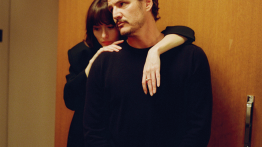
Celine Song’s first film, the wonderful Past Lives (2023), earned two Oscar nominations. So expectations were riding high for Materialists. Perhaps way too high. And, yes, it’s a letdown. It feels like an early Woody Allen but blunter, shallower, with no zingers, and a lead character that’s hard to care about. Dakota Johnson is our lead, playing a matchmaker who has two dreamboats (Chris Evans, Pedro Pascal) vying for her hand and throughout I was thinking: I should have your problems, love.  Should she be seduced by Harry’s penthouse or return to broke John? (Harry! He has silk sheets!) It’s billed as a romcom but those who expect that will

Disconcerting but often delightful new Bach transcriptions

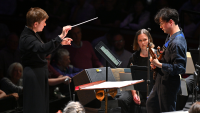
Grade: B Everyone loves the music of Johann Sebastian Bach. Rather fewer people love the sound of an unaccompanied organ, so a cottage industry has developed among conductors and composers, retrofitting Bach for full orchestra. From Elgar and Mahler to showman-maestros like Stokowski and Henry Wood, orchestral Bach transcriptions have tended towards the spectacular, and they annoy all the right people. When Wood arranged the D minor Toccata and Fugue for a super-sized orchestra, he pre-empted the backlash by crediting it to a fictional Russian modernist, ‘Paul Klenovsky’. The critics duly raved.  Still, who knew that the late Sir Andrew Davis – the closest thing we had to a latter-day

Modest, interesting – no masterpieces: Millet at the National Gallery reviewed

Jean-François Millet (1814-75). One Room. 14 items. Eight paintings. Six drawings and sketches. Modest, interesting. No masterpieces. The show appeals to the contemporary English preference for the unassuming, the humble, the unpretentious. Take ‘The Wood Sawyers’ (oil on canvas, 1850-2). Two figures are sawing a tree trunk with a long two-man bucking saw. Two thick sections have already been cut and the sawyers are busy with a third. The simplified trunk is like a salami, the bark corresponding to the floury skin. The main foreground figure with his blue rump has his foot braced against the trunk and commands our immediate attention. You can see the folds of flesh gathered

The rise of cringe

No one wrote programme notes quite like the English experimentalist John White. ‘This music is top-quality trash,’ proclaims his 1993 album Fashion Music. ‘We kindly ask the users of this CD to play it at the volume of a suburban Paris soundmachine or a London underground discman earphone as used by the kid next door.’ Track titles included ‘Epaulette’ and ‘Latin Flutes’. From what I remember – my copy vanished a long time ago – the music was cheap and very funny: tinny and dumb. I was reminded of White recently because trash is back. Everywhere I go, I find composers producing shamefully terrible music. Some deliberately, some inadvertently. What

Rattigan’s films are as important as his plays

A campaign is under way to rename the West End’s Duchess Theatre after the playwright Terence Rattigan. Supported as it is by the likes of Judi Dench and Rattigan Society president David Suchet, there’s evidently a desire to right a historical wrong. Author of classics such as The Browning Version, The Winslow Boy and Separate Tables, Rattigan was known for his poise, melancholy and restraint, all of which put him at odds with the coterie of upstart writers of the 1950s – still amusingly known as the Angry Young Men. It’s an oft-repeated chapter of theatre history that arch-kitchen-sinkers such as John Osborne made the environment virtually impossible for Rattigan

The excruciating tedium of John Tavener

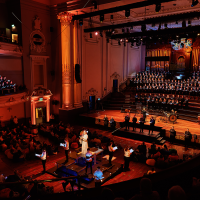
The Edinburgh International Festival opened with John Tavener’s The Veil of the Temple, and I wish it hadn’t. Not that they were wrong to do it; in fact it was an heroic endeavour. Drawing on three large choirs, members of the Royal Scottish National Orchestra and a sizeable team of soloists, this eight-hour performance was the sort of occasion that justifies a festival’s existence – the kind that, done well, can transform your perceptions of a work or a composer. It was certainly done well, and it certainly transformed mine. I’d never much minded the music of John Tavener. By the fifth hour of The Veil of the Temple, I

The terrifying charisma of Liam Gallagher

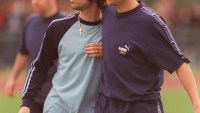
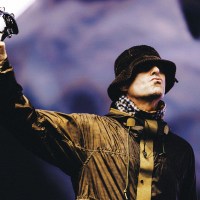
You’d have thought Wembley Stadium was a sportswear convention, so ubiquitous were the three stripes down people’s arms from all the Adidas merch: veni, vidi, adi. Pints drunk: 250,000 a night, apparently. All along the Metropolitan line pubs noted an Oasis dividend. At a corner shop, I was sold an official Oasis Clipper lighter. It’s surprising Heinz hasn’t yet offered an Oasis soup; you get a roll with it. Plainly, an awful lot of people have missed Oasis. And an awful lot of people – Noel and Liam Gallagher included – saw the chance to make an awful lot of money from their reformation. I don’t think any of them

A mafia drama like no other

The Kingdom is a mafia drama like no other. It’s directed by Julien Colonna whose father was a Corsican mob boss who died in 2006 (officially in a car crash although it’s generally believed he was ‘whacked’). And it’s told through the eyes of a young girl. Think of it as The Godfather from the point of view of a teenage Connie Corleone. Or The Sopranos from the perspective of Meadow. Or just take it for what it is, which is tense, brilliant and rivetingly convincing. The film is set in Corsica in 1995 at a time when the island was experiencing deadly mob feuds as well as intense conflicts

What a slippery, hateful toad Fred Goodwin was

Make It Happen is a portrait of a bullying control freak, Fred Goodwin, who turned RBS into the largest bank in the world until it came crashing down in 2008. Fred the Shred’s character makes him a tough subject for a drama. His morning meetings were called ‘morning beatings’ by terrified staff. He ordered executives to pitch him an idea in the time it took him to eat a banana. Inciting arguments between staff amused him and he once sacked an employee for saying ‘I tried’ instead of ‘I succeeded’. He was obsessed with colours and fabrics and he personally oversaw the design of the carpets and even the handwash

Worth watching for Momoa’s gibbous-moon buttocks alone

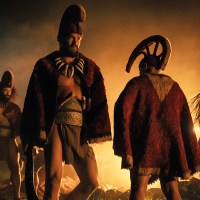
If you enjoyed Apocalypto – that long but exciting Mel Gibson movie about natives being chased through the jungle with (supposedly) ancient Mayan dialogue – then you’ll probably like Chief of War, which is much the same, only in Hawaiian. Like Apocalypto, it even has sailing ships appearing mysteriously from Europe with crews that serve the role of dei ex machina, rescuing endangered native protagonists at key moments. This time our based-on-a-true-story hero is Ka’iana, the 18th-century Maui chieftain who succeeded in uniting the four warring island kingdoms (Oahu, Maui, Molokai and Lanai) and turned them into the kingdom of Hawaii. He is played by Jason Momoa – to you,