Arts Reviews

The good, bad and ugly in arts and exhbitions

Strong performances in a slightly wonky production: Uncle Vanya reviewed

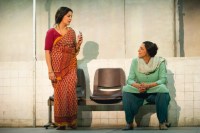
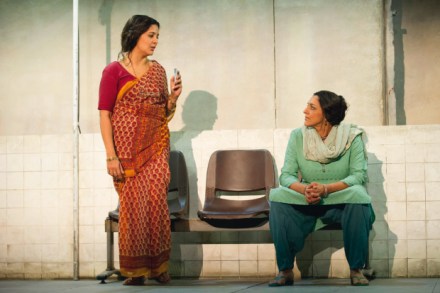
Uncle Vanya opens with a puzzle. Is the action set in the early 20th century or right now? The furnishings might be modern purchases or inherited antiques, and the costumes are also styled ambiguously. It soon becomes clear from Conor McPherson’s script, which uses colloquialisms like ‘wanging on’, that this is a contemporary version. It’s always a risk to update Chekhov and the director Ian Rickson pulls it off. Never once did I wonder why these chattering idlers didn’t have broadband or mobile phones. But the casting is awry. Vanya is a middle-aged Hamlet, a thinker, an observer, whose dreams are smashed to pieces in the course of the action.
Understated, unashamedly patriotic and heartbreaking: The Windermere Children reviewed

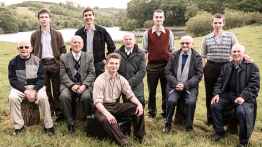
One of the many astonishing things about the BBC2 drama The Windermere Children (Monday) was that the real-life story it told isn’t better known already. In August 1945, 300 Jewish children, who just a short time before had been starving in Nazi concentration camps, arrived at a converted seaplane factory in the Lake District. None, as far as they knew, had any family left, and none could speak any English. Waiting to welcome them was Leonard Montefiore of the Central British Fund for Jewish Relief who’d raised the money to turn the factory into a carefully thought-out rehabilitation centre — and amid the wreckage of Eastern Europe had liaised with

Mad but terrific: The Lighthouse reviewed

The Lighthouse stars Willem Dafoe and Robert Pattinson (and a very nasty seagull) in a gothic thriller set off the coast of Maine in 1890, and it’s terrific. Mad, but terrific. It is gripping, intense, extraordinarily written — someone is accused of smelling like ‘curdled foreskin’ at one point — and is about two fellas thrown together. But unlike most odd-couple scenarios there is no bonding. So get bonding right out of your mind. Instead, they drive each other full-on (and marvellously) insane. It’s a mad film about madness, in short. The writing is so dazzling it may well blow your mind It is directed by Robert Eggers (The Witch)

The art of pregnancy

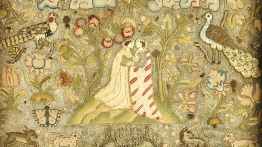
In 1622, Elizabeth Joscelin wrote a letter to her unborn child. This was fairly common practice in Elizabethan England; pregnant women were encouraged to write ‘mother’s legacy’ texts in case they did not survive the birth. ‘It may… appear strange to thee to receyue theas lines from a mother that dyed when thou weart born,’ she wrote. Her daughter Theodora was born on 12 October 1622, and following a violent fever Elizabeth died nine days later. Her letter — which urged her child to pray, avoid temptation and be charitable — was discovered posthumously in her writing desk and published in 1624 by an Anglican clergyman called Thomas Goad. The

Dazzling and sex-fuelled: Picasso and Paper at the Royal Academy reviewed

Picasso collected papers. Not just sheets of the exotic handmade stuff — though he admitted being seduced by them — but any scrap that could inspire, support or become part of an image. He jettisoned muses like there were endless tomorrows but clung on to Métro tickets, postcards, restaurant bills, bottle labels. When the thrill of a muse was gone her creative possibilities were exhausted, but you never knew, with synthetic cubism, when that old Métro ticket might come in handy. In a garret he would have had a hoarding problem. ‘Picasso throws nothing away,’ reported one lover. There was no filing system: a photograph in the exhibition shows a

Best gig of the week: the fuzzy, slacker melodies of teenage quintet Disq

Come January, when the proper pop stars are all in the gym working off the pounds before they emerge, blinking and svelte, into the watery winter sun, the small venues of London attempt to pack in the curious by filling their schedules with seasons of up-and-coming artists. In east London this past week, the excellent promoter Eat Your Own Ears ran three free nights of new acts. In Islington, the Lexington offered first the Winter Sprinter — five nights of sweet-toothed indie pop, where you might have caught the Portland Brothers, the occasional duo featuring Steven Adams, once of the Broken Family Band, and the best songwriter almost no one

Radio 4’s new H.P. Lovecraft adaptation will give you the chills

Of all the many things I’ve learned from the radio so far this decade, the most deranging is that the universe is the dream of the god Azathoth. Not unreasonably, Azathoth yearns to wake up and visit his creation. In The Whisperer in Darkness (Radio 4), a crusty coven of drug-addled neopagans seek to realise this wish by summoning Azathoth through a mystic portal they’ve opened — just off the B1084 in Suffolk. Fools! Don’t they realise that they risk unleashing forces they don’t understand? Waking Azathoth would mean there will be no dreamer to dream the dream and so not just Suffolk but all reality would be obliterated as

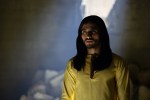
Netflix’s Messiah is a great concept undermined by implausible politics

Sky’s latest bingewatch potboiler Cobra can’t quite make up its mind whether it wants to be an arch, knowing House of Cards-meets-The Thick Of It satire about parliamentary intrigue. Or a full-on post-apocalyptic thriller in the manner of Survivors or The Walking Dead. It ends up succeeding in neither. The premise is that a powerful solar flare is heading towards Britain, leaving the government little time to prepare, and subsequently causing all manner of chaos: plane crashes, hotel fires, escaped prisoners, mass blackouts. Will mild, likeable Conservative prime minister Robert Sutherland (a miscast Robert Carlyle), his fractious cabinet and his civil service prove up to the job of extricating Britain

Sweeping, sod-you comedy – irresistible: Billionaire Boy reviewed

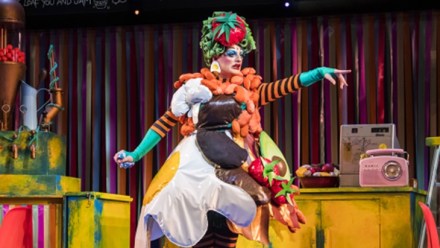
Falling In Love Again features two of the 20th century’s best-known sex athletes. Ron Elisha’s drama covers a long drunken night spent by Marlene Dietrich and Edward VIII at Fort Belvedere, near Windsor, on the eve of Edward’s abdication in December 1936. It sounds like a contrived premise for a play but Elisha, who researches his material thoroughly, says this encounter actually took place. Marlene (played by Ramona von Pusch as an enigmatic adventuress in green lipstick) claims to have fled the Savoy where Rudolf Hess is bombarding her with flowers in the hope of luring her home to make films for the Third Reich. Marlene refuses because she can’t

One of those films that never seems to end: A Hidden Life reviewed

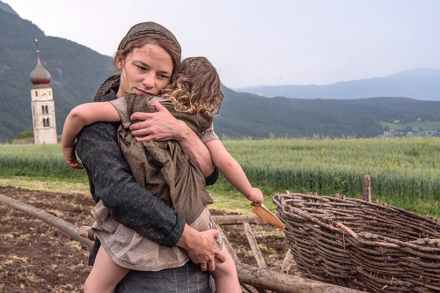
Terrence Malick’s A Hidden Life is a historical drama based on the true story of Franz Jäggerstätter, an Austrian who refused to fight for the Nazis in the second world war and was later beatified by the Catholic church. It isn’t peak Malick as it’s linear rather than associative — let’s not pretend we aren’t mightily relieved — but otherwise it’s business as usual in the sense that it’s visually beautiful, poetic, philosophical, theological and slowly, slowly, slowly meditative. In fact, it’s so slowly, slowly, slowly meditative it’s one of those films that feels as if it’s been playing for ever when there is still an hour to go. As

Enchanting but outrageously expensive: Tutankhamun reviewed

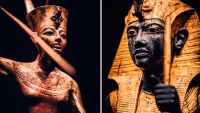
Like Elton John, though less ravaged, Tutankhamun’s treasures are on their final world tour. Soon these 150 artefacts will return permanently to Egypt. Nearly a century after Howard Carter disrupted their 3,000-year rest in the Valley of the Kings, they are to be retombed in the new Grand Egyptian Museum in Giza. But first they undergo their final ordeal, an outing in London. The genius of the Saatchi show, curated by Tarek El Awady, is to simulate the trials the pharaoh’s mummified corpse endured in the netherworld. After having his brain pulled out through his nose, Tutankhamun had to pass through 12 gates guarded by snakes, crocodiles, vultures and supernatural

Undeniably eye-popping: BBC2’s Louis Theroux – Selling Sex reviewed

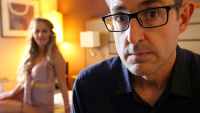
Victoria, a single mother in her early thirties, is getting her children ready for school — ensuring an equitable distribution of toast and issuing a series of determinedly patient instructions. (‘Listen to Mummy, you need to put your socks on.’) Once they’re gone, she then heads to a hotel to meet the first man that day who’ll be paying her £250 for sex. ‘It’s the perfect job for me,’ she explains cheerfully. ‘Very flexible.’ Victoria was one of three women featured in Louis Theroux: Selling Sex (BBC2, Sunday) for which Louis furrowed his familiar brow, adopted his finely honed bemused expression and set off to investigate transactional sex in digital-age

TikTok is the world’s fastest-growing – and goofiest – digital platform, but should we fear it?

In November last year, an internet video made by a 17-year-old American went viral. The video was less than a minute long and began with its creator, Feroza Aziz, looking directly into the camera and talking viewers through a makeup tutorial. ‘The first thing you need to do is grab your lash curler. Curl your lashes, obviously. Then you’re going to put them down and use your phone… to search up what’s happening in China, how they’re getting concentration camps, throwing innocent Muslims in there, separating families from each other, kidnapping them, murdering them, raping them, forcing them to eat pork, forcing them to drink, forcing them to convert.’ The

The latest Turner Prize stunt is a step too far

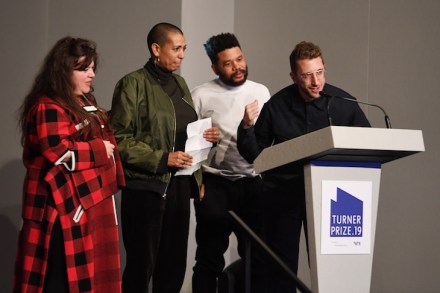
This year’s Turner Prize has four winners rather than one. In a letter to the jury, the artists claimed that it would be wrong to adjudicate between the social causes championed in their art. So in the end, they split the spoils between them. The judges had one job: to judge. Instead, they acquiesced to the candidates they were meant to be assessing. Instead of one name, poor Edward Enninful, the editor of Vogue, charged with opening the envelope at the ceremony in Margate, saw four: Oscar Murillo, Tai Shani, Helen Cammock and Lawrence Abu Hamdan. ‘Here’s something quite extraordinary,’ Enninful said, presumably off the cuff. ‘At a time of

From cartoons to stage design: the genius of Osbert Lancaster

‘Bigger,’ said Sir Osbert Lancaster when asked the difference between his work for the page and for the stage. ‘Definitely bigger.’ For almost 40 years Lancaster was the ‘pocket cartoonist’ for the Daily Express. He had remarked to the features editor that no English newspaper had anything to match the little column-width cartoons of the French papers. ‘Go on,’ said the editor, ‘give us some.’ On 1 January 1939, Lancaster gave them the first of around 10,000 line-drawn cartoons. His subjects were the war, the Blitz, the weather, Stalin, Hitler and Dr Spock, the Swinging Sixties, the Common Market, the test tube baby and the topless swimsuit. His heroine, his

Remarkable and imaginative: Fitzwilliam Museum’s The Art of Food reviewed

Eating makes us anxious. This is a feature of contemporary life: a huge amount of attention is devoted to how much we eat, when we eat it, where it comes from, to toxic foods, organic and inorganic ones, environmentally damaging groceries, those that tot up too much mileage or cause damage to the rainforest. Some of these worries are relatively novel, but preoccupation with the nourishment we consume is not. A remarkable and imaginative exhibition at the Fitzwilliam Museum, Cambridge, Feast & Fast: The Art of Food in Europe, 1500–1800, documents just how obsessed our ancestors were with every aspect of their meals. At its heart are a series of

Wildly entertaining Pope-off: The Two Popes reviewed

The Two Popes stars Anthony Hopkins and Jonathan Pryce — that’s two reasons to buy a ticket, right there — as Pope Benedict XVI and his successor Pope Francis I, and it is wildly entertaining, so now you have a third reason too. True, it does, as others have noted, shy away from directly tackling the most difficult questions currently facing the church. But is that really the film you want to see? Rather than this affectionate and literate bromance that does, in fact, nudge us towards the bigger picture, but slyly? Also, it is brilliantly comic. Pope Benedict, for instance, doesn’t get jokes but does try to tell one,

The pleasures and perils of talking about art on the radio

‘I like not knowing why I like it,’ declared Fiona Shaw, the actress, about Georgia O’Keeffe’s extraordinary blast of colour, ‘Lake George, Coat and Red’. O’Keeffe was inspired by the lake in upstate New York but there’s no discernible lake on the canvas and no coat, although there is plenty of red. When Shaw is asked to describe the painting for us, her listeners, by Alastair Sooke, the presenter of The Way I See It, she puts her head in her hands. It’s almost like an amateur painting, Shaw concludes, and yet ‘it absolutely isn’t’. It’s an early work from 1919 when O’Keeffe was 32. At the time she was