Arts Reviews

The good, bad and ugly in arts and exhbitions

I want to support cinema but I have my work cut out with Love Sarah

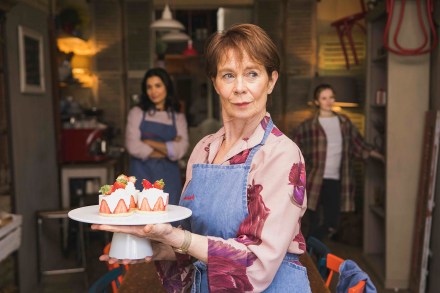
Some cinemas have reopened, with the rest to follow by the end of the month, thankfully. But the big, hotly anticipated films — Christopher Nolan’s Tenet, for example, or A Quiet Place II — won’t be out for a while yet, as opening schedules are adjusted. However, there is a new film that is cinema-only: it’s British, and it’s called Love Sarah. It stars Celia Imrie and is about three generations of women who seek to overcome grief by founding a bakery in London’s Notting Hill rather than running away to join Isis, say. (Is it always a bakery in Notting Hill or does it just feel like that?) I
Not even a genius could make Much Ado About Nothing funny

The RSC’s 2014 version of Much Ado is breathtaking to look at. Sets, lighting and costumes are exquisitely done, even if the location is not established with absolute clarity. The date is Christmas 1918 and we’re in a stately home that has been converted into a billet, or a hospital, for returning soldiers. The prickly Beatrice (Michelle Terry) seems to be an unemployed aristocrat working as a volunteer nurse. She fusses around the ward making discreet enquiries about an old flame, Benedick, whose memory she can’t shake off. Enter Benedick played by Edward Bennett and the fun starts. These two absolutely get inside the skins of their characters. Terry’s portrait

The joy of socially distanced gallery-going

Not long after the pubs, big galleries have all started to reopen, like flowers unfolding, one by one. The timing reminded me of an anecdote that Lucian Freud used to tell about a Soho painter friend he took into the National Gallery after it had shut (as some senior artists are entitled to do). They arrived after closing time in the drinking holes of Soho, and the painter friend was staggering and swaying so much that Lucian — who was not easily rattled — became alarmed that he was going to put one of his flailing arms through a Rembrandt. I wonder how those art-lovers of yesteryear would have coped

Culture is going underground: meet the rebel army

Among the first to arrive was a Labour grandee. Then others drifted over: academics, musicians, writers, a nurse. They came from different directions, some looking shifty, others excited. The secret meeting point was an inconspicuous pub in north London. Queueing shoppers nearby assumed the growing crowd was waiting to get into the supermarket. In groups of five those gathered were led down a suburban street to a derelict leisure centre. For one night only, the gym had been turned into a makeshift theatre. The audience, of up to 30 people, had congregated to flick a collective V at the social distancing measures, and to watch A Hero of Our Time,

I wish John Chamberlain was still around to crush this hideous toothpaste-blue Ferrari

For three months art lovers have had nothing but screens to look at. As one New York dealer complained to the Art Newspaper in May, ‘Everything is so flat — except for the curve,’ referring to the infection rate. Flatness isn’t such a problem for paintings, which are flat anyway, or for digital media obviously. The art form that has suffered most from the lockdown is sculpture, since no 360˚navigation technology yet invented can replicate the experience of walking around a 3-D object. So it’s fortuitous that Gagosian is unlocking its three London spaces to a trio of new exhibitions of 3-D works, under wraps since March. A woodcarving impregnated

A documentary about the M25 that will make your heart soar

When a 90-minute documentary is introduced with the words ‘This is the M25’, you’d be within your rights not to feel your heart soar. Nor would you necessarily expect what follows to be full of wonders of all kinds — natural, historical, literary and scientific. Yet this is exactly what happened in BBC Four’s The Hidden Wilds of the Motorway, presented by Helen Macdonald. Macdonald is best known for her 2014 bestseller H is for Hawk, which mixed memoir and falconry with a biography of the author T.H. White. In Tuesday’s programme, she was on similarly genre-blending form as she set off on a television journey that, in a rare

Chaotic, if good-natured, muddle: Hytner’s Midsummer Night’s Dream reviewed

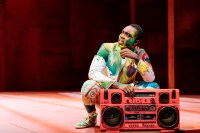
Nicholas Hytner’s A Midsummer Night’s Dream opens in a world of puritanical austerity. The cast wear sombre black costumes and Oliver Chris, with menacing swagger, brings a note of palpable sadism to the role of Theseus. Then things relax as the ‘mechanicals’ in modern boiler suits prepare to rehearse the play. Hammed Animashaun (Bottom) dominates this little scene with his impish charm and unpredictability. He’s a high-calibre talent of whom more will be heard. After this solid opening, disaster strikes. The forest sequences, already devilishly overcomplicated, are presented on double beds which move restlessly all over the shop and make the story almost impossible to follow. And Hytner has flipped

Why haven’t podcasts cracked the recipe for audio drama?

In Beeb-dominated Britain, the commercial triumph of podcasting — epitomised by Spotify’s recent £100 million deals with Joe Rogan and Kim Kardashian — is held up as proof of the complacency of the radio establishment. Freed from the constraints of box-ticking commissioners, wily podcasters have been able to steal a march on Broadcasting House by giving audiences what they actually want. Or so runs the theory. But I can’t help thinking there’s one large slice of legacy radio territory the podcasters haven’t taken yet. And that’s the good old-fashioned audio drama. Not the most fashionable genre right now admittedly, but an important one nonetheless. Few 20th-century broadcasts, after all, are

I didn’t expect to be so moved – galleries reopen

I’m in Mayfair and I’m boarding an airplane. Or rather, I’m boarding an approximation of an airplane. In the centre of Hauser & Wirth, there are airplane seats, organised into a formation that resembles a section of economy, and dislocated windows, hung on the walls where paintings might normally be. The seatbacks are stuffed, and a spring/summer 2012 edition of Sky Shop magazine is splayed across one of the seats. We are frozen in time and space. Like most of us in recent months, this plane — an installation by German artist Isa Genzken — isn’t going anywhere. It remains perpetually rooted. Its windows open on to white walls. The

Pointless but beautiful – and good for going to sleep to: Monument Valley reviewed

I was going to write about Monument Valley, and I suppose I will eventually, but first I have to write about this total catastrophe that has overwhelmed my life. Online Scrabble has gone! This was the proper Mattel trademark version that I’ve been playing for years with friends and it has suddenly been replaced by some hideous all-singing all-dancing version called Scrabble GO which looks like Candy Crush and — worse — is infested with ads. Not quick flash ads either but interminable videos about, say, a new type of squeegee. Everyone tells me I will get used to it eventually but I’m not sure I want to. Did you

Sensual and silky: the Royal Ballet returns to Covent Garden

Wayne McGregor’s Morgen! and Frederick Ashton’s Dance of the Blessed Spirits are the first pieces of live dance — streamed in real time from an empty auditorium — to come out of Covent Garden since March. Unaware that recordings would be available afterwards, I clung to these fleeting displays with the panic of grandparents on a Zoom call, furiously, helplessly slapping the screen whenever it buffered. Both are quick ballet interludes to longer opera programmes — not afterthoughts, exactly, but not centrepieces either, though with two shirtless danseurs and a beloved ballerina between them, they do just fine asserting their presence. Vadim ‘the Dream’ Muntagirov tackles the Ashton work, reaffirming

Pure poison: BBC1’s Talking Heads reviewed

The big mistake people make with Alan Bennett is to conflate him with his fellow Yorkshireman David Hockney. But whereas Hockney’s art is generous, warm, bright, life-affirming, Bennett’s is crabbed, catty, dingy, insinuating. The fact that the BBC-led establishment keeps telling us he’s a National Treasure tells us more about the BBC-led establishment than it does about Bennett. Bennett is typical of the English intelligentsia Orwell anatomised in his ‘The Lion and the Unicorn’ essay: ‘It is always felt that there is something slightly disgraceful in being an Englishman and that it is a duty to snigger at every English institution, from horse racing to suet puddings.’ I’d forgotten quite

Paapa Essiedu is a dazzling, all-encompassing prince: RSC’s Hamlet reviewed

The Beeb has released Simon Godwin’s Hamlet staged by the RSC in 2016. The director makes one major change and leaves it at that. Elsinore is transposed to a present-day African republic where members of the ruling clan are jockeying for power after the dictator’s death. This chimes with our understanding of geopolitics and lends simplicity and coherence to everything else. African flavours dominate the costumes, the furnishings and the music. The casting makes sense too. Most of the company are black and the characters are played by actors of the right sex. It’s rare to see Shakespeare’s gender choices followed faithfully. The superstitious element is strongly emphasised. The Ghost’s

The statue-topplers are obsessed with white men and white history

On my visits to Bristol in the past, there was always a certain statue peering over the city centre that would trigger heightened emotions in me. I’m not talking about the recently toppled monument of slave-trader Edward Colston, but the memorial to another representative of empire: the radical scholar and reformer Raja Rammohan Roy, who came to London in 1830 as the ambassador of the Mughal Emperor (who was by then a titular sovereign under the rule of the East India Company), and died in Bristol three years later. He now stands in pride of place on College Green, outside the cathedral, about five minutes’ walk from where the Colston

A true story that never feels true: Resistance reviewed

Resistance stars Jesse Eisenberg and tells the true story of how mime artist Marcel Marceau helped orphaned Jewish children to safety in the second world war. I had no idea. I had only ever thought of Marceau as ‘Bip’, who will live on for ever in my nightmares. (God, mime.) But while the story is remarkable, the film is considerably less so, veering between overtelling and undertelling, wavering in tone and never properly coming to any kind of life. If I had to do this review in mime I’d probably be miming nodding off on the sofa but, then again, I’m pretty sure I did that for real. Written and

A fine, even rather noble drama: BBC1's The Salisbury Poisonings reviewed

This week, BBC1 brought us a three-part dramatisation of an ‘unprecedented crisis’ in recent British life. Among other things, it featured a lockdown, an extensive tracking and tracing programme, much heroism from people on the front line, and much confusion among scientists as to how to provide the facts when they didn’t really know them. The Salisbury Poisonings (Sunday–Tuesday) was presumably made well before you-know-what. Yet watching the programme in the current circumstances, it wasn’t easy to decide whether the timing was good or bad luck for the makers. The obvious parallels did lend a haunting, drone-note resonance to proceedings. On the other hand, they sometimes threatened to overshadow what

From Hogarth to Mardi Gras: the best art podcasts

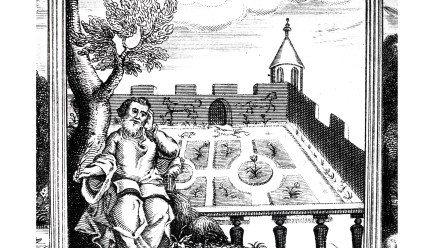
If you study History of Art, people generally assume you’re a nice, conscientious, plummy-voiced girl. Sometimes, people are right. It is the only subject I can think of that requires a student to describe what is already printed on the exam sheet. ‘In the foreground of the picture is a tree — in full leaf! — and on the horizon, a tower.’ It feels a little basic. But with art history podcasts description is everything. And to do it well is a real art in itself. The presenters of the Art Newspaper’s The Week in Art podcast were superb last week in their exploration of a portrait by William Hogarth.