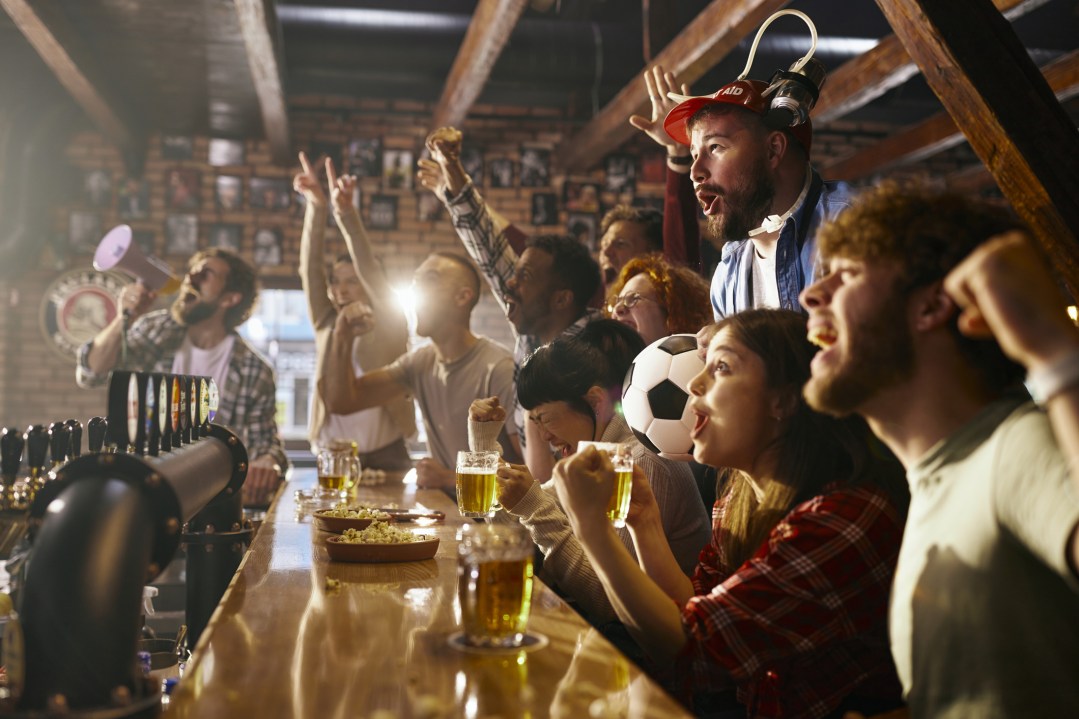
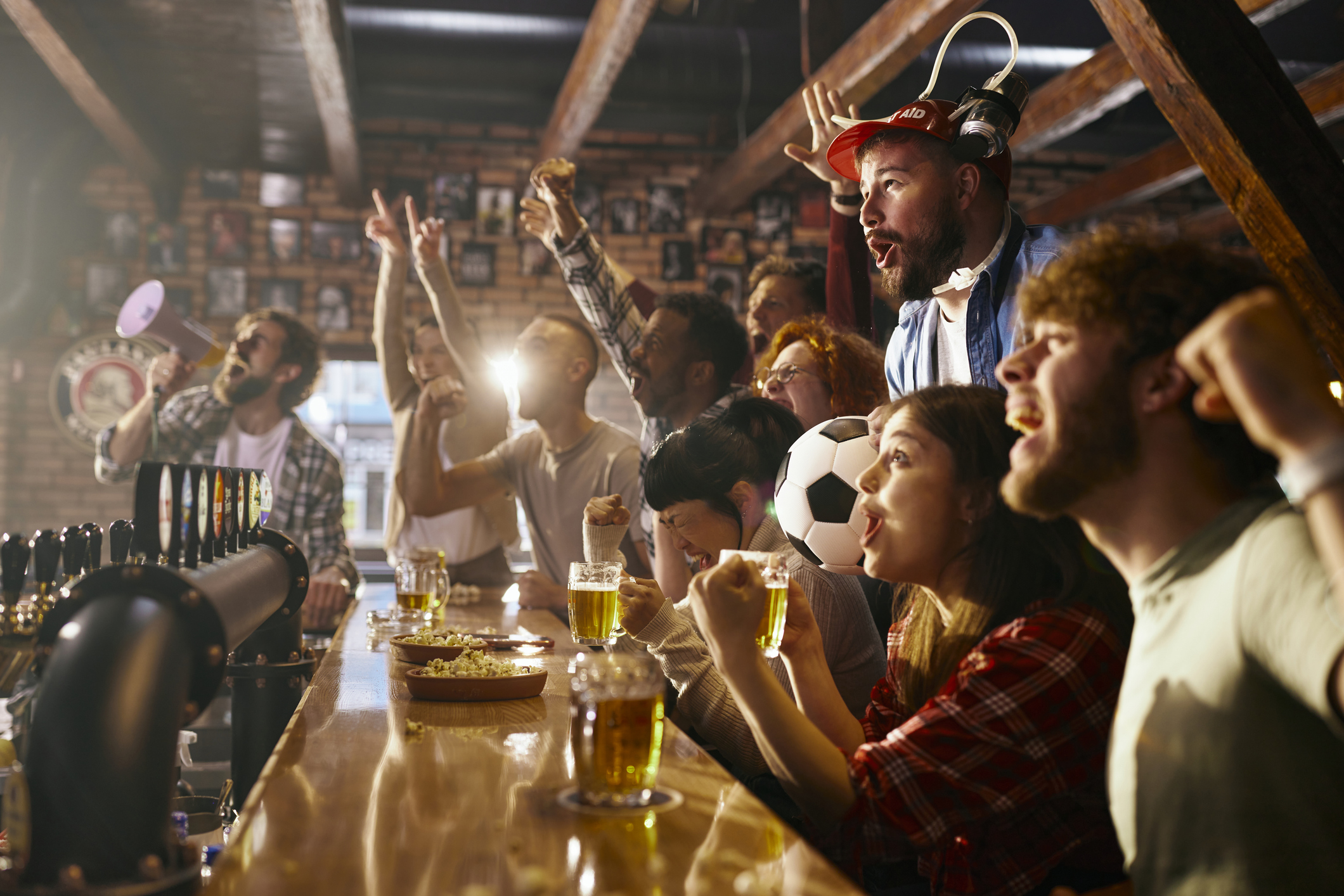
I was, aptly, in a pub when I heard the news. Owing to the time difference between Britain and North America, Sir Keir Starmer had confirmed that licensing laws would be relaxed for this year’s Fifa World Cup, allowing pubs to stay open later into the night.
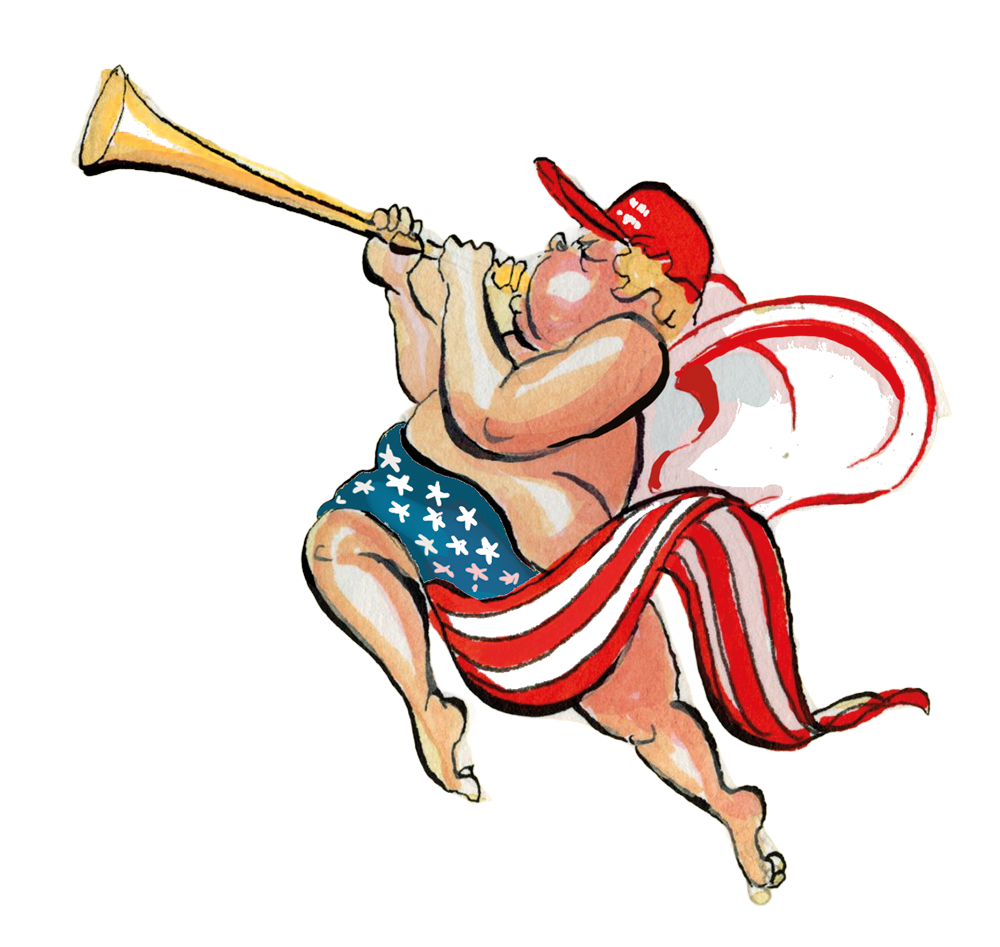
Shortly after the announcement, I found myself wondering about licensing laws generally. Like most Britons, I had long regarded them as part of the natural order of things; as permanent a fixture of pub life as sticky carpets. But what were these laws’ impact on my own relationship with alcohol and those of my fellow countrymen? Why is it, compared with so many other countries, we feel the need to binge drink?
The stereotype of the drunk Brit is by now internationally recognisable. Somewhere in Benidorm, a sunburnt Englishman in football colours is probably, as you read this, drawing eyerolls from the Spanish locals. Yet while we often treat this behaviour as evidence of some peculiar national failing – and perhaps it is – Britain’s drinking culture did not emerge from nowhere. It was shaped by our laws, labour and history.
Pre-industrialisation, Britons drank ale and beer with astonishing regularity. Some historians claim this was necessary due to concerns around sanitation at the time (although this is contested). Nonetheless, beer occupied a central place in diet and daily life, providing essential calories where food was scarce.
While this was not a uniquely British phenomenon – across Europe, wine and beer flowed freely – it laid the groundwork for the real transformation that came later. The English civil war and the puritanism that accompanied it left their mark not just on our constitution but culturally too. Puritan suspicion of drunkenness and disorder was hardly invented in the 17th century but it acquired new authority and political force following the execution of Charles I.
In something of a yo-yo effect, the Restoration of the monarchy with Charles II in 1660 embraced conviviality with enthusiasm. The tankard and the toast acquired symbolic significance. To drink to the health of the king was not simply an excuse for a tipple but, in certain settings, a sincere affirmation of loyalty to the crown and to the Stuarts’ more lenient interpretation of Christianity. Beer and wine became, if not quite instruments of liberty, then at least companions to a freer and more festive conception of public life.
The more the state has sought to curtail it, the more incentives it has created to drink large volumes of alcohol in shorter spaces of time
Meanwhile, the discovery of the New World and the expansion of the empire introduced Britain to beverages that altered habits drastically. Tea and coffee began to compete with alcohol for the nation’s attention. Crucially, these drinks required boiled water – alleviating concerns around diseases like cholera – and delivered stimulation rather than sedation. Historians have long debated how much coffee houses and tea drinking contributed to Britain’s commercial and industrial development but the overlap is difficult to ignore.
Britain industrialised earlier and more intensely than much of southern Europe. In Mediterranean societies, particularly those organised around agriculture, alcohol often remained part of daily life. Industrial Britain, however, operated differently. Dangerous factory work proved less compatible with leisurely daytime drinking. Labour became much more regimented and recreation, accordingly, became compressed into evenings and weekends.
The law reinforced this compression and, by the 19th century, legislators and reformers increasingly treated alcohol as a social problem requiring management. Licensing laws such as The Wine and Beerhouse Act 1869 were introduced and public houses became objects of scrutiny. Later, when the first world war started, fears that drunkenness was undermining wartime productivity prompted the state to intervene dramatically. David Lloyd George famously declared that Britain was ‘fighting Germans, Austrians and drink’ – adding that drink was proving the greatest enemy of all.
The legacy endured long after the armistice. For generations, British drinkers learned to consume alcohol within artificially narrow windows of opportunity. I have seen with my own eyes how the cry of ‘last orders’ has acquired an almost Pavlovian power. If drinking time was limited, the logic followed, one had better make the most of it.
Binge drinking in Britain can best be described, then, as the product of the law of unintended consequences. The more the state has sought to curtail it, the more incentives it has created to drink large volumes of alcohol in shorter spaces of time. The Old Firm (the football derby between Glasgow Rangers and Celtic) is a great example. Alcohol is forbidden at the grounds, and these matches often kick off at noon to prevent excess drinking beforehand. In reality, many fans just get tanked up in the early morning at a Wetherspoons or – as I have also seen – will pull an all-nighter and carry on drinking until the game.
Whether Starmer’s temporary relaxation of licensing laws for the World Cup will make much difference is another matter. One month – if England or Scotland get that far – of later closing times is unlikely to undo several centuries of social and legal conditioning. Nor, regrettably, should anyone expect it to improve the behaviour of football supporters should they make a deep run in the tournament. Then again, if you happen to encounter a lager lout enthusiastically celebrating their country’s progress, spare a thought for what he represents. Unknowingly, in his own muddled way, he may simply be paying tribute to a long line of Cavalier ancestors.




Comments