Fidel castro

Will Cuba be reborn as a Caribbean Las Vegas?

From our UK edition

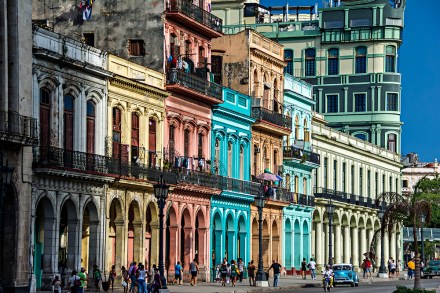
Cuba’s revolutionary spirit is giving out. Donald Trump has called on Cubans to ‘make a deal before it’s too late’ and has threatened military action. More than six decades on from the revolución of 1959, all talk is of the Yanqui dollar and how to acquire it. The scramble for greenbacks has fed into Cuba’s sex industry. In the dollar-happy resort of Varadero, the locals suffer police surveillance and the indignity of rationed food while prostitutes as young as 15 hover outside the motels. Yet for all the hardship and belt-tightening, Cuba commands sympathy from the international left as a last bastion of communism.
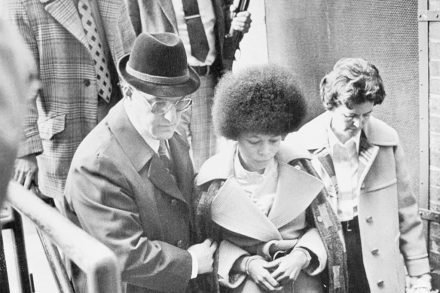
Why have Democrats mainstreamed a terrorist?

On September 26, the Chicago Teachers Union, representing all of the teachers in America’s second largest city, posted on X upon the death of “Assata Shakur” AKA Joanne Chesimard, that “The life and legacy of a revolutionary fighter, a fierce writer, a revered elder of Black liberation, and a leader of freedom whose spirit continues to live in our struggle." That would be one way to describe Shakur. Another way to describe her would be as a woman convicted of the murder of New Jersey police officer Werner Foerster, a former FBI most wanted terrorist who was broken out of jail by armed comrades and eventually escaped to Communist Cuba, where she lived under the protection of the totalitarian Communist Castro regime for the remainder of her life.

Joanna Chesimard

Has Cuba’s revolution finally fizzled out?

From our UK edition

In 1968, the US anthropologist Oscar Lewis arrived in Cuba with a tape recorder and a mission to capture the revolutionary zeal of everyday Cubans. Eighteen months later, he was sent packing. ‘We have nothing to hide,’ Fidel Castro, the leader of the country’s 1959 revolution, had supposedly told him. That wasn’t quite true: production targets were being missed, dissidents were being locked up and the US trade embargo was already beginning to bite. The project briefly – and unsuccessfully – passed into the hands of Boom-era author and friend of Fidel, Gabriel García Márquez. After that, the voices of Cubans vanished from the official record. Lots of vituperative denunciations from Cuban exiles, certainly.

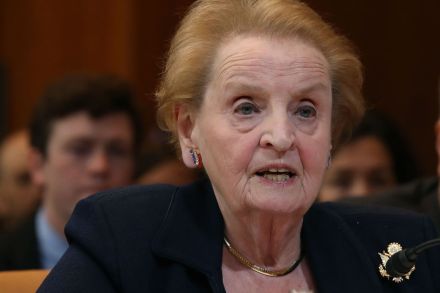
Madeleine Albright was an idealist overpowered by cynics

People die at random, of course, but it seems poignant that Madeleine Albright has died at the very moment the liberal post-Soviet world has met its own, more violent, end. Her term as Bill Clinton’s secretary of state coincided with the moment America, the most powerful nation in the history of the world, sat, unknowingly, at its own apogee. The Soviet Union was newly gone. America stood peerless and unchallenged. The attacks of September 11, 2001, and the twenty years of War on Terror that followed, were still unthinkable. China’s GDP rivaled Italy’s, not America’s. Even offhand, Albright could describe America as the “indispensable nation.” Charles Krauthammer had called it early — this was the “unipolar moment.

The restaurant that set Miami ablaze

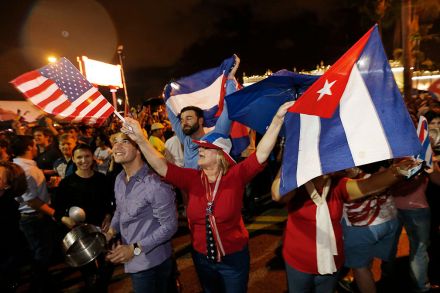
You’d think that a restaurant named Café Habana would be a perfect fit in Miami. But when it emerged this week that the New Yorker-owned joint specializing in Cuban/Mexican fusion was “inspired by a storied Mexico City hangout, where legend has it Che Guevara and Fidel Castro plotted the Cuban Revolution,” all hell predictably broke loose. The restaurant, slated to open in downtown Miami in the spring, has since scrubbed the Castro and Che reference from its website. But no amount of damage control will appease commie-hating Miamians, many of whom are surely cooking up protest plans, pots and pans at the ready. The original Café Habana opened in New York in 1997, and like so many other restaurants before it — the famed Carbone, etc.

How the third world war was narrowly averted

From our UK edition

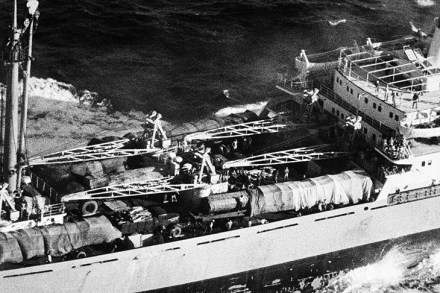
Nuclear weapons carry a payload of cold logic: if both sides have them, neither will ever use them. But in 1962, when the Soviet Union and US squared up to one another over Cuba, that logic broke down. As this superb new book shows, the Cuban Missile Crisis was the product of miscalculation, ignorance and staggering recklessness. The main culprit was Nikita Khrushchev. His first error was to mistake the US president for a callow weakling. ‘Don’t worry,’ he assured his Cuban friends, ‘I’ll grab Kennedy by the balls.’ After their first meeting, JFK remarked that negotiations with Khrushchev had been the ‘roughest thing in my life’.