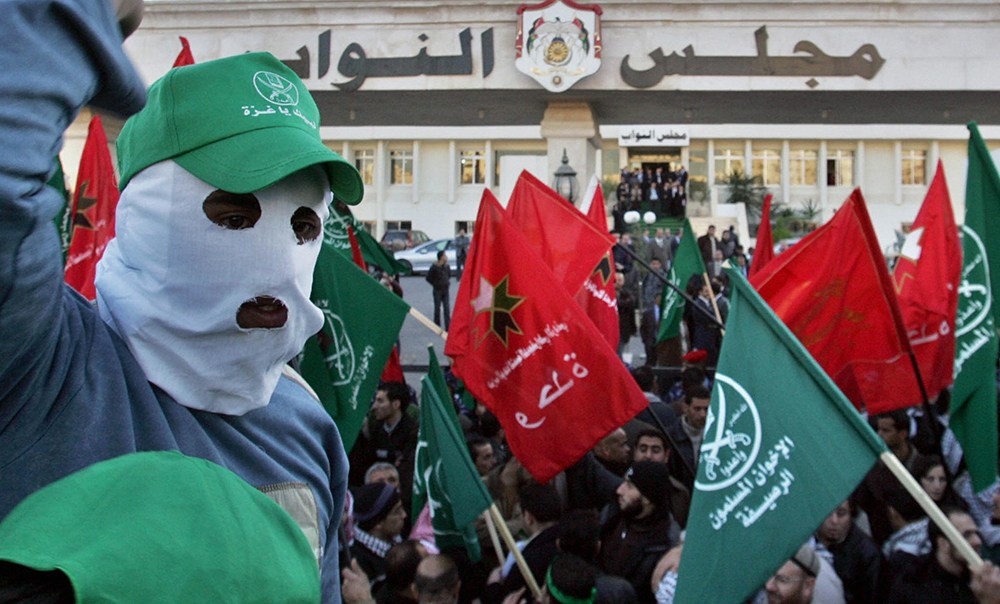
What should the British government do about the Muslim Brotherhood? This question has confounded policy-makers for decades and was brought to the fore last month when the United States sanctioned, for the first time, a London-based Muslim Brotherhood leader.
Announcing the sanctions, the US Treasury described Mahmoud al-Abyari as a ‘senior leader of the Egyptian Muslim Brotherhood’ with a ‘long history of senior leadership roles’, including in its General Secretariat.
For the United States, the secretive, transnational network founded in Egypt in 1928 is ‘the root of all modern Islamist terrorism’. To the Israelis, it ‘promote[s] a radical vision of Islam’. To Mohammed bin Salman, the Crown Prince of Saudi Arabia, the Brotherhood is ‘very dangerous’. The group is outlawed in Egypt, Jordan, Saudi Arabia and the UAE.
For the United States, the secretive, transnational network is ‘the root of all modern Islamist terrorism’
The UK, however, has never banned the Brotherhood or called it a terrorist organisation: successive governments have treated it as little more than a political headache, one they wish would disappear. The Treasury’s sanctions against al-Abyari show this position will be harder than ever to hold much longer.
The Brotherhood claims it is a proselytising group offering a middle way for Muslims between the godless West and the performative violence of Isis and al Qaeda. One that fuses Islam and politics, but which seeks to bring about change democratically. One that, it says, is avowedly non-violent.
Numerous Brotherhood members and sympathisers, however, are on record endorsing terrorism. Its foundational thinker, Sayyid Qutb, did more than most to propel revolutionary, violent jihad via his incendiary text Milestones. Its founder, Hassan al-Banna, worked for the restoration of the caliphate.
During my term as the government’s independent adviser on extremism, I saw firsthand how the Brotherhood operates a sophisticated network laser-focused on Islamising societies from the bottom up. It stoked grievances and extremism over Palestine and Islamophobia, in particular, and obscured its activities via a complex network of interlocking charities, companies, NGOs and media outlets.
Not all ministers prioritised the issue. The Brotherhood, after all, was not setting bombs off on our streets. One diplomat wondered if they were harmless Muslim eccentrics analogous to the Freemasons. Other officials thought their threat was too subtle or diffuse for departments across Whitehall to capture. The Brotherhood remained, in other words, on the ‘too difficult’ pile. Over some four years, I failed to persuade the government to embed a strand of work that would survive reshuffles or changes of prime minister.
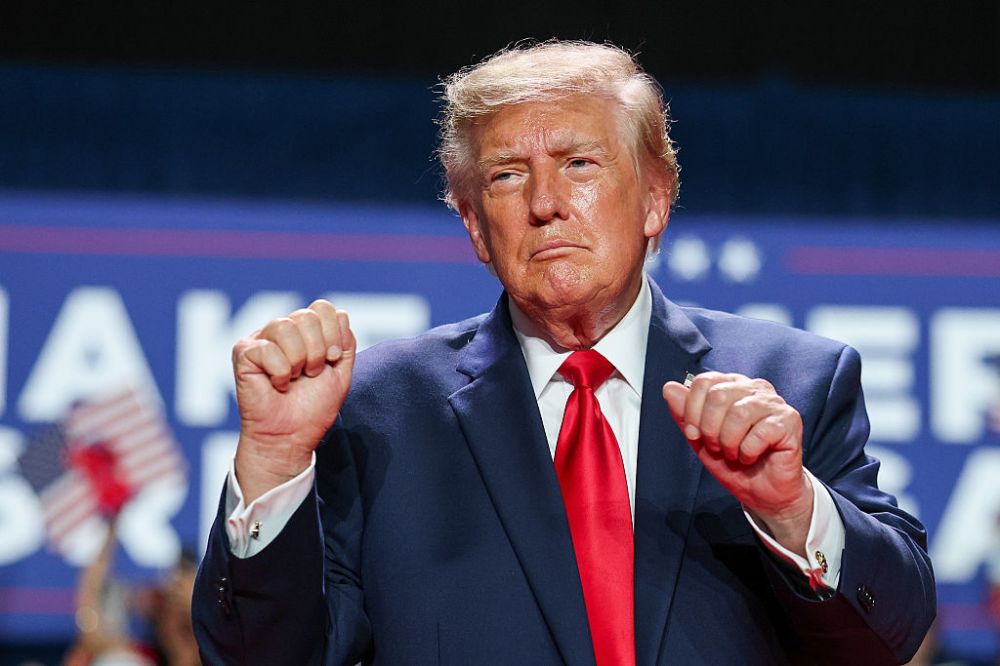
Donald Trump’s concerns about the Brotherhood are not new. There were noises about the group being designated during his first administration but there are practical, legal and intellectually defensible reasons as to why democracies have shrunk away from banning the Brotherhood and the idea ultimately petered out.
Yet staffing in key positions of the current administration has created fresh momentum. Earlier this year, Trump issued executive orders designating branches of the Muslim Brotherhood as terrorists in Egypt, Jordan, Lebanon and Sudan. While the US wants to go further, realpolitik will come into play: the ruling AKP in Turkey is heavily influenced by the Brotherhood and yet is a Nato member, and Trump recently championed the mutual defence pact they signed with Saudi Arabia and Pakistan.
Still, this focus on the Brotherhood is unlikely to wane. The May 2026 US counterterrorism strategy warned: ‘We [the US] will continue to designate its branches across the Middle East and beyond.’ The strategy’s author, Sebastian Gorka, says the Brotherhood’s enduring influence on jihadi groups around the world means they should be considered ‘the granddaddy of them all’.
It isn’t only London feeling the consequences; the White House wants to go much further into the European network than al-Abyari. However, the UK remains especially vulnerable, because it has allowed Brotherhood networks to embed here over decades. Those aligned with Hamas, a Brotherhood offshoot but one largely integrated into the wider Brotherhood network in the UK, have also ended up on Washington’s radar.
Take Zaher Birawi. A UK resident, Birawi was sanctioned by the US Treasury in January as a ‘senior official’ of a group which ostensibly organised flotillas to Gaza but which the Treasury alleged to be ‘a front organisation for Hamas’. This was a telling move, and all the more so because the UK government did not follow suit. The Trump administration is synonymous with America First but here it seemed more interested in issues in our backyard than we were.
Lest it be thought this is being driven only by Trump and Gorka, Joe Biden’s administration also sanctioned Hamas entities across Europe and what it called ‘one of the senior Hamas members in Europe’, Majed al-Zeer. Now based in Germany, al-Zeer has long-standing ties in the UK and with Birawi. Both al-Zeer and Birawi would no doubt reject claims that they are a part of Hamas.
That the US disagrees leaves the UK in a difficult position. Not only because we have served as a base for the Muslim Brotherhood in the past, but because the US government expects us to take practical action here and now. Earlier this month the UK did indeed arrest Mohammed Hasna, a Turk associated with a British charity, on suspicion of funding Hamas. US authorities thanked the Brits for their assistance and Hasna is due to be extradited to the States to face trial, where the allegations will be properly tested.

Nevertheless, Washington’s newly forward-leaning stance has been the source of some panic in Whitehall because in reality the Brotherhood is not a priority for us and we have no good story to tell about how we have tried to curtail its influence. Instead, there have been numerous opportunities we have failed to grasp. A review requested by David Cameron in 2014, written by Sir John Jenkins and the late Charles Farr, provided significant insight into the Brother-hood’s operations but a lack of political focus in SW1 meant enduring, substantive policy outcomes remained elusive.
Consider, also, the example of Interpal. The UK considers it to be a legitimate charity, albeit one that Jenkins and Farr assessed to be associated with the Brotherhood. By contrast, every US administration for the past 23 years has considered it a Specially Designated Global Terrorist and a ‘principal charity utilised to hide the flow of money to Hamas’. Interpal vociferously denies this and has taken legal action against those who repeat the charge in the UK.
The US looks at this with bemusement. It sees the UK as a country unable or unwilling to take action against Hamas. The UK says the Charity Commission looked into Interpal multiple times and was unable to prove its connections to terrorism. Those familiar with the powers available to the Charity Commission, and what kind of investigations it is and isn’t able to undertake, know that it was not the right authority to answer the question comprehensively either way.
When recommending steps to ministers to tackle the Brotherhood, I viewed strengthening regulation of the charitable sector as a key weapon in the arsenal. The government’s social cohesion action plan from April made welcome noises in this direction and similar moves were in the offing in the final days of Rishi Sunak’s government.
How much of a priority this will be for Andy Burnham is unclear, but he has already judged it politically expedient to have apologised for his predecessor’s unwillingness to call for a ceasefire sooner in Gaza.
A strategy to tackle non-violent extremism never truly made its way into wider national security thinking
That should serve as a reminder that the raw politics matter here. One law enforcement body I used to deal with during my time working with government demonstrated no interest in talking about the Muslim Brother-hood until Elon Musk posted on X: ‘Why is Starmer harbouring known terrorists?’ The context was a UAE press release announcing the proscription of eight UK-based companies for links to the Brotherhood.
I was pleased that my interlocutors were newly interested in investigating potential Muslim Brotherhood links, but considering how large its network is and how many viable targets there are, it was somewhat jarring that it took Musk’s proclamations to get there. In my experience, his musings were taken just as seriously and read more closely (if not more so) by analysts than those made by the Brotherhood’s leadership. It demonstrates an ongoing shortcoming in the state’s analytical capacity to understand Islamism, both in its violent and non-violent forms, in its totality.
So the failure to counter the Muslim Brotherhood is a story of a bigger failure: to make good on Cameron’s 2015 counter- extremism strategy’s promise to ‘counter the ideology of non-violent and violent extremists alike’. The strategy lapsed in 2020 with no progress made on that front. Three years later, in his review of Prevent, Sir William Shawcross concluded that the government’s approach had failed. A strategy to tackle non-violent extremism never truly made its way off gov.uk and into wider national security thinking. A lack of action on the Brotherhood was its most profound failing.
These are problems this government can and indeed should fix. Shabana Mahmood, the Home Secretary, has already proved herself to be bold on immigration. She should show a similar drive when it comes to the Muslim Brotherhood and extremism more broadly. The UK shouldn’t need pressure from Washington to understand the gravity of the threat and deliver tangible change.




Comments