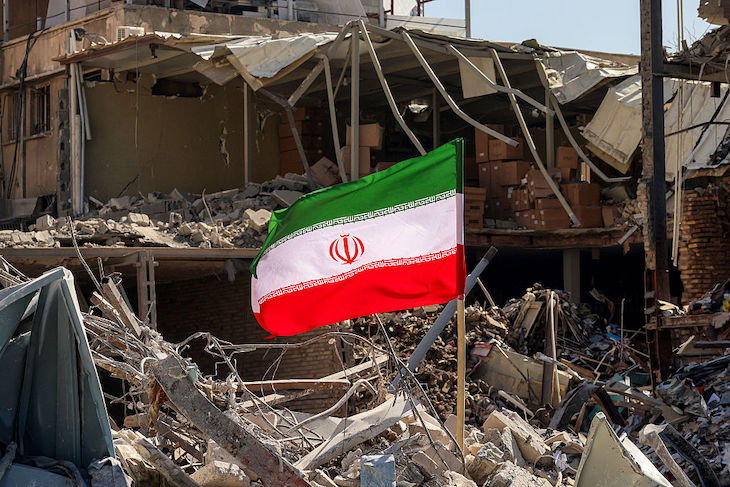
At the moment, a lot of people – notably including the Prime Minister, Sir Keir Starmer – are comparing the current war with Iran with the Iraq invasion of 2003. Do they have a point?
There are several common claims of comparison, some good, some bad.
There is no use pretending that the decisions Starmer has made will not have vast and far-reaching consequences
The principal claim is that what happened in Iraq means we should steer well clear of any further involvement anywhere. It reminds me of the final scene in that magnificent film, Chinatown. A private detective moves to intervene to stop a horror unfolding but one of his associates holds him back, saying, “Leave it, Jake, it’s Chinatown”. In this reading, the Middle East is Chinatown. Iran and Iraq are neighbours. They’re all the bloody same. The Iranians messed with us in Iraq and they will mess with us in Iran even more so. War in the region is always going to be nasty, brutish and long. We know too little about the culture, the politics, the lay-down of forces, the popular mood and so forth.
Some of that is fair enough. Certainly, in Iraq it turned out we knew far too little about how the human terrain had changed since 1991, when the Iraqi army had been expelled from Kuwait and severe sanctions applied. The sanctions were meant originally to compel Iraq’s compliance with various demands – for reparations; for the dismantling of its nuclear weapons programme; for the destruction of its medium and long range missile and CBW (Chemical and Biological Warfare) stocks; for proper and final demarcation of the border; for clarity over the fate of the Kuwaiti and third country nationals whom Iraqi forces had kidnapped in and after January 1991 and taken back to Iraq as hostages or simply murdered (in the grinding negotiations over whose whereabouts I was later involved); for the return of the Kuwaiti national archives and other looted property and so forth.
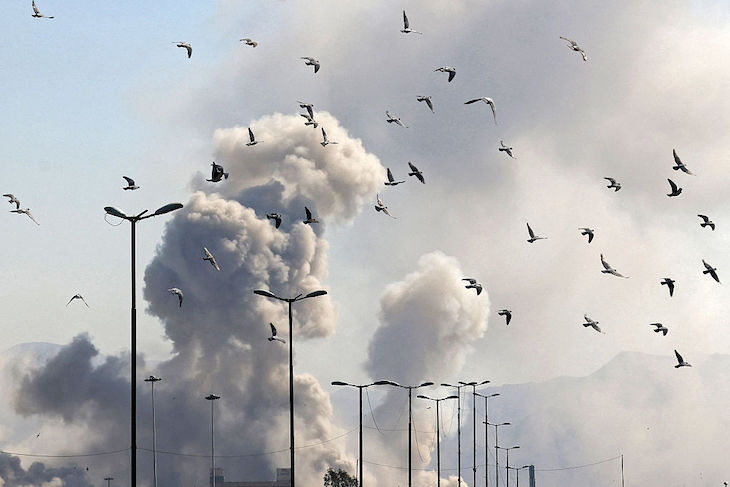
In practice, because of Iraqi foot-dragging, assisted by its allies on the UN Security Council, the sanctions, although gradually eroding, remained in place until 2003. Iraq sought to undermine them further by inducing certain individuals and states to compromise their application (which led directly to the oil-for-food scandal). Its governing elite remained largely immune to the effects. But sanctions still wrecked the social fabric of the country in ways that neither the US or we – or anyone else – had foreseen. And the absence of a diplomatic presence on the ground meant that we couldn’t gauge what was happening.
Most popular
Tim Shipman
‘Whose side are you on?’: How Keir Starmer alienated Britain’s allies over Iran
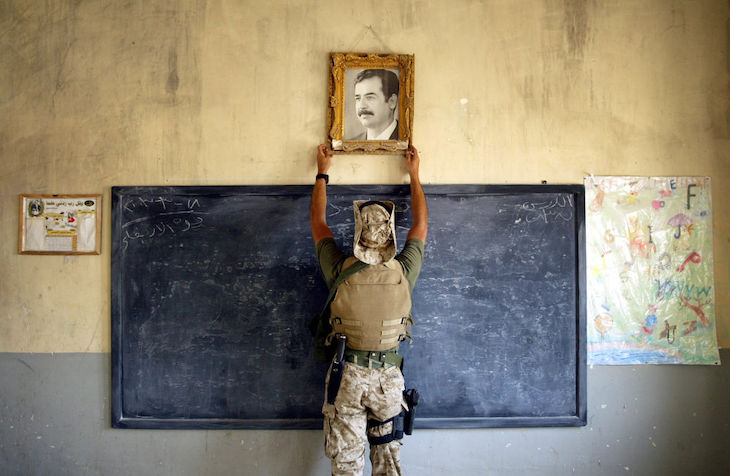
Against that, when the US were preparing to invade in 2003, the State Department in particular made great efforts to plug the gaps. With the US military they invested heavily in a project to recruit area experts, social anthropologists, linguists, development experts and so forth from outside government in order to establish regional teams which would be able rapidly to build a more accurate picture, not just of the human but the economic and political terrain and deliver rapid improvements on the ground. That failed partly because of resistance within the expert and scholarly communities and institutional rivalries in Washington, but also because the war on the ground started to go wrong almost immediately.
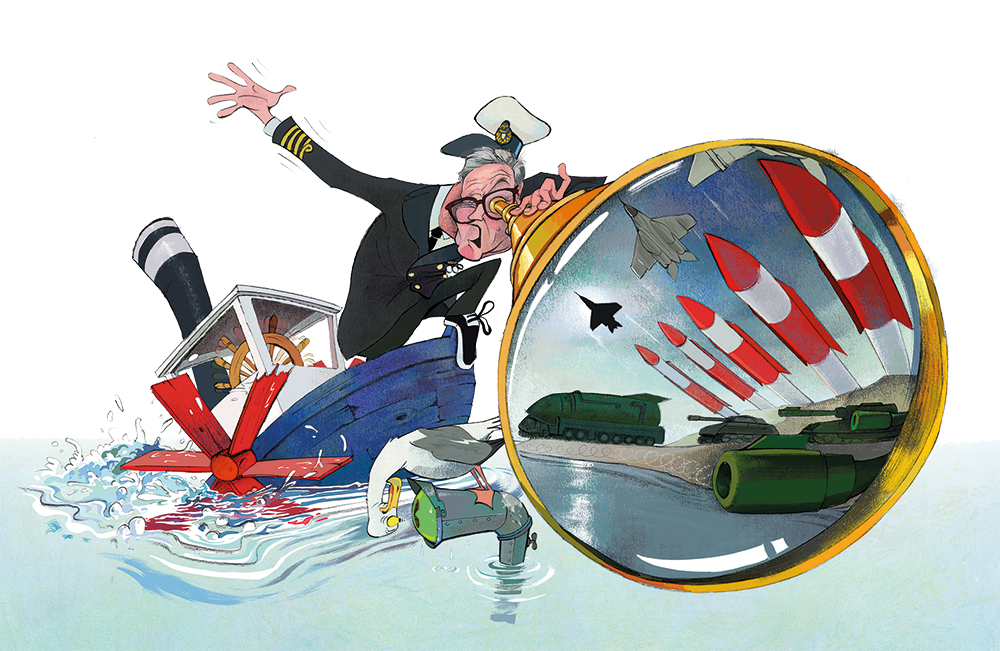
And there was – and is – a specifically British dimension which cuts both ways. The main reason we went into Iraq was to shape the US response and stay a close ally. We no doubt did not do that as well as we could have done. And there are reasons to be wary of such a logic repeating itself. That particular trade-off is one on which Starmer’s instinct is certainly different to Blair’s. But there is no use pretending that the decisions Starmer has made will not have vast and far-reaching consequences – all the more so when British defence spending is increasingly unlikely to rise to anywhere near the level it should: or that we can safely shelter under the umbrella of a softly-softly, cosily united European response when Mark Rutte, Nato’s secretary general, and Friedrich Merz, the German chancellor – the two most consequential poles of opinion – are essentially backing the action, in company with Canada’s leader Mark Carney and Australian PM Anthony Albanese. Our military response is woefully undercooked. The planning has been abject, due to political decisions. So we are going to be mere passengers in whatever comes next. Blair wanted to avoid that. Starmer has plunged in headfirst.
Yet it actually looks highly unlikely that on this occasion there will be any war on the ground. It’s true that if you want to occupy and hold territory, you need the poor bloody infantry. And there have been noises about arming Kurdish and other dissident groups within Iran itself. But Trump shows no inclination whatever – so far – to put American troops in harm’s way. It looks instead as if what he wants is the Venezuela option: take out the top guys and let the survivors work out that screwing with the US is a bad idea. That might or might work in Iran. But either way, it’s not going to be Iraq 2003 all over again.
And there’s another reason it won’t be. One of the things that was probably under-priced 23 years ago was the virulence of the wider reaction in the Sunni Muslim world and the capacity for funding, political support and fighters to flow into Iraq, in a way that would confound efforts to restore stability. A Shia Iran that has spent decades seeking to undermine its Sunni neighbours is different. My guess is that most Sunni Arabs don’t care if it takes a pounding. So even if there were to be some kind of US presence in Iran, it’s hard to imagine Iran being a new honey pot for foreign fighters.
When Saddam fell, there was little appetite in Iraq for a western-aligned replacement
It is true that sanctions have also had a massive impact on Iran, particularly on its ability legally to export oil and access dollars. The bigger problem however has been the malign incompetence of the Iranian government. Saddam Hussein was also incompetent and malign. But Iraq’s population was – and is – much smaller than Iran’s and its political culture far more primitive. The fact that Iran is running out of water or that the IRGC (Islamic Revolutionary Guard Corps) has been allowed to control and corrupt the economy is nothing to do with the US. Iranians tend to blame their rulers – the mercantile theocratic elite that the revolution embedded in power – rather than the West. Many Iraqis may have hated Saddam. But they were far readier to blame the West for their misfortunes. The few credible attitude surveys that have been conducted in Iran show that the population as a whole is far more inclined towards us than in our nominal “ally”, Pakistan.
That meant that when Saddam fell, there was little appetite in Iraq for a western-aligned replacement. Instead, the impoverished Shia masses of the South who had steadily built up their presence in Baghdad through migration in search of opportunity, were far more willing to listen to radical clerics than they were to development experts or diplomats wittering on about democracy. Part of that was undoubtedly because they remembered bitterly the failure of coalition forces in 1991 to stop Saddam’s generals massacring them when they rose up en masse in the south – in stark contrast to the protection given to the Kurds in the north. There were reasons for this. But it inculcated a sense of grievance that meshed with the Shia historical sense of oppression and suffering.
And that points to another difference. All the evidence suggests that Iran is now actually the most secular Muslim majority state in the entire region. As many less blinkered clerics warned all along, the worst thing that could happen to Shia Islam in Iran was to put clerics in charge. In response to their brutal obscurantism, all markers of religiosity – mosque attendance, Ramadan fasting, participation in pilgrimages – are down massively. Much of the population – maybe 70 per cent – has turned its back on claims that the Guardianship of the Jurisprudent – Wilayat al Faqih – will produce the perfectly just state. What they see is corruption, hypocrisy and injustice instead. And what a majority seem to want is a more normal state that remains culturally Shia and proudly Iranian but is governed by qualified non-Islamist politicians and technocrats, not unqualified Islamic jurists who can tell you exactly what to do after travel, defecation or sex but couldn’t run a whelk stall without killing all the whelks.
All the evidence suggests that Iran is now actually the most secular Muslim majority state in the region
And finally there is the role of that intangible thing: cultural memory. A couple of years ago, I asked a senior Iranian academic, teaching at a great American university, what made the “Woman, Life, Freedom” protests in Iran – and all their precursors over the last two decades – different in kind to the failed popular protests in the Arab world from 2005 onwards. He said, “Memory”. What he meant was that Iranians – even young Iranians – remember a better time, before the 1979 Islamic Revolution; remember the tragic failure of the Constitutional Revolution of 1905-1911; remember Iran’s great non-Arab dynasties, the Safavids above all, but also in recent times even the once despised Qajars and Pahlavis; and even remember that Iran was great before Islam – the national epic of Iran, Ferdowsi’s Shahnameh or Book of Kings, celebrates the achievements of the Sassanian monarchs whom Islam overthrew. In more recent times, Cyrus the Great, whom we really know through his Greek admirers, Herodotus and Xenophon, has once again become a culture hero. These recreated memories seem now far more resonant in the Iranian imagination than the parallel remembrances that devout Shia make of the battle of Karbala, the suffering of the Imam Hussein and the wickedness of his conqueror, Yazid, though for some the death of Khamenei will fit neatly into that nearly 1500-year old passion play.
Like Iraq, Iran has its minorities, of course, too: Kurds, Baluch, Arabs, Azeris. They are fractious and some are separatist. The Kurds actually managed to establish a short-lived statelet – the Mahabad Republic – in 1946, until the Soviets withdrew their backing. But the Iranian heartland, with its memories of civilisational greatness, is solid. It has a civilisation that can encompass difference and exists both in complementary to the region’s other Islamic cultures but also stands athwart them. Ayatollah Khomeini admired Plato. Other Shia clerics study the neo-Platonists. In contrast, in the Sunni schools of jurisprudence Greek philosophy is dismissed as infidel nonsense. So even among the clerical classes and more especially beyond them, there is a broadness of outlook that is rare elsewhere.
And that matters. Saddam was not notably religious, though he made an effort to co-opt religion in the 1990s. So, when he fell, the dominant opposition to him was inevitably religious – in the same way as it had been in Iran in 1979 – because it could mobilise support in a way its more secular opponents could not. But Iran has been through all that and come out the other side. The opposition now rejects any role for religion in politics because it has seen what it does. And it commands massive support. As long as the IRGC remain cohesive and retain their weapons and wealth, that support cannot make a difference. But if the IRGC were to lose that power – and that is clearly one of the aims of this campaign – then it would lose its ability to stop a civil state emerging.
Iran has a memory of other times when collapse happened and a new Iran was eventually born out of the ashes
Whether such a state will in fact emerge after the destruction of much of the Iranian theocratic state’s capacity is, of course, another question. When the Constitutional Revolution failed – with the forced dissolution of the Second National Assembly in 1911 – it precipitated a decade of chaos and violence. That was ended by a coup led by the commander of the Iranian army’s Cossack regiment, Reza Khan, the founder of the Pahlavi dynasty and the grandfather of Reza Pahlavi who, from exile in the US, has been calling for insurrection. Perhaps we shall see Iran again descend into internal disarray. It wouldn’t be the first time. But, unlike Iraq, Iran has a memory of other times when collapse happened and a new Iran was eventually born out of the ashes.
There is a final point. None of Iraq’s neighbours liked Saddam. They feared him. But they feared the consequences of his removal even more – because it would empower Iran. This time, a transformation of Iran would make the country less not more terrifying – unless the prospect of a more normal and prosperous Iran is in itself terrifying to states that are struggling to meet the demands of their own citizens. But economic and cultural rather than military or sectarian competition would in the end be a huge plus for the region as a whole.
I do not claim this is the inevitable end of the current campaign. Frankly, it remains unlikely. It may still all end in chaos and – yet again – tragedy for the people of Iran. And it is doubtless unwise to rely on the strategic foresight of the Trump administration. But we need to remember that what is currently happening in the region is about Iran, not Iraq. The roots go back to 1979 – and even, you could argue, to the unresolved questions posed over a century ago by Iranian constitutionalists backed, at least to begin with, by Britain. The outcome will not be determined by what happened between 2003 and 2015 in Iran’s Arab neighbour. And trying to force it into that mould will make us misunderstand what is at stake.
Comments