Tax

Tax the poor

A sanctimonious liberal like any other respectable 16-year-old, I made a seminal lurch to the right the first time I opened a pay slip. I was manning the register weekends for the Ice Capades Chalet in Atlanta and made about $40 a week. Or so I imagined. Then where the hell was it? The significantly lighter payment was my rude introduction to taxation at source. Indignation at being fleeced at a minimal income persisted into my adulthood. I lived on a wing and a prayer for decades, and having to pitch anything whatsoever into the communal pot was consternating. I fancied that I asked for nothing from government; in trade, they should ask for nothing from me. I wasn’t yet a grown-up.

tax

Why some small tradesmen are turning to bartering

From our UK edition

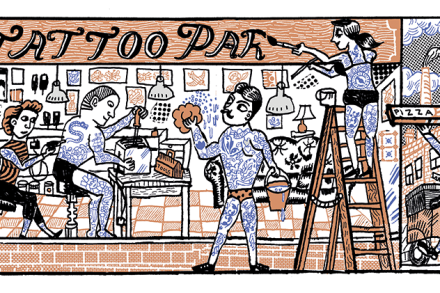
Holly, a 25-year-old sign writer and muralist, recently spent a couple of days staying in a shepherd’s hut an hour from her home. She didn’t pay for it – well, not in the way you or I would. The owner had a gypsy caravan with doors that needed painting. Holly could do the job. An agreement was struck, no money changed hands, and both sides walked away feeling they’d got a fair deal. Holly is one of a growing number of small tradesmen who have quietly decided to opt out of the traditional cash economy – or at least keep one foot outside it. She has been ‘paid’ in chiropractor sessions, pizza and someone cutting her grass. When she painted the Christmas windows of her local café, the owner told her to pop in for a free lunch ‘for the next ten goes’.

Benefits treats: how Britain became a freeloader’s paradise

From our UK edition

Plastered around Westminster this Easter were adverts for the Tower of London. ‘The perfect place for troublemakers – pre-book now,’ the poster read. ‘Members go free.’ So too – near enough – do those on Universal Credit (UC). Easter-holiday treats can be expensive for hard-working families. For those on benefits they’re a breeze. A trip to the Tower of London for a family of four costs £111. But if one of the parents is on UC (or a long list of other benefits), a £107 saving is applied and the whole family can get in for just £4. Visit the Tower’s café for fish and chips and UC bags you a half-price meal (£16.95 for the rest of us).

Making Tax Difficult: another Whitehall farce

From our UK edition

Welcome to the new tax year, with its overflowing hamper of half-baked, growth-eating, enterprise-crushing Labour measures. And if you happen to be one of the 4.4 million self-employed who scrape an independent living despite rising costs and red tape, welcome to what must surely be one of Whitehall’s longest-running but least funny sitcoms, Making Tax Digital (MTD). If your income from self-employment (or rents as a landlord) exceeds £50,000 a year, you must henceforth submit quarterly digital updates to HMRC; next year the threshold will drop to £20,000. You’ll have less time to pursue your trade but your costs will rise, because you’ll need new software and more professional advice.

No one is safe from a wealth tax

No matter how many jurisdictions discover the hard way that wealth taxes backfire, in California an initiative is collecting signatures to put a ‘one-time’ (ha!) 5 per cent tax on the net worth of the state’s roughly 200 billionaires on November’s ballot. Hey, those guys are rich. They won’t even notice. But the funny thing about people and money is that even folks with lots like to keep it. The 2026 Billionaire Tax Act is slyly retroactive, a variety of pre-crime legislation – applying to anyone resident in California on 1 January this year, looping a bungee cord around the ankles of would-be absconders. Thus billionaires such as Peter Thiel scrambled to establish a presence in a lower tax state before midnight on New Year’s Eve.

Where are you on the tightwad scale?

From our UK edition

I once stood in a queue behind a Scotsman checking out of a hotel in Germany. After he had finished scrutinising his bill in agonising detail, he demanded that it be reprinted, this time removing the €1 discretionary charge which had been added in support of the local homeless. More recently some friends of my daughter’s met a Yorkshire-born Spectator writer at a local fête. They mentioned the connection, expecting some mild pleasantries. Not so. ‘’Appen that reminds me: he still owes me for a taxi.’ When I heard this, I was bemused. Then I remembered I had indeed shared a taxi with the Yorkshireman in question, requesting a minor diversion to drop me off at Cannon Street. This, granted, would have added two quid to the overall fare. Point taken.

The UK’s tax take, take, take

From our UK edition

Helping her country ski ever more steeply down the wrong side of the Laffer curve, Rachel Reeves may be preparing to violate Labour’s manifesto and raise income tax – perhaps a suitable juncture at which to examine just how wacko the UK tax code is already. Start with the duplicity of ‘national insurance’. This unhypothecated add-on simply pours into the Treasury’s coffers as plain taxes. Yet much of the populace still believes that NI specifically funds the NHS. This is misunderstanding by design. The sly mislabelling is a resentment blocker. In truth, the employee basic tax rate is a straight-up 28 per cent, not 20 as advertised. The mooted Reeves proposal of raising income tax by 2 per cent and reducing basic-rate NI by 2 per cent is dishonest.

Reeves’s fiscal play-off

From our UK edition

In a week where political attention was on espionage and anti-Semitism, the cri de coeur from one Treasury official was notable. Recalling how Budgets were made during the years of Gordon Brown, before the 2010 coalition created the Office for Budget Responsibility (OBR), the number-cruncher complained: ‘All they had to do was fiddle their own figures. That was a dream compared with this.’ Earlier this month, Rachel Reeves received the OBR’s first estimate of the state of the public finances, showing the depth of the ‘black hole’. She will shortly get another OBR report on how falling productivity is damaging growth. For every 0.

The masterpieces on your doorstep

From our UK edition

I do not, if I can help it, catch a train to anywhere on a Sunday. Yet there I was at 9.14 a.m. heading out from Woodbridge in Suffolk towards Cambridge to view a painting by Walter Sickert, a work I had not seen before and whose vital statistics – what even the work was of – I had no way of knowing; its owner had refused to send a photograph or describe it over the telephone. Arriving at the owner’s address, I was met by a neighbour who told me that in the name of letting go and embracing surprise, they had decided to visit a relative in Scotland the night before.

Land value and the Somebody Else’s Problem paradox

From our UK edition

‘The Somebody Else’s Problem field can be run for years on a single torch battery. This is because it relies on people’s natural disposition not to see anything they don’t want to, weren’t expecting or can’t explain.’ The SEP, as I hope many of you remember, is a cloak of invisibility featured in Douglas Adams’s Life, the Universe and Everything. It perhaps arises from a universal aspect of socially driven behaviour – one which encompasses the Bystander Effect, the Overton Window and the Too-Difficult Box. Strangely, Donald Rumsfeld misses out one of the four (un)known (un)knowns: he does not mention ‘unknown knowns’ – things that we know but aren’t aware of knowing, or pretend not to know.

The truth about the Trump ‘trade deals’

They say three times makes a pattern. So what should we make of the President’s trade agreements, three of which he confirmed this week, as the August 1 deadline for "reciprocal tariffs” looms?  If there remained any confusion about his agenda, he helpfully laid it out in all caps. “I WILL ONLY LOWER TARIFFS IF A COUNTRY AGREES TO OPEN ITS MARKET. IF NOT, MUCH HIGHER TARIFFS!” he wrote on Truth Social. “USA BUSINESSES WILL BOOM!” Given the size of the lettering, and the similarities to the deals secured with Indonesia, the Philippines and Japan this week, we should take Donald Trump at his word on this one. Put simply: so long as other countries cut taxes for their businesses, he will hike taxes on American businesses ever so slightly less.

trump trade

Why wealth taxes don’t work

From our UK edition

The nation owes the former Labour leader Neil Kinnock an eternal debt for losing the 1992 general election when he was clear favourite to win it, thereby sparing us whatever socialist folly he might have brought to Downing Street. I salute him again for popping up to propose a 2 per cent wealth tax on fortunes above £10 million that might raise a supposed £11 billion for the hard-pressed Chancellor – thereby bringing into sharp focus the vague threat that several cabinet ministers have studiously refused to rule out. Pressure is building on Rachel Reeves from backbenchers, unions and anti-poverty campaign groups to mount a raid on the rich in her autumn Budget.

In defence of the Trump playbook

From our UK edition

The standard explanation for why charges for plastic bags reduced waste is economic. People were reluctant to pay 10p for a bag and so brought their own instead. This is partly true. But it would still be highly effective if the charge for a bag were merely 1p. That’s because charging any amount, however trifling, was sufficient to change the implicit assumptions about normal retail behaviour. Previously, if you went into Boots and bought, say, a toothbrush and a tube of Anusol, the default was for the cashier to put them in a new bag – it would have seemed rude not to do so. Suddenly, however, the imposition of a charge meant that shopkeepers had to ask whether you wanted a bag or not.

OnlyFans is giving the taxman what he wants

From our UK edition

Fenix International occupies the ninth floor of an innocuous office block on London’s Cheapside. The street’s name comes from the Old English for marketplace, and once upon a time Cheapside was just that: London’s biggest meat market with butcher shops lining either side of the road. Today, the street houses financial institutions and corporate HQs. But Fenix still runs a marketplace. Some may even call it a meat market, albeit one that operates on the phones of hundreds of millions of users worldwide. Its name: OnlyFans. OnlyFans is best understood not just as a porn site, but as a social media platform with a paywall. Creators – mostly women – post photos, videos and voice notes behind monthly subscriptions.

UK tax on US tech is a useful bargaining chip

From our UK edition

The Digital Services Tax (DST) is a relatively easy bargaining chip to give away in a last-ditch bid to appease Donald Trump, whose final menu of tariffs on UK exports to the US is expected imminently. First tabled by Philip Hammond as chancellor in 2018 and enacted by his successor, Sajid Javid, two years later, this 2 per cent levy on tech multinationals with more than £25 million of UK digital revenues was always seen as a raid on the likes of Apple, Amazon, Netflix, Google, Meta and Microsoft,  though it must by now also catch Shein and other Chinese operators – and was always a provocation to the White House. Within months, there were rumours that Boris Johnson’s government was ready to scrap DST to secure a longed-for UK-US trade deal.

Will better-than-expected inflation numbers calm the markets?

Has Donald Trump’s return to the White House triggered a second round of inflation? Not yet, according to the Bureau of Labor Statistics, which revealed this morning that the consumer price index rose to 2.8 percent in February — 0.1 percent less than markets had expected. The rise is being described as "stable," as annualized core inflation (which excludes more volatile prices like food and energy) rose to 3.1 percent — also a smaller rise than expected. While inflation on the year is ticking up slightly, it remains in the ballpark of what has been expected.

Rachel Reeves can still repair the damage done to farming

From our UK edition

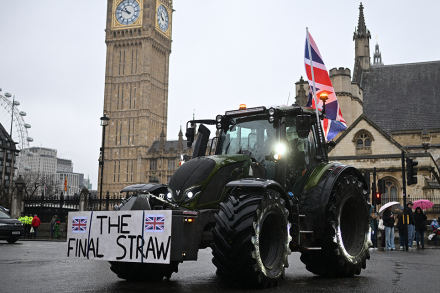
The Chancellor of the Exchequer found time this week to edit her own page on the social media site LinkedIn. She had, it appeared, fallen into error by saying that she had worked as an economist for the Bank of Scotland. Her role had in fact been humbler. No one should be criticised for seeking to correct a mistake. There is no fault in acknowledging that your claims to economic authority were exaggerated, and no shame in embracing humility. Which is why Rachel Reeves should apologise again – without further delay – to Britain’s farmers. For the grotesque, unjust and vindictive tax assault she has launched on the nation’s food producers.

Could inheritance tax changes help farmers in the long run?

From our UK edition

Britain’s farmers are in a bind. Despite sitting on land worth millions, they are unable to release that wealth without selling – and many struggle to make money from what they produce. According to Defra, almost one in five farms make a loss, while a quarter made less than £25,000 last year. Yet there are parts of the Labour movement that see farmers as money-grubbing, tweed-clad elites benefiting from special tax breaks and hefty subsidies. James Buckle, a farmer from Suffolk, understands those frustrations: ‘If our farm is worth £10 million, and we’ve got these new inheritance tax rules, we’ve got to pay something like £1.6 million to pass it on. And £10 million is a ridiculous value for an asset that one person owns.

Labour’s new cabinet divide

From our UK edition

There were no civil servants present when ministers gathered for their weekly cabinet meeting on Tuesday. The reason? It was time to talk politics. On the eve of Labour’s first Budget for 14 years, Keir Starmer tried to rally his ministers around a common message: blame the Tories! He spoke of the so-called fiscal black hole bequeathed to Labour before he handed things over to his Chancellor to explain why difficult decisions were required on spending, tax and welfare. Plenty of Labour MPs and aides question the wisdom of an election campaign which has boxed them in For all the attempts to unite against a common enemy, just a glance around the cabinet table was a reminder of the unease about the decisions taken this week.

Rachel Reeves is taking us back to the 1970s

From our UK edition

The first fiscal event to be delivered by a female Chancellor of the Exchequer is a landmark moment, but in every other regard this Budget was a return to the familiar, and failed, approach of Labour governments past. This was the Life on Mars Budget – a journey back to the 1970s, only without the cheap booze and fags. Tax rises, increased borrowing, a bigger state, spending on public services unaccompanied by meaningful reform and additional costs for those businesses which create wealth – we have seen all these before and we know they are the markers of decline. This Budget was a journey back to the 1970s, only without the cheap booze and fags Before the election there were signs that Labour’s leadership understood the need for a different approach.