
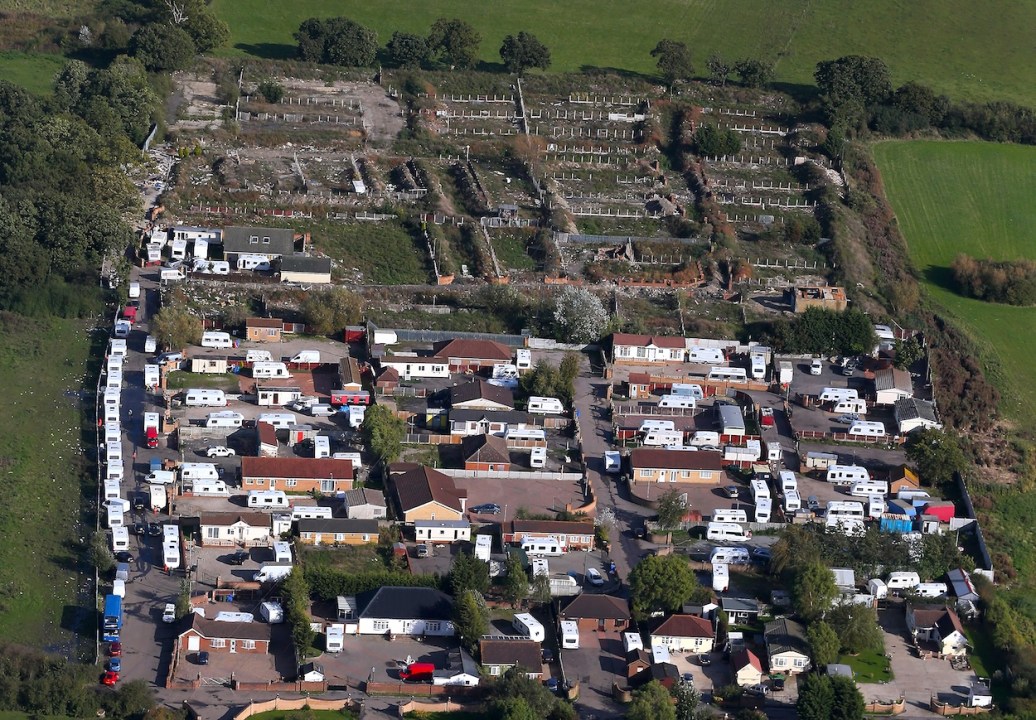
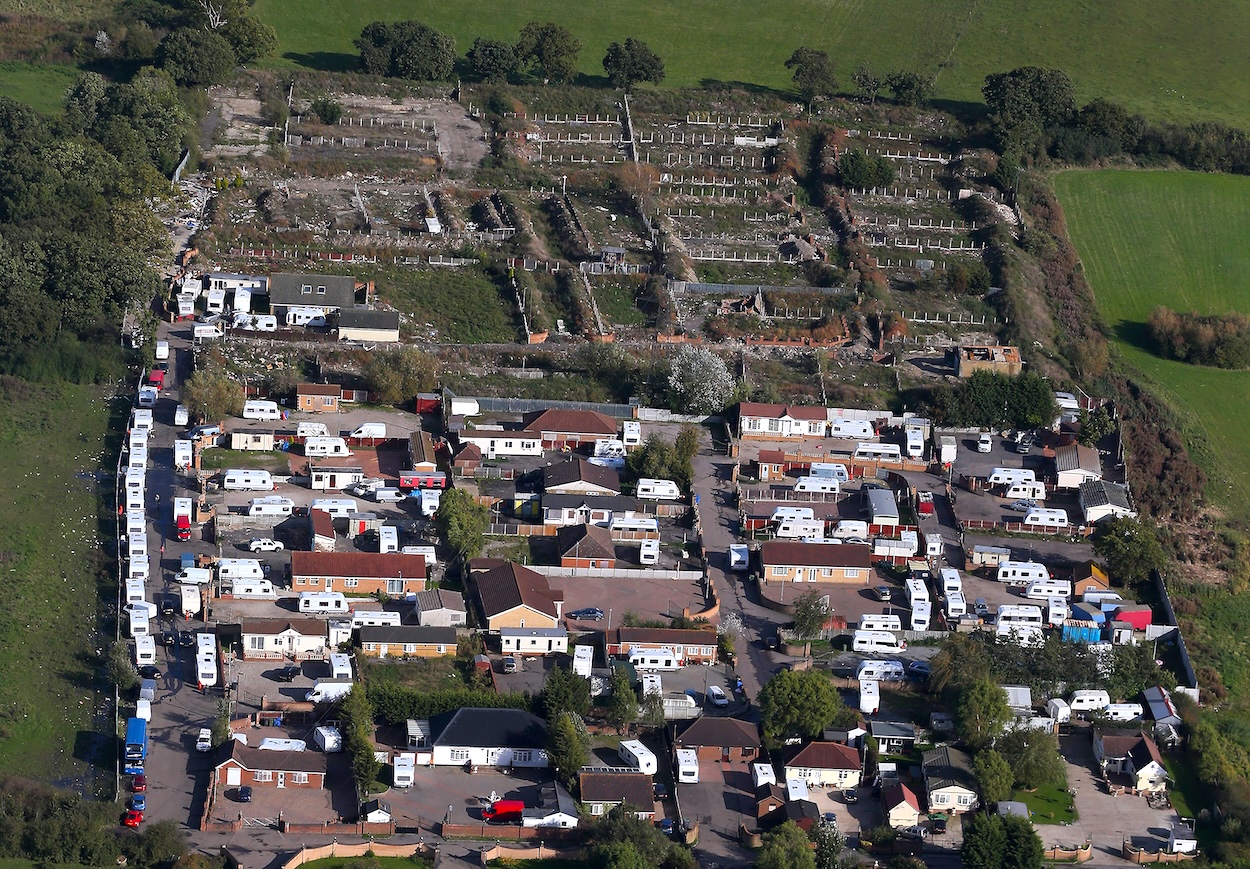
Here it is, finally: Labour’s ‘growth’ strategy. And what does it consist of? Reform of planning laws to make it easier for travellers to set up encampments in the countryside, in places where any other form of development would be banned. Under the previous rules, councils could consider ‘potential environmental damage caused by unauthorised encampments’ when looking at applications for traveller sites. The rules also said that sites should only be approved if they ‘provide a settled base that limits the need for long-distance travelling’. Both of these regulations have now been scrapped.

This will make it considerably harder for local residents to object to applications for encampments. The idea that we should no longer be able to object on the basis of environmental damage is utterly bizarre. Just come and have a look at some of the byways around where I live which become elongated rubbish dumps every time the travellers move on. If I drop a beer can in the High Street or, in some places, put my wheelie bin out a few hours early, I could be slapped with a £500 fine. It seems to be a different rule for travellers.
This is not really a growth strategy: it is just a policy devised to piss off Tory voters in the shires. The same is true of Labour’s planning policy more generally. How come a party which is wedded to ever greater and more ponderous regulations in just about every other field (see the Employment Rights Act etc) suddenly discovers a drive for deregulation when it comes to planning? It is true that in some cases the planning system is over-restrictive – consider the infamous £100 million HS2 bat tunnel in Buckinghamshire – but that is hardly the entire reason for low rates of housebuilding. The Nimbys whom Rayner so despises don’t nearly have the power she makes out.
According to the Planning Portal Market Index, planning permission has been granted for 1.2 million new homes since 2015 – around three new Birminghams – yet a third of them have never been built. In London, the construction of new homes has all but ground to a halt. Why? In many cases because regulations have made them uneconomic to build. Excessive demands for social housing to be included in developments, over-prescriptive fire regulations following the Grenfell Tower fire, and greedy demands for levies to fund local infrastructure and the Renters’ Rights Act have all played their part – as have, it has to be said, general market conditions. The end of the era of ultra-low interest rates has left a big gap between the prices that buyers want to pay and the prices that developers need to charge in order to make a profit.
As a result, Rayner looks set to fall 50 per cent short of her ambition to build 1.5 million new homes over the lifetime of this parliament: 151,000 new dwellings were started across the UK in 2025. The focus on the planning system will not change this so long as the economics for house-building are wrong. If Rayner really wants to hit her target, here is a growth strategy which really might succeed. First, reduce building regulations to a more sensible level. People did not die at Grenfell Tower for want of building regulations – there are many hundreds of pages of them – nor for want of a system to enforce them: Kensington and Chelsea’s building control officers visited the site 16 times during the works. People died because in the fog of regulation the important things were lost, such as not covering buildings with flammable cladding.
Second, Rayner needs to reform her own Renters’ Rights Act. There are some perfectly reasonable measures in it, such as providing greater security for tenants rather than the standard 12-month tenancies which existed prior to the Act, but overall it is a thoroughly punitive piece of legislation, with huge fines for minor bureaucratic omissions (just ask Rachel Reeves, who fell foul of licensing rules when letting her own house in Dulwich). It has all but destroyed the lettings market, and with it taken out a huge slice of the new homes sales market.
If you want more social housing, don’t try to bully private developers
Third, if you want more social housing – and I quite appreciate that a Labour government would indeed want this – then don’t try to bully private developers into building it for you. Ever since housing associations took over the building and management of social housing in the 1980s, they have shown little interest in new construction. Encourage them to start borrowing and investing in new homes and you might have some chance of reviving your target.
Fourth, tackle Nimbyism by truncating the planning system so that decisions do not drag on forever, but at the same time involve local people more fully in planning. Get them into public meetings, hear their views on where new housing should go and then make the decision. At the moment, councils and developers tend to dump plans for new homes on communities as a fait accompli.
Oh, and apply the same rule to travellers as to everyone else. Anything else is discrimination: something I thought Labour was supposed to be against.






Comments