
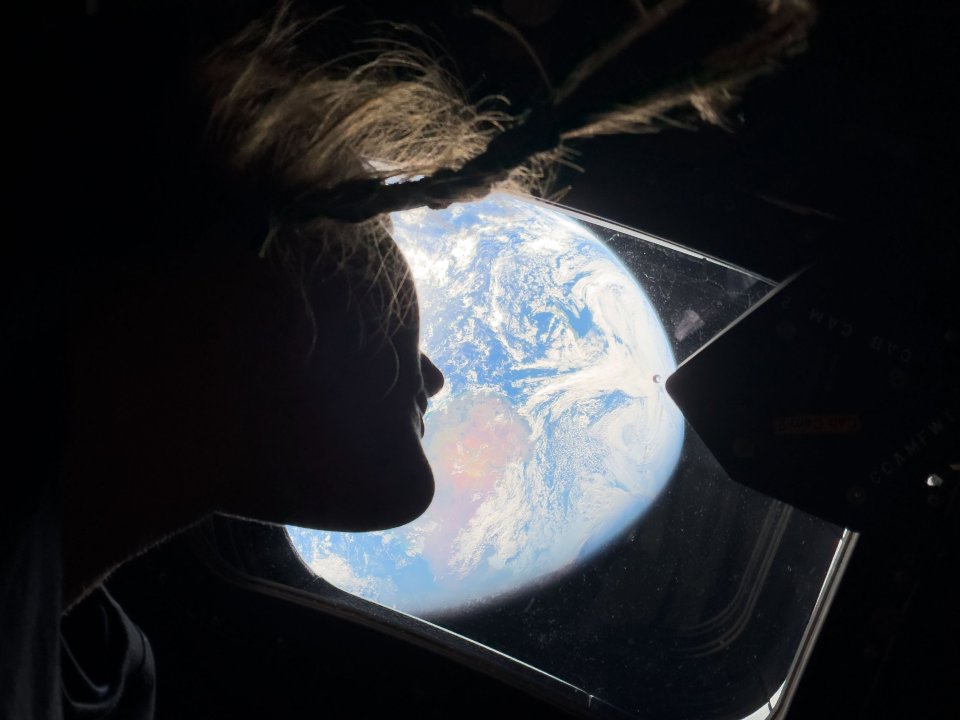
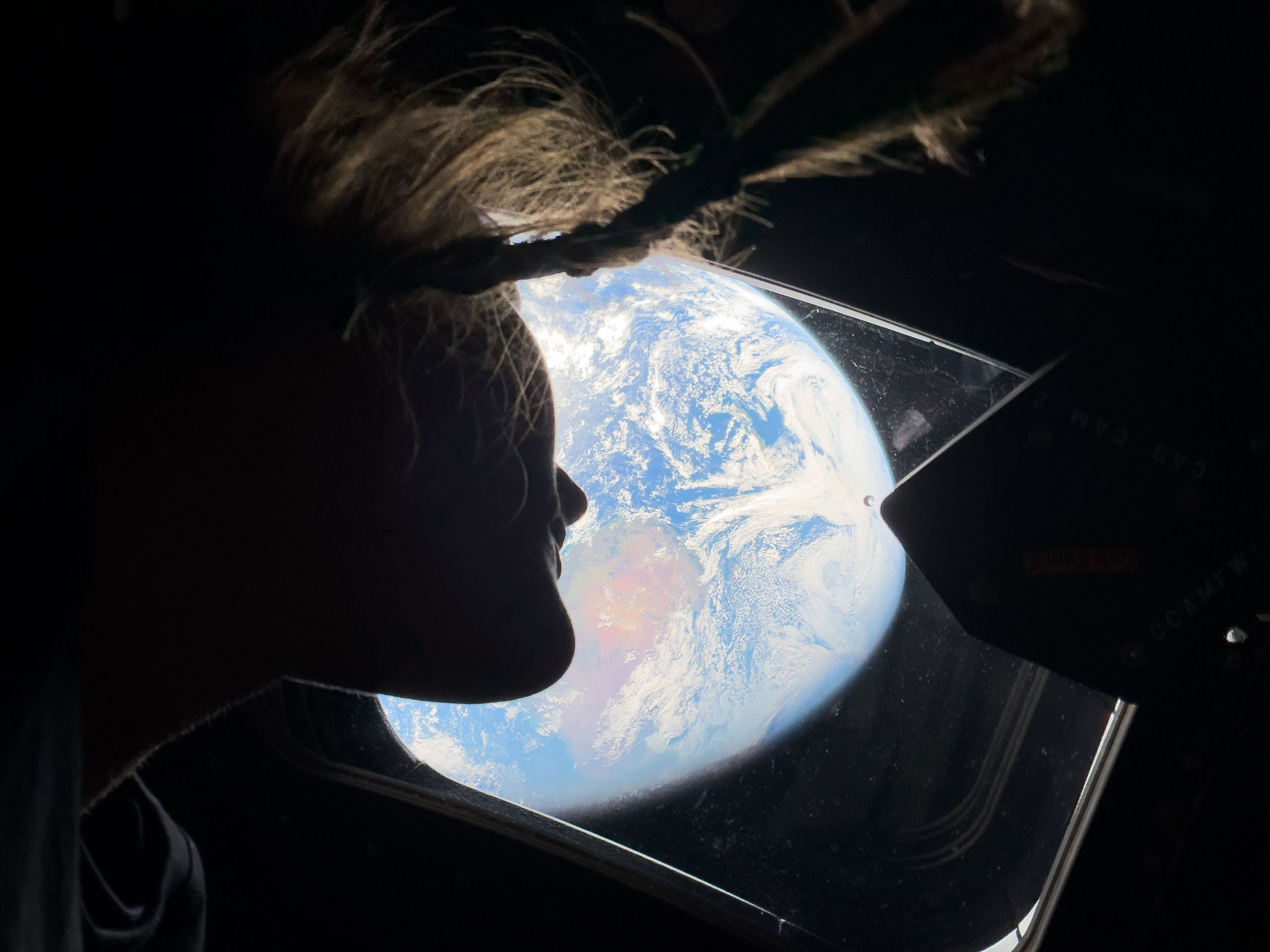
Weren’t those images beamed back from the Artemis II mission something to catch the breath in the throat? If something in you wasn’t stirred by the sight of Earth, glimpsed through the window of the space capsule past the silhouetted face of the astronaut Christina Koch, I don’t think you can be fully alive. And what about the thought that for the first time in history, human eyes will look directly on the dark side of the moon; or that the inhabitants of that spacecraft will travel further from our home than any humans have ever done? That for a few tens of minutes before earthrise, they will be wholly out of contact with home as they travel through the vast dark?

Stir the soul it might; but why, some will reasonably ask, should we be doing it at all? It isn’t, after all, a scientific mission that’s likely to tell us anything we didn’t know. Chris Lintott, Professor of Astrophysics at the University of Oxford, told the BBC with excellent pithiness: “The value of the images coming back from Artemis and its crew is artistic, not scientific.” Soul-stirring it is, then. Me, I think that’s all right.
Two things seem salient. Exploring outer space is worth doing because it is both pointless and difficult. Those don’t, I know, on the face of it, sound like recommendations. But the pointlessness – by which I mean, the lack of immediate or obvious utility – is a good sort of pointlessness. It’s the pointlessness of something that can’t be measured easily in dollars and dimes; it’s pointless like a sonnet. As it happens, all sorts of useful things came out of the original space race. Our mobile phones wouldn’t work, for instance, had humanity never left the earth’s atmosphere; and the argument has been made that the experience of seeing the earth photographed from space had an effect on our collective imaginations that, among other things, kickstarted the modern environmental movement. But we didn’t go there for the first thing, and the second thing was downstream of the sense of wonder that the image generated. The wonder was the point. It didn’t hurt, admittedly, that beating the Soviets to the moon wiped the USSR’s eye in propaganda terms; but, again, that was downstream of the wonder rather than something you could cost, like a missile silo or a friendly regime, as a cold strategic advantage. It was symbolic, and symbols matter.
As for the difficulty, President John F. Kennedy had us covered. In his 1962 speech at Rice University, he said:
We choose to go to the moon. We choose to go to the moon in this decade and do the other things, not because they are easy, but because they are hard, because that goal will serve to organise and measure the best of our energies and skills, because that challenge is one that we are willing to accept, one we are unwilling to postpone, and one which we intend to win, and the others, too.
Difficult, too, like a sonnet. Something that tests the species – “to organize and measure the best of our energies and our skills”. We shouldn’t, I think, see the notion that the value of a project like this is artistic – which can be to say imaginative or mythic – as indicating something trivial.
Outer space occupies the place in our collective imagination that the sea did to our ancestors, or the haunted wood to the tellers of European fairy tales. It’s the edge of the known: a vast, lonely place where the protagonist goes to face peril, and from which they come back changed. The emotional charge of the Anglo-Saxon poem “The Seafarer” is cousin to the emotional charge the child of the 20th century feels hearing the words: “Houston, we’re coming home.’
The sort of pointlessness I describe – an activity which isn’t instrumental, which spends a lot of time and energy in pursuit of nothing more and nothing less than the marvelous – swims against the tide of the world as it currently is; its calculations of tribal power and advantage, its awful pettiness. And so, too, does the difficulty. Nobody can be bothered to do anything difficult any more. We increasingly outsource our writing and thinking to AI. We imagine wars can be won from the air and that political activism consists of insulting strangers on the internet. Here’s something bigger than that.
And another thing. As much as this may be the triumph of American ingenuity and resources, once you’re that far above the Earth – as many astronauts through history have testified – you tend to start identifying more as a member of the species than as the holder of a particular passport. That picture: seeing the earth hanging in space from the vantage of a tiny capsule on the way to the dark side of the moon. It re-enchants our collective sense of home. And it offers something extraordinarily valuable, especially now: a sense of perspective.




Comments